How Did Honda's F1 Engine Problem Hurt Aston Martin?
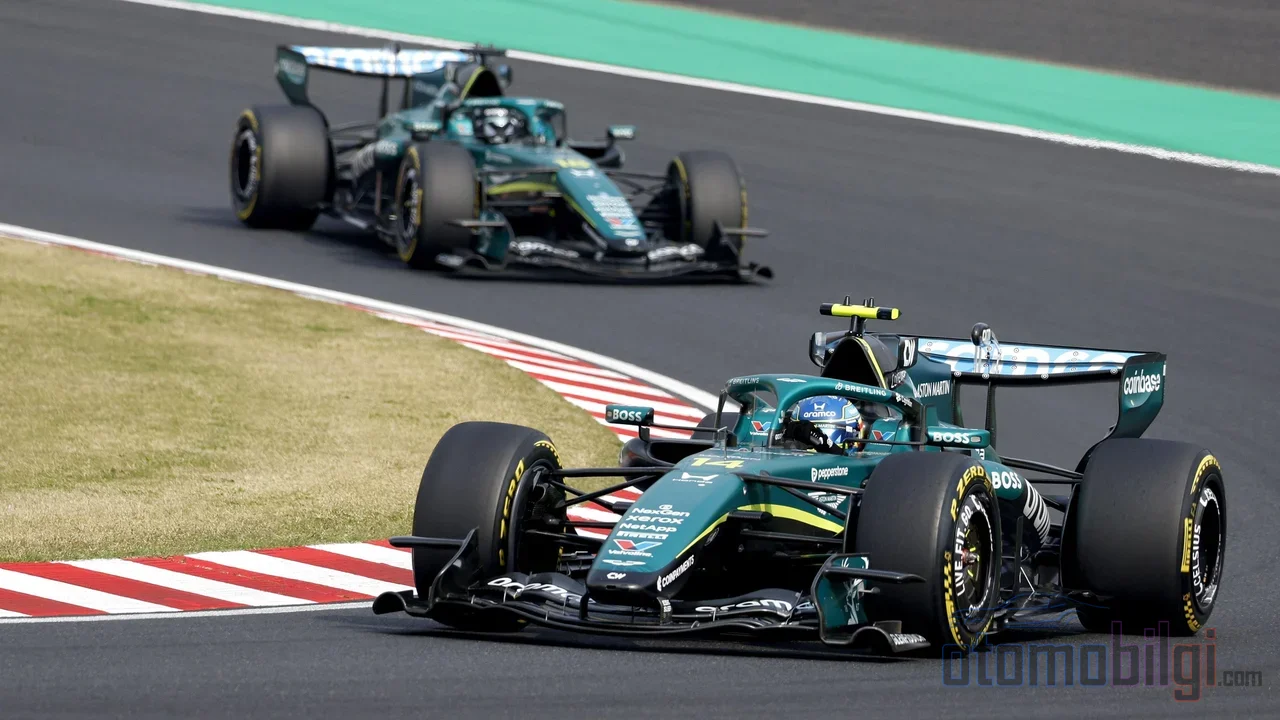
Five laps. That was the most painful statistic of the season, as of around midday Sunday in Mexico City: Fernando Alonso and Lance Stroll were both called to the pits in the very first stint of the Grand Prix, and both AMR26s returned to the garage with only five laps on the counter. A weekend that had already been troubled by an MGU-K cooling problem in Saturday's qualifying effectively ended in the earliest phase of the race. Alonso recorded the seventh race retirement of his career this season.
The real question is this: why couldn't the same cars, which completed 144 laps without issue in practice sessions, even manage five laps in the race? At the center of the answer lies the cooling circuit of the Honda power unit's energy recovery system and Mexico City's 2,200-meter altitude. And there is serious evidence that the team knew, even before the race started, that finishing would be difficult. The new countermeasures Honda introduced ahead of the Brazilian Grand Prix will determine the next chapter of this story.
A Race Over in Five Laps: What Happened in Mexico City?
The problems began before qualifying, in Practice 1, over the weekend. After his first fast lap, Alonso experienced a cooling problem in the MGU-K, the motor generator unit that recovers kinetic energy, and had to stop the car at the side of the track. Following the team's overnight work, Alonso's MGU-K was replaced, along with multiple components on Stroll's car. Both cars were eliminated in Q1; they came within four tenths of a second of the Q2 cutoff, but it wasn't enough.
There was a noticeable lack of power in both cars at the race start. The drivers were asked to lift off the throttle early on the straights to cool the system; at the end of lap three, both cars were called to the pits in the hope of lowering the temperatures. It didn't work. Alonso was taken to the garage, Stroll was stopped on the track, and a brief Virtual Safety Car period was declared. Both drivers were credited with five laps.
Key Highlights
- Alonso and Stroll abandoned the Mexico City GP after just 5 laps.
- The source of the problem: the ERS cooling circuit's overload at high altitude.
- A total of 144 laps were completed in practice; the problem is only triggered under certain conditions.
- At the start of the season, the team had only 2 working batteries left.
- Honda is bringing new countermeasures ahead of the Brazilian GP.
The Technical Reason: The ERS Cooling Circuit, Thin Air, and a World Without the MGU-H
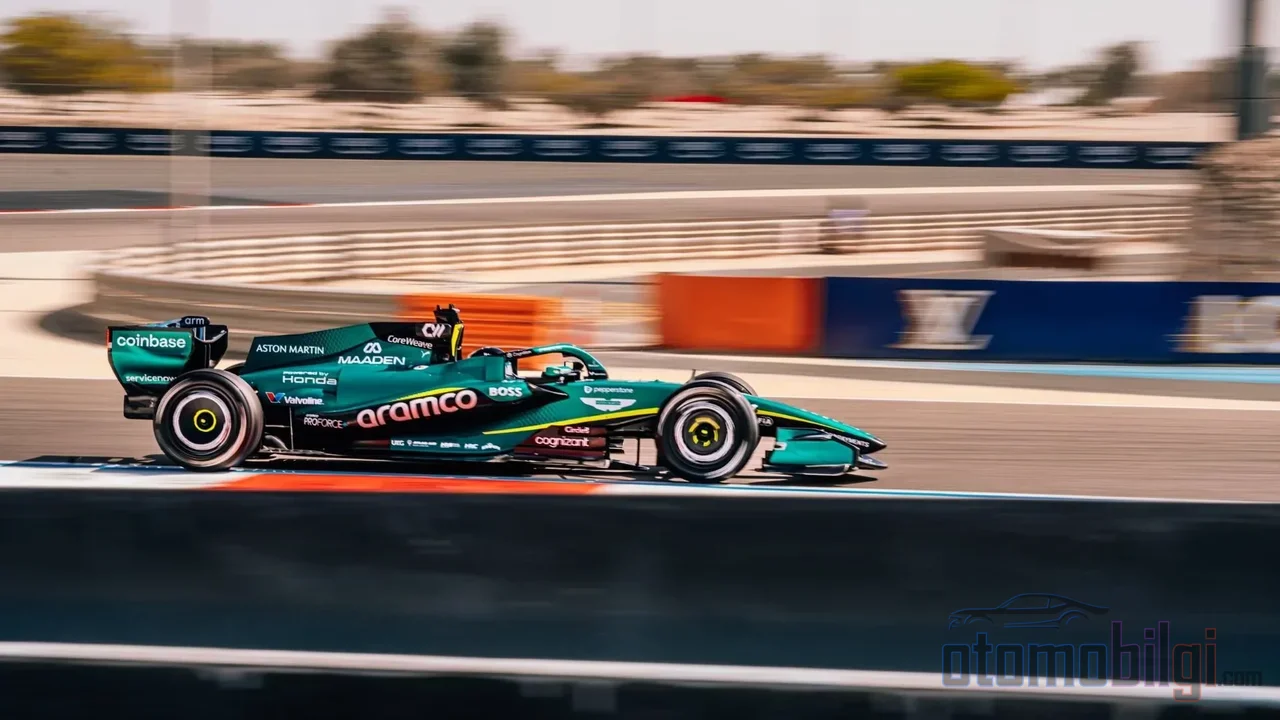
Honda's trackside general manager and chief engineer Shintaro Orihara laid out the technical explanation of the incident in clear language: The cooling circuit of the ERS, the energy recovery system, was working without issue during normal race laps; but under certain conditions the circuit came under stress and the cars stopped. Orihara stated that this stress stemmed directly from the high altitude. The system works properly for 80-90 percent of the laps; the problem showed itself in the remaining 10-20 percent segment, in moments when high load and regime changes strained the circuit. That was the secret behind the 144 laps being completed in practice: the specific conditions that triggered the problem did not emerge with the same intensity during the practice sessions.
From this emerges a deep-reaching side effect of the 2026 regulations. In the old power units, the MGU-H recovered energy from the turbo, softening turbo lag, that is, the delay in the response to the throttle input. The new, simpler power units do not have this component. While turbo efficiency was already low in the thin air of Mexico City, the absence of the MGU-H widens this gap even further. Orihara's assessment on Thursday explained exactly this.
Why Is Altitude So Decisive?
At the track, located about 2,200 meters above sea level, the air offers less oxygen to the engine and cooling systems, along with less cooling capacity. While the 2026 power units split the power roughly equally between the internal combustion engine and the electric motor, the fuel flow limit was also lowered; as the electric side's share grew, the load and tolerances borne by the ERS cooling circuit also changed. Aston Martin's trackside chief Mike Krack also said before arriving that among the biggest challenges would be the effects of altitude and temperature on cooling, drivability, and grip, that cooling would be a challenge from the very start and would last all weekend long. Alonso's assessment was even sharper: he expressed that he thought altitude-like conditions were probably underestimated by the power unit.
The Car Is Good, the Engine Is Fragile: The Gap Between the Chassis and the Power Unit
One of the striking aspects of the Mexican weekend was that the AMR26's potential truly existed. Honda made improvements in drivability and turbo lag between FP3 and the race; in FP2, Alonso got within just 0.769 seconds of the leading Charles Leclerc. Race day data told a similar story: when Alonso's three fastest sectors were combined, he was nearly catching Williams' Carlos Sainz on a full fuel load.
So the picture is clear: on the chassis side, the Adrian Newey design is moving in the right direction, and the main problem is the power unit's reliability. Alonso's summary was exactly this: the car is very good, but beyond a certain number of laps, nothing more can be done with the engine. He added that if lessons are learned, he hopes they will arrive better prepared next year.
Is the Responsibility Only Honda's?
The matter is not entirely one-sided. An assessment voiced in French motorsport circles suggests that some of the AMR26's problems may be attributed to insufficient engine cooling, and that Adrian Newey's team's overly compact aerodynamic concept may have contributed to this picture. The Honda side attributes the problem to the ERS cooling circuit's lack of durability. Krack's observation that everyone in the paddock carried similar concerns implies that the problem does not fall at the door of just one party. The truth probably lies at the intersection of the two ends: a cooling circuit that struggles under high-altitude conditions and a compact package installed into this circuit with low tolerance.
The 2026 Season: A Brief History of a Year-Long Reliability Crisis
Mexico was not the first breakdown. At the start of the season, Honda struggled with knocking problems; battery supply had dwindled to critical levels for Fernando Alonso and Lance Stroll. By Friday of the Australian Grand Prix, the team had only two working batteries left and no spare. Honda said it had been working around the clock to solve the knocking problems before the season opener; it admitted that it only noticed the full-scale problem in January, when the engine was integrated into the Aston Martin car.
The countermeasures introduced ahead of the Miami Grand Prix aimed to reduce engine vibrations and improve reliability. The season's first power unit update arrived at Zandvoort and was focused entirely on the internal combustion engine. Honda used both of the two update tokens it was granted for 2026. Following the poor start to the season, a management change was made at the head of the power unit project. So the five laps in Mexico were not just an accident; they were the most visible form of reliability problems that had accumulated over an entire season.
Countermeasures Ahead of the Brazilian GP and the 2027 Horizon
The most striking news after Mexico was that the team expected it would be difficult to finish the race, and that Honda had brought new countermeasures. Orihara said that lessons, even difficult ones, needed to be drawn from every race this year for 2027; a great deal of data, including turbo lag for this circuit, had been collected and solutions would be worked on. Although Interlagos is not as high as Mexico City, it will be a critical test of the season, and the first real measurement of the measures introduced will be made here.
There is also tangible hope on the horizon: According to Alonso, there is a completely new engine project for next year, and it is currently being tested on the dyno. He says that on the chassis side, the car is genuinely moving in the right direction, and he has high hopes for next year. Within a season already swallowing 2026's dust, this is not a desk-bound consolation; it rests on a provable performance base, also supported by race day sector data from the AMR26.
The Championship Table and the Meaning of the Remaining Season
The numbers are merciless. According to the official standings, Aston Martin sits at the bottom of the constructors' championship with 7 points after Mexico. Alonso is also 17th in the drivers' standings with 7 points, level on points with Carlos Sainz. Ahead of them is Mercedes, which has a chance to mathematically seal the Constructors' Championship in Brazil. In terms of the team's own goals, the remainder of the season has turned less into a points battle and more into development and preparation for 2027.
Krack answered the question about motivation sincerely: in such situations, keeping motivation high is difficult for everyone, and they have already been struggling all year. They had a very difficult start to the season; they got somewhat better results during the period when updates and engine developments arrived; and now they are experiencing problems with reliability again. Different problems and incidents also occurred in Texas. This is as much an admission of a management problem as it is the anatomy of a season.
The bottom line: What Five Laps Taught Us and the Lessons Carried into 2027
In short, the technical explanation for the double non-finish in Mexico is this: The ERS cooling circuit in the Honda power unit was loaded in a way that could not withstand the particular conditions created by Mexico City's high altitude; since the problem was triggered only in a small slice of the laps, it went unnoticed in practice, yet under the real load of the race it forced both cars to retire within five laps. The removal of the MGU-H enlarging turbo lag made the picture worse in the thin air.
In the past, an engine manufacturer partnership would mature over years; now the regulations have changed so radically that this 2026 crisis reads as the birth pains of a partnership era. Honda continues to gather data and develop countermeasures ahead of Brazil; Alonso, meanwhile, trusts the 2027 engine being tested on the dyno and the chassis under development. Mexico's five laps will either be forgotten as a footnote or stand as the first proof of a turning point. The only certain data we have right now is that the AMR26's pace is real and Honda's reliability bill has still not been paid.
Sources
- Why Aston Martin's Mexico City Grand Prix ended after five laps
- Why Honda's power unit lasted barely five laps in F1 Mexico GP
- Aston Martin knew before Mexico GP it would not finish, Honda brings new countermeasures
- How Honda's issues have left Aston Martin drivers fearing the worst
- Honda replacing F1 engine chief after poor start
- Why Is Honda Taking on the F1 Power Unit Challenge?
- 2026 F1 championship standings after the Mexico City Grand Prix
- An impossible marriage? Why the Honda engine is struggling
- Honda identifies main weakness and outlines upgraded engine package for Zandvoort
- How Mercedes can win F1's world constructors' title at Brazil GP