Rivals Rejected the Claim About Alonso's Driver Quality
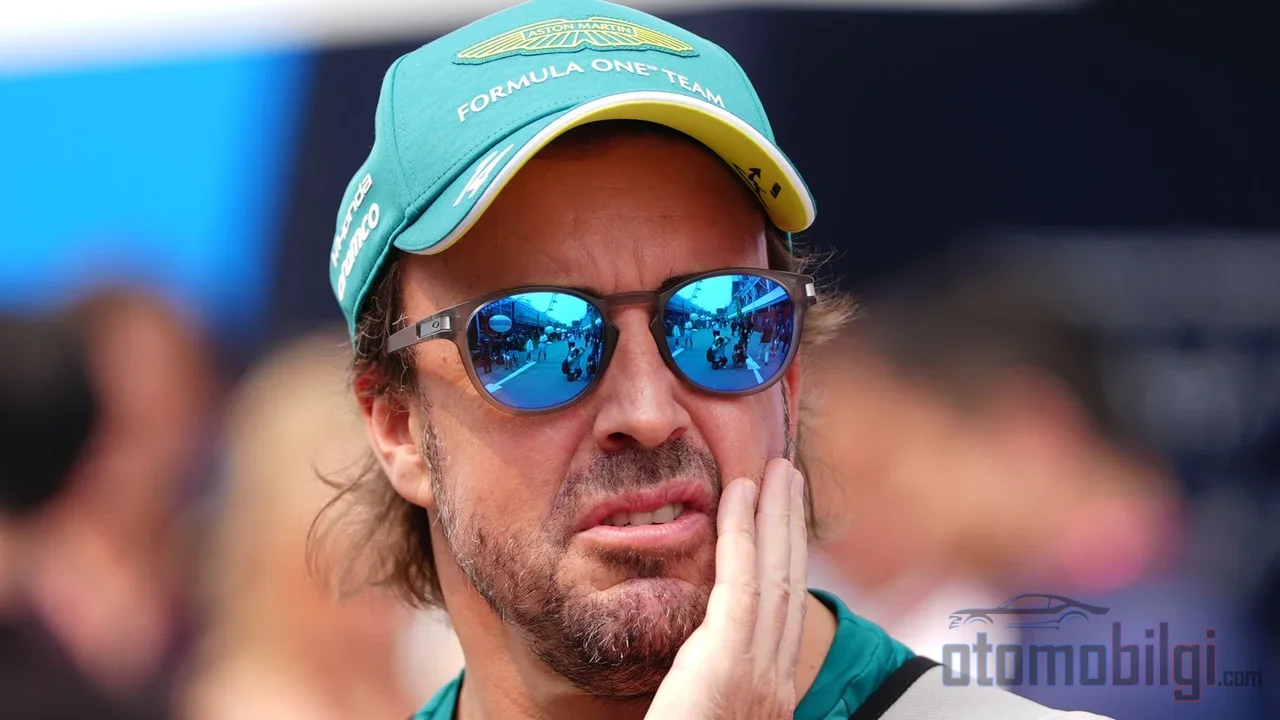
Contact at Turn 11 on lap one, then a much harsher statement than the pit wall: Fernando Alonso claimed after the United States Grand Prix that the driver quality in the bottom third of the grid is currently very low. In a 22-car field, that roughly translates to seven drivers - and branding an entire section of the grid with a single sentence is an unusual move for someone with over thirty years behind the wheel. So is he right, or is he speaking out of the anger the race created?
What Happened at Turn 11, and Who Is to Blame?
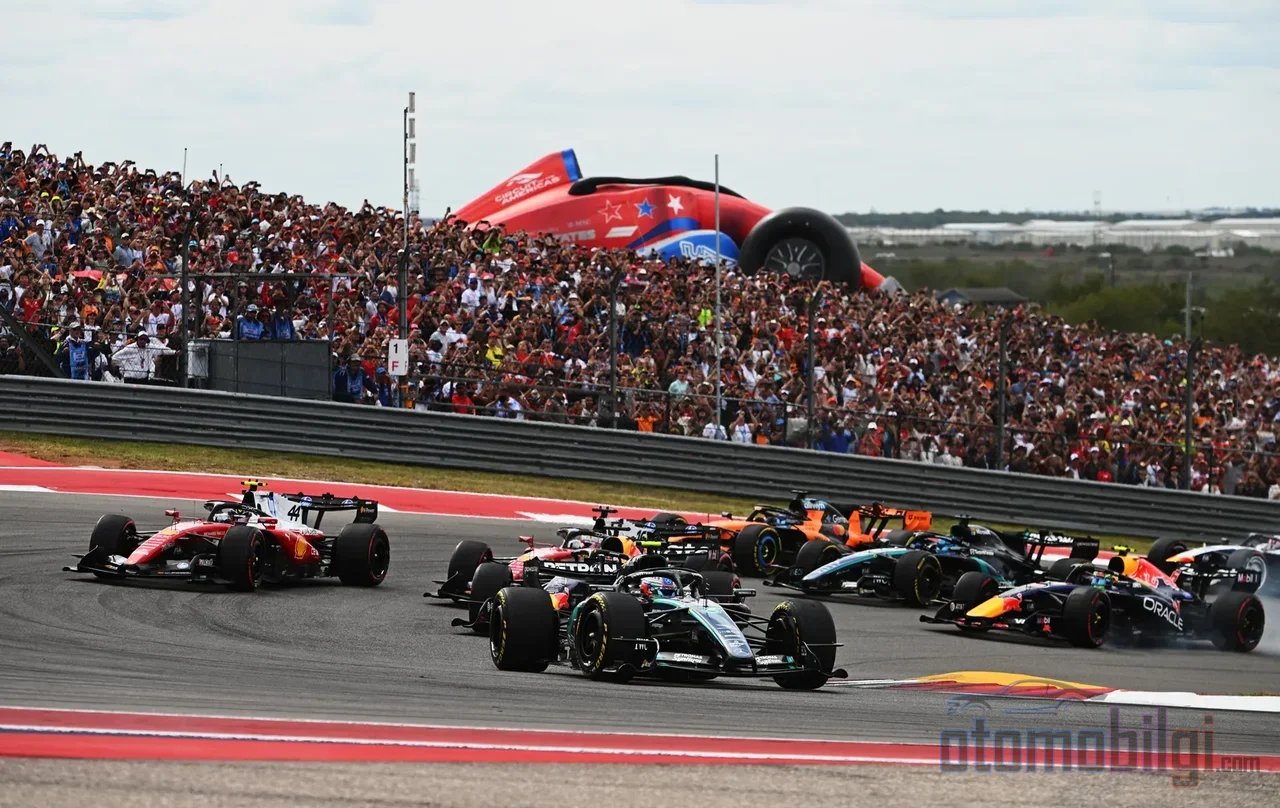
The opening lap at the Circuit of the Americas, 12. The lap took shape with the battle between the Aston Martin starting from 12th and the Williams driver Alex Albon at the hairpin. both cars sustained damage and the stewards did not penalize the incident. At the end of the race, Alonso finished 16th and Albon 17th. The anatomy of the incident is quite clear when looking at both sides' accounts: The front wing of Albon's Williams was damaged, while Alonso's car suffered damage to its left bargeboard.
According to Alonso, this damage cost him roughly half a second per lap - effectively continuing the rest of the race half a car down. Alonso's approach fits into an understandable frame: 12th place was one of Aston Martin's best Saturday results of the season, and the Spanish driver regarded this race as the team's most competitive of the year.
He argued that a deserved result would have been around P9-P10, but the lap-one contact burned it. 12. position, one of Aston Martin's best Saturday results of the season, and the Spanish driver rated this race as the team's best in terms of competitiveness this season. He argued that the deserved result was in the P9-P10 range, but the contact on the opening lap burned it. Alonso and Albon made contact at Turn 11 on lap one of the US GP; a rare opportunity had been squandered on the opening lap.
Highlights
- On lap one of the US GP, Alonso and Albon made contact at Turn 11; In the unpenalized incident, Alonso finished 16th and Albon 17th
- Alonso argued that the quality of drivers in the bottom third of the grid was very low - a claim roughly corresponding to 7 drivers in a 22-car grid
- The damage cost Alonso roughly 0.5 seconds per lap in his race; the reasoning behind the claim is also considered debatable analytically
- Albon made a standard racing defense, saying no apology was needed and that squeezing from the outside played a part in the incident
- An In-Race Traffic Incident Albon sharply reversed Alonso's perception.
Albon's Answer: there was another car of Esteban Ocon squeezing Alonso from the outside between the two cars that had raced side by side through the corner, and Alonso had no chance to move aside at that point.
Albon sharply overturned Alonso's perception. it was part of the race and there was no way to disappear. Between the two cars that had raced side by side up to the straight, Esteban Ocon had a car squeezing Alonso from the outside, and Alonso had no chance of backing off at that point. Albon's defense was briefly as follows: this was mid-race, and disappearing was not possible.
What is interesting is that the British driver did not use an apologetic tone. He assessed the incident as good racing and recalled that a second wave of tension between the two drivers occurred later in the race; he said he enjoyed the duel and hoped Alonso felt the same in the second half of the race. This is not a classic circus issue - it is a current example of two experienced drivers looking at the same corner and seeing two different stories.
Counter-Response from the Rival Camp: The Stigmatization of a Third of the Grid
The real expansion of Alonso's claim began at the generalization point, which went beyond the incident itself. The "bottom third" statement points to roughly seven drivers in a 22-car grid, and branding such a large group as unqualified in a single sentence quickly drew backlash in the paddock. Carlos Sainz openly rejected this generalization, and Alonso's remarks about the magnitude of the reactions also sparked a second wave with news value.
The analytical community does not think the claim is fully defensible either. The vagueness of which drivers Alonso meant created a concern of arbitrary judgment rather than a verifiable assessment; there were also debates in which a writer-analyst, in video content, dismissed the claim as absurd to the point of othering. So it is not only rival drivers - observers who have done this job for many years are also expecting this sentence to be backed by a list of names - and Alonso chose not to provide that list.
Who Is He Talking About? The Problem of Seven Unnamed Individuals
Alonso's criticism does not name anyone; but the assumption is that it points to seven drivers racing in the midfield. This vagueness is the real sore point of the controversy: midfield driving is already one of the most fragile jobs in F1, and a collective quality criticism aimed at roughly a third of the grid can easily overshadow these drivers' fight for their race seats.
Alonso's reasoning is also intriguing: in his view, risky moves have always existed in races started from the back of the grid; so his claim is not a sudden outburst, but the explosion of a trend he has been observing for a long time. The rivals, on the other hand, looking at the same incident, see not danger but normal contact arising from three cars getting squeezed at a narrow point. The difference in the middle shows that the perception of quality stems less from the incident itself than from the angry flashpoint of the incident.
The Cost Cap Connection: A New Shadow of an Old Debate
Alonso's history of this kind of criticism is not limited to a single race. His questions about introducing a driver salary cap were based on the question of what F1 itself offers while demanding more and more from drivers; and his description of the top teams' upgrade race as a money machine was criticism from another era. The fact that Aston Martin accepted a breach in the cost cap review is also a detail remembered in the background, but it has no direct connection to the current incident.
Regarding the 2026 regulations, Alonso's harsh remarks citing deficiencies in talent, speed and risk are also among the talking points of this year. His criticisms of budget limits and the competitive balance follow the same line of thinking as the statement about quality he made after Turn 11: in other words, Alonso's language has taken shape on a playing piece that targets the rules themselves rather than his rivals.
When Will the Tension Ignite Ahead of the Mexico GP?
The US GP was the first leg of F1's American triple-header, and the next chapter of the controversy coincides with the Mexico City GP weekend. The closeness of Alonso and Albon to the same corners on the following lap is ready to top journalists' question lists. On Albon's side, the matter appears closed: no apology needed, it was good racing, and he hopes they share the same feeling in the second half of the season. On Alonso's side, if the criticism remains an attitude directed at his rivals, close proximity with mid-field drivers during qualifying sessions in Mexico will be inevitable.
The two drivers' results remained close to each other: Alonso 16th, Albon 17th. - meaning the tangible outcomes of the dispute do not provide a result that will settle who was right. No penalty, a ranking gap of a single position, and damage that spoiled both sides' races. Such uncertainty does not make the question of which side should feel relieved answerable in the paddock; it merely explains why Alonso's sentence created such an uproar.
Conclusion: A Measured Judgment, a Harsh Sentence
To be transparent: It is understandable that Alonso believes the contact that damaged him at Turn 11 burned a result he deserved. But judging roughly a third of the grid's quality with a single sentence goes beyond the scale of the incident. Albon's defense - three cars squeezed into a narrow spot - is technically consistent; Sainz's denial and the analytical segment's criticism that the anonymous claim is unverifiable show that the dispute did not close in Alonso's favor.
If driver quality is truly believed to have dropped, its proof should be sought not in an opening-lap incident but in consistent data across the season. If Alonso's most competitive race of his own season was ruined by an opening-lap mistake, it stemmed not from low quality but from the natural cost of high-risk on-track battles. Viewed from a long distance, the real lesson of this dispute is this: Eliminating anyone with a single sentence is easy in a 22-car grid, but not wanting to name the seven established paddock drivers is the most questioned aspect of the criticism's credibility.
Sources
- Fernando Alonso criticises Alex Albon and says 'quality of drivers is very low' in bottom third of F1 field at United States GP
- Alonso calls 33% of the F1 grid 'low quality'
- Is Alonso's harsh F1 driver claim justified?
- Alonso says reaction to his verdict on quality of F1 drivers...
- Alonso slams driver quality after Albon clash
- Fernando Alonso lashes out at 'quality of drivers' at bottom of F1 grid
- Alonso questions driver salary cap when F1 is "asking more from us"
- Fernando Alonso questions "money machine" as top F1 teams pursue upgrades
- Aston Martin admits it has breached F1 cost cap rules