Human Error in Singapore: The FIA's Compounding Crisis
Share This Page
The FIA admitted that some cars were left without Overtake Mode due to human error in race control during the Singapore sprint qualifying. October 9, 2026 The omission, which occurred on Friday evening at Marina Bay and lasted only 27 seconds came right after last week's software-related delay in Malaysia and once again turned the reliability of race control in motorsport's top category into a topic of debate. The question is simple: how does the same organization make two mistakes within five days?
Highlights
- The error emerged when Overtake Mode failed to be activated on the restart after the red flag in Singapore SQ1; the system was only re-enabled for 27 seconds before being switched off again.
- Carlos Sainz was eliminated in SQ1; Lawrence Stroll claimed his son Lance 0.6 seconds lost.
- Williams' request for all 22 cars to advance to SQ2 was rejected by race control.
- Only five days had passed since the formation lap software error in Malaysia.
- The FIA explained that the mistake in Singapore was neither a timing issue nor connected to the software error in Malaysia.
How exactly did the Overtake Mode error unfold at Marina Bay?
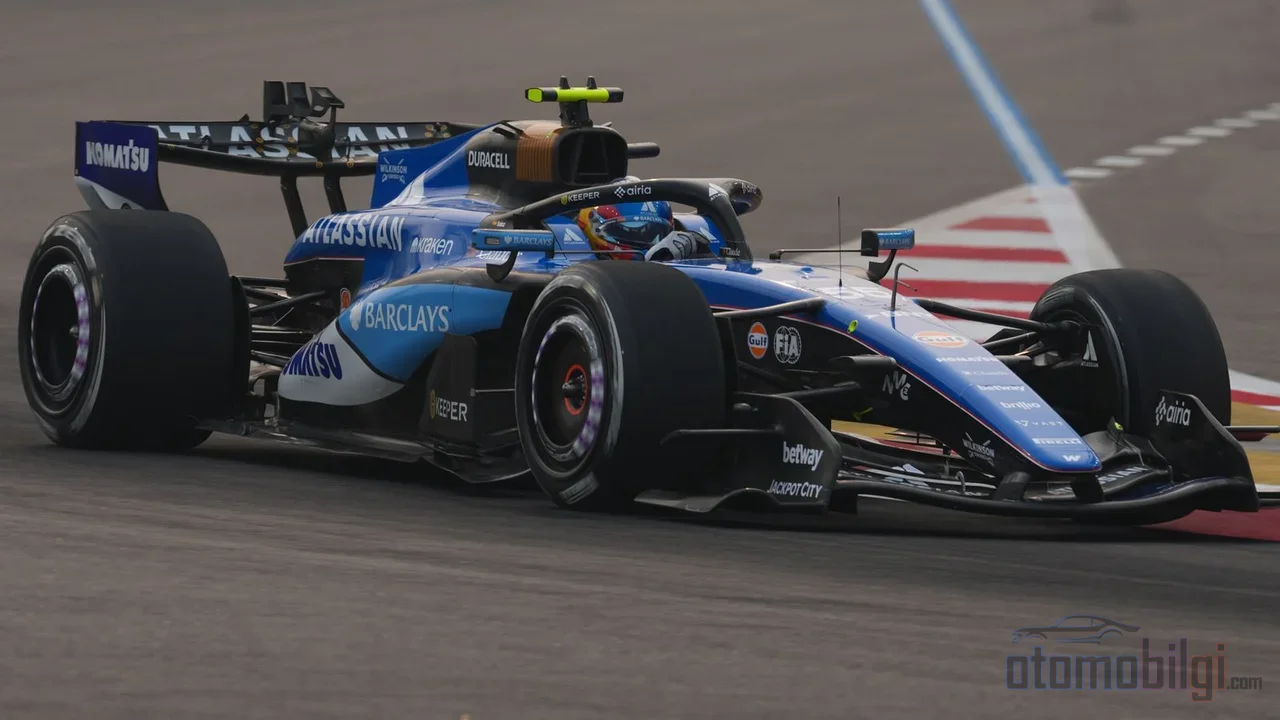
One of the new elements brought by the 2026 power units is Overtake Mode: an extra power mode normally used to make overtaking easier in races, which is active from start to finish for all cars during qualifying laps. In other words, everyone's engine is considered equal in qualifying; the fairness of the whole exercise rests entirely on this assumption. During the SQ1 session of the Singapore sprint qualifying, that assumption was broken.
During the session, Cadillac driver Sergio Perez hit the wall, and the resulting debris led to a red flag. The critical moment came on the restart: race control forgot to activate Overtake Mode when the session resumed. When the error was noticed, the system could only be re-enabled for 27 seconds and was then switched off again. Those 27 seconds coincided with the final minute of SQ1 - meaning some of the drivers on track were in the middle of their fastest laps. In the FIA's own words, this "unfortunate human error" affected the performance of some cars depending on their lap timing and position on track. It was officially announced that SQ2 and SQ3 were not affected.
Looking at it through the eyes of someone who has watched this with experience, the picture feels familiar. In the old days, race control consisted of a radio, a flag, and a notebook; the scope of a mistake made by human hands was limited too. Now, skipping a single button can indirectly differentiate the engine power of dozens of cars. As technology advances, the shadow of human error grows longer - and F1 was painfully reminded of this reality alongside the 2026 regulations.
What's more, the session itself did not go smoothly. SQ1 experienced a timing issue and there was a wait before SQ2 for the FIA to resolve these problems. The FIA described the timing issue as "unrelated" to human error; meaning there were two separate glitches in the same session with no connection to each other. This distinction may be technically correct, but for an outside observer the perception is the same: the system wobbled that evening.
Who paid the price for 27 seconds?
The error fell on Carlos Sainz who completed SQ1 in last place and was eliminated. Sainz says drivers with Overtake Mode gained roughly half a second. On the Aston Martin side the numbers are even more brutal: team owner Lawrence Stroll claimed his son Lance lost 0.6 seconds and Racing Bulls driver Arvid Lindblad was also among those who failed to make it to SQ2. Aston Martin was the team that officially acknowledged Stroll was affected.
The FIA's failure to disclose which cars accessed the extra power during those 27 seconds, and therefore which ones were left at a disadvantage, blurs the picture. The difference between half a second and 0.6 seconds matters precisely for this reason: different teams are talking about different losses, and there is no verifiable common data. This is the most sensitive point of the fairness debate.
Why was Williams' request rejected?
Williams went to race control after SQ1 and requested that all 22 cars advance to SQ2. The request was rejected; the team is not expected to pursue an appeal. It is not hard to understand this decision, but it is not easy to defend either. Suspending the session and rerunning it would have been the cleanest solution; however, used tires were already on the cars, and the fact that no car after the restart could beat Hamilton's early time showed this was difficult in practice. Aston Martin's main concern was not the fast lap itself anyway, but the tire preparation ruined by the power loss on the out-lap - drivers had reported over the radio that there was no power.
Result: the error was acknowledged but not compensated. Max Verstappen took sprint pole; he was followed by George Russell and Charles Leclerc. The order was thus officially set, but the legitimacy of the first period was discussed as much as the laps set on track.
The software glitch in Malaysia: what happened five days ago?
The FIA being in the spotlight for a second time barely five days after Singapore is not a coincidence but part of a pattern. In the race run in Malaysia, an "unprecedented" software glitch caused several cars to slow down and stop on the formation lap; the start was suspended and the race was red-flagged. Spectators waited roughly 40 minutes According to the FIA's statement, the source of the delay was a glitch in the 2026 power unit software in wet conditions.
The FIA has completed its investigation and shared the planned changes with the public. This can be read as the natural growing pains of an evolving regulation; the 2026 technical rules are the product of an era in which power unit software plays a more central role than ever, and this complexity is being attempted to be resolved through a comprehensive review to be carried out together with the teams and power unit manufacturers. However, it must also be noted on the record: there are messages from the Honda camp suggesting that the failure in 2026 "deeply wounded their pride." Software bugs are not merely an administrative headache; they are also a matter of engineering prestige.
Are the two incidents really connected?
On the technical level, the answer is no. The FIA clearly stated that the human error in Singapore is not connected to either the timing issue in SQ1 or the software bug in Malaysia. One is human forgetfulness, the other is a code crash; categorically different things. But on the management level, keeping them separate becomes harder, because the outcome of both is the same: an uncontrollable uncertainty affecting the race result on track. The speculations circulating on social media about the FIA's ability to push software to the cars and its messaging infrastructure are not yet based on a verified finding; it should be noted that they remain at the level of guesses by former drivers and engineers.
Why did Carlos Sainz react by saying "sporting equality"?
Sainz's criticism became the arrow that struck the heart of the incident. The Williams driver accused the FIA of a lack of sporting equality and chose his words very clearly:
More than half the cars completed their laps with an engine half a second faster than the others. I cannot understand why the FIA ultimately failed to ensure sporting equality in a situation similar to Malaysia's, and why it consented to half the field lapping with higher power.
Sainz also said that F1 needs to look at itself in the wake of the software bugs; the self-criticism dimension of the matter is also on the table. Fernando Alonso, for his part, described the software bug in Malaysia as "one hundred percent unfair," reinforcing the criticism on the axis of sporting equality, and emphasized that cars with the powerful Honda engines were left at a disadvantage. It is no coincidence that two different drivers, in two different countries, made the same statement after two separate errors; the drivers' sensitivity on this issue is a reflex formed by years of experience.
Is technology the only addressee of the criticisms?
David Coulthard became the figure who moved the debate into a broader frame. The former driver said that the FIA did not intervene early enough on the foreseeable problems of the 2026 technical regulations and did not listen to the warnings. This criticism emerged in August, independent of the incidents in Singapore and Malaysia; in other words, it was on the table before the software crises erupted. In the most delicate early months of a regulatory era, the governing body needs to mature both the technology and the procedure at the same time - and the current picture implies that this maturation has been delayed.
Aston Martin's stance adds another layer: they did not protest but are requesting an official explanation. The general mood among the teams is angry; however, none of them is unaware that there is no practical way to change the current result. This is the kind of position that puts the governing body in the most difficult spot: a process whose error has been acknowledged but which cannot be remedied.
Is an apology enough? The lessons of Abu Dhabi 2021
The FIA's explicit acknowledgment of human error looks, at first glance, like a positive example of transparency, and partly it is. But this organization's history with mistakes does not pass through the reader's mind without encountering a precedent: Abu Dhabi 2021. There, too, human error was acknowledged, a process change was made, and it was made clear that Lewis Hamilton was not expected to wait for an apology from the organization. The imprint left by that day shapes today's debate: the admission matters, but the concrete steps that follow the admission matter more.
The question of someone who has swallowed the dust of this business is clear: what lies behind the apology? The FIA promised to conduct a full review with the teams and power unit manufacturers; following the Malaysia investigation, it had already announced changes. The real yardstick is whether the steps after Singapore will come with the same speed and the same openness. The procedural safety nets of race control - such as automatic verification of critical modes and the tightening of pre-restart checklists - should be the natural outputs of such a review. Failure to announce these openly does not solve the reliability problem; it postpones it.
What has F1's 2026 complexity loaded onto race control?
The 2026 regulations represent one of the most ambitious turning points in F1's technical history, and this has made race control's job harder than ever. Power units are managed by software; different modes apply in qualifying and the race; the management software is in constant communication with the cars. In this architecture, race control's error is no longer a small hiccup like a flag being waved late, but an event that can shake the balance of power on the track.
That is why the 27 seconds at Marina Bay are a symbolic threshold. Despite its brevity, it called into question the legitimacy of a period of qualifying; it was enough to have a team's official request rejected; it dropped the concept of "sporting fairness" from the lips of two drivers and a team principal. And most importantly, it reminded everyone that in the first year of the regulations, the management side also needs to learn as fast as the drivers. Two crises arriving five days apart are, viewed individually, manageable hiccups; viewed in succession, they are a sign that the system's nerves are fraying. The FIA's next move will be the real lesson to be drawn from the night in Singapore.
Sources
- Singapore GP: FIA admits 'human error' created power disparity in Sprint Qualifying at Marina Bay Street Circuit
- FIA reveal 'unfortunate human error' further influenced sprint qualifying
- Singapore GP: FIA confirms software issue in sprint qualifying was caused by 'human error'
- FIA concludes investigation into Bahrain GP in Malaysia formation lap "software bug"
- FIA explains software glitch behind delayed Bahrain GP in Malaysia start
- Singapore sprint qualifying chaos leaves F1 teams furious
- Carlos Sainz hits out at FIA over perceived lack of 'sporting equity'
- FIA failed to listen to warnings over its 2026 F1 rules change
- Software chaos exposes F1's 2026 complexity
- 2026 Singapore Grand Prix – Sprint Qualifying Report
- Hamilton never expected apology from FIA in Abu Dhabi