27 Seconds of Overtake Mode Chaos in Singapore
Share This Page
In the first segment of sprint qualifying in Singapore, Overtake Mode was not reactivated after the red flag; due to this "human error" in the FIA's Race Control, some cars could not access full power on their final speed runs, while others gained an extra power advantage for 27 seconds. Protests were rejected by the stewards and the classification did not change. So when this error occurred right after last week's software crisis in Malaysia, how much closer does it bring the reliability debate over the 2026 regulations?
Highlights
- FIA's human error share in Singapore sprint qualifying: Overtake Mode was not activated after the red flag
- When the error was noticed, the mode for 27 seconds was reactivated and then switched off again
- Williams's request for all 22 cars to be advanced to SQ2 was rejected by the stewards
- In Malaysia, a software error during the formation lap caused the start to be delayed, and the FIA had completed its investigation
- As a solution, the FIA announced that software testing would be strengthened announced
How Did the 27-Second Error Happen at Marina Bay?
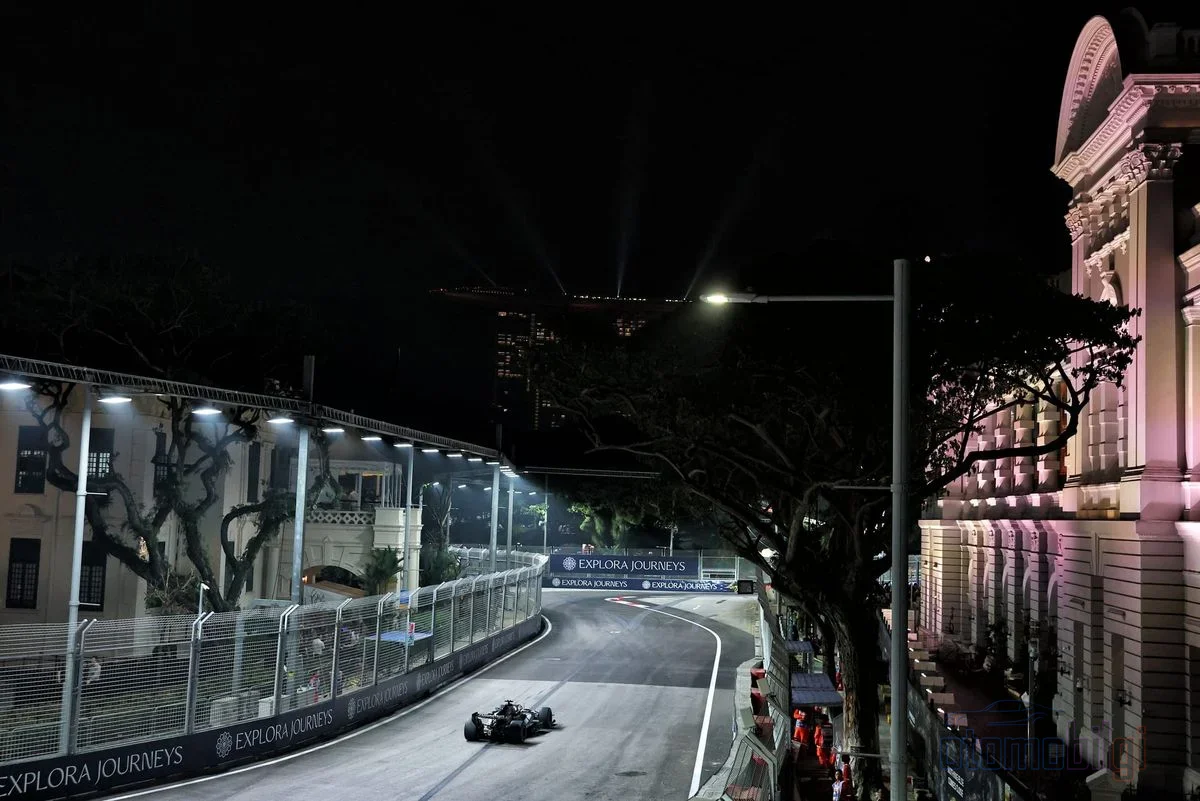
Singapore GP's sprint qualifying was disrupted in SQ1 when Cadillac driver Sergio Perez left his car on the track. The red flag came out, the session was stopped, and the debris was cleared. By rule, after such an interruption, race control was supposed to make Overtake Mode available again for all cars. It stayed where it was: when the session restarted, the system was not activated.
The problem was only noticed some time later. A race control official manually switched the mode back on; that is, they re-enabled the system for all affected cars. However, the system was switched off again 27 seconds later. According to the FIA's official statement, Overtake Mode "was reactivated for 27 seconds and then switched off again, creating an unfair advantage in the first segment of the Sprint." The result was tangible: while some drivers who finished SQ1 with their final speed runs could not use full power, others who caught sufficient gap within the 27-second window could complete their laps with extra power.
The FIA described the matter as an "unfortunate human error" and left the way open for affected teams to protest the session result. As someone who has spent many years in this business, it is worth adding: red flag restart procedures have worked in a similar way for decades, but when the system is connected to automation, the human factor now covers not only "manual" tasks but also ensuring that automatic tasks are initiated correctly. The error occurred precisely at this second stage.
What Is Overtake Mode, and How Does It Differ from DRS?
Introduced with the 2026 regulations, Overtake Mode is the main overtaking aid replacing DRS, which has been in use since 2011. While DRS only opens the rear wing in designated zones, Overtake Mode engages extra power when the attacking car passes the one-second proximity threshold. In short, overtaking is achieved through energy management rather than wing movement; the car raises its speed threshold considerably, providing better acceleration and sustained high speed for longer.
This is part of the general approach of the 2026 engines: alongside it there are modes like Boost, Straight Line and Cornering. In other words, when and how the power is used is largely determined by software and control logic. When one element is missing or not activated in time, the difference is measured far more clearly than before. In the DRS era, a mechanical failure meant losing an advantage for a few corners; now a system-level failure can have a direct impact on lap time. What happened in Singapore was exactly this: two cars set laps under the same conditions in two different power states.
What Did the Teams Want, and Why Did the Stewards Refuse?
The teams' reaction was surprisingly harsh but understandable. Williams argued that the fairest solution was to effectively reset the session: allowing all 22 cars to participate in SQ2 would wipe out the effect of the faulty SQ1. The stewards rejected this request and the SQ1 results stood.
Williams was not alone. Aston Martin pursued a formal protest review. Carlos Sainz was among those who sent a message to the FIA, and he pointed out that in the sixth session, that is, the final Sprint Qualifying session of 2026, two separate problems emerged after the red flag: the first was a software failure, the second was this human error. Max Verstappen took sprint pole right in the middle of this chaos; meaning that as far as the championships were concerned, the results were binding, while the controversy remained hanging in the air.
The explanation of the stewards' reasoning is limited. But the de facto situation is this: since the protests were rejected, the SQ1 results stood. And so did the question of injustice that this decision brings with it. The difference between setting a lap with extra power within a 27-second window and setting a lap deprived of full power is large enough to change the fate of a single qualifying lap. The stewards stayed within the existing rules; if there is no clause in the rulebook saying "reset the session," the fact that the result has to stand does not lessen the teams' anger.
What Happened in Malaysia a Week Earlier?
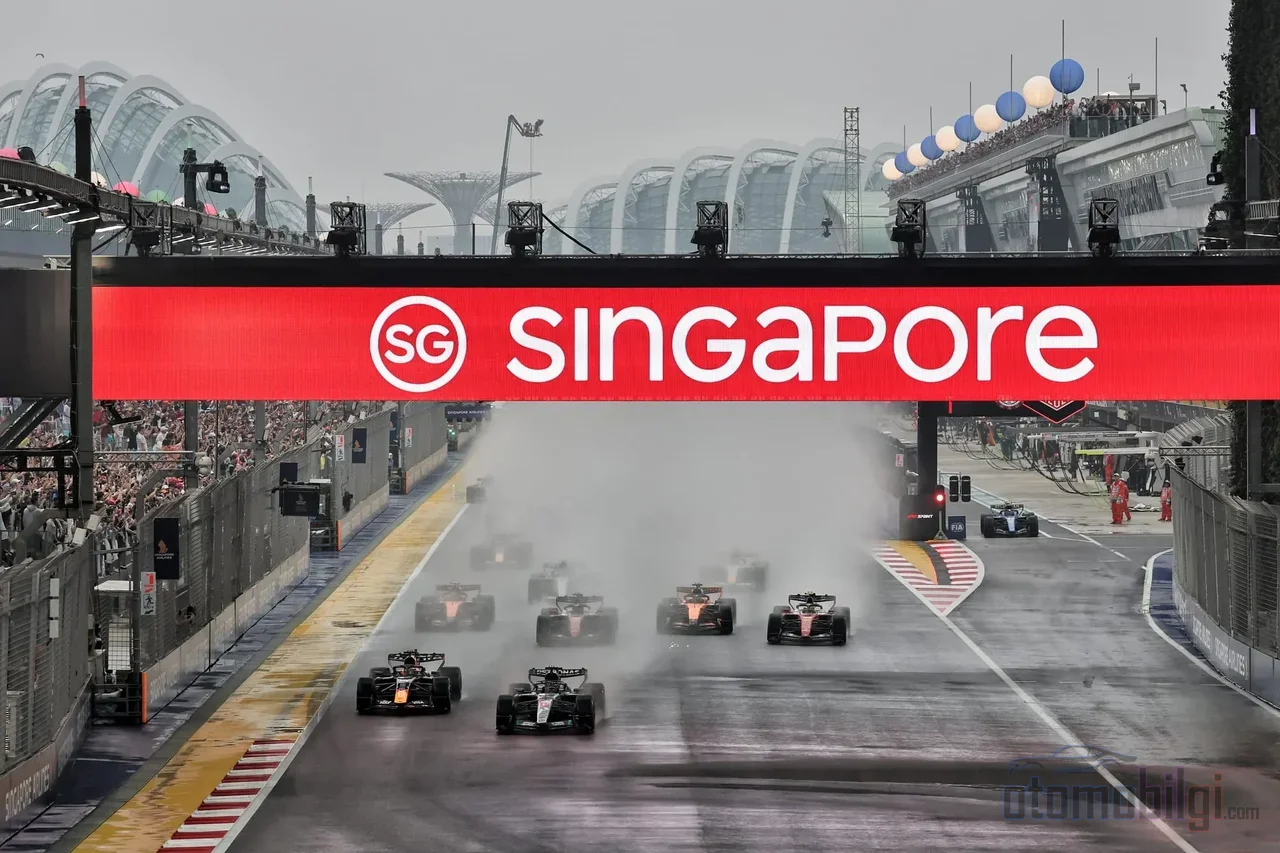
The error in Singapore, moreover, did not land on a blank page. On the formation lap of the Bahrain GP run in Malaysia on October 4, an error in the power unit software caused many cars to lose power, and the start was cancelled and delayed. The finding announced by the FIA was interesting: on a wet surface, as the drivers approached more cautiously, the on-board software could not handle the situation. In other words, what the driver needed to do and the scenario the software assumed did not match. This happened before the 2026 cars' first wet race; meaning that before a real stress test had even been carried out, the first result to come out of the test was an error.
As a result of the investigation, the FIA announced that software testing would be strengthened. This is the right step, but critical in its nature: the error in Singapore was not about software, but about people. Tightening the testing processes after Malaysia was not enough to save the restart procedure at Marina Bay a week later. Different layers require different controls.
Is the Technical Complexity of 2026 Turning into a Reliability Problem?
2026 represents one of the most radical technical transformations of recent decades: a system built around new power units, active aerodynamics and energy management. It is natural for there to be rough edges in the first year of such transitions; those who remember the early years of the old regulations know this well. Back then, the problem was mostly mechanical reliability - engines blew up or gearboxes failed. Now the problem lies somewhere subtler: in the control layer. Where power will engage, when it will be cut, which mode will be active under which conditions - all of these are matters of software and procedure.
In this context, the FIA moved to change the regulations at an early stage of the year, after only three races. Steps came onto the agenda such as easing the problem known as "superclipping" by limiting excess energy recovery, and raising the maximum recharge power from 250 kW to 350 kW, along with a six-point improvement plan. The institution announced that fine-tuning had been made to the regulations within the "Evolution, Not Revolution" framework. It also claimed that many issues drivers dislike about the 2026 rules could have been prevented due to manufacturers' objections; meaning part of the responsibility points beyond the steering wheel, to the other end of the table.
Still, what Singapore revealed is an operational question beyond the technical chaos: can the FIA's own processes keep pace with the system's growing complexity? Race Control no longer manages only flags and penalties; it also manages software states, modes and restart conditions. That errors in two consecutive race weekends stemmed one from software and one from a human is no coincidence. The more automated a system becomes, the more visible the error of the human procedure that triggers the automation correctly becomes. It had been said that tests would be strengthened in Malaysia; after Singapore, a similar cleanup effort is expected on the race control side as well.
Two Errors, Two Different Sources
| Criteria | Malaysia (Bahrain GP) | Singapore (Sprint Qualifying) |
|---|---|---|
| Date | 4 October 2026 | October 2026 |
| Type of problem | Power unit software error | Race control human error |
| Trigger | Wet track, cautious driving | Red flag, restart |
| Impact | Many cars lost power, the start was delayed | Some cars were deprived of full power, a 27-second unfair advantage emerged |
| FIA's response | Investigation completed, software tests to be strengthened | Human error acknowledged, appeal route left open |
Although the table alone doesn't provide answers, it points in a direction: the two incidents are not repetitions of each other; both ignite in different layers of the system. And both are products of 2026's control chaos. The risks in active suspension and central control logic, combined with the cost cap, are already caught up in reliability debates. Major manufacturers like Mercedes and Ferrari using energy management as a performance tool also raises tensions; it is said the FIA is evaluating concerns that a gray area in the engine regulations is being exploited. In this environment, even small management errors echo far more loudly than before.
What Will Change After These Mistakes?
What is officially known is this: software testing will be strengthened, the human error in Singapore was branded "unfortunate," and the appeal channels remained open. But because the appeals were rejected and the SQ1 results stood, the material correction the teams wanted did not happen. There are two things to watch in the remaining races of 2026: whether the FIA will update its race control procedures to guarantee that automated systems start in the correct state after a restart, and how quickly the rules will be tightened with fine-tuning in the shadow of manufacturer resistance claims.
To say it with thirty years of habit: in the early phases of every major regulation year in F1, things go wrong; the question is how quickly what goes wrong gets fixed. The two weeks stretching from Malaysia to Singapore show that the fixing is still proceeding layer by layer. The technical transformation itself carries a legitimate purpose; but the management of the transformation must be as reliable as the cars on track. Twenty-seven seconds is not a bad lesson for explaining this necessity - perhaps the shortest one.
Sources
- FIA admits 'human error' created power disparity in Sprint Qualifying - Sky Sports
- 'Human error' in Singapore F1 sprint qualifying - The Athletic / NYTimes
- FIA confirms software issue in sprint qualifying was caused by 'human error' - ESPN
- FIA error left some drivers without full power in sprint qualifying - The Race
- Singapore sprint qualifying chaos leaves F1 teams furious - Motorsport.com
- Carlos Sainz sends message to FIA after Sprint Qualifying - Yahoo Sports
- FIA concludes investigation into Bahrain GP in Malaysia formation lap "software bug" - FIA
- FIA to investigate software bug after Bahrain GP in Malaysia - Reuters
- FIA explains software glitch behind delayed Bahrain GP in Malaysia start - RACER
- FIA blames manufacturer resistance for F1 2026 problems - The Race
- The beginner's guide to the 2026 regulations - Formula1.com
- Overtake Mode, Boost, and how it affects 2026 racing - ESPN