Mekies Extends His Role at Red Bull Until 2031
Share This Page
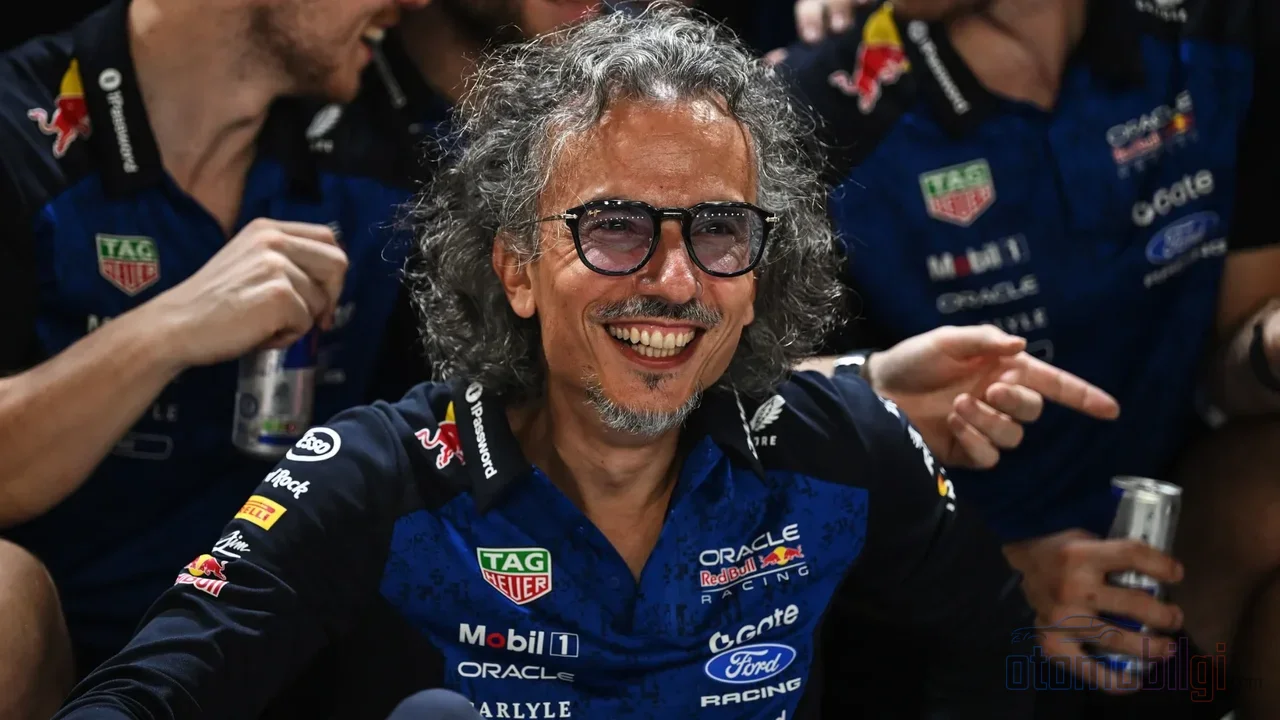
Red Bull has extended its partnership with team principal Laurent Mekies through the end of the 2031 season. The five-year contract, announced on October 14, 2026, turns the seat the French executive took over from Christian Horner in July 2025 into a long-term project. The announcement came right after Max Verstappen's back-to-back wins in Malaysia and Singapore, with the team now sitting just 7 points behind McLaren in the constructors' championship. In short, Red Bull is telling everyone in a single sentence that the post-Horner era is here to stay: the leadership is settled, the lineup is set, and the roadmap is drawn.
Highlights
- Mekies, under the extension announced on October 14, 2026, will remain until the end of 2031 as CEO and Team Principal.
- Mekies took over his role on July 9, 2025, succeeding Horner, who had served for 20 years.
- Verstappen took the season's first two wins in Malaysia and Singapore, winning from pole.
- Red Bull sits third in the constructors' standings, 7 points behind McLaren.
- Verstappen is under contract until 2030, while Isack Hadjar is signed until 2027. under contract until then.
Why Was Mekies' Contract Extended Now?
The timing is no coincidence. Red Bull had just taken the season's first two wins, and both belonged to Verstappen. In Malaysia, the Dutch driver beat Hamilton by 0.298 seconds with a pole time of 1:35.130, while in Singapore he utterly dominated the weekend he started with a 1:31.373: pole, Sprint win and race win. At Marina Bay, it was the first victory after nine attempts, and the picture assembled on Sunday showed, for the first time clearly to the outside, the recovery the team had been talking about internally for some time.
The statement issued by the shareholders emphasized that Mekies played a critical role in the transition process and that the extension reflected the trust in this leadership. This can be read as marketing language; but it must be acknowledged that the numbers and the calendar really did point in that direction. Verstappen had extended his contract until the end of 2030 in August, and the 2027 lineup had become clear with Hadjar staying. The only missing piece in the management wing was who they would ask in the pit lane. Now that question's answer is also fixed for another five years.
July 2025: The End of the Horner Era
To understand this story, we need to go back a year. Christian Horner had been at the team's helm since 2005; he had spent the entire twenty years since its founding in that seat, completing eight championships and one of the most successful team principalships in F1 history. On July 9, 2025, however, his tenure was ended. The sudden departure of such a major figure would shake any team; Red Bull's situation was all the more delicate, because in the same period the team was experiencing its most competitive era yet with its new engine project.
The replacement instead was an insider: Laurent Mekies. The French engineer was promoted from his role as team principal of the junior team Racing Bulls; he had previously worked at Ferrari and the FIA, with a technical career that progressed along a line stretching from the pit wall to the regulations desk. He had taken over the seat of Franz Tost, who served at Racing Bulls for many years, and his performance there had caught the attention of the main team. The appointment of the 49-year-old executive could be seen as a risky move from the outside; but Red Bull's preferred model was clearly this: a familiar culture, a known face, a transition with no adaptation burden from scratch.
The First Year: Calm, Close Contact and Recovery
The most talked-about aspect of Mekies' first year is the understated nature of the changes he brought. What stands out in the analyses is the establishment of a calmer working environment within the team and the creation of a direct, tight line of communication with Verstappen. Someone who has been in this business a long time knows: the most critical work of a boss at an F1 team is usually invisible. Human resources policies, shortening the distance between the technical department and the driver, not panicking after bad weekends. There used to be organizations that ran their teams according to a star's whims; now the winning model is those who can keep the technical equipment and the human balance upright at the same time.
The results also gave an unquestionable signal of a good start. In the final part of the 2025 season Red Bull had recovered noticeably, with Verstappen finishing the championship race just 2 points behind Lando Norris. For an executive who took over the job mid-season, this was the most tangible proof of emerging from a bad interim period. The team's slump after the Spanish Grand Prix in the first half of 2026, however, showed that this recovery was not stable and that the job still requires effort.
7-Point Gap with McLaren: The Battle for Third
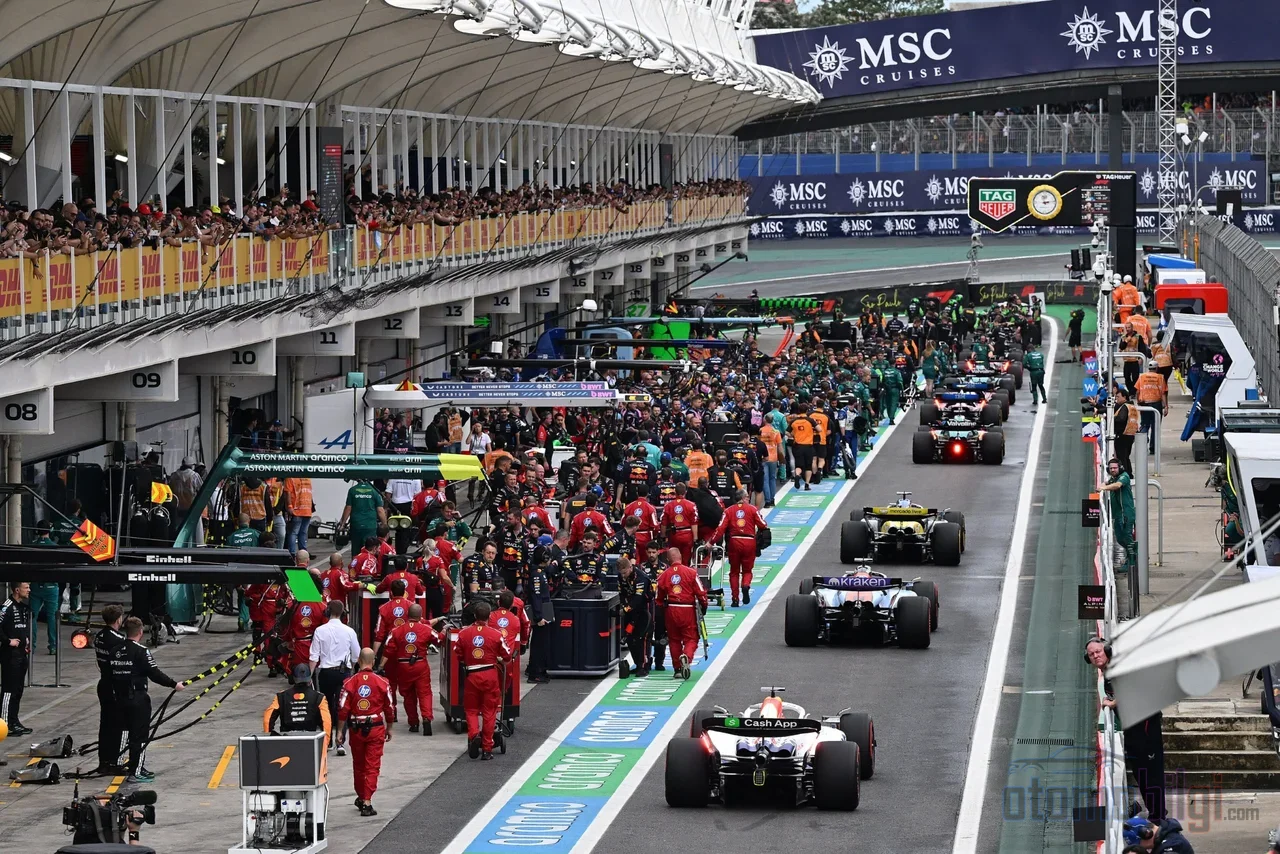
The 2026 constructors' championship has established an unexpected order at the top. While Mercedes leads by a wide margin with 578 points, Ferrari sits second with 444 points. The real contest is for third: McLaren is on top with 332 points, Red Bull not 332, not 339 - to avoid confusion, McLaren has 339, Red Bull 332. The gap is only 7 points. A two-race winning streak, or even a single podium difference, is enough to reverse this ranking.
| Position | Team | Points |
|---|---|---|
| 1 | Mercedes | 578 |
| 2 | Ferrari | 444 |
| 3 | McLaren | 339 |
| 4 | Red Bull Racing | 332 |
For Red Bull, the most interesting aspect of the picture is that 2026 will be the team's first year as an engine manufacturer. An organization that raced with a customer engine for years now fielding its own unit partly explains the struggles at the start of the season. Childhood illnesses on the engine side can block the path of aerodynamic development; old track experience teaches this: a team that closes its first season with a new engine properly usually opens the second season in front. Mekies' extension also has an economic-shadow side in this context - the long-term commitment sends the message to the architects of the engine project that the project will be completed in their hands.
Verstappen until 2030, Hadjar until 2027: Is the Lineup Settled?
Yes, it is settled. Verstappen extended his contract on August 20 until the end of the 2030 season, meaning until he is 33. His previous agreement was set to end in 2028 and contained performance-based exit clauses; the new extension eliminated both the limited duration and the instability surrounding that clause. A star committing to his team for this long also clarifies the return plan for infrastructure investments: engine, chassis, and lineup decisions can now all be designed around the same horizon.
The seat next to him is also filled. Isack Hadjar extended his contract thanks to his performance in his first season at Milton Keynes and will race alongside Verstappen in 2027. The team officially announced that the 2027 lineup is complete and will not change. With this, Red Bull has completely closed the subject of driver uncertainty that was constantly discussed toward the end of the Horner era: the experienced champion and the rising young driver will be in the same picture for at least two seasons.
Is a Five-Year Commitment Too Much? The Two Sides of the Debate
As with any extension news, there is a counterargument here too. The critical reading says this: two wins do not prove the success of a long-term restructuring. Red Bull had struggled at the start of the season, and the team management had also been warned over Verstappen's public criticisms. Going all the way to 2031 based on such a fluctuating record is a bold move; a short extension could have expressed the same confidence with a more measured risk. It is also a correct observation that the recovery cannot be attributed to a single person, that it is the product of a collective effort, and that the credit should be shared.
On the other hand, the corporate view positions the extension as a vote of confidence in the long-term vision, and this reading is not empty either. The trust in Mekies is based not only on the last two races, but on his leadership during the transition and his technical-strategic expertise. Internal team statements emphasized that the teams led by Pierre Wache and Ben Hodgkinson will play a central role in shaping the future; this shows that the extension is not built on a single-boss culture, but on the continuity of a broad technical structure. The pattern I have seen in thirty years of this profession is simple: institutions sign short contracts in moments of panic; when they are sure of what they know, they prefer the long one. Red Bull looks confident.
The Calendar Ahead and What to Expect
The season continues; the next stop is the United States Grand Prix, to be run in Austin on October 23-25. In the overall standings, the talk is about whether Kimi Antonelli can clinch his championship in the nearest race, while the main topic on the Red Bull front is third place: a 7-point gap is a margin that could easily melt away with the remaining calendar. If the performances in Malaysia and Singapore can be sustained, McLaren can be overtaken; but one bad weekend could reverse the ranking.
The real message of the extension lies precisely in this expectation management. Red Bull has fixed its roadmap regardless of on-track fluctuations: the team principal is committed until 2031, the first driver until 2030, and the second driver until 2027. This picture will not change no matter what happens in the rest of the season. Races won on track make good headlines; but an organization's true strength is measured by its ability to secure the people in the seats and focus on technical work. With this move, Red Bull declared that the post-Horner era is no longer a transition but an era. The payoff of the promise made there will be seen in the remaining races and in the new engine era of 2027.
Sources
- Mekies commits to long-term contract extension as Red Bull Team Principal
- Oracle Red Bull Racing completes 2027 driver line-up
- Horner to exit Red Bull with immediate effect as Mekies takes over as CEO
- 2026 TEAMS' STANDINGS
- Verstappen signs Red Bull contract extension until the end of 2030
- Why Max Verstappen's perfect Singapore weekend should...
- Laurent Mekies