Colton Herta's 2027 Uncertainty: Which Way from IndyCar?
Share This Page
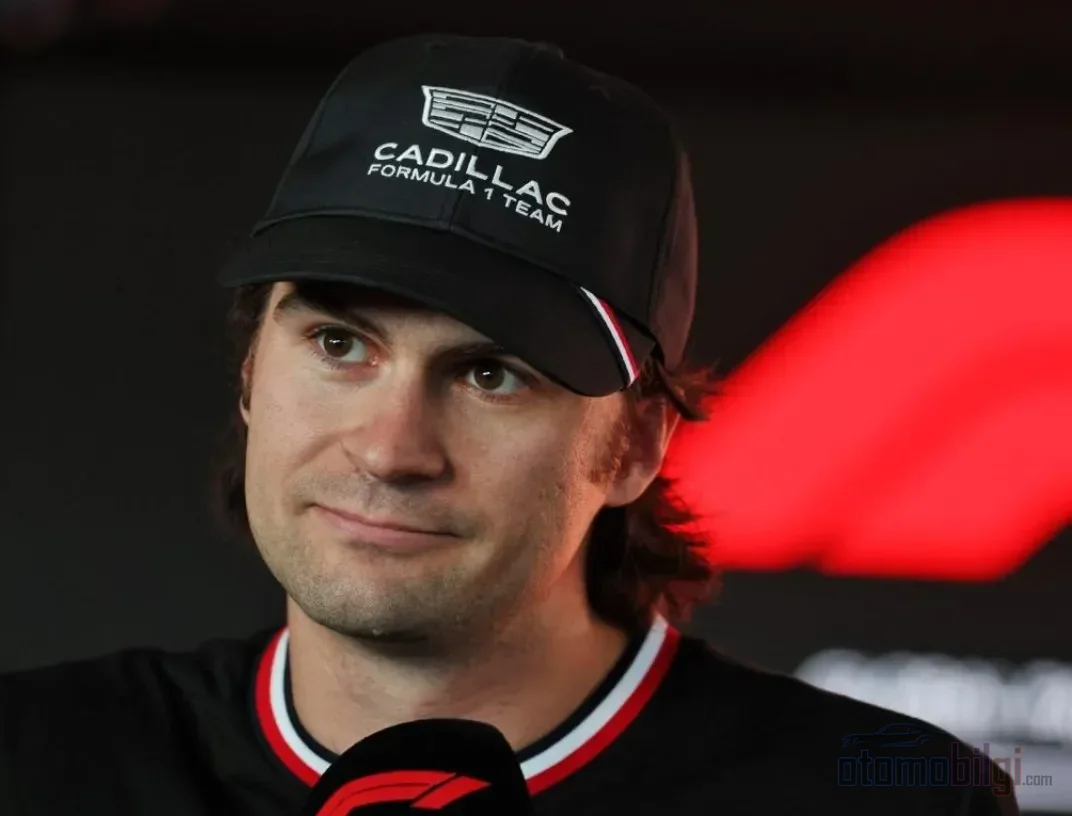
Colton Herta's plans for 2027 remain unclear as of October. The 26-year-old Californian driver left IndyCar in the fall of 2025 to join Cadillac's F1 project as a test driver, spent 2026 in Formula 2 with Hitech TGR. Now three paths lie ahead of him: a one-off return to the Indy 500, the three endurance classics in IMSA, and a reserve driver role at Cadillac. The outcome has turned into a waiting game that will directly affect the 2027 lineup plans of teams in both IndyCar and the sports car scene.
Highlights
- Herta has not yet announced his 2027 plans; his career decision is on hold as of October 2026.
- Between 2018 and 2025 in IndyCar, he took 9 wins and 16 poles. won.
- His chance at the 2026 Indy 500 was exhausted because F2's Montreal round fell on the same weekend as the Canadian GP.
- He reportedly rejected Chip Ganassi Racing's offer and is leaning toward a reserve driver role at Cadillac.
- The F1 path is still blocked by the FIA Super Licence points barrier.
Is Herta returning to IndyCar in 2027?
The short answer: it's unclear. Herta himself says he has not yet started making plans for 2027 and needs to talk to the executives on the Cadillac side before making a decision. On the other hand, his stance on the Indianapolis 500 has never been less ambiguous: he makes it clear that if an offer comes, he definitely wants to run the race, and that if the opportunity is presented to him, he will take full advantage of it. A one-off Indy 500 return is a much smaller commitment than a full-season IndyCar career and an easy scenario for both sides to test.
A full-season return, however, paints a more complicated picture. Rumor-level reports suggest that a return to IndyCar was seriously considered on Herta's agenda after a difficult season in F2; but the reality on the ground is harsh. Top teams have already shaped their lineups and the number of available seats is small. The most concrete development is the news that Chip Ganassi Racing approached Herta but the approach was rejected. This rejection most likely means Herta will take the reserve driver role at Cadillac in 2027 and appear at tracks for additional practice sessions in Formula 1 cars.
How the 2026 season went: a tough adaptation year in F2
Herta's departure from IndyCar in September 2025 seemed surprising for a driver who had amassed 9 wins, 20 podiums and 16 poles in street races; he had finished the championship second in 2024 and had run every Indy 500 since 2019. Will Power took his place at Andretti Global. Herta became the official test driver of the Cadillac F1 team and started racing in F2, Formula 1's feeder series - a move confirmed by Cadillac CEO Dan Towriss.
The results were not bright. Finishing 19th in the overall standings, Herta's best result of the season was a fifth place in the Barcelona sprint race; he made it into the top eight four times but never saw a single F2 podium in 2026. Was this the natural price of an IndyCar winner over 30 racing in the same series as a young rising driver, or the result of adapting to the series too late? Probably a mix of both. F2's car philosophy, tire usage, and race weekend rhythm do not come naturally at first to someone coming from IndyCar; those who have spent years in this business know this well. We have seen in the past that those who jumped from the American series straight to F1 skipped this preparation stage entirely - and the results mostly ended in disappointment.
Why couldn't he return to the Indy 500?
This was the closest missed opportunity for 2026. Herta was planning to return to the Indy 500; however, the FIA's decision to cancel the Bahrain and Saudi Arabia rounds and add an F2 round in Montreal on the same weekend as the Canadian Grand Prix blocked the plan. The calendar clash knocked the one-race return off the table. Such calendar overlaps were a problem in the past for drivers split between the two series as well; now F1's expanding calendar has increased the likelihood of clashes even further.
The IMSA option: three endurance classics on the table
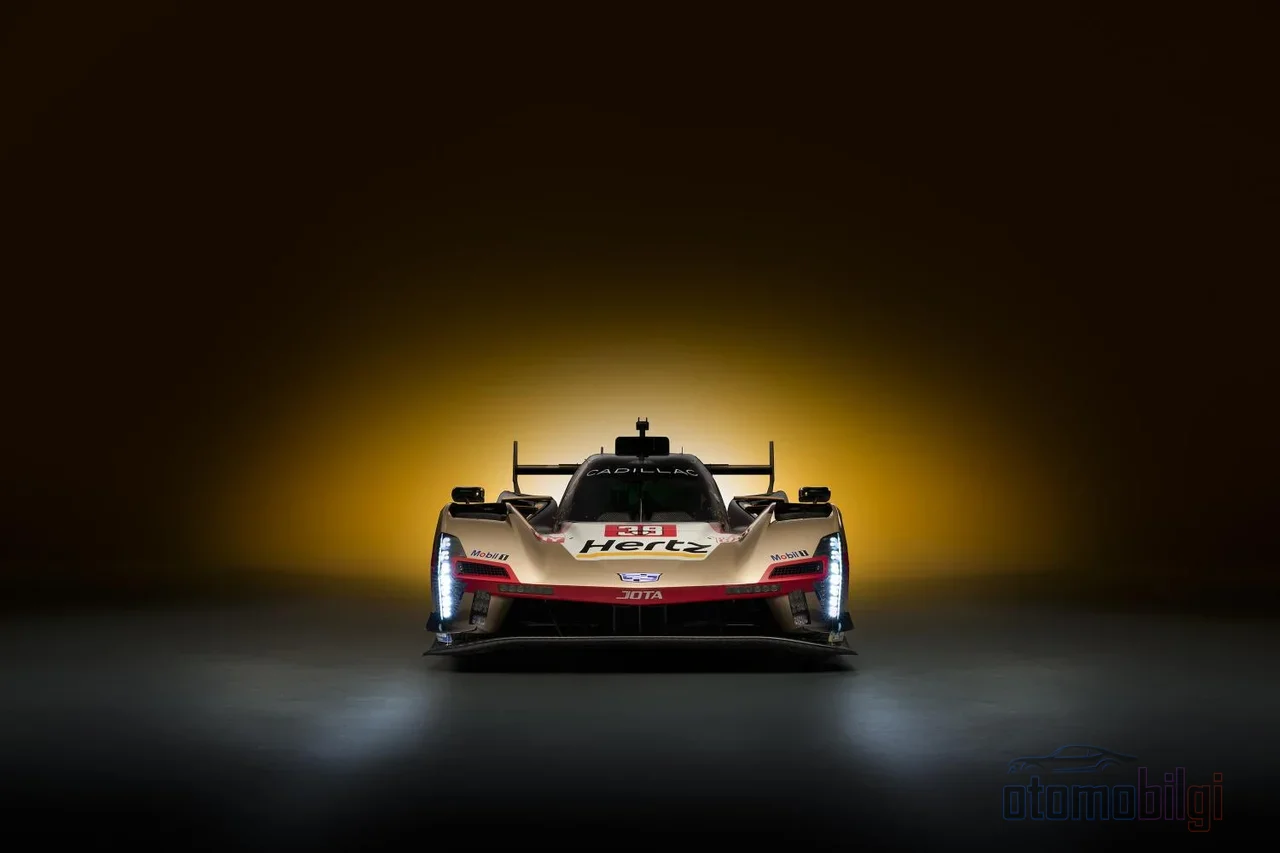
One of Herta's most satisfying answers in 2026 came from IMSA. Cadillac Racing announced that it had included him in the No. 40 V-Series.R prototype for three endurance races: the Rolex 24, the 12 Hours of Sebring, and Petit Le Mans. Herta, who returned from Petit Le Mans with a podium, said he felt comfortable in this program and that, if it were left up to him, he would have wanted to run all three races. A similar arrangement could be set up for 2027 as well; this gives Herta quality race pace in American motorsport while offering Cadillac a way to keep its driver sharp. The fact that this rapport with the WTR team has already been established takes the option beyond being purely theoretical.
Why is the F1 dream still stuck on the Super License?
The real obstacle on Herta's path to F1 is not results but bureaucracy: FIA Super License points. Since IndyCar's points system has long been considered too low, Herta moved to F2 to complete his super license. However, each of the four Cadillac practice sessions planned for 2026 awards only one point, and reaching the target at this pace is difficult. With roughly 30 points losing their validity at the end of the year, the chance of reaching an F1 seat by 2027 narrows considerably. Herta's clear statement that he will not return to F2 in 2027 closes that door as well.
The hope lies in IndyCar's updated, more generous super license points table. If a top-three finish in the championship combines with additional sessions in F1 cars, a door could crack open for 2028. Herta's own assessment was already clear: this is his last chance for F1; had he believed he was not fast enough, he would have stayed in IndyCar.
Cadillac's three options
Herta's uncertainty has also split Cadillac's 2027 lineup discussion into three scenarios:
- Herta racing in IndyCar while collecting points through F1 practice sessions, and the target being pushed to 2028.
- F3 champion Ugo Ugochukwu using practice sessions for Cadillac in 2027; the Red Bull-backed young driver is reported to be moving up to F2.
- Andretti prospect Sebastian Wheldon joining Trident's F3 team for 2027.
The critical point is this: Herta is no longer Cadillac's only American candidate. The proliferation of alternatives for an F1 project seeking an American driver is steadily eroding Herta's bargaining power. In the past, a team's sole hope could be kept waiting for years; today the junior pool produces new names every year, and having a replacement ready for the waiting driver makes things easier.
Was the F2 move justified?
This debate has two legs. Critics see Herta's F2 adventure as almost entirely a wild step taken for superlicense points; the 19th-place classification results feed this view. The other side points to the value of preparation: F2 teaches a driver the rhythm of the GP world on F1 circuits and in F1's race weekend environment; both Herta and Towriss emphasized this rationale. The debate over unfairness in the superlicense table is fueled from the same place: while a fourth place in Super Formula is worth 15 points, the same result in IndyCar is worth only 10, while in F2 it is 30. Critics call this the FIA imposing its own ladder; proponents point to F2's physical and technical closeness to F1. The truth, most likely, lies somewhere in between.
Opportunities within the countdown
Herta's uncertainty creates a countdown not only for his own career but also for the plans of the teams around him. Andretti had already closed its lineup early by bringing in Will Power as his replacement; Ganassi's approach ended in refusal, and empty seats are filling up fast. If a team on the IndyCar side wants to keep Herta, it will have to act before the year ends. On the Cadillac side, a reserve driver role, the IMSA endurance program, and a few practice sessions stand as the most realistic cards Herta holds to fill 2027.
The concern over a talent drain is also a legitimate debate. In recent years, IndyCar has experienced both ends of the two-way driver flow to F1: those coming from F1 have left, and so has IndyCar's fastest American product. Herta's one-race return to the Indy 500 looks like a conciliatory formula for both worlds - no full commitment, a prestigious race, and high image value. On the IMSA side, a program spanning three classic races offers a low-risk solution that benefits both the driver and Cadillac. As the decision draws near, it is not hard to predict that the lineup dominos in both series will also accelerate.
Conclusion: a room with three doors
Herta's 2027 picture is a three-door room of mutually exclusive options: a Cadillac plan adorned with reserve driver duties and practice sessions, a one-race Indy 500 return, and the three endurance classics in IMSA. A full-season IndyCar return looks like the weakest scenario, given Ganassi's rejection and the seats being filled. Herta's own priority is transparent: the Indy 500 is always on the table, the endurance races willingly. The F1 goal, meanwhile, waits as a postponed dream until the superlicense math is solved. As an observer of this business for 30 years, I can say this: the most expensive thing in a driver's career is the gap between talent and waiting - how well Herta manages to fill that gap, we will see as the calendar pages turn.
Sources
- Colton Herta eyes potential Indy 500 return and IMSA enduros as 2027 plans remain in flux
- Three Cadillac F1 options as Colton Herta future uncertain
- Colton Herta joins Cadillac Racing for IMSA endurance rounds
- Colton Herta Moving to F1 as Cadillac Test Driver in 2026
- Colton Herta's Indy 500 bid blocked as F2 adds Canada race
- Colton Herta's F2 team confirmed as Cadillac test driver
- Colton Herta