Why Is Ford Returning to the Overall Class at Le Mans After 57 Years?
Share This Page
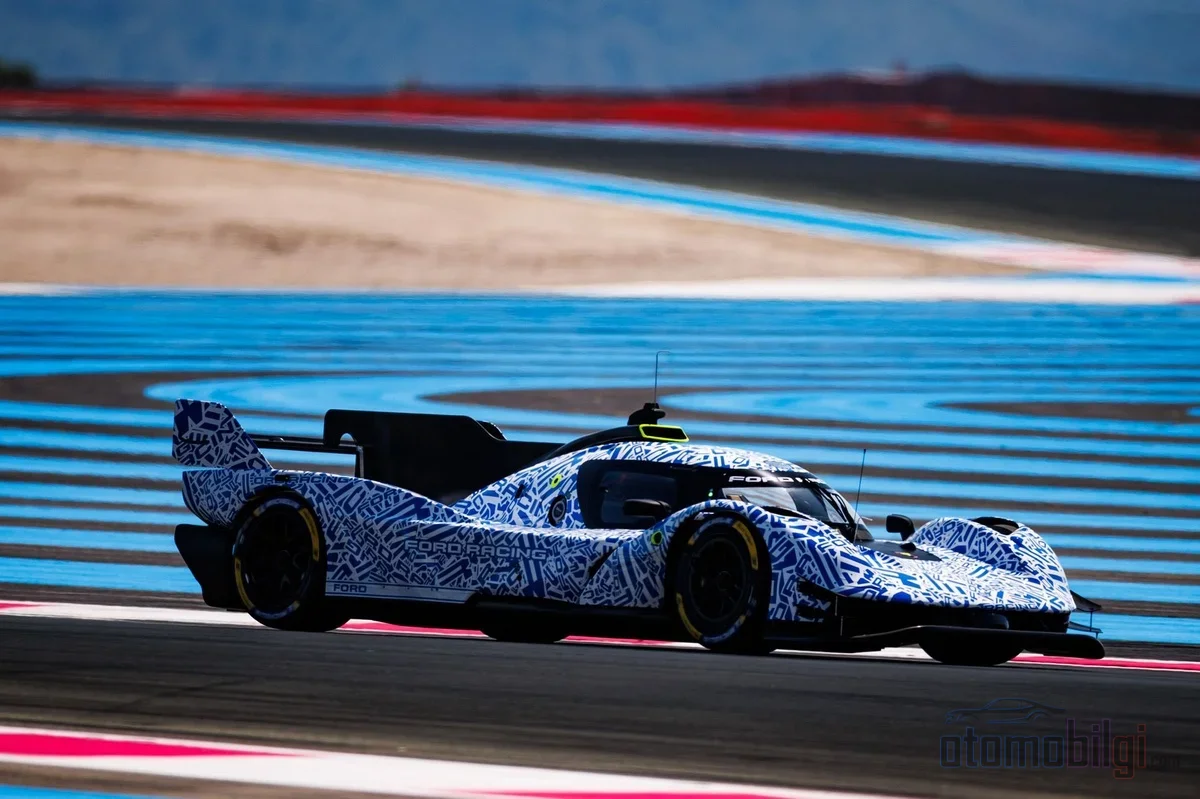
Ford is preparing to compete for the overall classification at Le Mans for the first time since 1969: the LMDh prototype, built with an ORECA chassis and a 5.4-liter naturally aspirated V8 engine, will be on track in the Hypercar class in the 2027 FIA WEC season and in the 95th running of the 24 Hours of Le Mans. The brand made this return tangible with its first test steps at Paul Ricard in August 2026, covering a distance of more than 1,000 kilometers over three full days. The question is no longer whether the car works; it is whether the GT40's legacy of four victories can find its counterpart in today's Hypercar field, home to established powers such as Ferrari, Toyota and Porsche.
Highlights
- Ford, in the 2027 WEC season, is returning to the Hypercar class with its LMDh prototype; the target is the 95th running of Le Mans (June 2027).
- The brand's last overall classification entry dates back to 1969; before that, it had won four consecutive victories with the GT40 between 1966 and 1969.
- The car uses a chassis developed with ORECA and, for the first time, an in-house produced 5.4-liter naturally aspirated Coyote-based V8 engine.
- The first test was conducted at Paul Ricard in August 2026: shakedown plus three full days, more than 1,000 km of running.
- Six official drivers have been announced: Rockenfeller, Sargeant, Priaulx, Campbell, Yelloly and Blomqvist.
Why Is Ford Returning to the Overall Classification Exactly 57 Years Later?
The answer to this question is both historical and corporate. Ford still holds the title of being the only American automaker to have won Le Mans; the project that achieved four consecutive overall victories with the GT40 from 1966 to 1969 is one of the best-known chapters in the brand's racing history. The 1967 victory was won by A.J. Foyt and Dan Gurney. Afterwards, Ford withdrew from the overall classification field; its entries over the years remained limited to class wins. Even the 2016 Le Mans GTE Pro victory was not a full overall classification story, but rather an endurance victory that finished just 10 seconds ahead of the Risi Ferrari.
Despite what is told on the Ford front, this story is a continuation: the brand's official statement points to the goal of "reclaiming our place at the pinnacle of endurance racing." There is also an organizational rationale. Ford Racing taking over the program gives the company the ability to react faster on track and increase competitiveness. For someone who has watched this business for many years, this is a classic Ford move: consolidating decision-making, ownership of the decision, and resources in a single hand on the road to a big goal.
There is one detail that history buffs ask about regarding the historical context: why the exit in 1969? The technical picture of that period is explained by the fact that, after the homologation of cars such as the 917 and 512S in the Sport 50 class, 5-liter Ford and Lola-based cars became unable to compete in the overall classification. This reading is not an official explanation; it reflects a technical consequence stemming from the regulations of the era, but it offers a sufficient framework for understanding the logic behind the exit.
Technical Anatomy of the LMDh Car: The ORECA Chassis and the 5.4-Liter V8
The car's technical skeleton is based on two main components. On the chassis side, a partnership has been established with ORECA; this is a natural consequence of the common chassis manufacturer approach imposed by the LMDh formula. On the engine side, things get more interesting: a 5.4-liter, non-turbocharged, naturally aspirated Coyote-based V8. This engine is being developed in-house by Ford for the first time and is running with Red Bull support. While hybrid systems and turbocharged units dominate the modern Hypercar field, choosing a naturally aspirated V8 is a distinctive choice both in terms of engineering and sound.
It is clear that Ford Racing is the decisive factor in the operational side of the program. In the company's official communications, this transition is described as enabling faster decision-making on track and easier measurement of competitiveness. It is a fact that legacy racing organizations learn as fast as their decision chain is short; Ford deliberately establishing this structure is one of the signs demonstrating the program's seriousness.
| Component | Detail |
|---|---|
| Class | Hypercar (LMDh) |
| Chassis | LMDh chassis developed in partnership with ORECA |
| Engine | 5.4-liter naturally aspirated Coyote-based V8 |
| Engine development | In-house at Ford, with Red Bull support |
| First test | August 2026, Paul Ricard, 1,000+ km |
| First race | 2027 WEC season, June 2027 |
The Paul Ricard Test: What Do 1,000 Kilometers Tell Us?
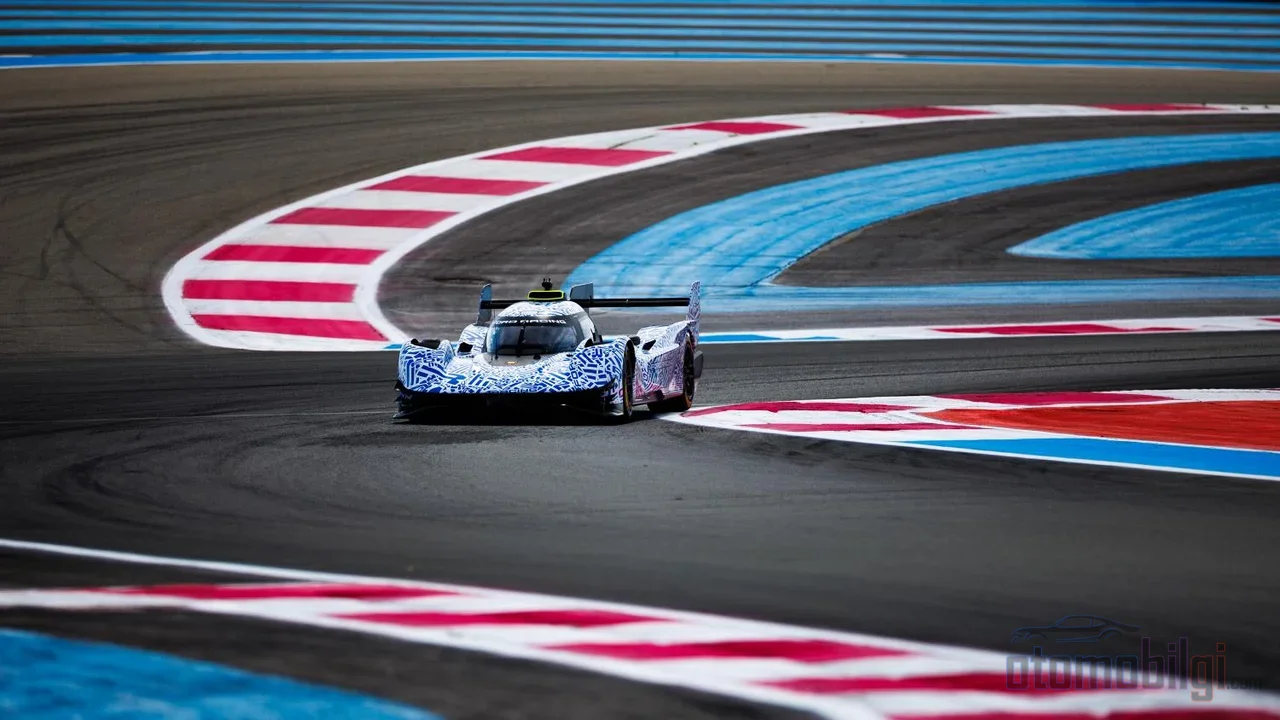
The first steps taken at Paul Ricard in August 2026 strengthened the impression that the program is ready. The car first appeared with a shakedown; then, over three full days of testing, a total distance exceeding 1,000 kilometers was covered. A prototype completing this mileage on its first track outing shows that the car's basic level of reliability was established not on track, but beforehand. The preparation process described by program director Dan Sayers confirms this: thanks to test bench work in Dearborn, engine firing in France, and simulator preparation, the team was ready right away on track.
Every kilometer brings us a little closer to Le Mans and to reclaiming our place at the pinnacle of endurance racing.
There were four names at the wheel in the first test: Logan Sargeant, Matt Campbell, Tom Blomqvist, and Mike Rockenfeller. Sebastian Priaulx and Nick Yelloly were in the pit on those days and were awaiting their turns in the coming weeks. Campbell described the first test as "a really positive start"; this is the kind of measured praise drivers most often use with a new prototype.
Testing Program Continuing Across Three Continents
Paul Ricard was a start; the main development schedule accelerates from here. The plan continues with three days of simulator testing at the Ford Racing center in North Carolina for data correlation, followed by a move to Portimao in early September. After that, tests are planned at Silverstone, Monza, Imola, Aragon, Austin, and Sebring. This is the kind of intense, intercontinental program a manufacturer could devise to be ready for the Hypercar class in its first year. Sebring's presence on the list is also meaningful: it shows that Ford has integrated its existing endurance knowledge and North American infrastructure into this program.
Six Drivers for 2027: Who Makes Up the Lineup?
Ford has announced its six official drivers for the 2027 season: Mike Rockenfeller, Logan Sargeant, Sebastian Priaulx, Matt Campbell, Nick Yelloly, and Tom Blomqvist. The mention of these six names together also resonated in the team's language; in Ford's own words, a "lineup capable of winning races" has been formed. Mark Rushbrook's comment that the six drivers being together at the first test demonstrates the team spirit reveals that this lineup is not merely a list of names but also a team-building move.
The balance of the lineup is also striking. Rockenfeller and Blomqvist represent years of experience in endurance racing; Campbell is a proven name in the endurance and GT world for a long time; Sargeant brings youth from the single-seater world. Yelloly and Priaulx, meanwhile, are names who bridge these two worlds. Six drivers complementing each other in endurance racing is the kind of lineup architecture a 24-hour race demands.
What Are Ford's Chances in the Hypercar Field?
The 2027 WEC season is preparing for one of the most crowded periods in the history of the Hypercar class. The class is expanding with the participation of Ford and McLaren; the nine-round 2027 calendar has been announced. McLaren Endurance Racing and Genesis Magma Racing are also entering Hypercar in the same year; following the manufacturer entries, the WEC points to the possibility of a 42-car grid. The current grid list includes, alongside Ford, Alpine, Aston Martin, BMW, Cadillac, Corvette, Ferrari, Genesis, Lexus, McLaren, Mercedes, Peugeot, Porsche, and Toyota. This is a density far beyond the era an old viewer remembers as "four or five real contenders."
Ford's biggest rivals are still clear: Ferrari's 499P, Toyota's and Porsche's 963. Ferrari and Toyota have long had an established line of success in this class; Porsche is among those who invested early in the LMDh platform. Ford's primary advantage, as a latecomer rival to the class, is having learned some of the initial mistakes; its disadvantage, however, is that its accumulated experience in the first year has not yet reached the level of Ferrari and Toyota. The brand is already competing with Ferrari in the WEC with the Mustang GT3; however, having returned to the top class after a long hiatus, overall classification validation will be an entirely new trial.
Is the Atmospheric V8 Enough?
Another debate circulating in the paddock concerns this engine's competitiveness: does a naturally aspirated, non-turbocharged V8 really stand a chance in today's Hypercar arena? The honest answer is that this remains an unanswered question. The performance balancing mechanisms of the LMDh and LMH regulations were designed to allow different engine architectures to settle into the same performance band; but the regulations permitting something is not the same as finding real speed on track. Ford's decision to develop this engine in-house shows that the brand wants to distinguish itself not only through engine sound but also through engineering control. The 1,000 kilometers covered in the initial tests are certainly a positive sign on the reliability front; the performance assessment, however, awaits the tests at Portimao and beyond.
A crowded field has its own risks. With the increase in manufacturer numbers, there are rumors of some withdrawals and speculation that the class could shrink; for example, Alpine's announced withdrawal has not yet been officially confirmed, so it is appropriate to read it as speculation. From Ford's perspective, the main message does not change: the class it is entering is crowded and competitive, which increases the value of victory while making the road to it harder.
The GT40 Legacy's Meaning Today
Understanding this program requires going back to the 1960s. The GT40 was developed to beat the Italian brand at Le Mans after Ford's attempt to buy Ferrari ended in failure. The car debuted in 1964, but its first Le Mans victory came only in 1966; even that delay tells the story of the project's character. Ford's determination in that era resembles the mindset of today's program: the goal is overall classification, the road is long, and the budget and dedication are enormous.
In the past, victory could be seen as a struggle brands fought for their own prestige, beyond a profit-driven marketing campaign. Now, we are in a period where manufacturers align their racing programs with electrification and sustainability goals; yet Le Mans's allure has not changed. Ford's move toward 2027, on one hand revives a historic legacy, and on the other restructures the company's racing organization. The program's real exam will be given in June 2027, over 24 hours at Sarthe. Every test kilometer covered until that day will be one of the pieces determining the grade of that exam.
Sources
- Ford Returns to Le Mans, Sports Car Racing Pinnacle, in 2027
- 2027 WEC Hypercar Program - Ford Racing
- Building a Ford Racing Hypercar Team for 2027
- Ford finalises 2027 Hypercar driver line-up
- Ford in the top class at the 24 Hours of Le Mans in 2027
- Campbell: First Ford Hypercar Test "Really Positive Start"
- Ford completes first Hypercar test ahead of WEC debut
- Long-distance testing gets Ford Hypercar off to a fast start
- FIA WEC reveals nine-round 2027 calendar as series expands
- WEC Hints 42-Car Grid Possible Amid Manufacturer Influx
- FIA WEC Grid
- Ford GT40