Colapinto Addressed His Fans: You Are Not Helping Me
Share This Page
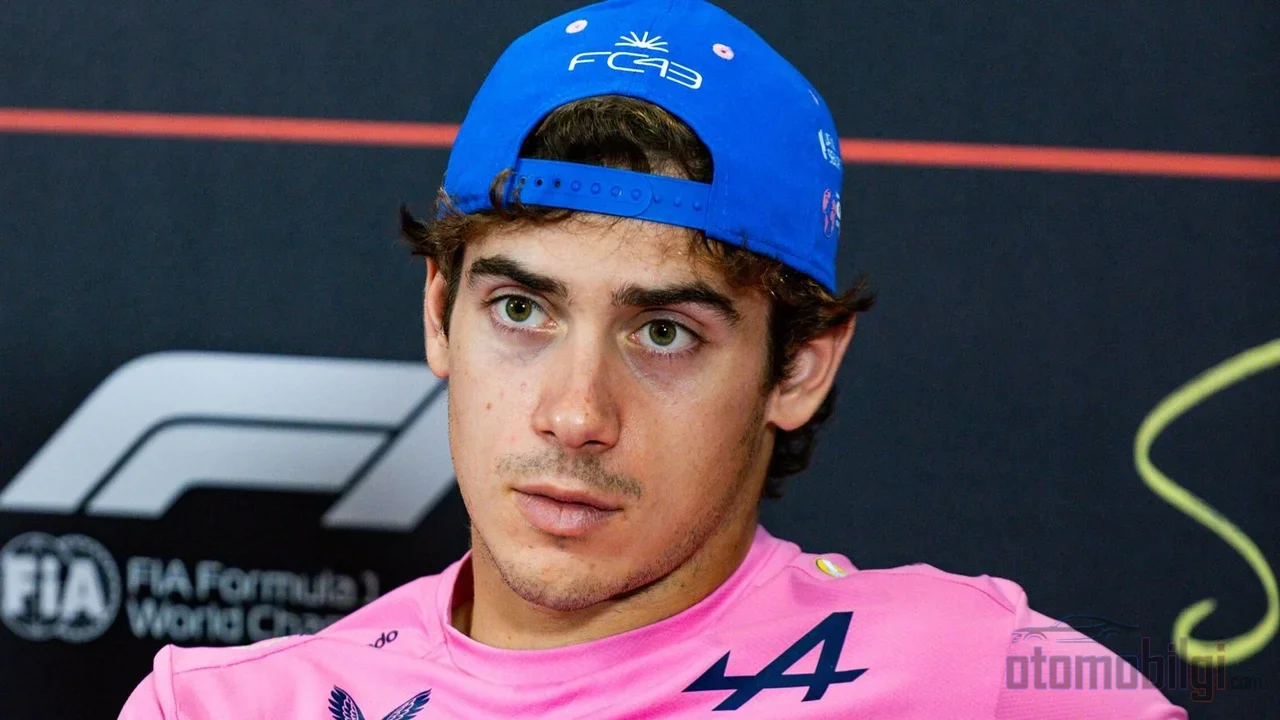
In a Spanish video message posted on his Instagram account on Thursday, October 15, Franco Colapinto spoke to his fanbase with such open language for the first time: he said that those who think they are supporting him are actually doing the exact opposite, in other words harming the young driver's career. After the Zandvoort, Madrid and Baku races, hate speech directed at the stewards, at Pierre Gasly and his family, and at Lando Norris pushed the 23-year-old Alpine driver's patience past its limit. In this article, we cover the content of the message, the chain of events behind it, and the pressure that comes with the 2027 Alpine seat.
Highlights
- Colapinto on October 15, 2026 made a video call to his fans, published from his personal account, to end hate speech
- The attacks after the Zandvoort, Madrid and Baku races were aimed at the stewards, Gasly, his family and Norris
- The message was published not through Alpine's official channels but as the driver's personal initiative
- Colapinto signed a contract extension with Alpine in August 2026 for the 2027 season signed
- In the championship standings, Colapinto is 12th with 27 points, Gasly is 10th with 41 points in position
Why did Colapinto speak to his fans?
The short answer is this: the online attacks carried out by fans in the name of defending him, in the driver's own words, brought him and his future nothing; on the contrary, they caused harm. In his message, Colapinto stated that those who think they are supporting him are actually doing the opposite, that nothing is being done for him and his future. He said that things sometimes go too far, and that instead of supporting him, attacks are aimed at other drivers, colleagues, teammates, mechanics and engineers.
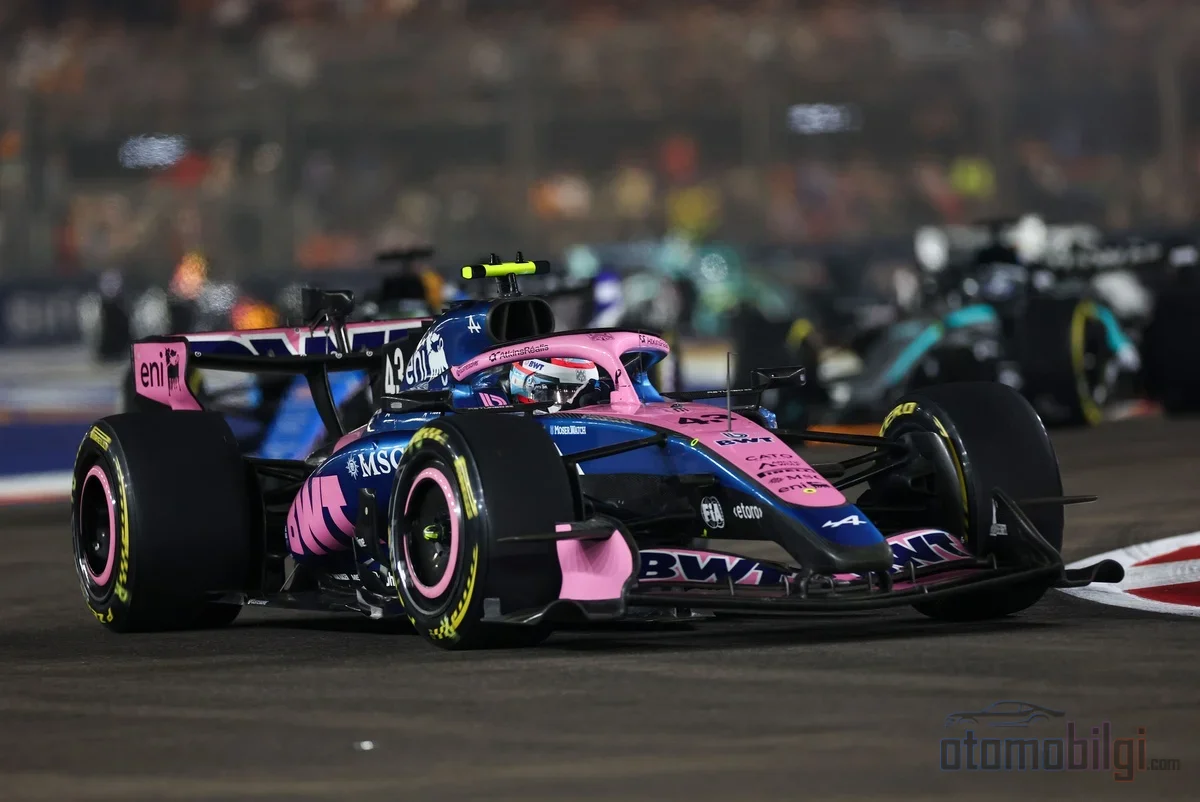
The trigger was the Singapore Grand Prix. An energy storage system failure on Saturday and a gearbox problem on Sunday knocked Colapinto out of the race twice over the weekend. As a natural consequence of the technical failures, the points that needed to be earned on track were left up in the air; whereupon some fans on social media directed their anger at Alpine's mechanics and engineers. Speaking as someone who has been following this environment for more than three decades: finding targets to criticize as if they had sabotaged a mechanical failure is the most unproductive reflex of fan culture, going back to the old days.
The real issue, however, was not limited to Singapore. The message came at the end of a pattern that repeated itself throughout the season and is being assessed as the driver's strongest public statement to date.
From Zandvoort to Baku: the chain of events behind the attacks
At three different points in the season, three separate race weekends saw attacks targeting three different groups. The picture clearly shows that the problem is not a single incident:
| Race | Incident | Target of the attack |
|---|---|---|
| Zandvoort | Tension after the race | FIA stewards |
| Madrid | Gasly's refusal to let Colapinto through | Gasly and his family, including death threats |
| Baku | The double collision Colapinto caused at Turn 1 | Lando Norris after harsh criticism |
Madrid: tension with his teammate
At the Madrid Grand Prix, when Gasly blocked Colapinto and refused to let him pass, fans subjected Gasly to a heavy wave of abuse and death threats; his family was also threatened. Yet a detail later revealed showed how baseless the anger was: the team had never requested any position swap. Gasly described this kind of abuse as entirely unacceptable, and Flavio Briatore, an influential figure in the team's management, drew a line on the matter.
Baku: Norris's criticism and the bill that followed
At the Azerbaijan GP, Colapinto crashing at Turn 1 and causing a double drama marked the most painful chapter of the events. Championship leader Lando Norris made harsh criticisms about Colapinto and even defended his penalty, whereupon he himself became a target of online abuse and later apologized to Colapinto. Alpine became the team that issued a statement against abuse after Baku; it had already been releasing condemnation statements regularly throughout the season.
There is a small but important nuance here: Colapinto had stated that during the Baku period, this behavior did not come solely from Argentine fans, but also from all over the world and from other fan groups, yet nobody talked about it. In other words, the issue is far too widespread to be reduced to a single national fan base.
The message was a personal initiative: what was Alpine's role?
The video was published not through Alpine's official channels but from Colapinto's personal account. According to close sources, it was not the product of a team decision; it was the driver's own initiative. This detail is not trivial. Statements of condemnation made on behalf of the team had already been read throughout the season and their impact remained limited. A message from a driver addressing his own fan base, in his own voice, in his own language (Spanish), carries a completely different weight.
In the same message, Colapinto also announced an important personal decision: he said he had decided some time ago to step away from social media, take a break, and focus on his dream and his sporting career. He also stated that he would maintain his bond with fans through races and performances. For a driver with six million followers, withdrawing from social media is a sign of the seriousness the situation demands; it also shows how much a driver's digital visibility is up for negotiation in modern Formula 1.
The 2027 Alpine seat: contract secure, performance still under watch
Colapinto's seat is not in danger in the short term. The driver signed a contract extension with Alpine for the 2027 season in August 2026, and the team confirmed an unchanged lineup consisting of the Colapinto-Gasly pairing. This marks a notable turnaround compared to what happened before 2026. At one point, the German media wrote that his future was in jeopardy, and Colapinto was considered the driver under the most pressure heading into 2026. Briatore did not hesitate to explain how a maturing Colapinto earned his 2026 seat.
The points standings show the scale of the job that needs to be done: as of October 16, Colapinto ranks 12th with 27 points; his teammate Gasly is 10th with 41 points. The gap is not small, but the longest part of the season still lies ahead: the United States, Mexico and Brazil rounds, followed by the Las Vegas-Qatar-Abu Dhabi triple header. Team harmony stands out as a critical element in the young driver's career, and the risk that fan attacks could poison exactly that harmony is the real reason behind the message.
Not a single incident: the scale of the abuse problem in Formula 1
Colapinto's case is far from the only example the sport has seen in recent history. The same fan sub-group had previously targeted Yuki Tsunoda and Jack Doohan with abuse, pushing Formula 1 to demand a stronger fight from social media platforms. The FIA condemned the harassment and disrespect directed at F1 stewards and announced that, from August onward, it had been exploring new technologies and legal avenues to detect and pursue social media bullying. Alex Dunne, who races in Formula 2, was also among those subjected to similar abuse after Monaco.
What used to be shouted in the grandstands would be forgotten in an evening; now the same anger sits permanently archived, landing on the driver's phone and his family's screens. To underestimate the effect of this transformation on a driver is to fail to understand how young careers are being consumed. The difference between Colapinto's earlier, more cautious statements and Thursday's message is also the product of this accumulation.
How responsible are the platforms?
Another layer of the debate is platform responsibility. The Formula 1 side takes the view that social media platforms' fight against abuse is inadequate and has called for action, while the FIA is moving forward on detecting bullies and pursuing them through legal channels. In response, criticism from fans also rose after F1's official social media accounts suppressed negative comments about the 2026 cars. In other words, the balance is not one-sided: excessive intervention, too, produces its own backlash, as does doing nothing at all.
Conclusion: support, by definition, should benefit the driver on track
Colapinto's call is a rare move in which a driver holds his own fanbase to account, and it has a reason that cannot be taken lightly: attacks directed at stewards, rivals, teammates and his own team's engineers were not making the driver's job easier, but harder. His contract is secured until 2027, but unless the points gap closes and the atmosphere within the team eases, the return on that security must be earned on track. What his fans need to do is actually simple: choose a form of support that benefits the driver they back. Colapinto said it himself; he could not have put it more clearly.
Sources
- Colapinto urges fans to stop online abuse: "You're not helping me or my future" - Autosport
- Colapinto Warns His Fans: 'You Are Not Helping Me' - Yahoo! Sports
- Alpine's Franco Colapinto urges fans to stop online abuse - The New York Times / The Athletic
- Pierre Gasly calls social media abuse "completely inappropriate" - Motorsport.com
- Lando Norris targeted by online abuse after calling for Colapinto ban - The Guardian
- Lando Norris apologises to Franco Colapinto - Sky Sports
- Alpine announce Colapinto contract extension for 2027 - Formula1.com
- FIA's war on F1 social media toxicity - PlanetF1
- FIA condemns 'harassment' after social media abuse of F1 stewards - Yahoo! Sports