Red Bull's Engine from Scratch: The Story of RBPT's First F1 Victory
Share This Page
Red Bull Ford Powertrains' DM01 engine wrote its first victory into Formula 1 history as a manufacturer with Max Verstappen winning the 2026 Bahrain Grand Prix; this marks the peak point of an engineering organization founded from a completely blank page in Milton Keynes five years earlier. Red Bull, the first F1 team to build an engine from scratch and also develop its own chassis, delivered the first serious response to the engine dominance that Mercedes and Ferrari had enjoyed for decades. Below you will find the milestones of this journey and the dynamics reshaping the 2026 engine era.
Highlights
- RBPT was founded on February 16, 2021 following Honda's withdrawal from F1.
- The project is run with more than 700 employees spread across three factories.
- The DM01 was unveiled on January 15, 2026; it is named after Dietrich Mateschitz.
- The first pole and first victory came in Bahrain on October 4, 2026.
- Seeing the Ford name at the top of the podium was the first time since 2003.
Starting From a Blank Page: How Was RBPT Founded?
The founding story of Red Bull Powertrains Limited is the product of one of the most typical engine crises of F1's modern era. When the 2014 regulations launched the turbo-hybrid era, Renault-powered teams fell behind Mercedes and Ferrari; Red Bull lived through that partnership with years of tension. The partnership running with Honda from 2018 onward brought four world championships, but Honda announced its decision to withdraw from F1 at the end of 2021. Red Bull faced two options: search for an engine supplier or take the job into its own hands. Helmut Marko and Christian Horner chose the latter, and RBPT was founded on February 16, 2021.
In the organization's early days, the numbers were modest: a facility next to Red Bull Racing's chassis department, and engines purchased from Honda that took to the tracks under the RBPT name. Being one of only two teams where chassis and engine are produced under the same roof - the other being Ferrari - remains an exceptional situation in F1 even today. But in 2021 this facility was still a promise for the future; the real work was taking over Honda's know-how and adding its own layer on top.
The Transfer Wave from Brixworth to Milton Keynes
The shortest way to build an engine division from scratch is to bring experienced staff together. In April 2021, Ben Hodgkinson moved from Mercedes' Brixworth facility to RBPT as technical director after a 20-year career. In May 2021 he was followed by five more senior names: Steve Blewett, Omid Mostaghimi, Pip Clode, Anton Mayo, and Steve Brodie. These transfers were read as the first concrete sign of how serious Red Bull's engine project was - and they proved justified.
The Honda Bridge: An Inherited Engine, Frozen Development
The period between 2022 and 2025 was a bridge era in which RBPT did not build its own engine but prepared to learn its own engine. The engines were purchased from Honda and raced under the RBPT name; Honda provided assembly and trackside support until the end of 2022, and the intellectual property remained with Honda. The engine development freeze that came into effect in September 2022 also tied RBPT's hands: no development could be done on these engines. In October 2022, Honda signed an additional agreement for the partnership to continue until the end of 2025.
Meanwhile, the 2022 RBPTH001 engine was a derivative of Honda's RA621H; it includes changes to ignition, cylinder pressure, MGU-H, crankshaft and block geometry for E10 fuel compatibility, and offered higher thermal efficiency than its predecessor. So the on-track success was not entirely Red Bull's engineering credit - the founding team says this openly too. The real issue was being able to combine this accumulated knowledge with its own design once the freeze ended and the 2026 rules came into effect.
Why Ford, Not Honda? The Logic of the Partnership
The contract with Honda was ending at the close of 2025, and from 2026 Honda went down a completely separate path with Aston Martin. The name Red Bull chose for the new era was Ford; in the partnership announced on February 4, 2023, Ford provides expertise in battery cells, electric motor, power unit control software and analytics, as well as combustion engine development. In December 2025, the project's name was simplified to "Red Bull Ford". While describing Honda as an extraordinary company, Horner emphasized that the agreement with Ford covers 2026 and beyond - meaning the choice was for a long-term technical partnership, not a short-term supplier relationship.
There is also a concrete face to the integration: embedded engineers work at Ford's facility in Milton Keynes; their numbers can vary depending on the project. For a former manufacturer brand to work at this depth with a team developing its own engine is a quite different model from the supplier relationships of the 90s and 2000s. In the past you would order the engine and take delivery at your door; now the partner is inside the facility.
DM01: The First Engine Dedicated to Mateschitz
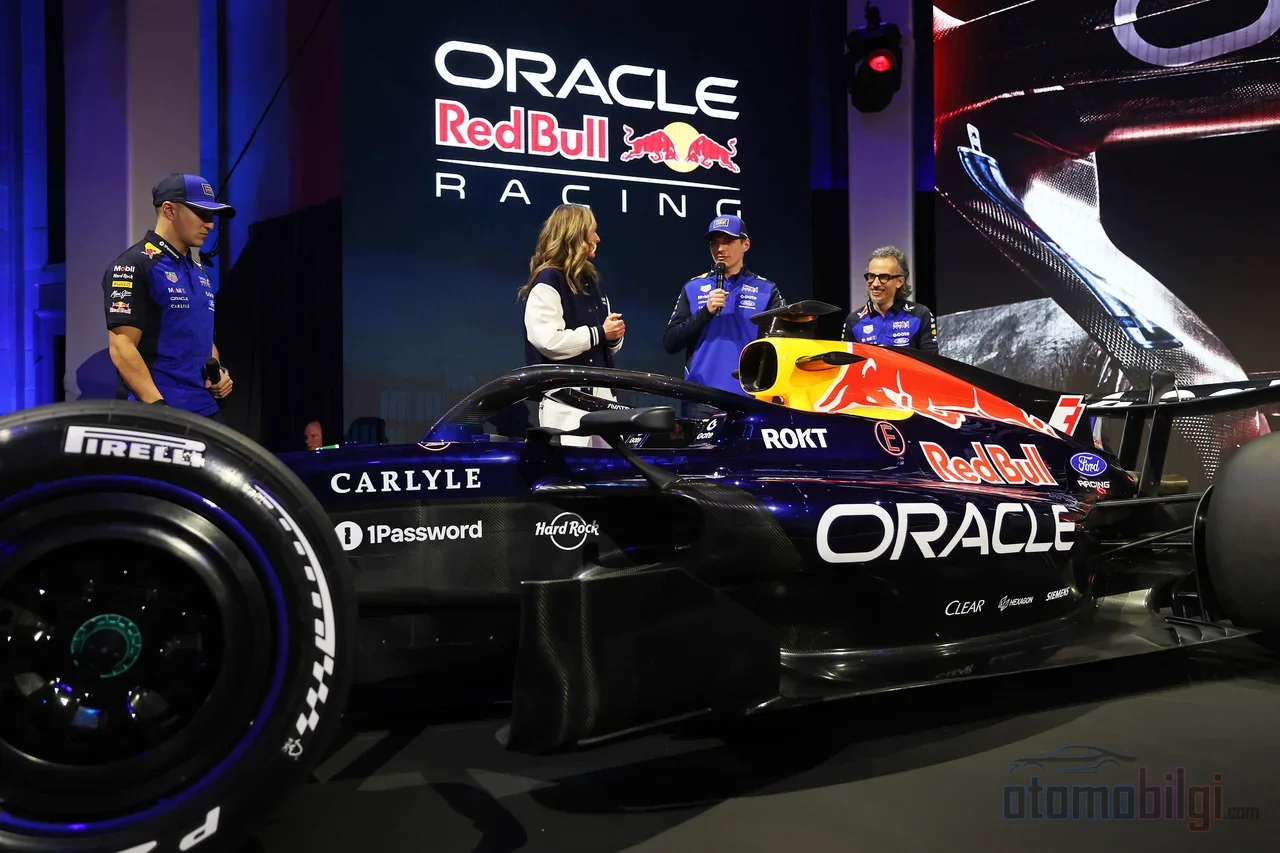
Unveiled on January 15, 2026, the DM01 is Red Bull's first engine designed and built entirely in-house, and it takes its name from Dietrich Mateschitz, the company's founder who passed away in 2022. Mateschitz had contributed closely to the founding of RBPT; the engine's name is read as a tribute to him. The engine was developed and is being produced at the Red Bull Technology Campus in Milton Keynes. The project has more than 700 employees spread across three factories, and it is frequently stated that being built from scratch - an organization free of old habits - is seen as an advantage.
There are two teams using the engine: Oracle Red Bull Racing (RB22) and Visa Cash App Racing Bulls (VCARB 03). In the 11-day pre-season test, RBPT-Ford completed a total of 2,026 laps; quite an ambitious effort for a first season in terms of reliability. After the test, even some rivals couldn't stop praising Red Bull's progress on the engine side - George Russell described Red Bull's engine advantage as, word for word, "scary."
Red Bull's engine advantage looks scary.
What Did the 2026 Engine Regulations Change?
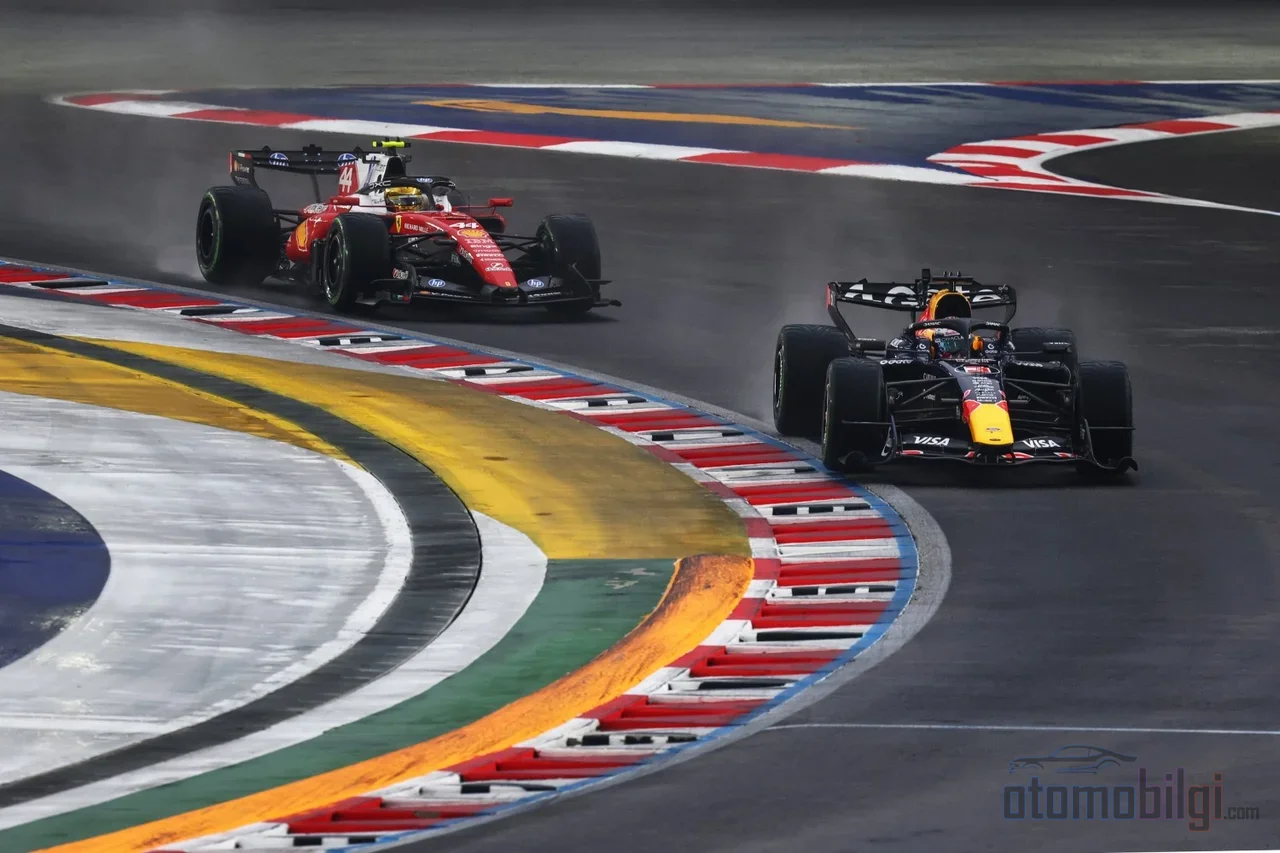
2026 is a milestone in F1 engine history: half of the power unit's total output comes from electricity, the MGU-H has been completely removed, and the MGU-K's output has been raised from 120 kW to 350 kW. The fuel is 100% sustainable and consumption is less than half compared to 2013; each driver can use only three engines throughout the season. The base is the 1.6-liter V6 turbo used since 2014; however, total power will only reach the expected level over the years. This framework created an opportunity window for new entrants that resets the old hierarchy - and Red Bull entered through exactly this window.
| Element | 2026 Regulation |
|---|---|
| Engine architecture | 1.6-liter V6 turbo (2014 base retained) |
| Combustion engine power | 350 kW; an increase is planned in later years |
| MGU-K output | Raised from 120 kW to 350 kW |
| MGU-H | Completely removed |
| Fuel | 100% sustainable, less than half the consumption compared to 2013 |
| Number of engines | Three engines per driver per season |
| Manufacturers | Mercedes, Ferrari, Honda, RBPT and Audi |
An era with five manufacturers is a density long unseen. Audi is on the grid with its own engine; Williams shut down its own engine program and switched to Mercedes power, and much of the grid is once again entrusted to the Mercedes-Ferrari duo. Cadillac, meanwhile, aims to use its own engines from 2029 onward. In short, 2026 is a season that redraws the engine map and seriously shakes the Mercedes-Ferrari duopoly for the first time.
First Victory in Bahrain and the Season's Tension
At the start of the season, the widespread consensus was clear: Mercedes dominant, Red Bull behind. Leclerc was saying that before 2026, Red Bull and Mercedes were ahead of Ferrari and McLaren; yet even in testing, the new rules were making the order surprising for the drivers. At the Austrian GP, Russell won while Red Bull returned to racing - the narrative quickly reversed. The real turning point came in Bahrain: Verstappen took the brand's first pole position one day, and claimed its first victory the next. All four RBPT-powered cars finished in the top 10.
This victory has layers: it is the first time since 2003 that the Ford name appears on the top step of the podium, and it marks the 177th overall win for engines associated with Ford. For Verstappen, this is his first victory of the 2026 season and Red Bull's 72nd overall win. At mid-season, the Red Bull Ford record across 17 race entries (16 starts) shows one win, 10 podiums, 2 poles, 2 fastest laps and 400 points; Red Bull Racing sits fourth in the championships, with Racing Bulls fifth. The numbers will of course become outdated as the season continues - but as an engine manufacturer, the first victory has already gone into the history books as a fixed record.
How Realistic Is the "Invincibility" Narrative?
Despite the excitement of the first victory, there are cautious voices noting that the messaging surrounding the project is not as clear as it appears. It is worth remembering how solid a basis - how much data, how much intuition - lay behind the "Mercedes dominant" consensus that seemed to be disproven by the Bahrain win. The true strength of an engine program reveals itself not in a single race result but in consistency across the rest of the calendar; considering that 2026's new rules have made the standings uncertain even for the drivers, early definitive judgments are for now worth less than before.
After 2026: A Return to Simpler V8s in 2030
The 2026 era crowned by the DM01's victory may not be permanent either. The FIA president has committed to a return to simpler, louder V8 engines by 2030 - possibly 2031; the first details announced point to a 3.0-liter turbo V8, a smaller electric motor and cars roughly 50 kilograms lighter. Although there are minor differences in the figures reported in the press, the direction is clear: reducing hybrid complexity and returning to a more authentic engine sound based on sustainable fuel. Mercedes is known to support these plans. In other words, RBPT's first victory perhaps came at the very end of the regulatory era it was designed for - ironic from an engineering standpoint, but I do not think it diminishes the engine's value; on the contrary, it stands as proof of what an organization built from scratch can achieve over the entirety of a rule cycle.
Conclusion: An Engine Culture That Caught Up in Five Years
Red Bull's engine journey is one of the fastest start-up stories in F1 history. A unit established in 2021 after Honda's withdrawal, staff transferred from Mercedes, a Ford partnership and an organization of 700 people spread across three factories - after five years it designs, builds and wins with its own engine. Breaking up the Mercedes-Ferrari duo cannot be measured by a single race result; but the pole and victory in Bahrain demonstrated the seriousness of this endeavor in a way that leaves no room for debate. That engine bearing Dietrich Mateschitz's name standing on the top step of the podium is a summary of where the project sits, both engineering-wise and emotionally.
Sources
- Red Bull Powertrains
- A New Winning Chapter for Ford and Red Bull Ford Powertrains
- Red Bull and Ford: How the new F1 engine will power success beyond 2026
- All you need to know about F1's new power units
- Facts and Stats: Power Unit Regulation Changes
- What engine every F1 team is using for 2026 rules
- 'Unstoppable'? How the Red Bull/Ford engine project is really going
- Ford boss Jim Farley on the Red Bull F1 engine
- Red Bull's first win as a power unit manufacturer 'very special'
- Red Bull's F1 advantage is 'scary'
- Who's really fastest in 2026?
- First details of future F1 engine rules revealed
- F1 could get loud again from 2030
- Charles Leclerc's early verdict on Ferrari in F1 2026