F1's Africa Grand Prix Officially Announced in Kigali
Share This Page
Formula 1 officially announced, at a ceremony held in Kigali on October 13, 2026, the 10-year agreement for the Formula 1 African Grand Prix, presented by Visit Rwanda race. The race will join the calendar in the early 2030s and will be the first F1 race held on the continent since 1993. In Bugesera, about 40 km south of Rwanda's capital, a circuit signed by Tilke and Alex Wurz will be built, with a 197-meter elevation change per lap, making it the highest-elevation track on the current calendar. The fact that the race is named 'African Grand Prix' rather than 'Rwanda Grand Prix' stands out as one of the most interesting decisions of the announcement.
Highlights
- 10-year agreement; race joins the calendar in the early 2030s
- 6 km length, 17 corners, counter-clockwise layout
- Per lap 197 meters of elevation change - nearly double that of Spa
- Opening of Kigali International Airport targeted for 2027-2028
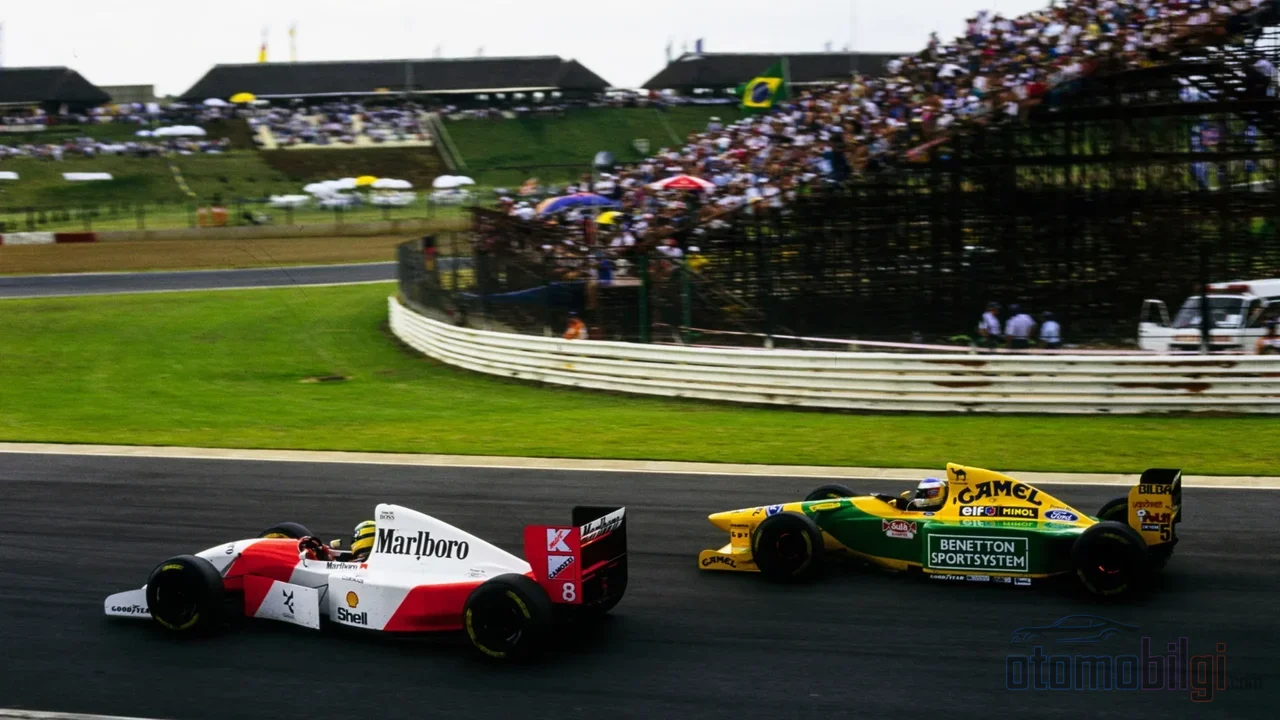
- Last F1 race in Africa: March 14, 1993, Kyalami, winner Alain Prost
The launch in Kigali: who, when, and what was announced
The announcement was made at a ceremony in Kigali, led by the Rwanda Development Board and Formula 1. The official statement visibly bore the signatures of Head of State Paul Kagame, F1 CEO Stefano Domenicali, and FIA President Mohammed Ben Sulayem. This was no ordinary press conference; Rwanda had officially declared its candidacy when it hosted the FIA meeting in December 2024, and after nearly two years of preparation, the idea has turned into a written agreement.
Five days before the announcement, news agencies reported that Rwanda would host the race, that the official announcement would be made in Kigali, and that Qatar had lent its support to the project. In other words, the process was less a leaked surprise than an example of step-by-step managed diplomacy. For someone who has been watching this world for over 30 years, what is remarkable is this: F1's return to Africa had been discussed for years, the revival attempts in 2024 came to nothing, and this time it was not words but a 10-year contract that was put on the table.
The timing also makes sense in terms of the calendar. F1 has a full 24-race calendar for 2027, but many circuits' agreements expire before 2030: Mexico and Singapore are contracted through 2028, Japan through 2029. The gap that would make it easier for the new race to enter the calendar is already at the door. No exact first race date was announced; F1 stated that 'relevant details will be announced at a later date,' while reports point to around 2029-2030.
Technical specifications of the circuit: 6 kilometers, 17 corners in Bugesera
The circuit will be built in Bugesera, about 40 km south of Kigali, on land adjacent to the new Kigali International Airport. Since the goal is construction, we are talking about a permanent facility built to FIA Grade 1 standards; that is, not a temporary street circuit arrangement, but a long-term investment. The project is part of a broader sports, tourism, infrastructure, and commercial development package led by the Rwanda Development Board.
The design is based on a collaboration between two familiar names in circuit design: Dr. Carsten Tilke on the Tilke Engineers & Architects side, and former F1 driver Alex Wurz along with the WurzDesign firm on the other. The layout runs counterclockwise, 17 corners and features fast-flowing sections with consecutive passing zones, aiming for close racing throughout a lap. Many new circuits added to the calendar in the past were criticized for templated layouts consisting of long straights and heavy braking corners; the philosophy expressed here is different: a circuit with uninterrupted flow that rewards precise driving. The track is also being designed for multi-disciplinary motorsport use.
Key technical specifications
| Feature | Value |
|---|---|
| Length | 6 km (3.7 miles) |
| Number of corners | 17 |
| Direction | Counterclockwise |
| Elevation change per lap | 197 meters (646 feet) |
| Standard | FIA Grade 1 |
| Design | Tilke Engineers & Architects and WurzDesign |
| Location | Bugesera, approximately 40 km south of Kigali |
What the 197-meter elevation change means: a comparison with Spa
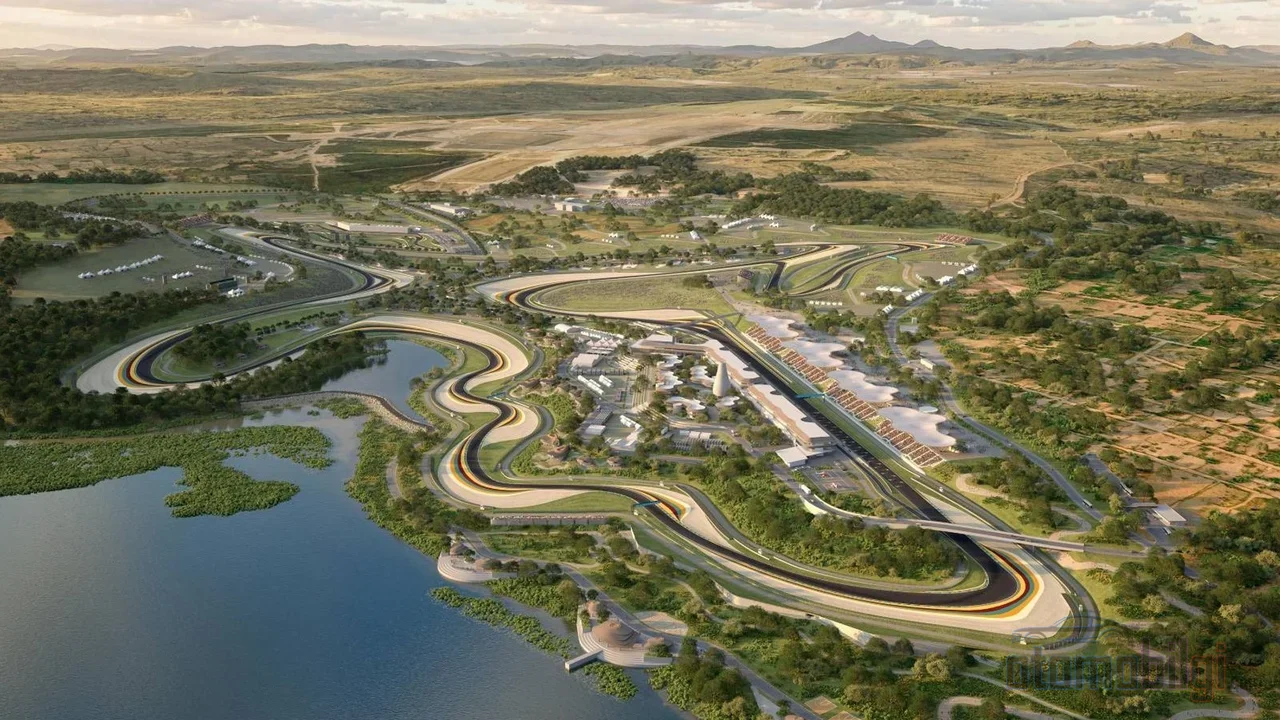
The most talked-about figure of this circuit is the 197-meter elevation change per lap. The hilliest track on today's calendar is Spa-Francorchamps, with an elevation change of approximately 102 meters. Bugesera's figure is almost twice that; in other words, drivers will lap a circuit that contains roughly twice the elevation change experienced at Eau Rouge in a single lap. Wurz is one of the names who said the layout has the potential to become a classic; the 'roller coaster' comparisons come from the design team.
As experienced teams will know, elevation change is not just a photographic beauty. Ascents and descents change braking distances per corner, the perception of downforce, and the engine's load distribution; the driver's 'field of vision' disappears, believe it or not, and soft entries over crests come to the fore. Predicting a new Grade 1 circuit without winter test data is a skeptical business, but the figure at least shows the design's ambition: this is not a distracting decorative track, but a circuit intended to challenge the drivers.
Why the timing depends on the airport: Bugesera's role
There is a concrete reason why the first race date has not been finalized: the completion schedule of Bugesera International Airport. The facility, under construction since 2017, is targeted to open in 2027-2028; its first phase is designed for an annual capacity of 7 million passengers and 150,000 tons of cargo, and the cost is reported to be around 2 billion dollars approximately. F1's first race date depends on the airport's completion. This is a reasonable order of priorities when you think about it: considering twenty teams, thousands of tons of equipment, and tens of thousands of spectators, Grade 1 connection infrastructure should come before a Grade 1 circuit.
The positioning of the track adjacent to the airport is part of the same logic. The Rwandan side is building the facility not only for F1 but for year-round use: Rwanda Development Board CEO Jean-Pierre Karabaranga said the facility will host a variety of events from concerts to exhibitions and that they aim to attract series such as MotoGP and WEC. Those who have been in this business a long time know: tracks used one week a year lose money, facilities busy 52 weeks a year make money.
Why 'African Grand Prix' and not 'Rwandan Grand Prix'?
The race's name was the most striking decision in the announcement. The rationale Karabaranga explained at the press conference can be summarized as follows: Rwanda holds a pioneering position in regional integration - East African Community membership, African Continental Free Trade Area negotiations, and the visa-free entry policy applied to Africans are concrete examples of this. A name like 'Kigali Grand Prix' or 'Rwandan Grand Prix' would feel somewhat exclusionary in this context. A continental name makes it easier to attract sponsors and partners; the commercial value of Africa's return to the sport after decades is also greater.
There is also a symbolic goal behind this: the aim is to create the moment when 'sport returns to Africa and never leaves again' and to see multiple races on the continent in the future. The name choice has been framed as a continent's story of return rather than a single country's prestige project. Beyond being a rhetorical nuance, this is also the right commercial reading: across the continent there are more than 100 million F1 fans, and in key markets in Sub-Saharan Africa nearly 60% of fans are under the age of 35. For sponsors, this demographic is an argument that needs no explanation.
Africa's gap in the F1 calendar and the 1993 Kyalami legacy
The last F1 race held in Africa was the South African Grand Prix at Kyalami Circuit (South Africa) on March 14, 1993; the winner was Alain Prost. More than three decades have passed since then, and while F1 has expanded to the Middle East and stretched as far as Las Vegas in the meantime, it has not visited Africa. When the airport is completed, F1 will have raced on every inhabited continent - the last missing line in the calendar's geographic story will be filled.
Closing this gap has long been desired by the sport's leading figures as well. Seven-time world champion Lewis Hamilton has campaigned for a race in Africa for years; he described the continent as 'the most important, most beautiful continent' and said he appreciated Domenicali's efforts. Plans to revive the race in 2024 had come to nothing; this time, the fact that an agreement has been signed makes the difference.
Criticisms and the sportswashing debate
The announcement did not pass without objection. Amnesty International UK campaign director Felix Jakens described the 10-year agreement as a 'sportswashing prize'; he accused Rwanda of investing in the world's biggest sports to polish its poor human rights record, referring to its support for the M23 and its role in the conflict in eastern Congo. This criticism is a continuation of the growing tradition of objections to F1's similar agreements in recent years.
Previous sponsorship controversies also loom in the background: 'Visit Rwanda' is Aston Villa's shirt sponsor; Arsenal, under pressure from supporter groups, ended its eight-year deal at the end of last season, PSG extended its deal to 2028, Bayern ended its commercial deal and extended its academy deal; and DR Congo had in 2025 asked three clubs to review their agreements. To put it with a measured judgment: the corners and elevation differences of the track are not technically debatable things, but the debate over this project's legitimacy lasted for years outside the sporting scene and will continue to do so.
Conclusion: not the promised date, but the promised track
Nobody today can say clearly when the African Grand Prix will hold its first race; 'early 2030s' is the official phrase, and the rest depends on the speed of digging and concrete in Bugesera. But the announcement itself is a milestone: a 10-year contract, a Grade 1 standard track, the highest elevation difference on the calendar, and a naming decision that does not reduce an entire continent to a single country. For those who have been following this calendar for many years, the real question will be this: will Bugesera become a classic reminiscent of Spa's hills, or just another modern track designed in good faith? Answering that is not the job of Wurz and Tilke, but of the drivers who have not yet turned a wheel in those corners.
Sources
- Formula 1 returns to Africa with 10-year agreement to race in Rwanda
- Hills, a lake and a roller coaster: inside Rwanda's plan for the African Grand Prix
- 1993 South African Grand Prix race result
- Highs and lows - which F1 track has the most elevation changes
- Why the F1 Grand Prix is Named as 'African GP' Instead of 'Rwanda GP'
- F1's African GP race date hinges on this $2bn unfinished airport
- Rwanda's F1 Circuit Could Be an Instant Classic, Says Alex Wurz
- F1 News: More details emerge about the Rwanda Africa track
- Formula 1: Rwanda to join calendar in the early 2030s as African Grand Prix host
- F1, Rwanda announce creation of African Grand Prix
- F1 returns to Africa for first time since 1993 with 10-year Rwanda deal
- Bugesera International Airport
- Circuit de Spa-Francorchamps