How Did Keiichi Tsuchiya Become the Drift King?
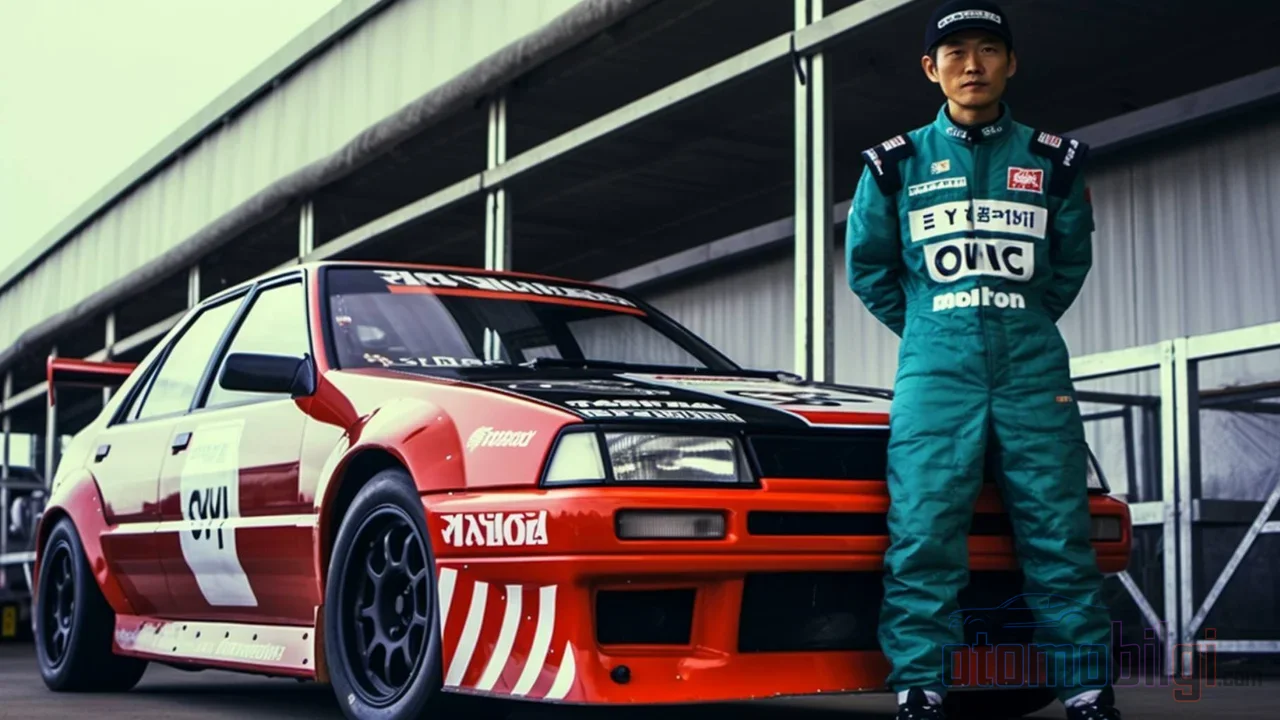
Imagine a mountain road, tires smoking through the corners, steam pouring from the hood of a Toyota AE86. Behind the wheel is a kid whose name nobody knew back then; today millions of drift fans call him Drift King, or Dorikin. So how did Keiichi Tsuchiya become the drift king? No support from a wealthy family, no pit pass, and at the start not even a proper race car. All he had was incredible steering talent and thousands of hours spent on mountain roads. Let's follow this story step by step.
A Kid Raised on the Snowy Roads of Nagano
Keiichi Tsuchiya was born on January 30, 1956, in the small town of Tomi near Nagano, Japan; the town's population was below even 30,000. His family wasn't wealthy, and he had no relatives in motorsport. So there's no classic "my dad bought me a kart" story here. But the road right by Tsuchiya's house led up to the mountain roads called touge - the toughest school of Japanese racing culture.
His first car was a Nissan Skyline 2000GT, and he usually drove it in the worst possible conditions: snowy, icy mountain surfaces in winter. He learned to control a car not on polished asphalt track, but while sliding. This detail matters a lot - because drifting is the art of controlling the slide, and Tsuchiya had learned this art at home before he even set foot in the racing world.
The slide cornering technique didn't escape others' eyes either. At the 1964 Japanese Grand Prix, Tetsu Ikuzawa, in a Skyline sedan, managed to pass a special Porsche 904 GTS by deliberately sliding the car at corner entries. So the seed had been planted long ago. But the one who would turn it into an art and a sport was that kid from Tomi, learning to slide on snowy roads at an age when he was still a child.
Following the Man Who Rode a Moped: The Fuji Freshman and AE86 Years
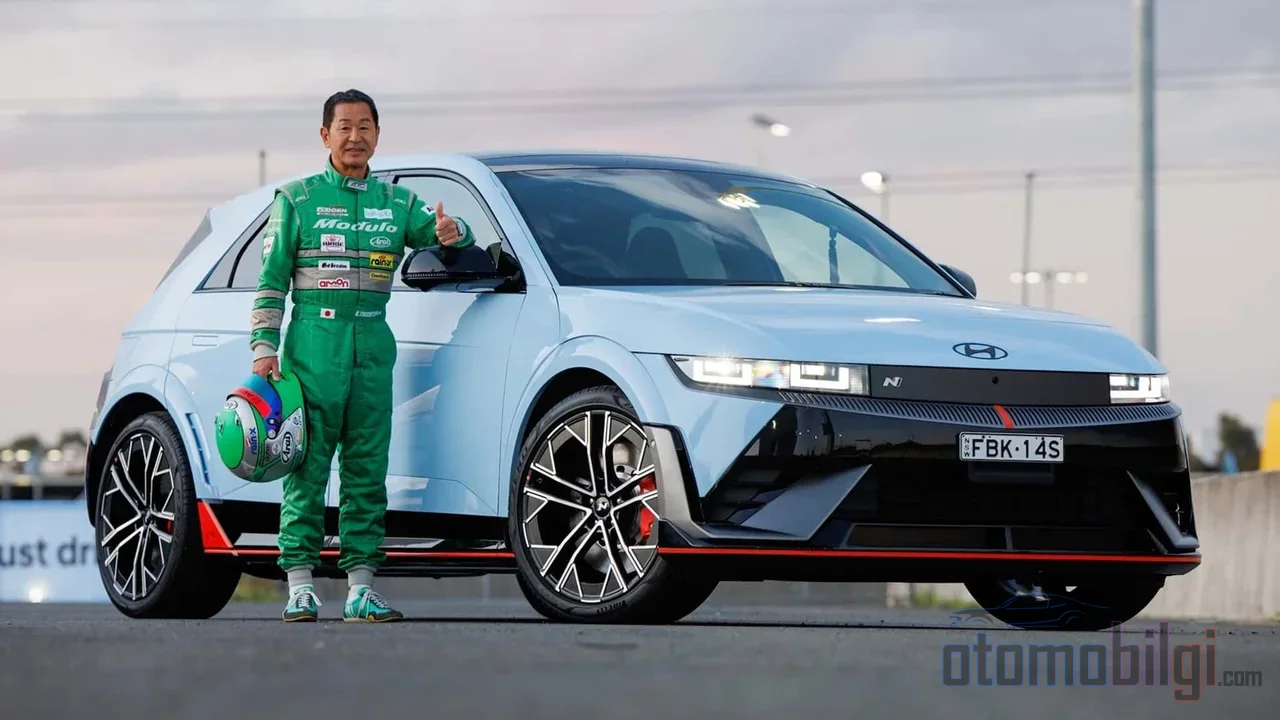
Tsuchiya's first idol was Kunimitsu Takahashi - a former motorcycle champion, a man known as the "father" of drifting. In the 1970s, Takahashi used the Skyline's famous excessive understeer in corners - the way its nose tucked inward - in a flamboyant style. Tsuchiya took this man as a role model so much that he was crazy enough to ride a moped from Nagano to Fuji Speedway. Just think about it once: a moped, from the mountains, to a national circuit. That's what passion is.
He made his professional debut in 1977 in the Fuji Freshman series; first at the wheel of a Nissan Sunny, then a Toyota Starlet. Coming from street racing culture, the world of hashiriya, set him apart from many classic racers. The man who won prizes on the track was the same man closing corners sideways in the mountains on weekends.
The real turning point came in 1984. His sponsors bought him the Toyota AE86 Sprinter Trueno, the car that would later become synonymous with his name: with its 1.6-liter twin-cam engine, lively rear axle, and 5-speed manual gearbox, a light, balanced car that was unbelievably willing to slide. That year he took 6 victories in the Fuji Freshman series. In 1985 he reached a Class 3 victory in the All Japan Touring Car championship with the AE86. In the following years he raced in the JTCC in cars such as the Sierra Cosworth, Skyline GT-R, Honda Civic and BMW E30; in 1988 he won the Toyota Cup and finished 4th on the Macau Guia circuit. . In 2001 he finished 2nd in the All Japan GT Championship with the ARTA team, driving a Honda NSX. .
Highlights
- Keiichi Tsuchiya was born on January 30, 1956; he rose from the small town of Tomi near Nagano to worldwide fame.
- In 1977 he competed in the Fuji Freshman series, and in 1984 he took 6 wins with the AE86.
- In 1995 and 1999 he took class victories at Le Mans; in 1999 he also fought for the top of the overall classification.
- The 1987 video Pluspy / The Touge made him the star of the drift world.
- He became a co-founder of D1 Grand Prix and its first head judge.
1987: The Forbidden Recordings and the Video That Gave Birth to the Drift King
Now we come to the boldest part of the story. In 1987, popular car magazines and tuning garages filmed Tsuchiya's drifting skills. Two legendary videos emerged: Pluspy (+P) and the two-part Dorikin Keiichi Tsuchiya – The Touge VHS tape released by Carboy Magazine. These recordings were among the first documented examples of drifting ever captured on camera, and they made the young man famous overnight.
The video was shot in an AE86 Corolla Levin on the Usui mountain pass. There was just one small problem: these were illegal street recordings, and it is said that Tsuchiya's racing license was nearly revoked when the time came. Think about it - he put his professional career at risk, giving away footage that introduced drift to the world. That's why I'd bet it's a rare occurrence in motorsport history.
But the real bridge had not yet been built. Carboy magazine organized the first drift event in 1986; then in 1988 or 1989 - sources cite both dates - Ikaten (Ikasu Hashiriya Team Tengoku) began, the first officially sanctioned drift competition. Ikaten was the event that carried illegal mountain drifting to professional circuit drifting: it had a team-based, tandem - that is, simultaneous back-to-back - driving format, and Tsuchiya sat in the judge's seat. The kids sliding on the streets could now become competitors.
A Drift King at the Top of Le Mans
Many people know Tsuchiya only as the drift guy, but the man was an endurance racing monster. Between 1994 and 2000 he raced 7 times in the 24 Hours of Le Mans. One of his brightest moments came in 1995: driving a Honda NSX, he won the GT2 class together with Kunimitsu Takahashi and Akira Iida, finishing 8th overall. The drift king was also the fastest in his class at Le Mans.
And 1999 was a complete movie scene. Racing in the Toyota GT-One, Tsuchiya battled for the lead right up to the final hour with the Ukyo Katayama and Toshio Suzuki team. In the final hour, while Katayama was pushing hard, a privateer BMW V12 LM car pushed him onto the grass, and a tire blew. Even so, they managed to set the fastest lap of the circuit that lap and finished the race as winners of their class. Its rankings in the general class are listed as 2nd or 9th in different sources; it is certain that they were one of the three cars that survived. The drama of that night, whether they won or not, remains one of the unforgettable moments in Le Mans history. In 2000, with a Panoz LMP-1 Roadster-S, he showed once again that he was playing for the podium, finishing 8th showed once again that he was playing for the podium.
He Wrote the Rules of Drifting: D1 Grand Prix and Drift Muscle
After Ikaten, drifting was now an organized sport, and a visionary was needed to write the rules of this sport. Tsuchiya became a co-founder and the first head judge of the D1 Grand Prix. He was the one who formulated the judging standards and scoring system of competitive drifting; so if you ever wonder what judges score in Formula Drift or any other series today, the roots go back to the lines Tsuchiya drew at D1.
In January 2011 he left D1, and this time focused on amateurs: together with Daijiro Inada he founded the Drift Muscle series, where he also served as a judge. In 2014 he partnered with the King of Europe Drift ProSeries and announced the King of Asia ProSeries; drifting turned into a bridge uniting Europe and Asia. The commercial side was not empty either: he ran his own aftermarket company, Kei Office, selling it at the end of 2005 to found DG-5. His signature jade green color is still recognized in the drift world as a visual signature of his.
The Drift Bible and Initial D: A Legend's Journey to the Screen
He also wanted to teach drifting to readers, beyond the judges' stand. In 2003 he released the Drift Bible: A Complete Guide to Drifting video. In this video he explained the six fundamental drifting methods one by one: handbrake (E-brake), shift lock, power over, braking, feint, and lift-off. Almost everyone who starts learning drifting today encounters a version of these six techniques; their origin goes back to here. In other words, the Drift Bible is something like the open textbook of drifting.
His influence on popular culture is probably deeper than most people realize. He served as a consultant and on-air visual supervisor for the Initial D manga and anime series, and even made a cameo appearance in the series. Even better: the life of the main character Takumi parallels Tsuchiya's own life - both had discovered the local touge, the mountain roads, while making deliveries for their family business. If you are looking for the real person who inspired Takumi, the door leads to Tsuchiya.
Even Hollywood could not give him up: in the 2006 film The Fast and the Furious: Tokyo Drift he served as a stunt driver and stunt coordinator, and also made a cameo in the film as a fisherman. He was the host of the Best Motoring video magazine, served as on-air consultant for the Wangan Midnight anime, and after 1995 appeared on screens as an F1 commentator on Fuji TV. Moreover, drifting's international influence is undeniable; Vaughn Gittin Jr., who in 2005 became the first American to win a pro drift, describes Tsuchiya as the godfather of the sport and as a judge whose approval he tried to earn. So for drift pilots around the world, his approval is worth more than a medal.
Today: The Aging Kingdom and the Green-Lit Approval
Tsuchiya is still making headlines. Hyundai's Ioniq 5 N DK Edition carries his official approval, and a long profile written for the occasion was published in October 2025. He turned 70 in 2026 and is still referred to as the man who made drifting a worldwide sport. So the kingdom looks comfortably upon its throne.
But then let's come to the final question: who invented drifting, and who popularized it? Sources point to names like Ikuzawa, and most of all Kunimitsu Takahashi, as pioneers of the technique. But the name who took drifting out of the circuit demonstration and turned it into an organized sport, who wrote its rules, filmed its videos, founded D1 and enabled its globalization is, without question, Keiichi Tsuchiya. So if Takahashi is the father of drifting, Tsuchiya is the Drift King.
So Who Exactly Is the Drift King?
Let's summarize: Keiichi Tsuchiya is a Japanese racing driver who made his name with touge drift videos shot in a Toyota AE86, who took drifting out of illegal street culture and turned it into an organized motorsport, who was a co-founder and first head judge of the D1 Grand Prix, and who also won class victories at Le Mans in 1995 and 1999. From the snowy mountain roads of Nagano to the night traffic of Le Mans, from the back seat of a moped to the throne of the world drifting scene, his story is one of the most inspiring rise stories in motorsport. And the best part: watching all of it through the eyes of a man who saw sliding never as fear, but as an art. How far do you think the future of drifting will advance on the foundation he built?
Sources
- Keiichi Tsuchiya - Wikipedia
- Drift King: The Story of Modern Motorsports Legend Keiichi Tsuchiya - Hagerty Media
- Keiichi Tsuchiya - 24h-lemans.com
- 1995-1999 The TS020 with Three Japanese Drivers - Toyota Gazoo Racing
- D1 Grand Prix - Wikipedia
- How Ikaten bridged illegal and professional drifting - Japanese Nostalgic Car
- The History of Drifting and The Future of Formula Drift - MotoIQ
- Dorikin Tsuchiya Keiichi: The Touge Part 1 (Video 1987) - IMDb
- Initial D: A worldwide, beloved saga - GTChannel