The Father of Drift: Kunimitsu Takahashi
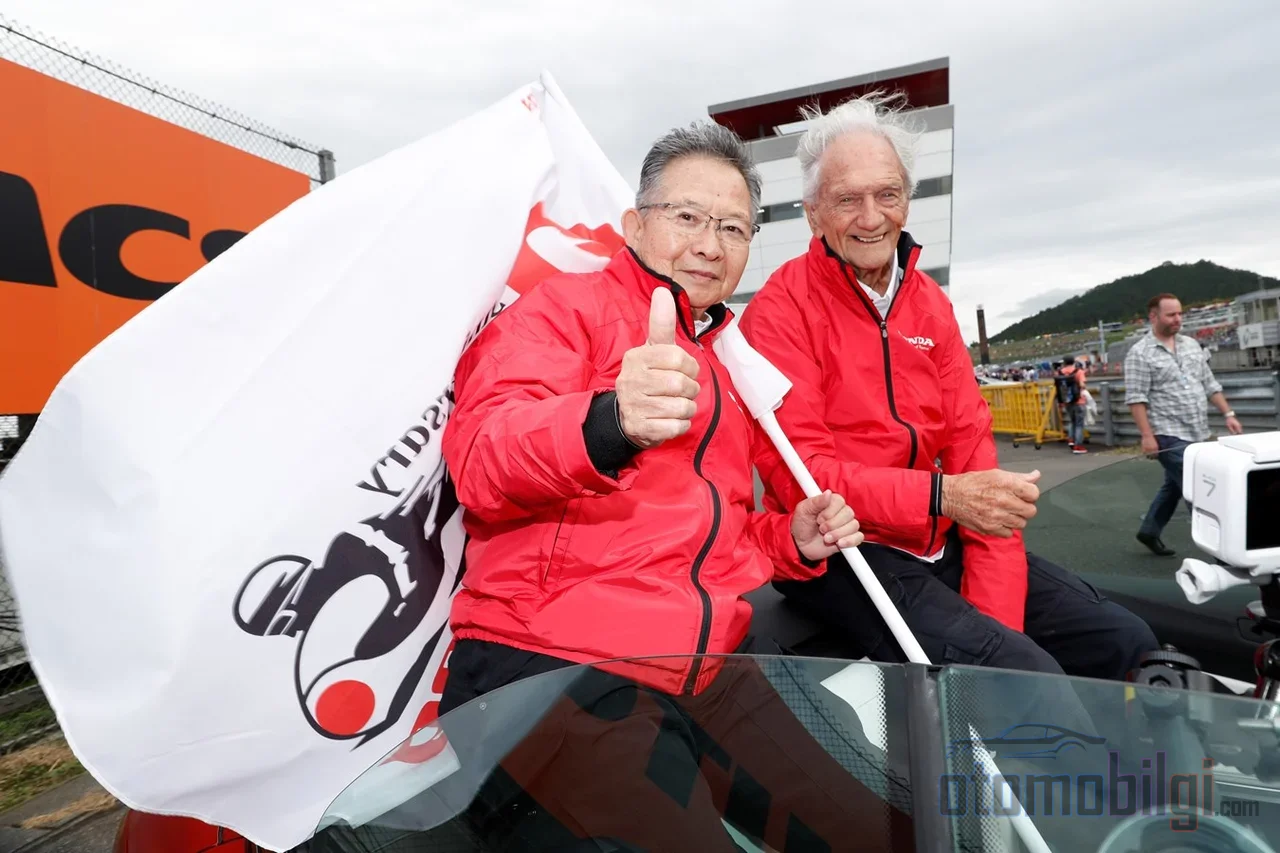
When a man dismounted from a motorcycle, no one imagined that years later, on mountain roads, cars sliding sideways through corners would turn into a sport. Today, if you follow the story of cars sliding through tire smoke all around the world, the trail leads at one point to the same name: Kunimitsu Takahashi. So who exactly was this man known as the father of drifting, and why does he deserve that title?
From Tokyo to Hockenheim: The First Japanese Motorcycle Champion
Takahashi's story begins not on four wheels, but on two. Born in Tokyo on January 29, 1940, Kuni-san entered racing in 1958 and became a Honda factory rider in 1960. Looking back today, that seems perfectly ordinary, but at the time it was a serious sign of trust; Honda was still making a name for itself in world motorsport and was giving the young Takahashi a chance.
A year later, that gamble paid off spectacularly. Takahashi became the first Japanese motorcycle rider to win a World Grand Prix, taking the 250cc German GP at Hockenheim in 1961. Just imagine: over his career, 4 World GP victories, 15 podiums, 129 starts, and 3 fastest laps. He climbed as high as fourth place in the 1961 250cc and 1962 125cc world championships. For a 20-year-old Japanese rider, that was practically a science fiction performance.
But motorsport is ruthless. After being seriously injured at the 1962 Isle of Man TT, his motorcycle career came to an almost complete halt, and Takahashi switched to cars in 1965. Looking back today, this was one of motorsport's greatest strokes of luck: if that crash had never happened, the story of drifting could have taken a completely different turn.
Highlights
- 1961: Became the first Japanese motorcycle rider to win a World GP at Hockenheim.
- October 23, 1977: Entered his only F1 race; finished the Japanese GP 9th in a Tyrrell 007. finished.
- Four-time All Japan Sports Prototype champion and winner of the Le Mans GT2 class in 1995.
- Team Kunimitsu was the first team Honda entered into Super GT; it won the championship with Jenson Button in 2018.
- Passed away from lymphoma on March 16, 2022 at the age of 82.
A One-Race F1 Adventure and the Four-Wheeled Golden Age
A single Formula 1 race. That is the entirety of Takahashi's F1 career. The Japanese GP on October 23, 1977 gave him that scene everyone who moved from two wheels to four dreams of: on the grid at his home country's race, in a (non-works) Tyrrell 007 powered by the Cosworth DFV engine. The result was a 9th-place finish - it brought no points, but he went down in the history books as a driver who completed a race in the most competitive series in the world.
His real fortune came after F1, and I think that is one of the things that makes his story so interesting. He won All Japan Endurance championships in a row from 1985 to 1987; in All Japan Sports Prototype, he also became champion four times, in 1985, 1986, 1987, and 1989 - all with the Porsche 962C. He went to Le Mans eight times (between 1986-90 and 1994-96) and in 1995, while winning the GT2 class with the Honda NSX, he finished 8th overall. Between 1987 and 1994, he also raced in Japanese Formula 3000. This man never stops, does he?
| Period | What He Did? |
|---|---|
| 1958-1963 | Motorcycle racing; first Japanese World GP winner in 1961 |
| 1977 | One F1 race: Japanese GP, 9th with the Tyrrell 007 |
| 1985-1989 | All Japan Sports Prototype champion 4 times (Porsche 962C) |
| 1986-1996 | 8 trips to Le Mans; 1995 GT2 class winner (Honda NSX) |
| 1994-1999 | JGTC with Team Kunimitsu; retired as a driver in 1999 |
| 2018 | His team won its first Super GT drivers' championship |
Who Is the Father of Drifting: Tsuchiya or Takahashi?
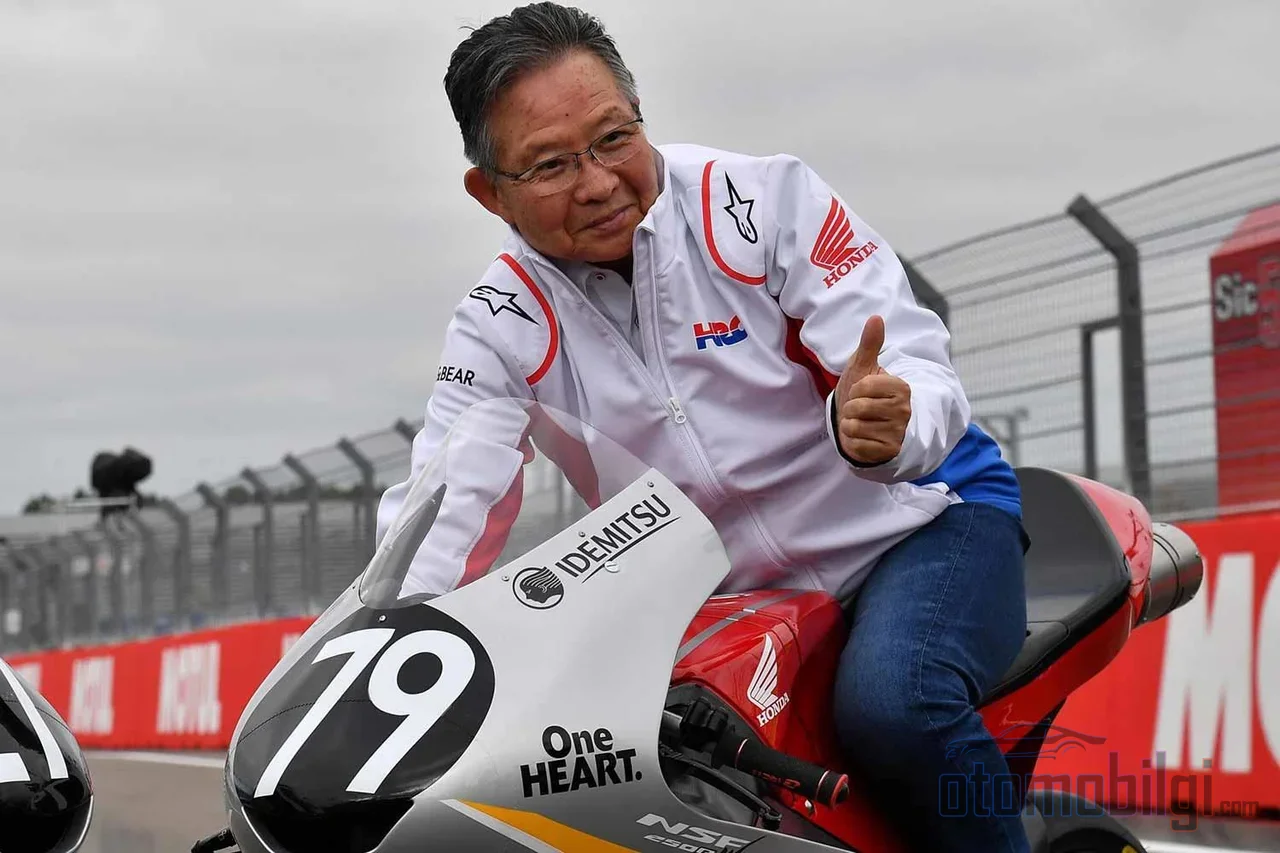
Here we come to one of every car enthusiast's favorite debates. When it comes to the father of drifting on the internet, most people first think of Keiichi Tsuchiya - the legendary figure nicknamed the "Drift King," who made the sport famous worldwide. But is that title wrong?
Yes, drifting as a discipline became popular in Japan in the 1970s, and its roots go back to the All Japan Touring Car Championship races. Also, mountain passes - touge in Japanese - were the cradle of this culture; the driving style born on Japan's narrow, winding mountain roads in the 1960s and 70s laid the foundation for professional series like D1 Grand Prix and Formula Drift. In this environment, Takahashi developed and mastered the technique of sliding cars sideways through corners to compensate for the weak grip and poor-quality tires of the era's vehicles. So he didn't choose an elegant style for himself; he found the fastest path that the conditions at hand offered him. Deliberately losing the grip of the rear tires while keeping the car under control to take a corner - this is the very definition of drifting, and Takahashi was doing it before anyone even called it a "sport."
Some motorsport historians, however, prefer to make a finer distinction: Tsuchiya should be credited for the sport's spread as the one who embraced the technique, turned it into his own style, and evolved drifting from a hobby into a culture; while Takahashi, having come before him, deserves the title of grandfather or regent. My view is this: both names are part of the story, and the truth is that Takahashi was Tsuchiya's direct source of inspiration. He even employed Tsuchiya on his team for a period. In short, there is a master-apprentice chain: Takahashi gave birth to the technique in racing, Tsuchiya introduced it to the world, and cultural phenomena like Initial D along with the D1 Grand Prix, which began in 2001, spread the fire everywhere.
Team Kunimitsu: A Career That Didn't End With Retirement
Takahashi's connection to racing wasn't limited to the driver's seat. Founding his own team became the longest-lasting chapter of his story. The team's founding year is listed as 1992 in sources - others count the official founding as 1994, for the first JGTC season; the difference is probably in the transition between the preparation phase and the official founding. The team eventually raced in the GT1 class in 1994 with the Porsche 911 RSR Turbo alongside Keiichi Tsuchiya, and in 1996 moved to Honda in the GT500 class, becoming the first team to enter a Honda car in the JGTC.
A summary of the team's success is as follows:
- 1996: became the first team that brought Honda into the JGTC/Super GT world; hit the road in Raybrig colors.
- 1998: First JGTC race victory - Round 6 at Mine.
- 1999: Won Round 2 at Fuji, and that same year, took his final driver victory at the age of 59 before retiring.
- 1993-2007: Served as president of the Super GT organizer, the GT Association.
- 2018: First drivers' championship with Naoki Yamamoto and Jenson Button - the #100 Raybrig Honda.
Winning a race and retiring at the age of 59 - let that sink in. Even today, most drivers hang up their helmets in their mid-40s, while this man built his career in two separate disciplines, across two separate centuries.
His Passing and a Legacy Still Racing in 2026
On March 16, 2022, at the age of 82, he passed away from lymphoma. He left behind a sport, and beyond that, a culture. Nissan honored him in Japan with a special exhibition after his death - one of the most meaningful gestures possible for the father of drifting, of course at the home of the very brand he first battled with his technique.
So what is the situation today, in 2026? Here comes the sweetest part of the story: Team Kunimitsu is still at the peak of Super GT. Running the #100 STANLEY Honda this season, the team sent a powerful message by winning the 3-hour championship round at Autopolis on October 18, 2026, with Naoki Yamamoto and Tadasuke Makino. An even more striking detail: one of the team's three-time series champions was only able to hold Takahashi's record as the oldest winner in every class for 168 days. His records are still being chased even after his death - to me, that is the clearest proof of a legend.
The Void He Left in Today's Drift Culture
After Keiichi Tsuchiya, and also after projects that contributed to the explosion of culture-defining works like Initial D from 1995 onward, drifting; transformed into a massive industry with D1 Grand Prix, Formula Drift, and local series all over the world. Takahashi's mark is in every corner of this ecosystem: the tandem format, the judging criteria, the car setup philosophy - all of it descends from one man trying to gain speed by sliding his low-grip car down mountain roads.
It is hard to describe the void he left in the culture after his passing, because his role was not the kind that can be categorized. He neither founded a series nor gave symposiums; he was simply very fast, and he found that speed by pushing the car's grip to its limits. Today, those who call him the "father" and those who are more cautious and say "grandfather" are actually saying the same thing: he is the reason this sport exists in the form we know it.
Now I want to ask you: who do you think deserves this title? The one who invented the technique but never made the sport famous, or the one who introduced it to the world? I'm curious in the comments - but first I recommend you watch that Autopolis victory; an old master's team is still showing the young ones how it's done.
Short Answer: Who Is the Father of Drifting?
The name most widely credited as the father of drifting is Kunimitsu Takahashi: the first Japanese motorcycle rider to win a World GP, in 1961, who raced a single F1 event in 1977 and, in the 1970s, developed the technique of cornering by sliding cars in a controlled manner in Japan. Keiichi Tsuchiya embraced this technique and turned drifting into a worldwide culture, which is why he too is regarded as the sport's greatest ambassador; for that reason, some consider the title of grandfather or regent more fitting for Takahashi. Both names are inseparable parts of the story, and Team Kunimitsu keeps this legacy alive today with the team's victories in Super GT.
Sources
- On the Passing of Kunimitsu Takahashi - Honda.Racing
- Kunimitsu Takahashi - Wikipedia
- Team Kunimitsu - Wikipedia
- Team Kunimitsu Makes Championship Statement With Autopolis 3h Win - DailySportscar
- Kunimitsu Takahashi (1940-2022) - Japanese Nostalgic Car
- What is drifting? - Red Bull
- The Japanese Origin Story of Drifting - Red Bull Türkiye
- Touge Driving: Japan's Mountain Roads - Apex Custodian Club
- A Look Back At The Story Of Drift Racing - HotCars
- Kunimitsu Takahashi on the birth of modern motorbike GP racing - Motorsport Magazine