How Does the Penalty System Work in GT Racing?
Share This Page
In GT racing, the penalty system is a deterrent mechanism in which stewards evaluate every incident, from track limits violations to contact between drivers, according to predefined rules. Penalties such as time penalties, drive-through and stop-go become part of pit strategy; with repeated violations, penalties escalate and can completely reverse the outcome of a race. In other words, while systems like BoP try to balance the cars, the penalty system keeps drivers and teams in check - neither side can think about ways of winning without factoring in the fear of penalties.
Highlights
- Time penalties are usually 5 or 10 seconds and are served during a pit stop.
- The common system for track limits violations: a warning, then a driver reprimand, then a penalty.
- At the 2026 24 Hours of Spa, the starting order changed with 10 cars given grid penalties; the winner was Lionspeed GP.
- In the Pro-Am order, the presence of a Bronze driver on the team is mandatory in most series.
- A drive-through means not stopping at the pit box; stop-go is a penalty involving a 10-second stop.
What Are Track Limits and Why Do They Take Them So Seriously?
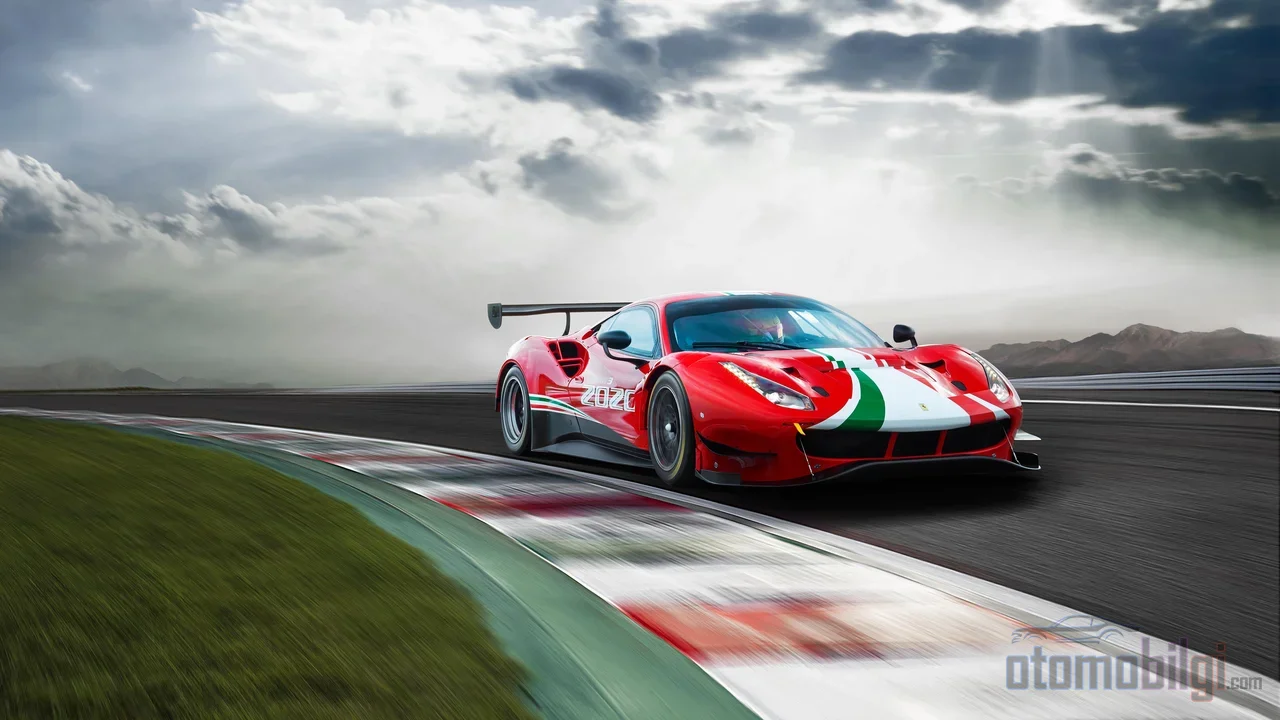
Track limits are the line that defines how far you can take the car. The core of the rule is very simple: the track is generally defined by the white line, the white line itself counts as part of the track, and if a wheel crosses this line, the driver is considered to have left the track. Kerbs are included within the limits in the rules of some series. The goal is to prevent any driver from gaining unfair time by cutting the track or using the run-off area. Just imagine: if you gained 0.2 seconds in every corner by putting half the tire on the grass, the difference over a 40-corner lap would be significant - that's why the stewards are so strict about this.
In international race control, drivers are expected to stay within predefined limits throughout the race, and there must be a legitimate reason for leaving the track. The key phrase here is: legitimate reason. Losing control under braking while defending is one thing; routinely cutting the chicane every lap is something entirely different.
How Is a Violation Detected?
In the virtual world, this is clear-cut: in Assetto Corsa, all four wheels crossing the line counts as a violation, while iRacing measures the vehicle's center point and evaluates each corner separately. Le Mans Ultimate uses a system that assigns points for violations; if the threshold is exceeded, a drive-through penalty follows. In real life, each track may have its own rule, and stewards' decisions can also take subjective factors into account, such as whether the driver could have stayed on the track. So the clear on/off logic of sim racing turns into a bit more of a judge's job in real life.
Another interesting detail: in sessions outside the race, a violating lap that gains time is invalidated, and on platforms like Le Mans Ultimate, a violation after the final heavy braking point can also affect the next lap. Needless to say, there are drivers who complain that having both that lap and the next lap deleted in Gran Turismo is extremely frustrating - forum fights over this topic are legendary.
Types of Penalties: The Ladder From 5 Seconds to Disqualification
The most common penalties in GT races are time penalties; repeated track limits violations and small, avoidable contact are typically punished with these. A 5-second penalty is served at the next pit stop, with the car waiting the specified time in its pit box. If the mechanics touch the tires before the time is up, the penalty is invalidated and an additional sanction follows. What if you don't pit? Then the time is added to your race finishing time - in fact, many races are decided this way.
| Penalty Type | How Is It Served? |
|---|---|
| Time penalty (5-10 sec) | Served at the next pit stop; added to finishing time if there's no pit |
| Drive-through | Passing through the pit lane respecting the speed limit without stopping |
| Stop-go | Stopping for 10 seconds in the pit box; mechanics cannot work |
| Grid penalty | A 5-10 place drop at the next race |
| Penalty point | Added to your license; exceeding the limit results in a race ban |
| Disqualification | Removal from the results in case of a serious rule violation |
Climbing this ladder follows rules too. Under British racing regulations, for example, a fourth track limits violation means a 10-second addition to race time, the fifth means a drive-through penalty, and it escalates from there. The classic warning-warning-penalty rhythm is also common in real life: one violation is met with a warning, and if the same violation is repeated, it is referred to the stewards. The stop-go penalty is a rare and severe sanction; the 10 seconds when the mechanics cannot touch your car, you just stop and continue on, is actually very painful.
At the far end of the scale are penalty points and disqualification. Points added to the Super License are valid for 12 months, and a driver who reaches 12 points receives a one-race ban - at the 2024 Azerbaijan GP, Kevin Magnussen hit exactly that limit and was banned from the race. Technical rule violations are even riskier: at the 2025 Las Vegas GP, McLaren drivers Norris and Piastri were disqualified because rear skid wear fell below the 9-millimeter minimum. A similar logic applies in the GT world: ruling strictness goes down to the last technical detail.
How Does the Stewarding Structure Work?
In international GT series, the workflow is roughly as follows: the race director reports violations to the stewards, and the stewards also investigate incidents themselves if they wish. In post-race reviews, the parties involved are usually summoned to a stewards' hearing. So the race ending doesn't mean everything is over; even in the middle of a podium celebration, a flag can go up. This is one of the reasons teams don't immediately jump to celebrating post-race results.
In series like GT World Challenge Asia, there is also an interesting automatic balancing system: in every race, specific time penalties are applied to the cars and drivers finishing in the top three in GT3 and GT4; in the Japan Cup, a similar practice works through the classes. The goal is to make it harder for a continuously winning team to start the next race with the same advantage. You can think of it as a mirror image of BoP: BoP slows the car down, while penalties of this kind balance the workings.
A Real Example: How Did the Penalty Change the Result at the 2026 Spa 24 Hours?
The CrowdStrike 24 Hours of Spa, run on June 27-28, 2026, was part of the GT World Challenge Europe Endurance Cup and the Intercontinental GT Challenge, and it demonstrated the power of the penalty system twice. A long list of grid penalties before the race changed the starting order: Ten cars were penalized, and four of them had to start from the back. In other words, the race was run on paper with a different order before it had even begun.
The lesson within the race, however, came not from the winning side but from a team fighting for third place. Boutsen VDS's No. 2 Porsche received a 5-second penalty for the trio due to contact during the battle for third, and this tiny amount of time completely destroyed their podium chances. 5 seconds in a 24-hour race - yes, math can sometimes be merciless. The winner was the Porsche customer team Lionspeed GP. In Spa, where we say customer racing beats at its heart, the fact that penalty rules determine results like this proves how much of a real strategy layer the entire system is, from driver categories to the stewards.
Are There Extra Rules for Amateur Drivers in the Pro-Am System?
The short answer: yes, quite a few. FIA driver categories are divided into Platinum, Gold, Silver and Bronze, and Bronze refers to amateur, i.e. gentleman drivers, who pursue racing as a passion rather than a career. The pro-am model at the heart of the GT world brings these two worlds together in the same car, but there are rules for it.
- Mandatory pairing: Pro-Am combinations must consist of a Bronze driver together with a Silver, Gold or Platinum driver, and each pairing is subject to organizer approval.
- Solo penalty: In British GT, if a Platinum or Gold professional is classified alone without a regular Bronze teammate, they must forfeit the points they earn.
- Car usage: According to the GTD rules updated by IMSA in 2022, an Am driver was required to use the car in both qualifying and the race start; the rules were relaxed to encourage the inclusion of Bronze drivers.
- Class-specific BoP: In the 24H Series, from 2025 onwards, a special SEMI-PRO BoP is applied to teams without an AM driver.
There is also a difference between sprint and endurance formats: In the AM class, only two Bronze drivers are allowed in sprint format, while this number rises to three in endurance races (except 24-hour races). In short, even how much time an amateur driver spends in the car is framed by the rules.
Team Orders: What Do the Rules Say?
Team orders are directives given by management to drivers in multi-car efforts, aimed at influencing on-track movements. When a team's two cars carry a risk of colliding, it makes sense to give orders to save fuel, reduce the risk of mechanical failure, or avoid a crash - but that is also where the debate begins. Since driver changes are already a strategic decision in endurance racing, who gets called to the pits and who gets left ahead are also part of this coordination.
In GT, things work a bit differently from F1; because drivers compete in different categories and often alongside their patrons, meaning amateur drivers who bought the car. Still, the penalty system applies here too: avoidable contact is penalized, and if team orders turn into a collision, the stewards' desk convenes quickly.
A Debate on BoP, Sim Racing, and the Deterrence of Penalties
The debate over whether penalties are fair is one of the GT community's favorite topics. On the BoP side, some see the system as a kind of tax on success: the team that performs well gets equalized in the next race, which discourages competition. The opposing view is that BoP is the only mechanism that makes it possible for manufacturers to race on equal terms. Both sides have concrete examples, and the truth is that finding balance is a job that leaves no one entirely happy.
In terms of deterrence, the system is being tested in different ways. In sim racing leagues, steward panels review the race afterwards and apply penalties; being involved in multiple incidents with the same car can lead to a heavier penalty, or even disqualification from the race. In real life, subjective factors can creep into a steward's decision: did the driver leave the track, but did they do so beyond their control? This difference between the clear algorithm of sim racing and the human judgment of a real steward differentiates the penalty culture of the two worlds. Which do you think is fairer - cold calculation, or human judgment? In my opinion something in between, but think it over and let's discuss it in the comments.
To sum it up: The penalty system in GT racing is a layered structure extending from track limits to contact assessment, from grid penalties to penalty points, and it is intertwined with pit strategy. As Spa 2026 showed, even 5 seconds can decide a race. Watching a race knowing this is like trying to read the calculations on the pit wall - once it sinks in, you can never watch it the same way again.
Sources
- Chat GT3: What are the Types of Penalties?
- The beginner's guide to F1 penalties
- What are Track Limits in Circuit Racing
- Track Limits - Motorsport UK
- Incidents And Sanctions - GT World Challenge Asia Sporting Regulations
- 2024 Sporting Regulations - British GT
- Understanding track limits - Le Mans Ultimate Guide
- Balance of performance - Wikipedia
- Porsche customer team Lionspeed GP wins the 24 Hours of Spa - Porsche Newsroom
- Starting Grid for Spa 24 Hours shaken up by penalties - Motorsport.com
- 2026 24 Hours of Spa - Wikipedia
- IMSA modifies GTD rules, boosts recognition of Bronze drivers - Racer.com
- Sporting Regulations 2025 - 24H Series
- FIA Driver Categories - GridGuy
- Team orders - Wikipedia
- Penalties - Apex Racing League GT3 Trophy Rules