GT World Challenge: How Does a Season Work in Europe?
Share This Page
GT World Challenge Europe is a season championship organized by SRO Motorsports Group and run with cars compliant with FIA GT3 regulations: the series is split into two wings, namely the Sprint Cup and the Endurance Cup, each wing contains five race weekends, and the overall champions of the season are determined by combining the points from the two wings. So while it looks like a single race series, in fact there are two different disciplines that complement each other under the same roof, plus a whole stack of parallel championships. It sounds complicated, I know. But once you grasp its logic, following this series becomes incredibly enjoyable. Let's break it down step by step.
Highlights
- The Series Consists of 10 rounds : 5 Sprint Cup and 5 Endurance Cup weekends.
- In the Sprint Cup, every weekend features two 60-minute races; in the Endurance Cup there are 3-hour and 6-hour races as well as the CrowdStrike 24 Hours of Spa .
- Drivers are rated according to the FIA classification from Platinum down to Bronze and race in the Pro, Gold, Silver and Bronze classes.
- The overall championship is determined by the combined total of Sprint and Endurance points.
- In 2026, the Sprint Cup broke a record with 45 cars ; the season finale was run at Portimão on October 15-18.
What Is the Difference Between the Sprint Cup and the Endurance Cup?
The heart of GT World Challenge Europe is this split structure. Both run the same GT3 cars, the same brands and the same tire supplier, but their formats feel completely different.
Sprint Cup: Short, sharp weekends with two races
The Sprint Cup lives up to its name. Every weekend there are two 60-minute races and each car is shared by two drivers. A mandatory driver change takes place within a time window set at the middle of the race. Since the distance is short, the margin for error is nearly zero: qualifying laps are extremely important, and the opening laps up to the first corner are pure chess. Teams like Emil Frey Racing have recently focused solely on the Sprint Cup; the distance is short, the calendar is packed, and the game is built entirely on speed.
Endurance Cup: A dance with time
The Endurance Cup, on the other hand, has five rounds, and the races typically last 3 or 6 hours . The crown jewel of the season, which also distributes the most points, is the CrowdStrike 24 Hours of Spa: 24 hours of non-stop racing. In this format, cars are usually shared by three drivers; outside the Pro class, a fourth driver is also permitted at Spa. Teams like Rowe Racing have traditionally focused on this wing, because the appeal of the 24 Hours always keeps entries in the Endurance Cup higher.
How Does a Race Weekend Work?
The weekend flow of the series actually follows a very regular rhythm. Typically you start with Free Practice 1 . One of the new features arriving in 2026 is here: the newly added Free Practice 2, replacing Pre-Qualifying and giving teams more flexibility for setups. In Endurance rounds, FP1 and FP2 each last 90 minutes, and FP2 can also be used to determine the grid if qualifying cannot be held. In other words, teams are given plenty of room to practice.
Then we come to qualifying. Since 2018, qualifying has consisted of three segments, with a different driver in the car in each segment; the car's total time determines the grid. This is a bit like doing group projects at school: the times of both the fast and the slow driver are added up, and the car is ranked as a single entity. As the grids have grown, this system has evolved too: split sessions were introduced for the Sprint Cup in 2025 and for the Endurance Cup in 2026 . Silver/Bronze Cup cars run in the 10-minute Group A, while Pro/Gold Cup cars run in the 10-minute Group B; Q1A and Q1B run back to back, followed by a 5-minute break, and the same pattern is repeated with Q2 and Q3. This means less traffic and cleaner laps.
Team, Driver, Manufacturer: How Are Points and Championships Distributed?
This is the part where new viewers get stuck the most, because there is no single championship table. Teams can compete for three separate titles: Endurance Cup, Sprint Cup and the combination of the two, the overall championship. Sprint and Endurance points are combined to determine the overall champions for drivers and teams. In other words, the answer to "who is the champion?" depends on which table you look at. It is completely normal for newcomers to find this confusing at first - we have all been through it.
What's more, there are also parallel class championships: alongside the overall title, the Gold, Silver and Bronze Cups proceed as separate standings. Team performance is also carried over into a global table; although teams are privately run, their results contribute points to the global GT World Challenge manufacturers' championship, alongside the American, Asian and Australian series. In Europe, Aston Martin, Audi, BMW, Chevrolet, Ferrari, Ford, Lamborghini, McLaren, Mercedes-AMG and Porsche compete. This clash between manufacturers is one of the driving forces behind the series.
It was this combined points structure that made the 2026 season finale go down in history: heading into the end of the season, Team WRT led with 142.5 points, while Winward Racing was only 5 points behind with 137.5 . In the drivers' standings, Lucas Auer and Maro Engel were tied at the top with exactly 131.5 points . Commitments of drivers who also race in other series such as WEC or DTM can seriously affect the points table, because a driver who does not attend all rounds loses out.
Pro, Gold, Silver, Bronze: The Driver Classes That Shape the Grid
The most special thing about GT racing is that world-famous professionals share the same race - and sometimes the same car - with amateurs who are just starting their careers in road cars. To make this fair, the FIA Driver Categorisation system rates drivers from Bronze to Platinum . Roughly, the table looks like this: Silver drivers are rising talents, semi-professionals, or young professionals with notable results; Bronze refers to amateurs for whom racing driving is not a profession, in other words the so-called "gentlemen". To compare this system to everyday life, imagine a club football tournament where each team could include a few professional players in its squad: the levels are mixed but the rules maintain the balance.
How are the classes structured per car?
- Pro: No driver restriction; competing for the overall driver and team championships. Limited to three drivers at Spa.
- Gold: A class where Gold drivers are allowed, with one Silver permitted per car.
- Silver Cup: Teams made up entirely of Silver-class drivers.
- Bronze Cup: In Sprint rounds, at most one Platinum and one Bronze; in Endurance rounds, additional Silver drivers are allowed.
The Gold and Bronze Cups were introduced in 2023, and that same year saw the final season of the old Pro-Am Cup. Behind this restructuring lies a driver rating adjustment: the class structure was changed with the aim of distributing the growing Silver pool. Let's also be honest: this rating system is still seen as a "fuzzy" business in sports car racing; it is not always clear why one driver counts as Silver and another as Bronze. Still, the financial reality of the pro-am model rests on top of this system: amateurs in the Bronze class provide the resources that make the championship financially possible, while Gold and Platinum professionals bring the fan interest.
Pit-Stop and Driver Change Rules
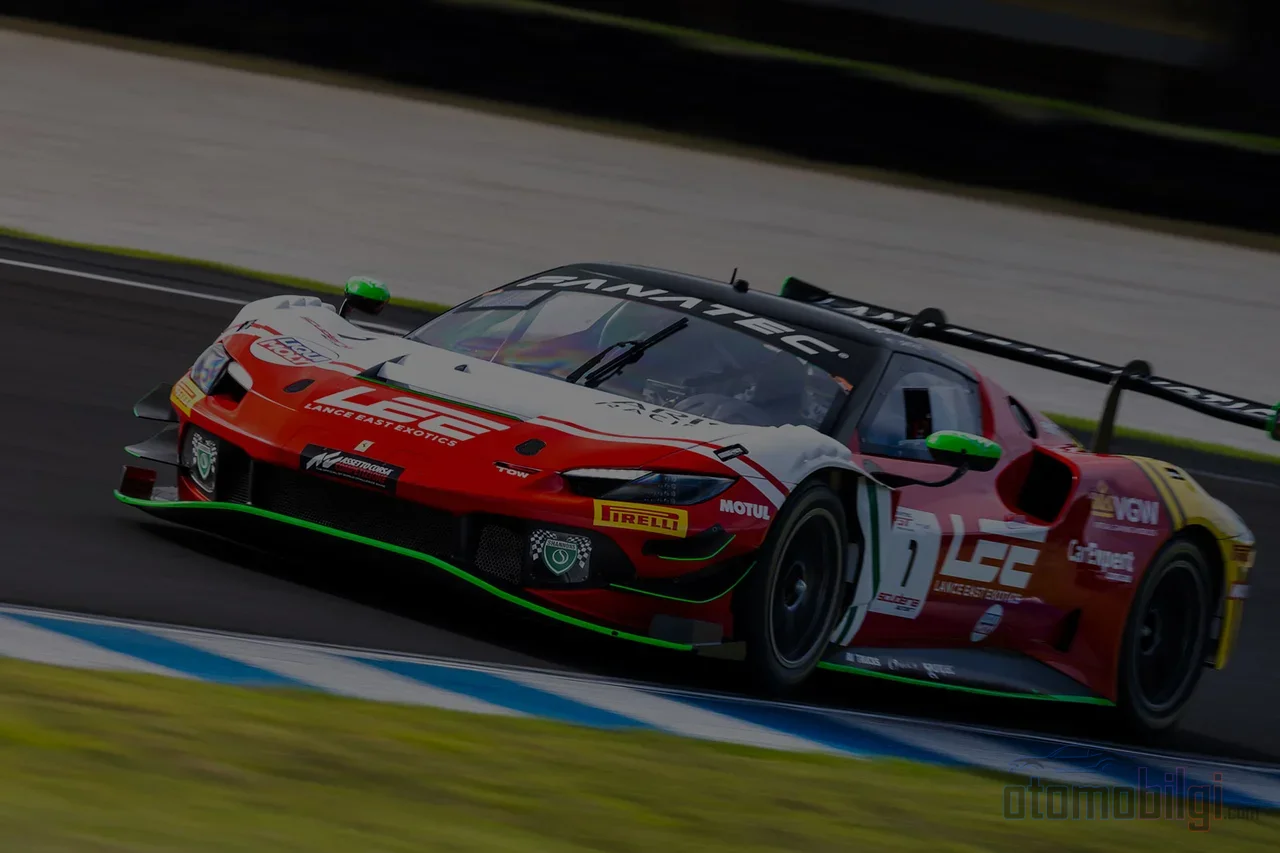
What determines the rhythm of middle-distance and long-distance races is the pit-stop rules. The basic rule is simple: the driver change can be made at any moment of the pit-stop, and in the Sprint format there is a mandatory driver change within the designated time window. But you do not have to change drivers or change all four tires at every pit stop; teams build their strategies accordingly. In the Endurance format, there is a mandatory pit window per race for driver and tire changes, and no refueling takes place during the race; in other words, you cannot play with fuel, but you shape the game with tire and driver tactics. Pit window timing is the reason this series is thought of as more of a "chess" game than Formula 1. If you come out one lap too early you get caught in traffic, if you come out one lap too late you wear out the tires.
Driver Rotation and the Flexible Structure of Teams
In this series, the relationship between drivers and teams is far more flexible than you might imagine. Every model exists, from full-season commitments to one-off entries; especially for the 24 Hours of Spa, even single-race invitations are common. Factory drivers can race for different teams: in 2026, Nicolas Baert raced within the same season for Lionspeed GP (Porsche), HRT (Ford) and Comtoyou (Aston Martin) cars. There is almost no limit to the number of cars teams can enter; teams range from one to six cars. So the grid paints a slightly different picture every weekend, and that makes following the series full of surprises.
2026 Season and the Barcelona Finale: How Was the Championship Decided?
The 2026 season was the clearest proof of how much the series has grown: the Sprint Cup with 45 cars broke a record. The calendar remained largely the same; one event was moved from May to September, and the season finale on October 15-18 settled at Portimão(Algarve).
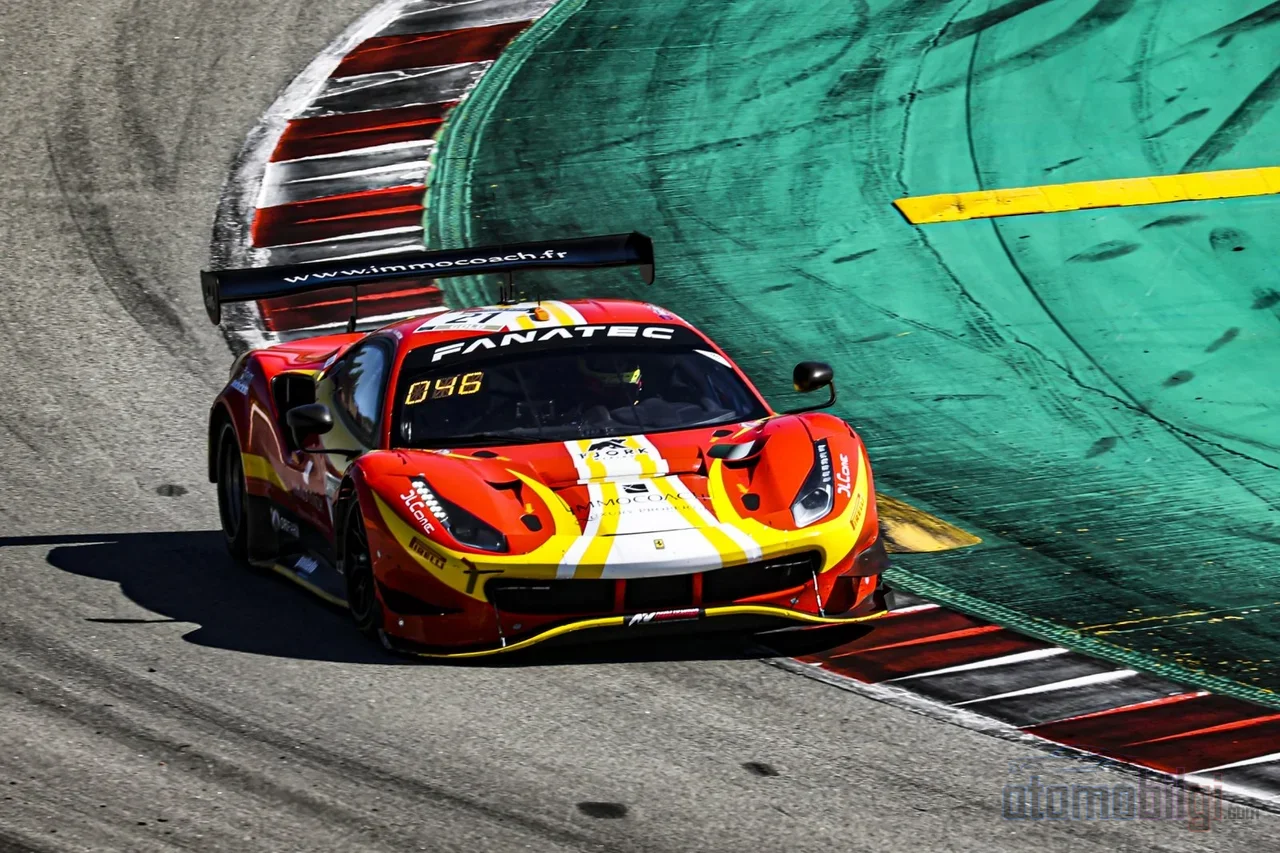
If you want a concrete example, look at the October 2-4, 2026 Sprint Cup finale in Barcelona: this round closed out the Sprint Cup season as Round 9, and the championship battle was decided at Barcelona-Catalunya. Thierry Vermeulen and Ben Green won the round with Emil Frey Racing's Ferrari 296 GT3 EVO #69 car; AF Corse and Tresor Attempto Racing completed the podium. The class championships were also settled here: Matisse Lismont and Ignacio Montenegro became Sprint Cup Silver drivers' champions, while the #93 car took the Sprint Cup Bronze title. The overall picture at the close was breathtaking: Team WRT held its lead in the teams' standings, while in the drivers' standings Auer and Engel reached the top on equal points. That is exactly what the series is about: when the points of two separate disciplines combine, everything stays open until the last race.
There is also a nice bonus: since 2023, the team that wins the Bronze Cup earns, if it enters all 10 rounds of the series, an invitation to the 24 Hours of Le Mans LMGT3 class. The first winner was Pure Rxcing, which raced at Le Mans in 2024. So even an amateur-heavy team can open the door to Le Mans at the end of a perfect season. Is that not motivating?
Looking back, you can see how competitive the series is: Team WRT won 6 of the 12 possible overall titles (with 4 Audi and 2 BMW); Akkodis ASP ranks second with three championships (all with Mercedes-AMG). Among drivers, Raffaele Marciello holds the record with 3 overall championships ; in 2025, Kelvin van der Linde went down in history as the first non-European overall champion.
A Beginner's Summary: When to Watch What?
If you are watching this series for the first time, let me draw you a simple roadmap. If you are wondering who will be the overall champion, follow the combined total of the Endurance and Sprint points; a single wing's table only tells you half the story. On Sprint Cup weekends, be sure not to miss the qualifying sessions, because in short races grid position is everything. In the Endurance Cup, however, the real joy of watching lies in pit-stop strategy and driver rotation. Thanks to BoP, the balance of performance system, cars from different brands run close to each other; we decided to focus here on how the season works - you can find the deep details of this topic in our BoP article on our site. Finally, leave a question in your mind: if it were up to you, would you go for the sharp speed of the Sprint Cup, or the 24-hour marathon of Spa? Whatever your answer, this series offers a show that will prove you right either way.
Sources
- About the GT World Challenge Europe powered by AWS
- GT World Challenge Europe Sporting Regulations
- Sporting FAQs - GT World Challenge Europe
- Barcelona, Spain, 1-4 October 2026 (official event page)
- Watch Live - Portimao, 15-18 October 2026
- Standings GT World Challenge Europe 2026
- GT World Challenge Europe - Wikipedia
- 2026 GT World Challenge Europe
- Chat GT3: How Are Driver Rankings Categorized?