IMSA, GT World Challenge and Super GT: The Same Cars, Different Rules
Share This Page
The same GT3 car runs in GT World Challenge in Europe, in IMSA's GTD class in North America, and on Super GT's GT300 grid in Japan; but in each series with different rules, a different Balance of Performance (BoP) approach, different tires and different race formats. In other words, that race car you bought (or dream of) takes on practically three different characters from continent to continent. In this article, we put the journey of the same car in three championships side by side.
Highlights
- The same GT3 car races in GT World Challenge in Europe, IMSA GTD in North America, and the Super GT GT300 class in Japan
- The first application of BoP was made at the end of 2004 so that the Maserati MC12 could race fairly in the FIA GT Championship
- On the SRO side, the standard tire is Pirelli; in IMSA, GTD and GTD Pro use a single-spec Michelin tire
- In Super GT GT300, more than 40 car models compete in the same series
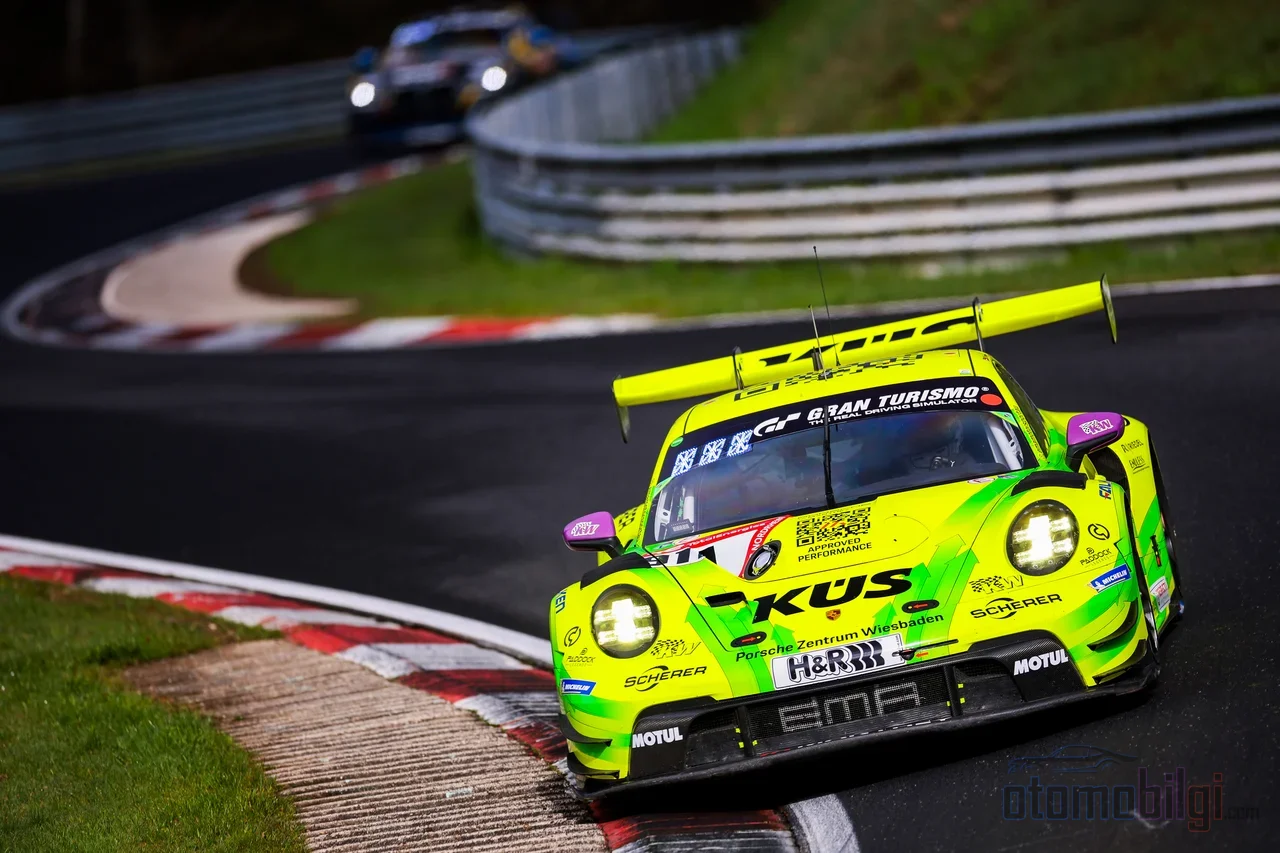
- The Spa 24 Hours is considered the world's biggest GT3 competition; 15 Porsche 911 GT3 R in the same race
What Is BoP and Why Is It Considered the Heart of GT3?
The idea behind GT3 is simple but bold: open up unlimited development space for manufacturers and control performance through regulation. In the early 2000s, costs in international GT racing had skyrocketed and manufacturer diversity had narrowed. SRO founder Stéphane Ratel proposed performance control and a customer-oriented GT category as the remedy instead of open development; thus the concept of GT3 was born. The idea of BoP was put into practice by FIA Technical Advisor Peter Wright, with the support of FIA President Max Mosley.
So what exactly does BoP do? Let me give an analogy from everyday life: think of giving the tallest kid in class a soccer ball instead of a basketball. The goal is for everyone to compete fairly in the same arena with different equipment. In practice, BoP is assigned based on testing and analysis of a model's performance in previous races; items such as minimum weight, air restrictor diameter, maximum boost pressure for turbocharged cars, minimum ride height and refueling restrictor are adjusted. In other words, you're not buying power, you're buying balanced competition.
Let's clarify one nuance right away: as Super GT's technical advisor Hiroshi Kato also emphasized, BoP does not mean making every car exactly identical. The goal is to reduce the 5-second gap between first and second to 0.5 seconds and close the gaps without forcibly changing the order. This is something different from the "success weight" handicap, which is awarded based on results and makes it harder for the same car to win back-to-back: BoP is model-based, while success weight is team-based.
The Same Car, Three Championships: What Are the Differences Between the Series?
Now let's get to the main question: what changes for the same GT3 machine from continent to continent? The short answer: almost everything - how BoP is calculated, the tire supplier, the race format and the driver profile on the grid.
| Feature | GT World Challenge | IMSA (GTD/GTD Pro) | Super GT GT300 |
|---|---|---|---|
| Race format | Sprint Cup (about 1 hour) and Endurance Cup | Multi-class races, long endurance events | Numerous models with different power and body styles, multi-make tires |
| Tires | Pirelli P Zero DHG (treaded) | Single-specification Michelin | Multi-make tires |
| BoP approach | SRO manages BoP in its championships | Class-based performance windows | SRO determines BoP based on data, adds on top of GTA |
| Driver mix | Pro-Am mix, FIA categorization | All-pro in GTD Pro, mixed in GTD | Wide range of models and drivers in GT300 |
Europe: Two Formats, One Championship Story
GT World Challenge Europe runs through two separate disciplines: the Endurance Cup and the Sprint Cup. Each format contains an equal number of events and the two together determine the overall championship title; separate team and driver titles are also awarded in each discipline. Sprint races typically last one hour and each car is shared by two drivers; endurance events are much longer. The global picture in 2026 is impressive: registered 10 manufacturers, across 29 events a total of 46 sprint and endurance races. This series is also one of the main SRO championships where the treaded Pirelli tire is standard - meaning if you're driving the same car in Europe, there's a tire underneath it that saves as much road as possible.
North America: GTD and a Single-Tire World
In IMSA, GT3-based cars race in the GTD class. Starting in 2022, GTD Pro replaced the former GT Le Mans class as the top GT class in the WeatherTech SportsCar Championship, removing GTE machines from the grid. So in American racing, where classic prototype and LM P layouts dominate, GT3 cars run as a slice of a multi-class pie - while prototypes like LMP pass you up front, you compete within your own class. On the tire side, IMSA confirmed that GTD Pro will use the same single-specification Michelin tires as the current GT Daytona class; Michelin engineers developed a single tire specification for both classes. Compared to the treaded Pirelli in Europe, it's not at all surprising to see the same car's tire character change from continent to continent.
Japan: BoP's Most Colorful Laboratory
Super GT's GT300 class is perhaps the most creative corner of the GT3 world. In the series, more than 40 car models compete, and even in GT300 alone there are models with very different engine power, body shapes, and tire characteristics. Since tires are multi-make, pinning all cars to the same horsepower would be meaningless; instead, balance is achieved through BoP while preserving car and tire characteristics. GT300 BoP is determined through consultations between GTA and SRO: Data is collected from all cars after qualifying and races, SRO determines the BoP for FIA-GT3 cars, and GTA adds the "GTA-GT300" and "GT300MC" (mother-chassis) categories on top of it. Analyses also draw on data from the previous year and earlier; long-straight circuits like Fuji and twisty circuits like Okayama or SUGO are categorized separately. In short, the same car in Japan goes through the most meticulous, circuit-specific BoP process.
What Is the Difference Between GT3 and GT4?
This is a frequently asked question, so let's answer it clearly. GT4 is the entry-level class below GT3: aerodynamic development is more limited, overall power levels are lower, and reliance on production-based components is higher. To give a rough idea on the power side, GT3 cars typically make 500-600+ hp while GT4 cars produce around 400-500 hp but this is a categorical range based on sim data, and shouldn't be read as an exact table. Porsche's new 911 GT4 R announcement also sums up the logic of this class: an important step below GT3 that combines production-based technology with moderate operating costs. So if your budget doesn't stretch to GT3, there's no need to cry - the GT4 door is wide open.
Format Differences: Sprint or 24 Hours?
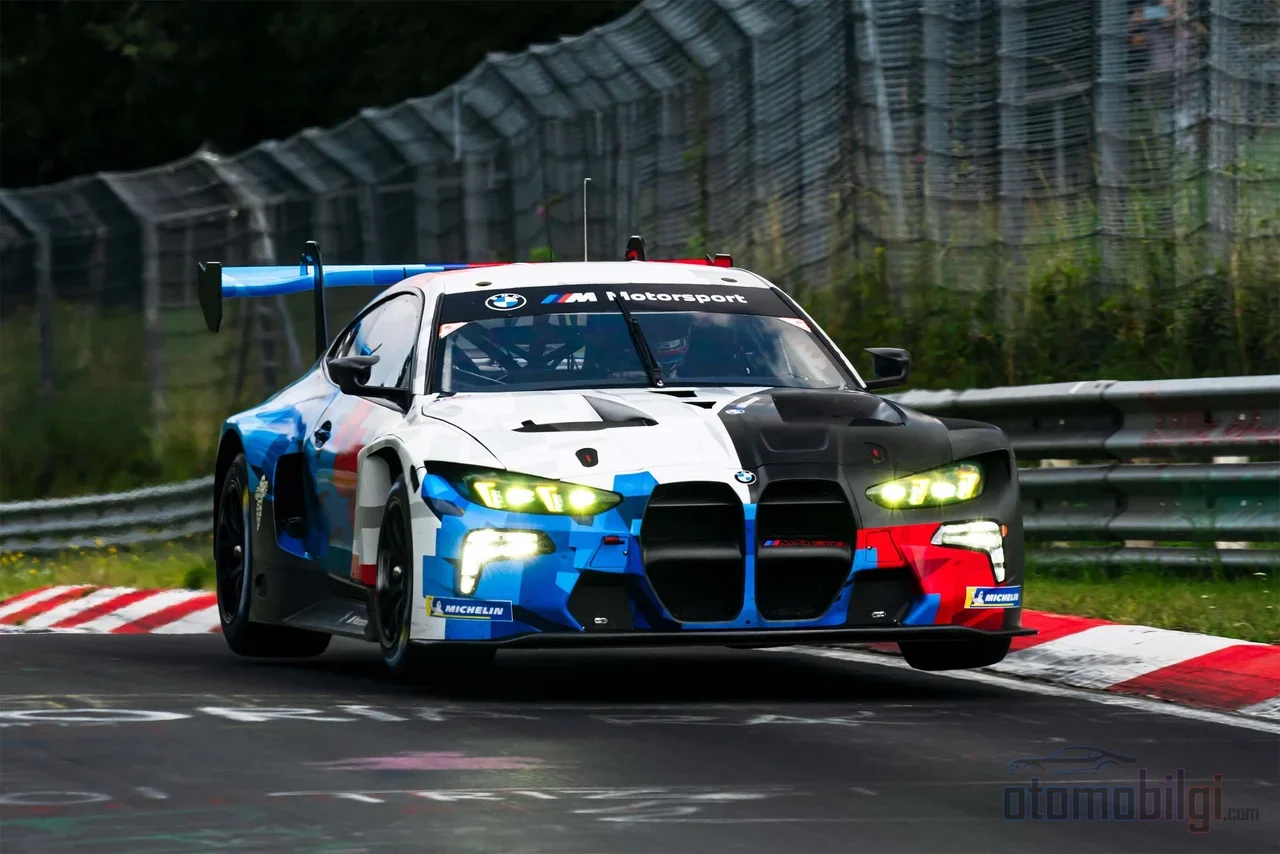
The same car's season calendar can look completely different depending on the continent. In Europe, a weekend means two one-hour sprint races; another weekend might be an endurance race lasting hours. In North America, meanwhile, you share the track with prototypes in multi-class races. This difference even changes a driver's day: in sprints, qualifying and the first corner are everything, while in endurance, tire and fuel management, night sections, and pit stop discipline come to the fore.
The Great Endurance Classics
Three races stand out among the pearls of the GT3 calendar. The Spa 24 Hours, held at Spa-Francorchamps in Belgium since 1923, is regarded as the world's biggest GT3 contest; the 2026 race was run on June 24-28, and there were 15 Porsche 911 GT3 R cars on track - 15 cars of a single model, imagine that! The Bathurst 12 Hour, run at Mount Panorama in Australia, is an annual endurance classic for GT and production cars; it took place on February 12-15 in 2026, and Ford talked about its preparations for the Mustang GT3's Australian victory. The Intercontinental GT Challenge, which combines these two races with legends like the Nurburgring 24 Hours, positions itself as the only global GT3 series in the world. In other words, for a manufacturer, the same car can race on four different continents under four different sets of rules within a single season.
The Pro-Am Model: Where Does the Amateur Fit In?
Perhaps the most charming detail that sets GT racing apart from other disciplines is this: amateur drivers share the same car with professionals. What makes this possible is a rating system called FIA Driver Categorization; it classifies drivers according to their age, experience, and achievements. The definitions are as follows:
- Platinum: The most accomplished professionals
- Gold: The other professional category
- Silver: Rising talents, semi-professionals, or young pros with notable results
- Bronze: Amateurs whose profession is not racing, i.e. "gentleman" drivers
The Pro-Am class is based on a mix of a bronze (amateur) driver and a pro (silver/gold/platinum) driver; the Am class is reserved for two bronze drivers, and the Silver Cup for two silver drivers, and this arrangement applies in 24-hour races. This model is also the architect of the budget: the gentleman driver's contribution keeps teams alive and grids growing. There are also those who think the system is not fair; criticisms that driver ratings are flawed have long been debated in the motorsport press - it is not easy for categorization to measure age, experience, and success with a single metric. But without the system, GT3's broad, mixed, and accessible structure would not be possible either. Which do you think is more important: absolute fairness, or the amateur being able to race on the same grid as the professional?
What Does This Table Mean for Manufacturers?
Look at it from a manufacturer's perspective: The same homologated GT3 car races in Europe with Pirelli tires, under a slick tire rule, in sprint and endurance formats; in America with a single-specification Michelin in multi-class races; and in Japan in a circuit-based, data-driven, multi-layered BoP process. This means marketing and competitive opportunity across three continents with a single development budget - but it also means tracking each series' BoP separately. On the Super GT side, the future is also being discussed: the GTA is evaluating dedicated hybrid systems for future GT500 regulations, and the series has taken environmental steps such as carbon-neutral fuel. GT3's decentralized yet interconnected structure lies exactly in this: a single car, a single category, but dozens of interconnected interpretations worldwide. And let me be frank, I think this is precisely one of the cleverest structures in motorsport.
Next time you watch a race, think about this: On which continent is your favorite car racing, on which tire, and with which BoP parameters? Knowing the answer turns every pit stop on screen into something entirely different.
Sources
- Chat GT3: Who Created Balance of Performance? - GT World Challenge America
- Review: "Success weight" and "BoP" (Part 2) - SUPER GT Official
- SUPER GT News - GTA/SRO GT300 BoP consultations
- Balance of performance - Wikipedia
- About GT World Challenge Europe
- Series Explainer: GT World Challenge America powered by AWS
- GT World Challenge - Official site
- Chat GT3: How are Driver Rankings Categorized? - GT World Challenge America
- Chat GT3: What Are the Differences Between GT3, GT2, and GT4 Cars? - GT World Challenge America
- FIA Driver Categorisation Regulations - FIA
- IMSA Confirms Same Spec Michelin Tires for GTD Pro, GTD in 2022 - Sportscar365
- New GT Class Structure - Sportscar365
- Pirelli presents the P Zero DHG for GT racing - SRO Motorsports
- 15 Porsche 911 GT3 R set to compete in the 24 Hours of Spa - Porsche Newsroom
- Porsche unveils the new 911 GT4 R - Porsche Newsroom
- Mustang GT3 Debuts Down Under - Ford
- Bathurst 12 Hour - Wikipedia
- Intercontinental GT Challenge - Official site
- GTA Considering Custom Hybrids for Next-Gen GT500 Rules - Sportscar365
- Differences Between GT3 and GT4 Race Cars in Sim Racing - Fanatec