From Spa to Bathurst: GT's Great Endurance Classics
Share This Page
Le Mans is the big name on everyone's mind, but the true heart of the GT world beats elsewhere: In the Ardennes forests, in the green hell of the Nordschleife, and on the steep slopes of Mount Panorama. The 24 Hours of Spa, the 24 Hours of Nürburgring, the Bathurst 12 Hour and the Rolex 24 at Daytona are classics, each with its own personality, living with its own track and its own tactical setup. In this guide, we tour all four one by one, covering their founding stories, track challenges, and how they differ from one another.
Highlights
- The 24 Hours of Spa has been run since 1924 at Spa-Francorchamps, which is 7.004 km long.
- At the Nürburgring 24, more than 160 cars race on the 25.3 km track, in more than 20 classes.
- The Bathurst 12 Hour starts in darkness, and sunrise laps are considered the signature of the race.
- At Daytona, the infield road course of about 1 mile combines with the high-banked tri-oval.
- In 24-hour races, teams typically rotate with three drivers.
Four Races, Four Different Challenges: A Quick Comparison
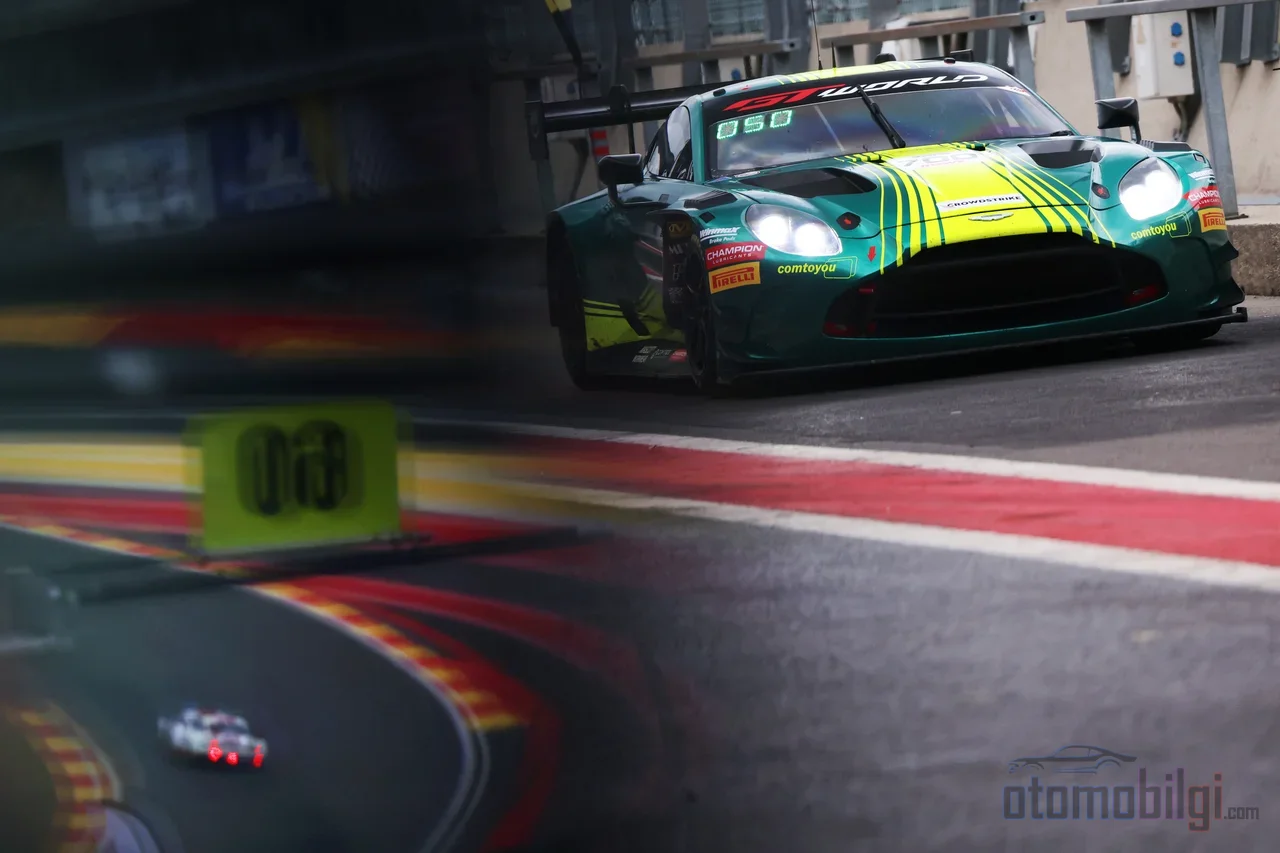
What the four have in common is simple: GT3 cars, long hours, and everything that can go wrong at any moment. But when the lights go out, you enter four completely different worlds. At Spa, it comes down to speed and chassis preservation; at the Nürburgring, to endurance; at Bathurst, to the track's steep climbs; and at Daytona, to adapting to the oval-road course mix.
| Race | Track | Signature challenge |
|---|---|---|
| 24 Hours of Spa | 7.004 km | The Eau Rouge climb and 2.500 km of road |
| 24 Hours of Nürburgring | 25.3 km | Nordschleife + more than 160 cars |
| Bathurst 12 Hour | Mount Panorama | Dark start, steep climbs |
| Rolex 24 at Daytona | 3.56 miles | Banked oval + infield mix |
24 Hours of Spa: Rolling Through the Ardennes
Held since 1924 at the Circuit de Spa-Francorchamps near Stavelot, Belgium, this race has earned the nickname "the Ardennes rollercoaster." Why? The track is like a real rollercoaster flowing swiftly over the hills. Run under the name CrowdStrike 24 Hours of Spa, the race is part of the GT World Challenge Europe Endurance Cup and a favorite of the pro-am crowd: along the track, professionals and "gentleman" drivers who work other jobs during the week share the same cars.
Eau Rouge: The Single, World-Famous Question
The 15% descent that begins after the La Source hairpin, the left-hander taken at the bottom, the fast right-hander, and the steep climb with an 18% gradient: Eau Rouge/Raidillon. Visibility is so limited that for a brief moment during the climb, the driver sees only the sky and the treetops. The numbers are frightening: at approximately 240 km/h, 3.0g of lateral force deforms the tire sidewalls, roughly 5 tons of force pushes the car outward through the corner, and under compression the chassis has been known to load the ground with up to 2.5g. Rims can bend, and cars with broken chassis have been seen.
So, is it taken flat out? At race pace, usually no. Over 24 hours the car covers more than 2,500 km, and this section, taken flat out in Qualifying, is mostly lifted during the race to protect the tires and chassis. A former F1 champion had a business card printed reading "I survived Eau Rouge" after leaving both flat-out attempts against the barriers - a lovely detail that says a lot about the track's prestige, I think.
Spa 2026: From Pit Lane to Victory
A record-breaking 2026 edition is behind us: 132,000 spectators were at the track, and Porsche took its first overall victory since 2000. The #80 Lionspeed GP 911 GT3 R started from the pit lane after an engine change on Thursday, climbing from the back of the 69-car grid to the top. The class battles were colorful too: ROWE Racing BMW won the Gold Cup, Kessel Racing Ferrari the Bronze Cup, and JMR Corvette in Pro-Am - the Corvette's first win since its overall victory in 2009. Another nice touch was seeing the organizers of Europe's three great 24-hour races (Spa, Le Mans, Nürburgring) share the same stage at the opening ceremony.
Nürburgring 24 Hours: An Endurance Test in the Green Hell
Held since 1970 on the combination of the Nordschleife and the GP circuit, this race takes its name from the track: "Green Hell", that is, the green hell. At 25.3 km long, this combination is known as one of the most brutal circuits in the world, and the real question of the race is not speed but endurance. GT3 cars reach speeds of around 265-270 km/h here, but the real story lies in what you ask of the car every lap through dozens of corners.
Another spectacle is the sheer size of the field: More than 160 cars and more than 20 classes on track at the same time. You sit in a GT3 in the tourist-session style, and ahead of you a slow touring car can appear, costing you a lap. That is why skill here is as valuable as pure speed at Spa - perhaps even more so. Short sleeps and rest between stints are the key to maintaining focus.
Bathurst 12 Hour: Start in the Dark, Victory at Dawn
Run at the Mount Panorama Circuit in Australia, the Bathurst 12 Hour is the member of the list that is not 24 hours but is spiritually from the same family. The race starts in darkness: cold morning stints, headlights lapping through the fog, and then Australia's most cinematic moment, the sunrise laps. The official description sums it up as "from sunrise start to flat-out final stints" - 12 hours of speed, strategy, pressure and precision. The 2026 event was run on the Intercontinental GT Challenge calendar on February 11-15 under Meguiar's sponsorship.
Mount Panorama's steep climbs also shape pit strategies: the uphill and downhill sections really stress the tires, the brakes and the driver's shoulders. And the race's structure, stretching into the morning, puts the night drivers and their sleep right at the center of tactics.
Rolex 24 at Daytona: The Marriage of Oval and Road Course
The Rolex 24, held at Daytona International Speedway, poses a completely different mechanical question from the other three: the 3.56-mile track and its roughly 1-mile infield road course combine with the familiar high-banked tri-oval. So a driver takes on the road course's demanding corners in one lap, then holds full throttle on the banking in the tri-oval. The GTD class is a "spec" setup using the global FIA-GT3 specification: Audi, BMW, Ferrari and friends all race under the same rulebook.
The 64th running in 2026 The Rolex 24 was a real drama in GTD PRO: the lead battle turned in the final 15 minutes, and Paul Miller Racing's BMW M4 GT3 took a historic win.
BoP, Classes and Pro-Am: What Keeps These Races Balanced
So why do such different cars from different brands compete on equal footing in the same race? The answer: Balance of Performance, or BoP for short. This mechanism, born with GT3 in 2005, gives cars different limit adjustments based on previous tests and race analyses; the goal is for every brand to be in a position to win. With 10 registered manufacturers racing on the GT World Challenge calendar, it would be impossible without BoP.
Driver Ratings from Bronze to Platinum
Drivers are divided into four levels: Bronze ("gentleman" drivers whose profession is not racing), Silver (faster gentlemen), Gold and Platinum (professionals). Pro-Am lineups are a product of this system: the pairing of one professional and one amateur. Amateur-owned teams and driver training are at the heart of this world; fatigue and heat over long stints can be decisive for the amateur. GT4 is also the entry step of this ladder: slower than GT3 but, like the GT1 era, not ultra-expensive either - so reaching that dream is not hard.
Night, Sleep and Rotation: How Is the 24 Hours Survived?
Now for the common themes. No single person drives a GT car for 24 hours straight: teams rotate in stints with three or more drivers. Some drivers spend a total of 8 hours at the wheel, others 4.5 hours. To prevent fatigue and accident risk, teams generally rotate with three drivers; it is critical that the driver entering the night stint gets uninterrupted sleep beforehand. Realistic teams even plan their preparation accordingly: every driver gets at least one night stint.
Night is the hidden hero of these races. GT3 headlights lapping Spa in the dark of night are among the track's most iconic sights. At the Nürburgring, night makes a track that is already hell even more hellish. And at Bathurst, night is not just a condition - since it turns to dawn, the race itself is remembered most of all there. In my view, this is exactly why the heart of the GT world beats not at Le Mans, but at these four tracks: here, victory is decided not only by speed, but by who gets through the night more intelligently.
Sources
- Extreme Eau Rouge: the secrets of the world's most dangerous corner
- Porsche triumphs in record-breaking CrowdStrike 24 Hours of Spa
- 24 Hours of Spa - Wikipedia
- Nürburgring 24 Hours - Wikipedia
- Everything you need to know about the Nürburgring 24 Hours
- Guide to the Nürburgring 24 Hours classes
- The Nurburgring 24 Hours iRacing Guide
- Bathurst 12 Hour - Wikipedia
- Meguiar's Bathurst 12 Hour - Intercontinental GT Challenge
- 24 Hours of Daytona - Wikipedia
- Back-to-Front for Paul Miller Racing BMW in GTD PRO at Rolex 24 at Daytona
- Balance of performance - Wikipedia
- Chat GT3: How Are Classes Structured?
- British GT: what you need to know