Why Is the GT4 Class a Different World for Amateur Drivers?
Share This Page
GT4 is the entry level of GT racing: a class much closer to a road car, less powerful, and significantly cheaper. While GT3 is largely a machine redesigned for racing, GT4 is a deliberately simplified version of a production-line car; designed for amateur drivers and young racers starting their careers, a category SRO has kept alive since 2006.
Highlights
- GT4 cars produce roughly 400-500 hp while GT3 cars are at 500-600+ hp levels.
- A new GT4 car falls in the 150,000-250,000 EUR range; significantly more affordable than GT3.
- The class was launched in 2006, at the same time as GT3, as a low-cost entry category.
- In Europe the GT4 European Series and in America Pirelli GT4 America are the leading series.
- GT4 is the first solid rung on the ladder to GT3-based series and endurance racing.
What Is the Difference Between GT3 and GT4?
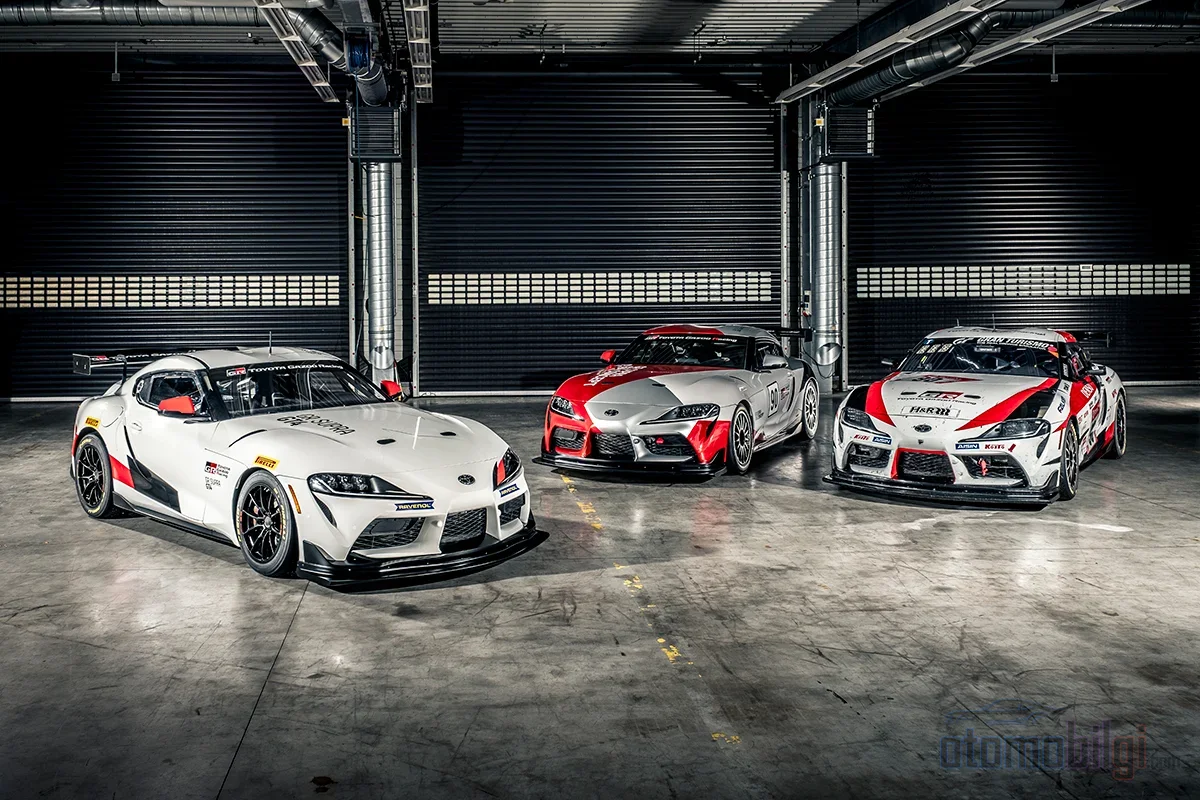
Both belong to the GT world, but they are two entirely different games. A GT3 car is a monster so heavily modified you would not recognize it from its factory form: a big front splitter, a huge rear wing and diffuser, ABS, traction control, extensive telemetry... In other words, a thoroughbred racing machine that broke away from the road car at the design table. GT4 is more conservative: the engine block, suspension layout, and some interior elements remain stock, and aerodynamics are deliberately limited. The car still closely resembles its road-going counterpart.
The picture is also clear on the power side. GT3 cars produce around 500-600+ hp while GT4 cars hover around 400-450 hp ; some models reach up to 500 hp, meaning there is a wide range of models. Less power, less downforce, simpler setups. The result? A more forgiving car. The margin for error is wider, the learning curve gentler. It is no coincidence that so many drivers experience their first real racing in this class.
In short, GT4 is not a scaled-down version of GT3; it is a different philosophy. GT3 appeals to those who want to play at the limit of performance, while GT4 speaks to those who want to start racing on a reasonable budget and on the basis of a genuine road car.
| Feature | GT4 | GT3 |
|---|---|---|
| Power | Approximately 400-500 hp | 500-600+ hp |
| Car price | 150,000-250,000 EUR | 400,000-600,000 EUR |
| Production proximity | Many stock parts retained | Largely reworked from the base model |
| Aerodynamics | Limited | Large wing, splitter, diffuser |
| Driver aids | Fewer, simpler systems | ABS, traction control, telemetry |
| Target audience | Amateurs and developing young talents | Pro and top-level pro-am lineups |
Cost Breakdown: Is GT4 Really Cheap?
Short answer: absolutely, compared to GT3. A new GT4 car costs around 150,000-250,000 EUR while a GT3 car comes in at 400,000-600,000 EUR band. The difference doesn't end with buying the car: running costs such as parts, tires and maintenance are also significantly lower in GT4. Think of a knock at the front - the part you need to replace on a GT4 may also be found on the production car. In GT3, it's a specially produced component with a special price.
Concrete examples also clarify the picture. The new Porsche 911 GT4 R, was announced in the USA with $375,000 a price tag and is expected to start racing in 2027 as the first 911-based GT4 race car. Porsche 718 origin Clubsport models, on the other hand, sell in the $174,900-199,900 range. So saying "GT4 is cheap" doesn't mean "hobby prices" - but knowing that the same money buys less than half a car on the GT3 side sums up the class's identity.
The real truth of the budget, however, is the gap between the car price and the season budget. For a GT4 race weekend, the figures teams talk about start from the $7,000-10,000 level, while there are also narratives of $35,000-50,000 for a single race; at the top end, it's said a gentleman driver's weekend could cost $50,000-150,000. The car price is a one-time purchase; tires, fuel, team staff, logistics and entry fees are bills renewed every weekend. You shouldn't confuse the two.
BoP: How Do You Build a Class Everyone Can Win?
If an Aston Martin, a BMW, a Toyota and a McLaren are going to race door to door on the same track, one shouldn't crush the others. This is where BoP, that is Balance of Performance, comes in. Simply put: the organizer balances the performance of different cars by adjusting parameters such as weight and engine power. You can think of it with an everyday analogy - if you're entering a running race with friends of different weights, you hang a backpack on the lighter one's back. The aim is to preserve everyone's chance of winning.
In GT4, BoP is managed by SRO, just as in GT3; and the institutional difference between them is interesting. While GT3 cars are approved with the FIA's "Group GT3" certificate, GT4 cars are mostly certified by the RACB authority in Belgium. The balancing decisions in GT4 America and the GT4 European Series are made based on tests, research, analyses and projections.
BoP is of course not perfect. Organizers can balance instant speeds, but balancing performance over an hour-long stint is much harder: the car with the best tire and fuel management can gain an advantage over time. Still, the existence of this system makes possible the idea at the center of GT4's identity - a genuinely competitive championship with different manufacturers' different machines.
Which Series Have GT4 Racing?
One of the most beautiful things about GT4 is that wherever you want to race, a series is waiting for you. In Europe, the GT4 European Series is the class's flagship: the 2026 calendar includes six race weekends and starts at Paul Ricard on April 10-12; Monza (May 28-31) and Spa-Francorchamps (June 23-27) calendar, while the season October 18 closes at the Algarve International Circuit. Since the series runs within the Fanatec GT World Challenge Europe race weekends, it enjoys access to first-class circuits and strong media support.
On stage in America Pirelli GT4 America: manufacturer-built GT4 machines battle door-to-door in sprint and endurance races where pro and amateur drivers meet in the same community. GT World Challenge America, meanwhile, enters its 20th season in 2026; with Pro, Pro-Am and Am categories, it allows driver pairs to compete at every level.
The list doesn't end there: ADAC GT4 Germany in Germany, the GT4 class of the British GT Championship in the United Kingdom, FFSA GT in France and GT World Challenge Asia in Asia all offer regular GT4 competition. In Japan, Super Taikyu's "ST-Z" class operates with a similar philosophy. Globally, under the GT World Challenge umbrella, 10 manufacturers, across 29 events a total of 46 sprint and endurance races are run - GT4 is the accessible tier of this ecosystem.
The Cars: Racing Machines Born From Road Cars
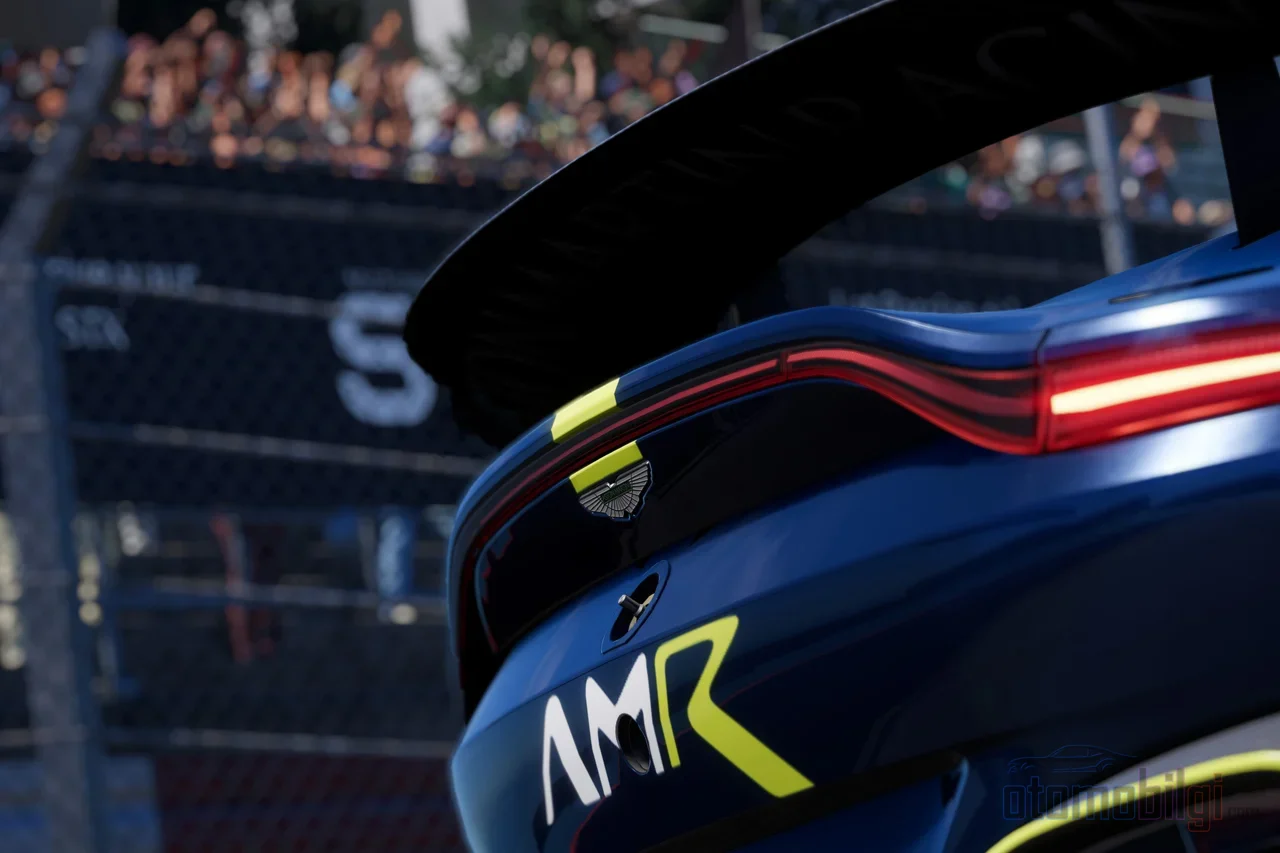
Looking at a GT4 grid is like looking at a crowded parking lot: every brand and body type is there. The 2026 GT4 European Series scene features models such as the Alpine A110 GT4+, Aston Martin Vantage AMR GT4 Evo, Audi R8 LMS GT4, BMW M4 GT4 Evo, Ford Mustang GT4, Ginetta G56 GT4 Evo and Lotus Emira GT4 . In the global manufacturer rankings, Aston Martin, Audi, BMW, Ford, Ginetta, McLaren, Mercedes-AMG, Porsche and Toyota stand out as nine major names.
The signature idea of this class is this: GT4 cars can be built from regular road cars coming off the production line and retain their closeness to the street car. It's not a completely redesigned monoposto covered in open-air channels; it's a deliberately simplified racing version of a model you know from everyday life. Even on the materials side, interesting things are happening - BMW's new M4 GT4 was introduced as the car with the most natural fiber parts ever in a GT racing series.
So does this closeness make the class slow? No - it just speaks a different language of speed. It means less downforce, longer braking distances and races where the driver's skill is talked about more. If you're looking for spectacle, you're right to look at GT3; but for pure, close and unpredictable racing, the GT4 grid promises a lot.
From GT4 to GT3: The First Rung of the Career Ladder
Perhaps this is GT4's most important role: opening the door. In Toyota Gazoo Racing's official definition, GT4 is described as the "ideal platform" for amateur drivers and young drivers who eventually want to move up to endurance racing. And in practice it works that way: this is usually where gentleman or lady drivers begin their professional motorsport careers, and teams usually work on a rental basis. In other words, it's possible to step into this world without owning a car for life.
The structure on the driver side also supports this ladder: in championships like GT World Challenge America, driver pairings are divided into Pro, Pro-Am and Am categories; an amateur developing alongside an experienced professional chases a championship in their own category while accumulating experience. For those wanting an intermediate step, series like Porsche Carrera are also a frequently recommended bridge. Even in the sim racing world, a similar ladder is drawn: from the MX-5 to GT4, and from there to GT3.
Major organizations that the class can enter widen the dream further: GT4 cars can take part in international endurance classics like the Nürburgring 24 Hours and the Bathurst 12 Hour. In other words, within the same class, there is a genuine path from a local championship weekend to competing in one of the world's toughest races.
Is GT4 Right for You?
If racing is a dream you postponed with "first I need a million dollars," GT4 is the answer to exactly that sentence. When car prices, operating costs, the forgiving nature of the cars, and the prevalence of the series come together, the picture looks something like this: a genuine GT championship experience, with machines close to production cars, on a reasonable budget. What's more, this is not a dead end - it is the most solid first step on the road to GT3, the pro-am world, and major endurance races. The question is up to you: are you starting from the spectator seat, or from the GT4 seat?
Sources
- Explainer: What are GT1, GT2, GT3 and GT4?
- What Are the Differences Between GT3, GT2, and GT4 Cars?
- Differences Between GT3 and GT4 Race Cars in Sim Racing
- About GT4
- Balance of performance
- What is "Balance of Performance"?
- SRO GT4
- 2026 Calendar - GT4 European Series
- 2026 Cars - GT4 European Series
- GT4 European Series - About
- Pirelli GT4 America
- 2026 GT World Challenge America
- GT World Challenge
- How are Driver Rankings Categorized?
- Porsche's New GT4 Race Car Is Based on the 911 for the First Time
- Track Cars for Sale
- BMW's M4 GT4 Is the Cheapest, Easiest Way to Drive a Race Car
- BMW unveils new M4 GT4 race car
- GT4 Manufacturer Ranking
- Eight brands commit to inaugural GT4 Manufacturer Ranking
- GT4 Class: The Entry Level of GT Racing
- SRO GT4 BoP Notice
- GT4 European Series BoP Bulletin 05 (2024)
- GT Race Cars - What is GT3, GT4 etc.