Tire Management Can Decide the Winner in GT Races
Share This Page
Tire management in GT racing is one of the most important strategic resources that determines the outcome of the race: just as much as the car's speed, how well you use the tire also determines the winner. Since BoP brings every car closer together, the real difference lies in the tire temperature window, wear rate, pit strategy, and the first flawless lap the driver writes into the tire.
Highlights
- In GT racing, tires are distributed in most series under a single supplier model; every team receives the same specification.
- In GT3, a tire change takes about 20 seconds; in full pit stops, continuing on worn tires almost never makes sense in any scenario.
- Slick tires are fitted on dry ground, and treaded wet tires when it rains; the moment of switching is one of the biggest strategic decisions of the race.
- Tire pre-heating moves the tire into the optimum range while also reducing the increase in operating pressure.
- The cost of a full GT3 season is around 2.5-3 million dollars; in GT4, this figure is around 1.5 million dollars.
Which Tire, Which Rule in GT3 and GT4?
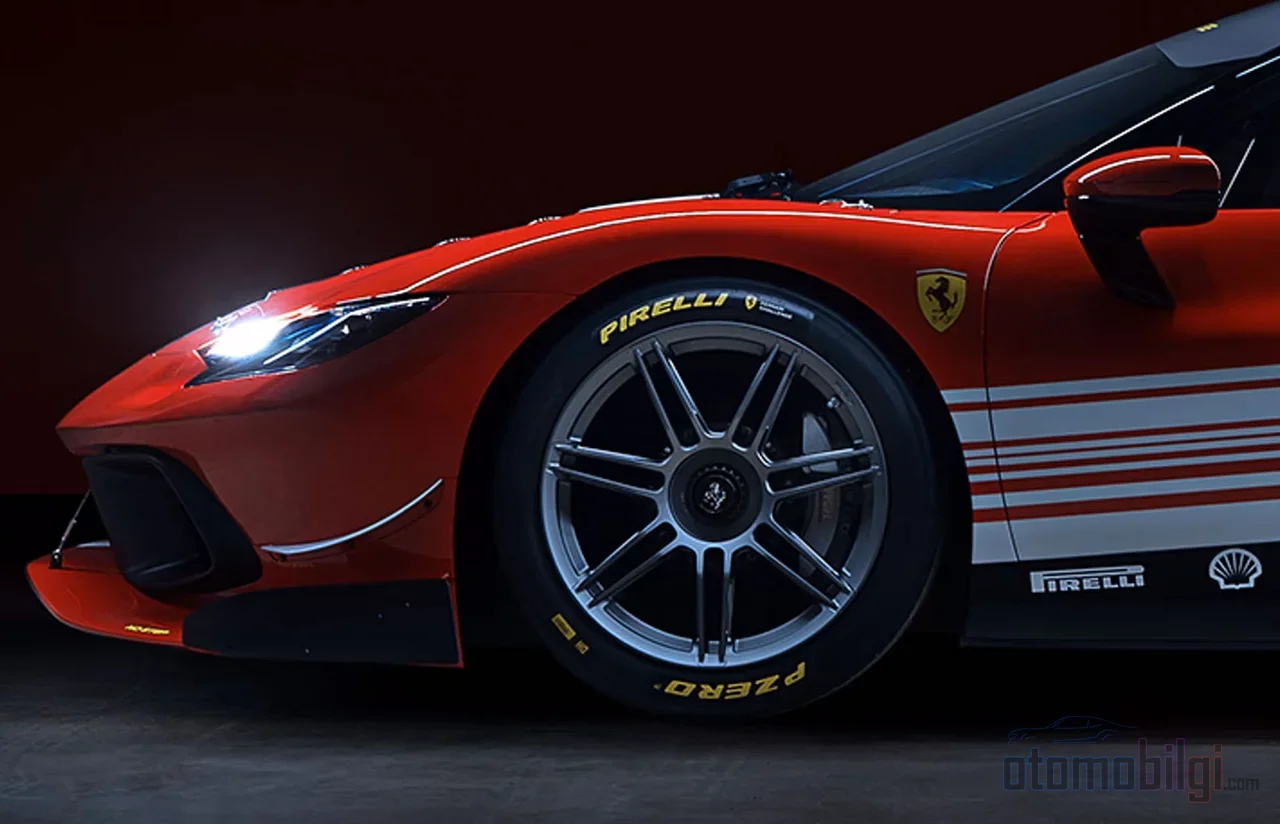
Things work differently in GT racing than in our garage logic: teams do not go to the market and choose whatever tire they want. Most series use a single-spec tire supplier model. For example, in GT World Challenge America, everyone receives only Pirelli's official tires, and every team has the same specifications. This has two nice results: the competitive balance on the track is preserved and the teams' costs are kept under control. Expecting grip, consistency, and durability from the same tire all at once is actually a crazy feat of engineering; don't be fooled by its resemblance to a road car tire - these tires are produced to carry high lateral loads, hard braking, long distances, variable track temperatures, and the different driving styles of multiple drivers in one car, all at the same time.
On dry ground, GT cars use slick tires, meaning there is no tread on the surface at all. The flat tread surface maximizes the amount of rubber on the contact patch and takes grip to the peak. But if it starts to rain, a slick works like a skate on a soapy surface: it doesn't know where to throw the water. That's exactly why teams switch to treaded wet-weather tires that channel water away from the contact patch. The moment of switching from slicks to wets is one of the biggest strategic decisions of a race; switch too early and the wet tire heats up on the dry track and degrades quickly, leave it too late and you end up in the wall.
The rules are not the same all over the world: at the 24 Hours of Nürburgring, the situation turns completely around and teams are left free to choose their tire supplier, with intermediates available in multiple compounds. So on one of the world's most demanding circuits, tire choice also becomes part of the strategy.
Why Is the Tire Temperature Window So Critical?
Think of tires like a piece of chocolate: if it has just come out of the fridge it is hard and unpleasant, and if it has been left in the sun it falls apart. A racing tire is exactly like that. Cold tire is slow: the rubber hardens and the contact patch cannot do its job. When it overheats, however, grip starts to drop; the more the temperature rises, the more the wear increases. What the driver is looking for is the narrow window between these two extremes: the temperature window.
Here is a curious but golden piece of information: the ideal combination is hot tires and a cool track. Why? Because the tire takes its grip not from heat, but from its own optimum temperature; as long as the track stays cool, the tire does not draw extra heat from the track and its wear decreases. To take heat away from an overheated tire, on the other hand, the track needs to be hot as well, and then wear accelerates. Also, tire pre-heating moves the tire into the optimum range while reducing the increase in working pressure; in other words, it prevents from the start the pressure ballooning caused by heated air. I would say you need to look not only at the tire itself, but also at the air inside it: even small changes in carcass temperature affect performance; roughly every 10-degree rise in rim temperature pulls the tire carcass temperature up by only 1 degree.
What Is Degradation, and Should You Choose Soft or Hard?
Degradation means the tire wearing out over time and losing grip. Compounds are divided into two main groups: fast but quickly wearing soft compounds, and slower but longer-lasting medium/hard compounds. A soft compound flies at the start of a stint, but its performance hits a wall at the end of its life; a hard compound is never the fastest at any given moment, but stays consistent for hours. In other words, there is always a trade-off between softness and longevity; how this trade-off is managed is the heart of strategy.
There is also a cunning detail: the tread thickness of the tire is not considered an exact mirror of the grip level. Yes, grip decreases as the rubber thins, but heat-related (thermal) wear requires a separate calculation. So before saying to the tire "you are still meaty and plump, why change it?", you need to think about how many degrees of torment it endured that day.
Tire-Preserving Driving: A Master at the Wheel
The good news is this: tire management is not the monopoly of a champion; it is a craft that anyone can improve with the right reflexes. Here are the basic techniques teams apply:
- Avoid braking lock-up: Wheel locking is one of the fastest ways to ruin tires and drop into an unplanned early pit stop. By reducing sudden weight transfer, you lower the risk of lock-up.
- Keep the throttle gentle: Heavy throttle applications make the rear wheels spin and enlarge wear. Early upshifts and soft throttle make the tire feel grateful for the first time in its life.
- Do not overdo the steering: Turning the wheel too much strains the tire. By using the full width of the track, you create a wide turning radius and reduce tire load.
- Stay off the grass and track limits: In short, stay on top of the track; it pays off both in terms of safety and tires.
- Not drawing lines, but cleaning the tires: Sudden left-right steering movements are actually fundamentally for cleaning the tires; hard braking, on the other hand, puts more heat into the front tires. Knowing the difference between the two is useful.
Then there is a dimension entirely outside the driver's hands: setup. A large part of tire protection work begins even before the race weekend starts. If the car is adjusted to favor one end, the driver can consciously manage traction and cornering load. In short, tire management is won not only behind the wheel, but also in front of the computers in the pit area. Which do you think is harder: protecting the tire during the race, or setting up the car that will protect it before the race?
How Do Tires and Pit Strategy Come Together in 24-Hour Races?
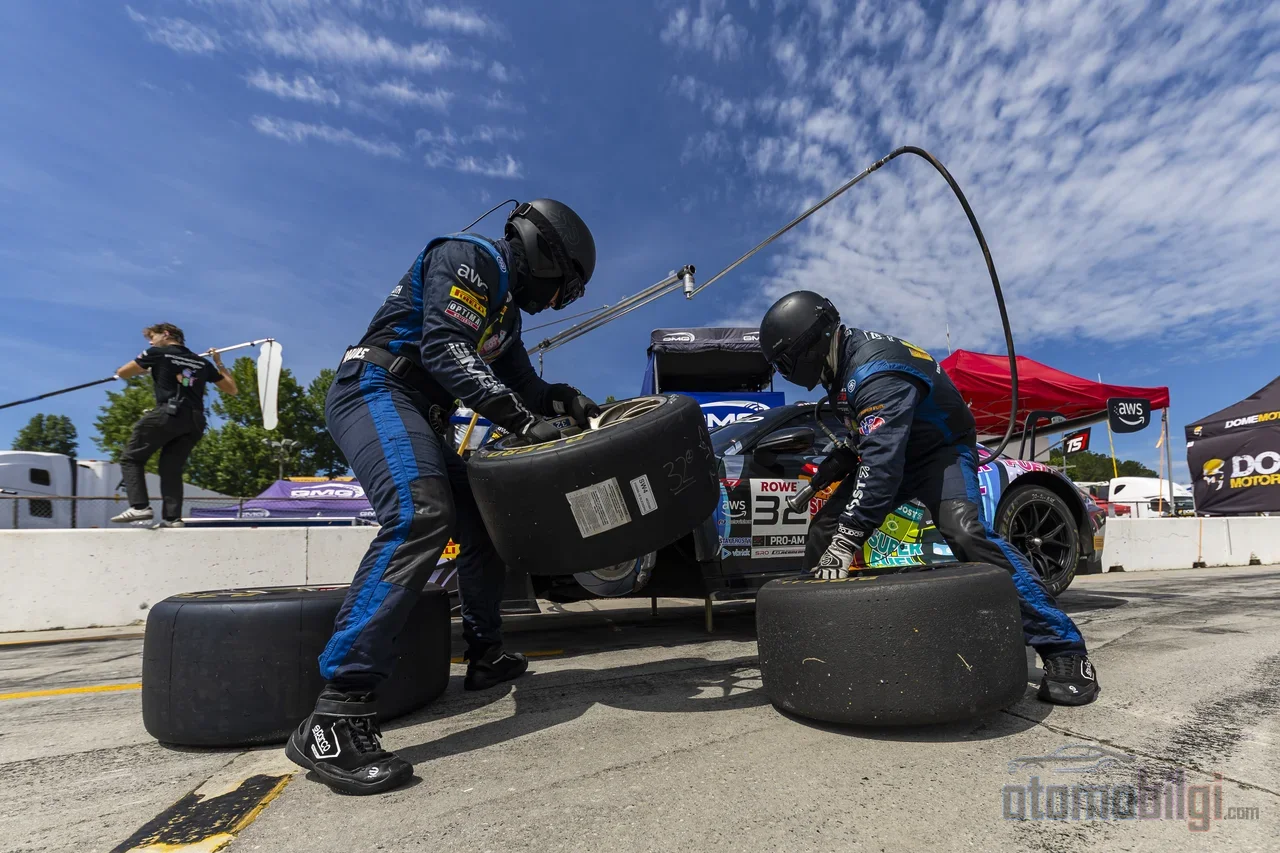
In long-distance races, tire decisions interlock with pit strategy. In GT3, a tire change takes about 20 seconds, and in almost no scenario is it meaningful to continue on worn tires; in full pit stops, the tires must be changed every time. In real 24-hour races, a normal pit stop including fuel plus a tire change takes an average of 1.5-3 minutes; stops requiring repairs extend that many times over. At Le Mans, pit stops cover refueling, tire changes, and driver changes, and the pit lane is such a strategic zone that races are won or lost there. One more subtle detail: teams keep the wheel holders on standby to start the tire change immediately when fueling ends and the remaining time drops below 10 seconds. So even seconds are calculated there.
Each race format, however, does not operate by the same rule. In short formats, the math reverses:
| Race Format | Tire Decision | Reason |
|---|---|---|
| Sprint race (about 1 hour) | No tire change required at the mandatory pit | Changing tires increases pit time and loss of track position |
| 6-hour team race | Double-stinting on the same set | Reduces pit time, but the tires demand maintenance to endure two full stints |
| 24-hour races | Tire changes at full pits are almost mandatory | Continuing on worn tires makes no sense in terms of balance and safety |
Some series also limit the number of tire sets per race; then tire management is no longer a choice but becomes a necessity. And there is the secret hero of strategy: fuel saving. The lift and coast technique, that is, slowing down by lifting off the throttle early instead of braking, can help synchronize tire stops with fuel stops. If planned correctly, even a single pit stop can win the race; imagine winning the race by lifting off the throttle a little early!
How Does BoP Create an Indirect Effect on Tires?
Balance of Performance (BoP) is GT3's defining mechanism that allows cars from different manufacturers to race against each other. The system was born in 2005 with the GT3 category and today keeps both the GT3 and LMGT3 fields competitive. BoP tries to equalize every car; of course engineers search for the best package in different ways, but in this equalized environment the system shifts the source of real advantage elsewhere: setup, driver consistency, tire management, strategy and data analysis. So thanks to BoP, it is not the "fastest car" but the "team that treats its tires best" that comes closest to winning. That is why how a car behaves on its tires is an area of superiority independent of BoP but combined with it.
The Cost an Amateur Driver Inflicts on Tires in Pro-Am Teams
In the economics of GT racing, tires are an invisible but constantly flowing expense item. A full GT3 season costs roughly 2.5-3 million dollars; in GT4 that figure is around 1.5 million dollars, and these amounts cover the car, team, tires, spare parts, consumables, entry fees, equipment and testing. Within this picture, the pro-am model - a professional driver and an amateur driver sharing the same car - puts the amateur driver in a particularly sensitive position: in long races with double stints, if the tires must last two stints, the amateur driver running one stint of the car's ability to preserve the tires directly affects the team's strategy and budget. A stint that ruins the tires costs not just lap time; it means an extra set of expenses and a changed pit plan. That is why teams take tire-preservation training for their amateur drivers as seriously as speed coaching. If you look at the salary side of amateur drivers, the picture gets interesting: professional GT driver contracts range from roughly 125,000 to 175,000 dollars per year, and many GT drivers are paid per race; meaning a driver who ruins tires can lose far more than they earn because of tires. A historical note: in the Rolex GT era there was no official "Pro-Am" category in today's sense, only cars with "Am" drivers; so this model and the tire-cost responsibility that came with it is a structure the sport developed over time.
Final Word: The Tire, the Silent Hero of GT Racing
Engine, aerodynamics, driver - all matter, of course, but in GT races the real battle is won at four small contact points. The team that hits the temperature window, picks the right compound, preserves the tires and syncs its pit plan with them can beat a rival that is faster on paper. Next time you watch a GT race, follow the tire changes during pit stops and the drivers' approach on their opening laps closely; you will see the strategy game unfolding behind the screen, and the race will start to look completely different to you. After all this technical explanation, my conclusion is this: the shortest path to truly understanding GT racing is understanding the language of the tire.
Sources
- Chat GT3: What Tires are Used in GT3 Racing?
- Chat GT3: Who Created Balance of Performance?
- The Ultimate iRacing Strategy Guide
- There's a Science to Managing Tire Deg in Racing
- 24 Hours of Le Mans – The lowdown on pit stops
- Pit stop tactics: a major factor at the 24 Hours of Le Mans
- Guide to the Nürburgring 24 Hours classes
- What is F1 rim heating?
- What Should The Temperature Of Your Racing Car Tyres Be?
- How Tyre Degradation Impacts Race Strategy
- Tire Management – How to Get the Most out of Your Race Tires
- How to Prepare for the iRacing Spa 24 Hours
- When should I change tires?
- Going Pro
- Professional GT Driver Mike Hedlund
- Balance of Performance: The Equalizer in GT Racing