How Do Pit Stops and Team Strategy Work in 24-Hour Races?
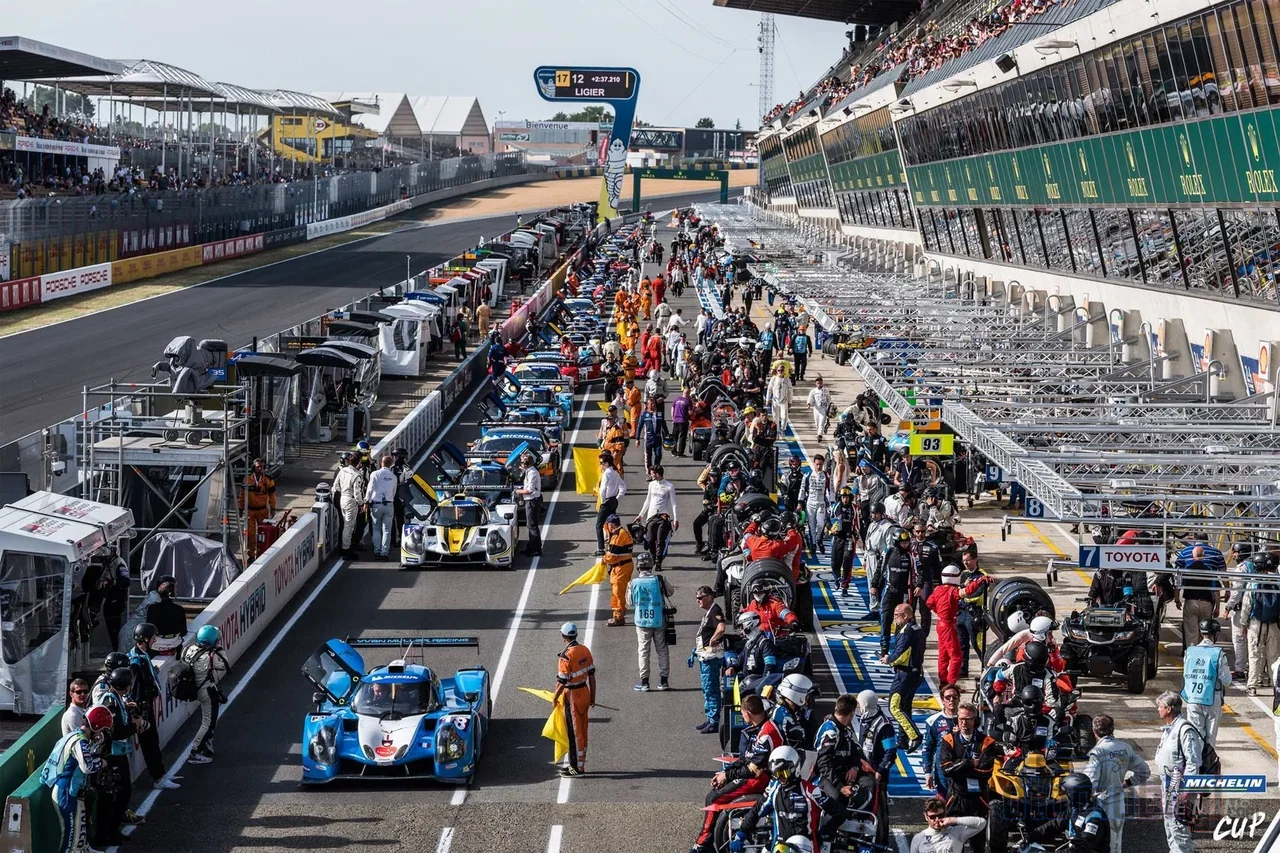
Share This Page
In 24-hour races, the pit stop is the operation that truly determines the outcome of the race, combining refueling, tire changes, mechanical adjustments, repairs, and driver changes in a single stop. Teams plan these stops by balancing fuel consumption, tire wear, and driver limits; cars heading for victory must keep their total pit time under one hour.
Highlights
- Winning cars make between 32 and 36 pit stops in 24 hours; total pit time 45-54 minutes varies within this range.
- In GT World Challenge, a maximum of 4 mechanics can work on a car at the same time.
- A four-tire change adds a fixed time of approximately 22-26 seconds on top of refueling.
- At the Spa 24 Hours, a driver stint is limited to 65 minutes .
- Each car refuels approximately 30 times over 24 hours.
How does a pit stop actually work?
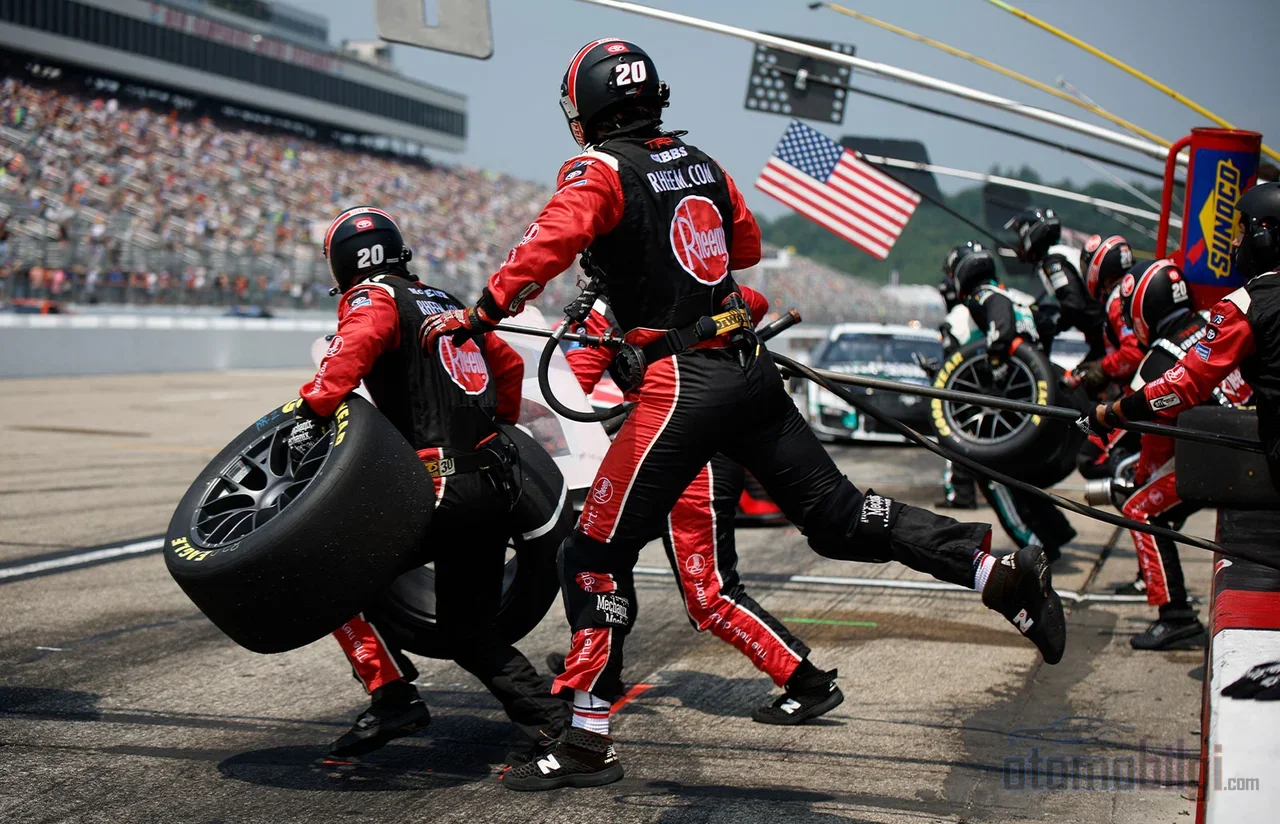
Think of it as very different from an ordinary track day: over 24 hours, the car enters the pits about 30 times, and each entry unfolds like a choreography. The order is always the same: fuel first. Refueling starts as soon as the car enters the pit box, and the tires are not touched until it is finished. With about 10 seconds left before the tank is full, the mechanics reach for the wheels and get to work the moment the fuel is done. If this synchronization breaks down, seconds fly away.
The rules in GT3 are also strict about the team: a maximum of 4 mechanics can work on the car at the same time, joined by one driver and a limited number of additional personnel. So don't look for Formula 1's 20-person tire brigades here; it means fewer hands and more planning.
The numbers are impressive too: a four-tire change adds a fixed time of approximately 22-26 seconds on top of refueling. A good crew can change four wheels in under 20 seconds; that means changing tires takes about 10 seconds, and skipping it entirely means keeping those 10 seconds in your pocket. That's exactly what strategy is: the art of keeping it in your pocket.
Why is the driver change so critical?
The driver change can only be made while the car is stationary in the pit box and is considered one of the most critical moments of endurance racing. Why? Because while it may sound like a two-second operation, in practice it is a ritual that unfolds step by step:
- The engineer says "box this lap" over the radio; the message is usually repeated after a certain point on the track so the driver doesn't miss it.
- The driver enters the speed limit at the pit entrance and stops at the exact marked point; the wrong spot means a penalty.
- The safety harnesses are unbuckled, the radio is removed, and the seat insert is taken out with the driver.
- The new driver sits in, the harnesses are fastened, the radio is plugged in, and the car continues on its way.
The driver entering the pit returns to the garage, does a quick assessment, and learns that their next stint will start within 1 to 4 hours. Stint duration is also measured precisely, including the time from the moment the driver gets into the car until they get out. In GT World Challenge series, a single stint cannot exceed 65 minutes; in a 6-hour race, 5 driver changes are required. To minimize time loss, refueling, tire change, and driver change are done simultaneously whenever possible - three birds with one stone.
How do you choose the fuel, tire, and stint strategy?
This is where things get really interesting. The team faces two main paths: stopping less with long stints, or extracting maximum performance from every stop with short, aggressive windows. Under normal conditions the plan is clear: for example, in LMP2 the standard stop comes around lap 11. But if a safety car or slow zone appears, everything changes; stints get longer, and teams try to turn the pit window into an opportunity. A poorly timed stop can cost several positions; a well-timed one can rewrite the running order from scratch.
Do we have to change tires?
In short races, this is the classic debate. A one-stop plan may be feasible in terms of fuel, but worn tires lose time: after about 30 minutes, worn tires can cause a performance loss of close to 0.7 seconds per lap. If this loss is greater than the 10 seconds you gain from a stop, changing tires pays for itself. GT3 tires last roughly 60 minutes, but the performance peak drops off much earlier.
Does fuel saving really pay off?
Absolutely. Drivers can lift off the throttle early before corners and upshift early - this is called short-shifting. In a 12-24 hour race, saving fuel over a few laps can shift the pit window by one lap, which means coming out ahead of a rival. Tire compound selection is also made according to air temperature: soft in the cold, hard in the heat. A simple but lifesaving rule.
How does the night section change the strategy?
Night is the most brutal part of an endurance race. Temperatures drop, visibility decreases, tire behavior changes, and a phenomenon called graining can appear on the tire surface, where the tire's upper layer clumps up due to heat and slipping. This layer seriously reduces grip - an example given by a Formula 1 engineer means a loss of about 0.13 seconds per lap, and that is a loss caused by a single corner. The 2025 Le Mans showed quite clearly that AF Corse's Ferrari 499P tire plan proved how much control over tire strategy matters overnight.
Night is also the period when the tactic teams call "survival mode" comes into play. In wet or difficult conditions, the goal is not to set the fastest lap; it is to stay alive and find grip. Teams that can instantly adapt to sudden rain or a safety car come out ahead in the morning. Damage situations are also more painful at night: if damage is visible, fuel is taken first; if it is serious, the car is taken straight to the garage and the repair time is significantly extended.
Who makes the decisions? The division of roles on the pit wall
The pit decision is usually made by the track engineer. They monitor telemetry, calculate fuel consumption, and send the "box this lap" message at exactly the right moment. The engineer also tells the mechanics how long the tank fill will take, so the crew can find time for secondary tasks like cleaning the windshields during refueling. This choreography, in which everyone plays according to a single script, is really a theater measured in seconds.
The pro-am format and BoP also indirectly affect strategy. BoP brings cars closer to similar lap times; in the end, the race comes down to the quality of each team's execution. Since driver rankings are regulated by the rules, the Platinum/Gold and Silver/Am combinations determine which driver will be on track at which hour, and therefore the pit plan. In mandatory pro-am lineups, the early part of the race sometimes progresses slowly; as drivers focus on avoiding accidents, teams save the risk for the later stages. Gaining or defending a position with an aggressive strategy call on the final stint is precisely the reward of this plan.
The joker stop and technical pit at Spa: special rules
The 24 Hours of Spa adds its own unique layers to pit strategy. The maximum stint length is 65 minutes, and every car must make a mandatory 5-minute technical pit stop after the 11th hour, before the race ends. Teams can also use a "joker pit stop" every six hours; this stop may include refueling and is planned to strengthen strategy. In the past, a minimum stop time from pit-in to pit-out was announced with a firm baseline such as 115 seconds; the rules can change from series to series and year to year, so following the current regulations is essential. These special rules take the planning of large-roster teams, which often include amateur drivers, to a whole different level.
A race of seconds: why is the pit stop everything?
Look at the numbers of the winning cars: the 2025 Le Mans Hypercar winner finished with 32 stops and a total pit time of 45 minutes 10 seconds; the LMP2 winner made 36 stops and nearly 54 minutes; the LMGT3 winner made 34 stops and about 48 minutes. In other words, within 24 hours, an hour spent stationary holds quite a lot of power. Do you think these times will drop even further next year? While teams strive to shave off every second, this choreography, one of the most enjoyable moments for us to watch, seems set to remain the true heart of endurance racing.
Sources
- Pit stop tactics: a major factor at the 24 Hours of Le Mans
- Chat GT3: What Are the Elements of a Pit Stop?
- Chat GT3: How Do Driver Lineups and Race Length Affect Strategy?
- The expert's guide to the Total 24 Hours of Spa
- Everything you need to know to follow the centenary CrowdStrike 24 Hours of Spa
- The Role of Strategy in Endurance Racing: More Than Just Speed
- Team Driving - iRacing Support
- An introduction to SRO's GT World Challenge Series - rules and participants
- Indianapolis 8 Hour: Your Guide to GT Endurance Racing
- iRacing Endurance Pit Strategy: Tires vs Fuel Guide
- 2025 24 Hours of Le Mans – Focus on AF Corse's Ferrari 499P tyre strategy
- Genesis Magma Racing's 2026 WEC Season Guide
- Spa 24 Hours: Pre-Race Rules & Regulations Primer
- 2015 Le Mans 24 Hours – GTE Am Preview
- Pit stop - Wikipedia
- How often to pit in endurance races? : r/ACCompetizione
- Stint time during endurance races - Le Mans Ultimate forum