How Does a GT Driver's Body Endure a Race Weekend?

Share This Page
A GT driver's body survives a race weekend battling cabin heat that climbs to 40-50°C, repeated lateral G-forces in corners, and kilos of fluid loss; drivers manage this load through cardiovascular conditioning, daily neck training, planned hydration, and driver rotation in 24-hour races. The best way to realize that the man in the seat is actually an athlete is to take a look at what goes on under the helmet. Do you think a body sweating behind the wheel tires more than a runner? Keep reading - the answer is more interesting than you'd think.
Highlights
- In race cars, cabin temperature regularly exceeds 40°C, and in extreme cases can reach 50°C.
- In a race, a driver can lose 2-3 kg, that is, up to 3-4 liters of fluid.
- Fluid loss equal to 2-3% of body weight can lead to a drop in concentration of up to 20% .
- Heart rate can stay in the 160-180 bpm range throughout the race; the cardiovascular load of a two-hour race is compared to a middle-distance run.
- In 24-hour races, a single car typically rotates with two to four drivers through planned pit stop changes.
How Does the Cabin Heat Up Like an Oven?
Looking from the outside, you might think wind comes in through the windows and grilles, so you might assume it stays cool. Quite the opposite. The cockpit sits directly above the engine and exhaust line, under the sun, and behaves like a box that traps incoming airflow. Heat gets trapped inside and struggles to escape. The result: cabin temperature regularly exceeds the 40°C threshold throughout a race, and in harsh conditions it can climb to 50°C . Think about touching your car's window on a hot summer day; now imagine feeling that sensation for two hours inside a scorching corridor.
Here's the interesting part: when researchers compared cockpit temperature with actual measures of the driver's heat stress, it turned out the two don't correspond one-to-one. In other words, whatever you see on the thermometer isn't necessarily what the driver's body feels. Fatigue arises not only from the heat, but from the effort itself, the water lost through sweating, and the microclimate under the clothing. That's why teams don't try to measure the driver's internal temperature from a single pool reading; they read indicators like sweating rate, heart rate, and core temperature together.
So how much water does the body lose in this oven? Throughout a race, 2-3 kilos go, that is, up to 3-4 liters of fluid. Think of it with a simple analogy: it's like sweating out two large bottles of water in a single workout. For an athletic body, this is a serious deficit, and the brain, which works like the body's electrical grid, is the first thing it breaks.
What Do Lateral G-Forces Do to Our Necks?
When you enter a corner in a GT car, your body wants to be thrown to the side; while the harness holds you, your head and helmet are pulled sideways like a giant pendulum. In Formula 1 this force exceeds 5g per corner; while the numbers in GT are more moderate, the principle is the same: The neck muscles have to re-balance, in every corner, a force equal to several times the total weight of the head and helmet. One corner, you say? Think of a hundred corners. By the end of the race, the neck and back muscles are nearly rock hard.
This fatigue has a costly price: When the muscles start to give in, the head's position deteriorates, the field of vision narrows, and the ability to perceive the car's movements weakens. So a tired neck doesn't just cause pain; it disrupts the driver's reading of the road. This enlarges the margin of error at braking points and corner calls (those sacred markers known as "reference points" in driver speak). Failing to keep your head upright in a sharp corner can produce a far more harmful outcome than dropping your phone.
The heart is strained on the same parallel. During a race, the heart rate runs in the 160-180 bpm range and can stay above 80% of maximum for long periods. The total cardiovascular load of a two-hour race is comparable to a middle-distance run. So the driver looks like they are sitting, but their body is running on a treadmill. Measurements taken under real racing conditions also show that G-force exposure can partially explain the high core temperature, heart rate and respiration rate; the body is fighting heat and being thrown about at the same time.
Does Dehydration Really Affect Concentration?
Short answer: Yes, but the story is a bit deeper. Fluid loss exceeding 2% of body weight is associated with significant drops in endurance performance. The picture is even more striking in driver-specific data: When loss reaches 2-3%, a loss of up to 20% in concentration and noticeably slower reaction times have been reported. There is also feedback that even a 1-2% loss reduces attention; so saying "I sweated a little, no problem" is not as innocent as it seems.
On the other hand, there is an interesting counterpoint: In short-duration driving tests, heat stress and dehydration were found not to measurably affect performance. So when talking about the effect, duration must also be taken into account; while the body barely reacts in a drive of just a few laps, in a race lasting hours the same loss appears as a cumulative load. Long exposure piles up like an enemy that doesn't look mild. For this reason, it is more accurate to think of dehydration not as an "all-or-nothing" issue, but as a risk that grows with the duration of exposure.
How Do Drivers Prepare Their Bodies During the Rest of the Week?
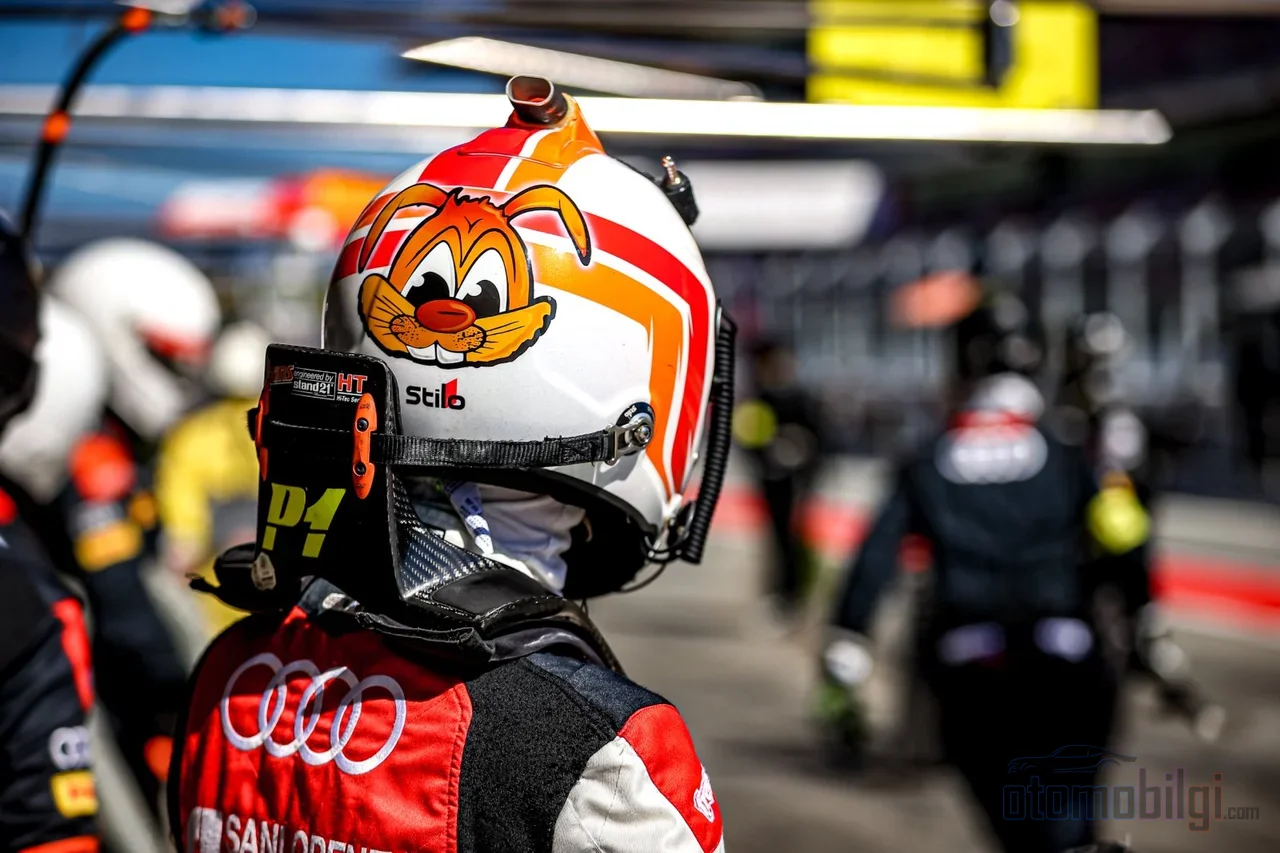
On a race weekend the body is truly put to the test; but the grade is assigned weeks in advance. Drivers build their fitness during weekday training blocks and reduce training volume in the days immediately before the race to keep the body fresh. So that upright posture and concentration that lasts right to the final lap don't suddenly appear on Sunday morning. So what exactly is done in these blocks?
Neck Training: Resistance Bands and Weighted Helmets
The neck muscles are a muscle group drivers work on almost every day. Resistance bands, weighted helmets, special harness devices and isometric exercises are the main ingredients of the routine. At the muscle level, the work targets the sternocleidomastoid, trapezius and deep cervical flexors; in other words, the stabilizers at the front, back and deep within the neck are each attacked separately. The loads are modest, but the sessions are performed multiple times a week, year-round, without ever being dropped from the schedule. The single most decisive factor here is consistency; those who start and then quit feel the difference at the end of a corner.
And this training has a real reward: Targeted neck resistance work has been shown to significantly reduce how tired drivers feel in the closing stages of a race, and some drivers have reported being more consistent at their braking reference points in the late phases. So neck training is not an aesthetic detail, but a performance fortress that touches lap time.
Cardiovascular Conditioning: Cycling, Rowing and Running
An aerobic base is essential for the heart to withstand the pressure of a race. Cycling, rowing and running take the leading role in programs focused on maintaining aerobic function at high core temperatures. Fitness plans for drivers recommend a mix of aerobic and anaerobic work along with interval training; a broad survey study of the driver population showed that the core focus areas are cardiovascular conditioning, upper body strength and coordination. In the professional world, specialist organizations handle this work, and it is known that the vast majority of drivers work on their cardiovascular fitness.
Hydration Strategy: Before, During and Cool-Down
The fluid question doesn't start on race morning; hydration begins at least 24 hours before. One of the standard practices is to take in 5-7 milliliters of fluid per kilogram at least 4 hours before the race and to aim for pale yellow urine. So the most practical indicator that your body is ready is _wc what you see when you go to the toilet. Inside the car, the drink system comes into play; the driver can take regular sips even while concentrating.
- At least 4 hours before the race: 5-7 mL of fluid per kg.
- 24 hours before the race: start hydrating and set up the in-car drink system.
- 20-40 minutes before the start: pre-cooling with a combination of cold water bath and cooling clothing.
- During the race: suppress body temperature with evaporative vests and pre-cooled gel vests.
The effect of cold water is no empty talk: approximately 5°C drinking cold water reduced the core body temperature increase from 1.69°C to 1.17°C. Although this may seem like a small difference, as you approach the end of a long race, this difference becomes valuable enough to determine whether reflexes are working or not. For a body battling the heat, every tenth of a degree is worth its weight in gold.
How Do Bodies Manage Rest Rotation in 24-Hour Races?
Driving continuously for a whole day is not something the human body can do on its own. That is why, in 24-hour formats, a single car typically rotates with two to four drivers; driver changes are timed to coincide with planned pit stops for fuel and tires. Porsche's official Le Mans guide also confirms that, to prevent fatigue and the resulting risk of accidents, teams typically apply a shift system with three drivers. In other words, the car does not stop, but the person at the wheel keeps changing; everyone takes their share and moves to the rest room.
Stint planning is not just common sense either. Working together with the fuel strategy, it is designed by operating from both ends of the race. Twilight and dawn are the weakest moments for the biological clock; experienced teams try to place their freshest drivers into these hours. In long-format amateur events, each driver of a six-person team may get 2x2-hour stints, and the rotation is planned precisely with these challenging periods in mind. In short, the secret tactical card of a 24-hour race is a sleep schedule just as much as a braking map.
In the Pro-Am Field: Where Does the Amateur Driver Stand Physically?
Because the heart of the GT world beats in the pro-am model, two different physical profiles run on the track at the same time. Factory and professional drivers operate the training blocks we listed above as a lifestyle; neck, fitness, and hydration are a daily routine by job description. Amateur and gentleman drivers, on the other hand, mostly work within their own budgets and time frames; for someone trying to fit work, family, and the race calendar together, doing daily neck training is by no means easy. This difference usually reveals itself in the final stints of the race: a body not prepared as well as a professional's tires earlier within the same time window and feels the loss of concentration sooner.
That said, the amateur side has this advantage: most of the strategies above are not high technology, but a matter of discipline. A resistance band, regular cardio, conscious hydration, and respecting the shift plan; none of these require a laboratory. In other words, anyone who can set aside a few days in their race calendar can make their body at least somewhat more race-ready. Driving well without getting tired is not reflex, but result.
In Summary: Is the Body at the Wheel Truly an Athlete's Body?
Yes, and we now know this with numbers. A 40-50°C cabin, a sustained heart rate of 160-180 bpm for hours, repeated loads loading onto the neck at every corner, and fluid losses of up to 3-4 liters; these are no coincidence, but a measured physical reality. Drivers meet these demands with daily neck training, an aerobic base, planned hydration, and smart stints rotation in 24-hour races. The next time you watch a GT race, stop saying the person behind the wheel is just "driving well"; remember that under the helmet, an athlete is running a marathon. If you were sitting in that seat, which training would you start with first, your neck or your heart?
Sources
- The Hidden Fitness Demands of Formula 1 - AutoRacing1
- Physiological responses of race car drivers in authentic racing - PMC (Holland et al., 2025)
- Cockpit Temperature as an Indicator of Thermal Strain in Sports Car Competition - PubMed (Barthel et al., 2021)
- No Impact of Heat Stress and Dehydration on Short Duration Driving - PMC (Mollica et al., 2019)
- Does Dehydration Really Impair Endurance Performance? - GSSI
- Cooling Strategies For Formula 1 Drivers - GSSI
- How does the 24 Hours of Le Mans work? - Porsche
- Endurance Racing Explained: Why the 24-Hour Format Is... - Yahoo Sports
- The effects of dehydration on driving ability - CAT Driver Training
- Hydration Strategies for Endurance Races - FluidLogic
- How Hot Does a Race Car Get? Real Cockpit Temperatures - Lead Foot Racing
- Race Car Driving Neck Strength and Conditioning - UPMC
- Fit to race: Identifying the balance, type and sources of fitness - SAGE Journals
- Be the Complete Racer: Fitness - Mazda Motorsports
- A motorsport brief review - MDPI (Formiglio, 2026)