How Does Warranty Transfer Work in a Used EV?

When buying a second-hand electric vehicle, the most debated topic is not the battery itself but the commitment behind it: the manufacturer's warranty. What happens to this commitment when the vehicle changes hands? Does it start from zero, continue from where it left off, or in some cases disappear entirely? The answer does not fit in a single sentence; because warranty transfer is a set of technical rules that varies from brand to brand, and even from market to market. On this page, let's decode that set of rules: which conditions carry the warranty over to the new owner, and which details quietly erode the protection.
Is the battery warranty tied to the vehicle or to the first owner?
In electric vehicles, the battery is defined as a primary component of the vehicle in most manufacturers' warranty texts. The practical consequence of this definition is clear: the protection is tied not to the first buyer but to the vehicle, and when the vehicle is sold, the remaining time and remaining kilometers become the new owner's right. The warranty period does not start from zero for a second-hand buyer; the clock that has been running since the first sale or first registration date continues from where it left off.
However, there are exceptions to this general rule, and the exceptions are exactly where the buyer gets hurt. Some manufacturers grant the long-term battery warranty only to the first owner; when the vehicle changes hands, the coverage either drops entirely or is noticeably shortened. Seeing that even the same brand can apply different rules in different markets shows just how document-dependent this matter is. In short, the "with warranty" phrase in a second-hand listing says nothing on its own; the question to ask is this: which type of document, under which conditions, is being transferred to which party?
Highlights
- The widespread battery warranty standard in the industry: 8 years / 160,000 km, with a capacity threshold of 70%.
- Warranty transfer does not start from zero; the remaining time, calculated based on the first registration date and mileage, passes to the new owner.
- At some brands, the long-term warranty belongs only to the first owner; the time left to a second owner may be shortened.
- With some brands, the transfer is not valid until the official ownership transfer is completed.
- The factory warranty and the extended protection package are not the same thing; the latter is often not transferable.
Warranty transfer by brand: how do the numbers change?
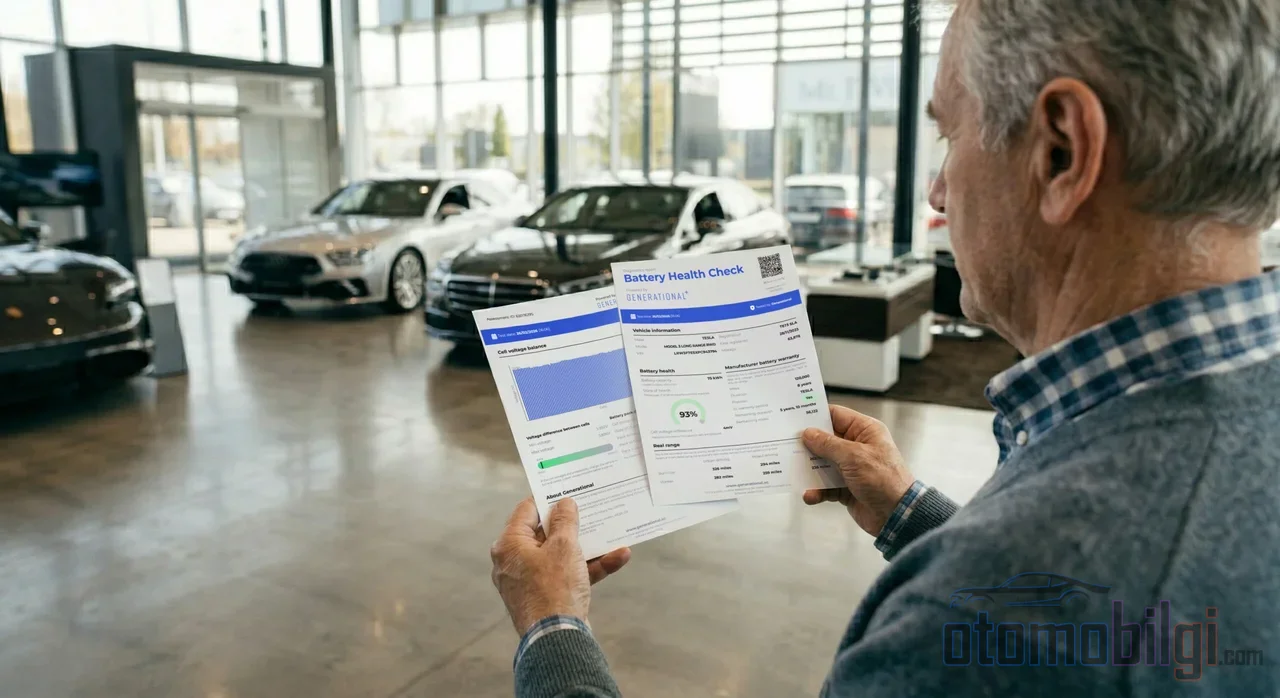
To make the comparison easier, let's gather the battery warranty tables and transfer behavior of prominent manufacturers in the market into a single table. The numbers may not be the same in every market; the values in the table reflect the conditions announced by the manufacturers in the relevant markets.
| Brand | Battery warranty | Transfer behavior |
|---|---|---|
| Tesla | Model 3/Y: 8 years / 160,000 km, min. 70% capacity | Tied to the vehicle; official ownership transfer required |
| Hyundai | Europe: 8 years / 160,000 km | In the US, 10 years/100,000 miles for the first owner; 5 years/60,000 miles for the second owner |
| Kia | Türkiye: 5 years / 150,000 km; UK: 8 years / 100,000 miles | Transferable in the UK; in the US, the long warranty is not transferred to uncertified second-hand vehicles |
| BYD | 8 years / 250,000 km | Table tied to the vehicle |
| Renault | 8 years / 160,000 km (Türkiye) | On models like the Zoe, the warranty transfers with the vehicle |
| Toyota | 10 years / 150,000 miles on hybrids; on BEVs, min. 70% capacity guarantee | The new vehicle warranty passes to subsequent owners with no additional action |
| Nissan | Varies by model | Transferable under certain conditions; at least 6 months must have passed after the first ownership |
The real lesson the table tells is this: the 8 years / 160,000 km and 70% capacity threshold has become a de facto standard in the industry; Togg, Tesla, Hyundai and Kia are consistent with this picture. On the transfer side, however, there is no such consistency. Hyundai's US practice shows it behaves differently from the same manufacturer's 8-year high-voltage coverage in the European market. Kia's US practice is even sharper: the 10-year / 100,000-mile long battery warranty on used vehicles outside the certified pre-owned program is not transferred to the second owner. Certified pre-owned programs can change this distinction; in other words, where you buy the vehicle can determine the fate of your warranty.
Capacity threshold and pro-rated warranty: what does 70% mean?
The battery warranty is not a single protection; it answers at least two separate questions. The first is defect coverage: the repair or replacement of a manufacturing fault in the cell, module or battery management system. The second is capacity loss coverage: whether the battery's storage volume, which shrinks with use, falls below a certain threshold. The common threshold is 70% of the original capacity; as long as the measurement indicating battery health stays above this value, a replacement under warranty is not required from the manufacturer's perspective.
There is also the concept of the pro-rated warranty: in some practices, the manufacturer's contribution to battery replacement costs decreases over time; even if the warranty continues on paper, the buyer's out-of-pocket share may increase. When reading the warranty text, one should look not only at the duration but also at how the contribution rate is tiered. In addition, whether the warranty covers defects, capacity loss, or both varies from brand to brand; the word "warranted" alone does not carry this distinction.
Calculating the remaining warranty: three reference points
The engineering method for calculating the actual warranty status of a used electric vehicle rests on three measurements:
- First registration / first sale date: the warranty period starts on this date. When a vehicle first registered in 2023 is bought in 2026, the eight-year table remains valid until 2031.
- Remaining kilometres: Even if the time period has not expired, if the km limit has been reached, the battery capacity coverage is considered exhausted. In a vehicle approaching the 160,000 km limit, it is the remaining km, not the remaining years, that is decisive.
- Current capacity threshold: How close is the vehicle to the 70% threshold today? Vehicles whose battery capacity has dropped below 80% are evaluated more cautiously by buyers; the threshold is not a limit, but a de facto health level.
A fourth measurement should be added alongside these three: whether a warranty-covered intervention has been performed in the past. A trace of the battery having been touched in service records changes both the vehicle's story and the shape of the remaining coverage.
Maintenance record and transfer procedure: the details that quietly void the warranty
Why is the service history decisive?
The manufacturer warranty is a conditional commitment, and the first of the conditions is that periodic maintenance is performed according to the schedule the manufacturer has prescribed. Some manufacturers explicitly state that the second-hand buyer must verify themselves that the maintenance was done regularly and that the warranty conditions were met. A missing service record is the most common piece of evidence a manufacturer can use as grounds for rejection in a warranty claim. A completed service history before purchase is not sufficient on its own; if there is a gap in the chain of records, you also need to clarify at which operation that gap occurred.
How is the transfer completed?
With some brands, the warranty takes effect when the change of ownership is formally transferred through the manufacturer's own system. Tesla is the best-known example of this: the limited warranty is transferred to the new owner, but this transfer is not valid until the manufacturer's ownership transfer process is completed. Having a notarized or title-like official vehicle transfer alone is not enough; the digital transfer on the manufacturer's side must also be completed. In some countries, however, when the change of ownership is reflected in the national vehicle registration database, the warranty is automatically tied to the new owner; although the mechanism differs, the obligation lies with the buyer: document through which channel the transfer was registered.
An extended warranty is a service contract
It is critical to distinguish factory warranty from extended protection plans purchased after the sale. Additional packages covering the powertrain components may belong only to the first contract holder and may not be transferable to a second-hand buyer. If the warranty on a vehicle listed as "has warranty" is an extension package and the package is registered in the first owner's name, the new owner is left with nothing. Do not make the payment without having the type of document being transferred confirmed in writing.
Manufacturer warranty or statutory warranty?
In second-hand vehicle purchases, two separate layers of protection work on top of each other and are often confused with one another. The manufacturer (factory) warranty holds the manufacturer responsible as long as its duration has not expired, regardless of which owner the vehicle is with. The statutory commercial warranty is an entirely separate arrangement: in second-hand sales by authorized dealerships, it provides a mandatory minimum guarantee, limited to certain age and mileage conditions; this minimum period appears in the legislation as 3 months / 5,000 km. If the manufacturer warranty has expired, the dealer's or selling business's responsibility is squeezed into a narrow time window and may remain limited to a liability of at most 45 days. In other words, the main major commitment on the table is the manufacturer warranty; what replaces it when it falls away is quite thin.
Pre-purchase checklist
If we are to reduce all these rules into a single working order, follow these steps when buying a second-hand electric vehicle:
- Determine the first registration date and the current mileage; calculate the remaining years and kilometers yourself.
- Have a battery health report (SoH) measured; evaluate the distance to the 70% threshold and the 80% reference.
- Check the continuity of the service record; ask whether any work was done under warranty in the past.
- Learn the brand's transfer procedure; insist that the ownership transfer is completed through the manufacturer's system.
- Get written confirmation of whether the warranty advertised is the factory warranty or an extended package.
- Evaluate the sales channel; certified pre-owned programs at some brands may include warranties that are not transferable.
Short answer: how does warranty transfer work on a second-hand EV?
The summary in a single paragraph is this: in most brands, the battery warranty is tied to the vehicle and the second-hand buyer benefits from the protection with the time and mileage remaining from the first registration date; however, the transfer is neither automatic nor unlimited. Some manufacturers reserve the entire long warranty for the first owner, some brands do not recognize the transfer until the official ownership transfer is completed, and gaps in the service record can become grounds for exclusion from coverage. The most valuable step a buyer can take is not to approach the warranty with the ad text, but with four measurable references: the first registration date, the remaining km, the capacity threshold and the transfer procedure. Every second-hand electric vehicle purchase made without clarifying these four values forgets that the battery is a component whose price shrinks through negotiation but whose technology cannot be negotiated.