Is Periodic Maintenance on an Electric Car Really Cheap?
Share This Page
No, an electric car doesn't exactly require "no maintenance," but it needs noticeably less maintenance than a gasoline car, and it's usually cheaper. Items like oil, spark plugs, exhaust, and clutch disappear; in their place come lighter but regular items such as cabin filter, coolant, brake checks, battery health tests, and software updates. Expecting annual costs to be roughly half those of a gasoline/diesel car is a reasonable starting point.
Highlights
- Periodic maintenance interval in most brands 1 year or 10,000-15,000 km
- Annual maintenance cost of an electric vehicle compared to the diesel average 45% lower
- Thanks to regenerative braking, brake pad life is roughly 3 times longer than gasoline cars
- Battery warranties in Türkiye commonly 8 years / 160,000 km
- Periodic items like annual coolant and 12V battery accumulate in years 4-5
What Is Actually Checked During Periodic Maintenance of an Electric Vehicle?
Taking an electric car to the service center is not a reduced copy of the oil-spark plug-filter ritual of gasoline cars; it's a different checklist. An electric motor has about half a dozen moving parts; compared to an internal combustion engine, this drastically reduces the number of parts that need lubrication, adjustment, and replacement line by line. The items that actually take up time at the service center are:
- Gearbox (reducer) oil: The electric motor spins at high rpm; a single-stage reducer adapts this rotation to the wheels. The oil's life is long but not infinite; the intervals in the manufacturer's manual should be checked.
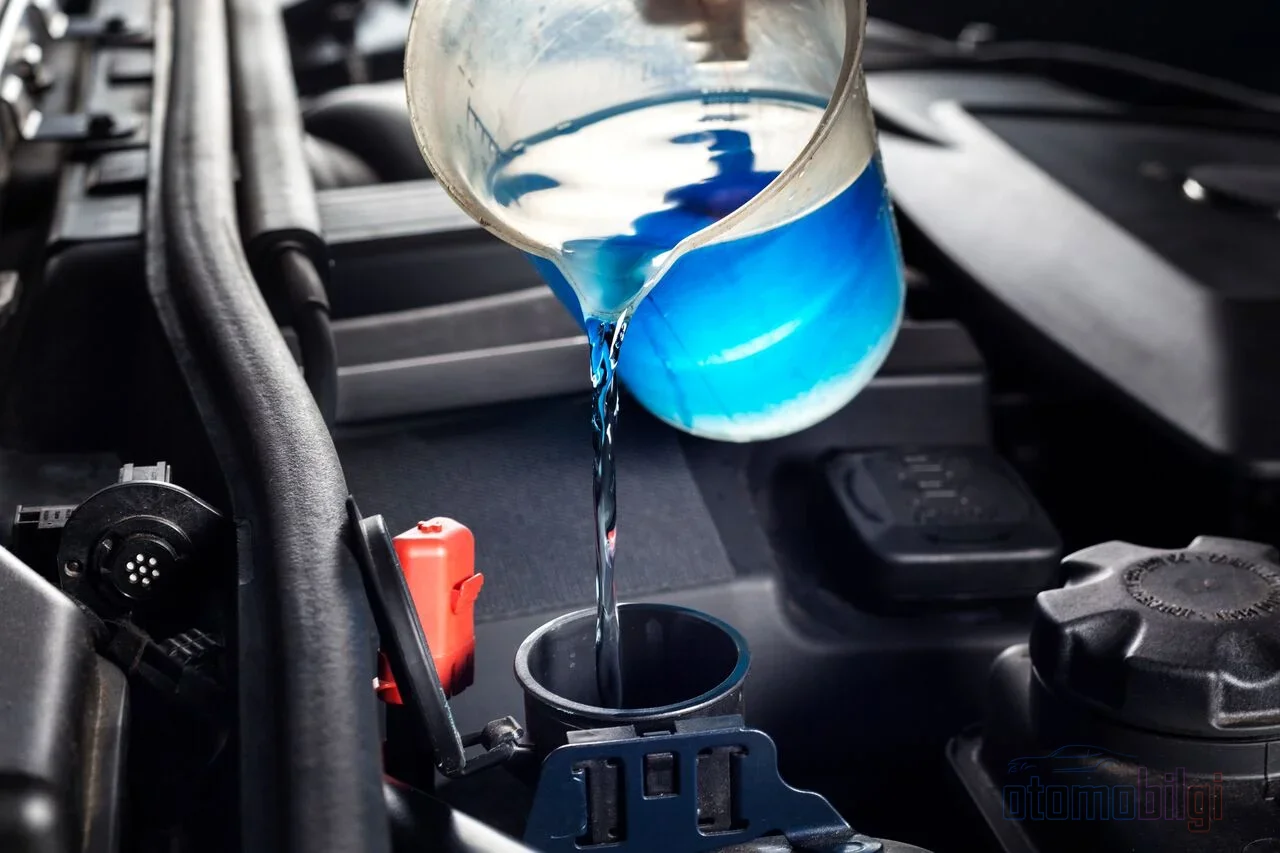
- Coolant: The thermal management of the battery, power electronics, and motor works with coolant fluid. The renewal item comes up in years 4-5.
- Cabin/pollen filter: Replaced every 15,000-20,000 km. Since there is no engine noise, outside smells and noise become more noticeable; a dirty filter makes this felt immediately.
- Brake condition: Pads wear little, but discs can rust; inspection is essential.
- Battery health check (SOH): Reading what percentage of capacity remains also directly affects the vehicle's second-hand value.
- Software updates: Both OTA and in-service updates can affect range and performance.
What Disappeared Compared to Gasoline Cars, and What Remained?
To clarify the differences, the best approach is to put the two lists side by side. What disappears is a direct consequence of the internal combustion engine: engine oil and oil filter, spark plugs, injectors, exhaust system, timing belt, pressure plate, clutch, and transmission oil in the classic sense. None of these parts exist in an electric vehicle; therefore, there is also no labor and parts budget spent on them.
The remainder falls into two groups. The first group is nearly identical maintenance items: tires, wipers, suspension and steering components, cabin filter, lights. The second group consists of EV-specific periodic items: coolant belonging to the high-voltage system, brake fluid, reduction gear oil and the 12V battery. It is recommended to inspect and clean the 12V battery connections every six months; while this small battery does not power the main battery, it feeds the computers when the vehicle starts up, and it is among the leading causes of unexpected faults.
| Item | Gasoline / Diesel | Electric |
|---|---|---|
| Engine oil + filter | Changed at every service | None |
| Spark plugs, injectors, exhaust, timing belt | Regular replacement/cleaning | None |
| Clutch, pressure plate | Wears out in non-CVT vehicles | None |
| Brake pads | Reference lifespan | Roughly 3 times longer lifespan |
| Cabin filter | 15,000-20,000 km | Same interval |
| Coolant | Engine cooling | Battery and power electronics cooling |
| 12V battery | Present | Present, regular inspection recommended |
Why Don't Brakes Wear Out But Still Need Inspection?
Regenerative braking has the motor handle most of the deceleration, so the mechanical pads are engaged very little; this extends pad life to roughly three times that of a gasoline vehicle. However, there is a critically important engineering detail here: a rarely used brake does not mean a barely worn brake. Before the pads wear out, the discs can need replacement due to rusting. Especially in vehicles that remain in low use for long periods and in high-performance EVs, disc/pad inspection must be carried out regularly.
What Does Annual Maintenance Cost Really Look Like?
The numbers need to be read on three levels: maintenance interval, annual package price, and long-term accumulation. In terms of maintenance interval, the difference is negligible: one manufacturer states "1 year or 15,000 km, whichever comes first" for electric models, while another applies a 1 year/10,000 km period at its authorized service centers. In other words, the electric vehicle does not go to service more often; it simply receives fewer operations at each visit.
Price Comparison: Türkiye and International Data
In Türkiye, as of 2026, basic maintenance (oil + 4 filters + labor) for a gasoline/diesel mid-segment passenger car is in the 2,800-5,500 TL range; major maintenance can exceed 5,500-10,000 TL, while the premium/SUV segment can exceed 8,000-15,000 TL. On the electric side, most of these items are absent: oil and filter sets, spark plugs, timing belts and other most frequently repeated expenses have dropped off the lists.
International comparisons support the picture: annual EV service is in the 150-250 GBP range while 300-500 GBP is cited for gasoline vehicles, and the gap widens as vehicles age. In examples looking at ten-year costs, Tesla owners' 10-year maintenance/repair spending averages 4,035 dollars - about 400 dollars per year. In direct comparison with diesel, the electric vehicle's annual periodic maintenance averages 45% cheaper calculated. The difference between the figures comes from a methodological difference: the first reflects dealership service prices, the second owners' actual average spending. Both point in the same direction: the electric side is systematically cheaper, but not zero.
The advantage also continues on the usage cost side: running on electricity generates about half the cost of running on gasoline. When maintenance savings combine with energy savings, the total cost of ownership clearly tilts in favor of electric.
How Do Warranty Terms Determine the Maintenance Schedule?
Most electric vehicle owners get maintenance done not so that the car "doesn't break down," but for warranty protection . Manufacturers tie periodic maintenance to warranty conditions; exceeding the mileage or time limit can void the warranty. This is especially critical for battery warranties: the common standard in Türkiye is 8 years/160,000 km, and the warranty usually covers the battery not dropping below a certain percentage of its original capacity. Terms vary by brand and model; skipping an interval without reading the manual means risking the assurance on the largest component.
Another dimension is competence. Working on a high-voltage system is a job requiring expertise and certification; in Türkiye, a MYK (national qualifications) certification requirement for electric and hybrid vehicle maintenance is on the agenda. This means "not every mechanic can do everything," and it is a criterion to be questioned when choosing an independent service shop.
Battery: How Much Risk Does the One Big Expense Item Carry?
The low cost of periodic maintenance is balanced by one large potential expense: battery pack replacement. However, the likelihood of this expense is not as high as thought. Modern lithium-ion batteries offer 1,500-3,000 full cycles; that corresponds to roughly 500,000 km to 1 million km. Real-world examples are consistent: a Renault Zoe 40 kWh showed a 96% SOH value after about 345,000 km, while a Hyundai Kona Electric 64 kWh reported 94.5% SOH at 210,000 km. Even packs whose capacity falls below 70% can get a second life in home energy storage; so the "once the battery dies, the car is scrap" scenario doesn't exist in practice.
Charging habits affect this picture: constant DC fast charging can accelerate degradation; the ideal split is roughly 80% AC, 20% DC. There are now also tools for those who want to see battery health objectively: test devices that issue a battery condition certificate in 3 minutes and cloud-based continuous health/range tracking services have become widespread. In the used car market, the SOH report is becoming the new standard item of inspection.
Are Software Updates a Maintenance Item?
Yes, and it is an item that has no equivalent in the traditional maintenance mindset. As an electric vehicle is updated, its range can extend, and its performance and charging management can improve; an OTA package arriving overnight effectively "rejuvenates" the car. This also has a consequence on the service side: a significant portion of fault diagnosis is done through software readings. The point to watch is that major in-service updates (such as BMS updates) can reset some battery statistics; keeping records is useful for long-term health tracking. Manufacturers' official manuals clarify daily, monthly, and periodic maintenance on separate pages; bold social media content (for example, a transmission cooling oil change at 160,000 km on a specific model) must always be verified against your own vehicle's manual.
Service Practice in Türkiye: Packages, Discounts, Price Transparency
In the Turkish market, it is becoming easier to make maintenance costs concrete: some manufacturers allow periodic maintenance prices to be queried online using the chassis number/plate and mileage. For example, the Turkish distributor of a German brand is offering a periodic maintenance discount of up to 30% for passenger vehicles over 2 years old, valid between May 5, 2025 and December 31, 2026. Such campaigns are worth following when planning a maintenance budget, whether electric or internal combustion. In addition, some maintenance products - cabin and HEPA filters, brake maintenance products, fluids - can also be sourced from independent sellers; for items that do not require a labor warranty, this can drive costs down.
Conclusion: Cheap, But Not Zero-Cost
Periodic maintenance of an electric car is genuinely cheaper compared to a gasoline one: the items that disappear were the most frequent and most predictable expenses, while the remaining ones come at longer intervals and are less demanding. The "no maintenance required" myth is wrong in two respects: on one hand, tires, brakes, filters, cooling, and battery checks are required regularly; on the other, periodic items like the 12V battery, coolant, and reduction gear oil accumulate in the 4th-5th years, pushing the annual average up. As long as you stick to the warranty calendar, establish balanced charging habits, and do not neglect SOH monitoring, maintenance remains the least problematic aspect of electric vehicle ownership.
Sources
- Maintenance and Service - Hyundai Türkiye
- Toyota Warranty System
- Volkswagen Periodic Maintenance Prices 2026
- Is electric car maintenance cheaper? - Kia
- Electric Vehicles - Citroën Türkiye
- Tesla Maintenance Service Intervals (Model Y Owner's Manual)
- Car Periodic Maintenance Prices and Service 2026 - Aksoy Tuning
- 2026 Electric Car Buying Guide - LenaCars
- Electric Car Maintenance: What Fluids Does Your EV Need? - Recurrent Auto
- EV vs Petrol: Complete UK Running Cost Comparison 2026 - CostPerMile
- Tesla maintenance cost (Consumer Reports data) - InsideEVs
- AVILOO battery health certificate
- No MYK Certificate? Don't Touch an Electric Car - Belgeser