Why Do Brake Pads in Electric Vehicles Last for Years?
Share This Page
In an electric car, brake pads last many times longer than their counterparts in a gasoline vehicle because regenerative braking takes on most of the deceleration: in practice, they can 150,000 km and beyond reach a lifespan of, whereas brake pads in gasoline vehicles are usually replaced within a range of 40,000-100,000 km . But this advantage comes at a price: rarely used brake discs rust, and hydraulic components do not tolerate neglect.
Highlights
- Brake pad life in an electric vehicle is typically over 150,000 km; replacement may come into question after 200,000-300,000 km.
- Compared to gasoline vehicles, electric vehicles emit up to 83% less brake dust.
- The most commonly overlooked issue is not pad wear, but the rusting of cast iron discs.
- Brake fluid is hygroscopic; if the manufacturer does not specify an interval, experts recommend replacement every 18 months .
- In scheduled maintenance, electric vehicle owners spend approximately 30-40% less than gasoline vehicle owners.
Regenerative Braking Does Not Replace Mechanical Braking, It Almost Renders It Unemployed
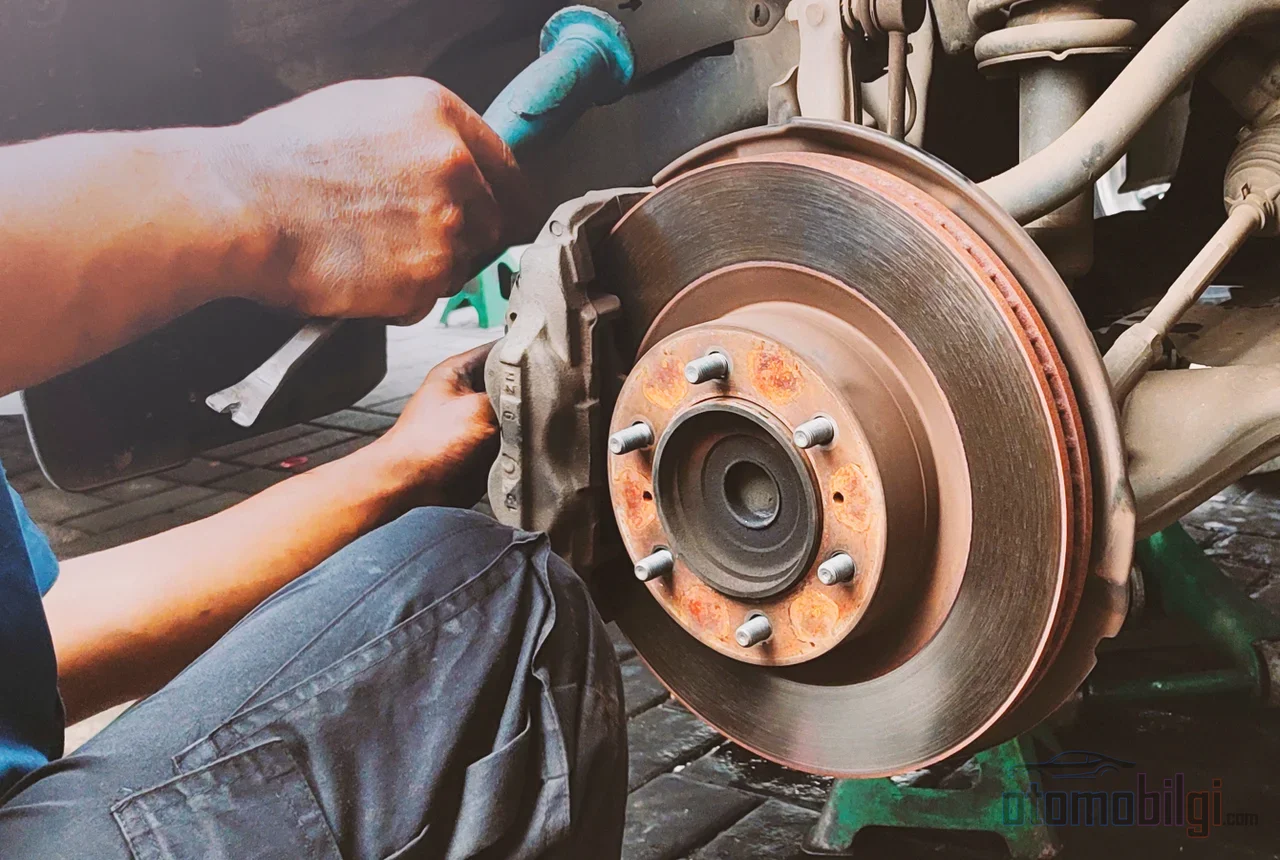
Let us first clarify the mechanism. In an electric vehicle, when you lift your foot off the accelerator pedal, the electric motor starts working in reverse and becomes a generator: the vehicle's kinetic energy is converted into electricity and sent back to the battery. In other words, a significant portion of the deceleration is provided not by friction, but by the motor's resistance. The mechanical braking system - disc, caliper, pad - is still right there and works with exactly the same hydraulic logic; regenerative braking does not take its place, it is added on top of it.
The consequence of this architecture for brake pads is calculable. Friction braking only kicks in during complete stops, at low speeds where regeneration weakens, and in emergency maneuvers. Therefore, the pads experience only a very small portion of their wear cycle. Let us recall that in most brands and models, the brake lights also come on when you lift your foot off the accelerator: the vehicle informs the driver behind that braking is taking place - whereas in reality, braking is mostly electrical.
To give a concrete scale: in gasoline vehicles, brake pad life is typically considered to be in the 40,000-60,000 km band, and some manufacturers state that it can go up to 100,000 km . In electric vehicles, this value can stretch to 150,000 km and beyond ; apart from aggressive use, pad aging remains minimal, and replacement only comes into question after 200,000-300,000 km of total driving. A brake that is used less also means less dust: electric vehicles have been measured to emit up to 83% less brake dust - you will confirm this with your own eyes when cleaning the wheels.
The Disc Does Not Wear Out as Much as the Pads Either: The Effect on the Periodic Maintenance Bill
The extended brake pad life is directly reflected in maintenance costs. Electric vehicle manufacturers mostly recommend annual or 10,000-15,000 mile (16,000-24,000 km) service intervals; in conventional vehicles, this interval is 5,000-7,500 miles . In terms of cost per trip, the picture is clear: in scheduled maintenance, electric vehicle owners spend on average 30-40% less paying. Comparison on a per-mile basis is even more meaningful - maintenance cost on an electric vehicle is roughly $0.03 per mile, while on a gasoline car it is around $0.06 . A reference point from the UK: a standard electric vehicle service falls in the 100-250 £ range, averaging 140 £.
| Item | Electric Vehicle | Gasoline Vehicle |
|---|---|---|
| Typical pad lifespan | Over 150,000 km | 40,000-100,000 km |
| Service interval | Annually / 16,000-24,000 km | 8,000-12,000 km |
| Scheduled maintenance difference | 30-40% less spending | Reference |
| Brake dust emissions | Up to 83% less | Reference |
In Türkiye the picture points in the same direction, but as a user experience it has not yet settled in. One example: in the price list of a widespread service chain, brake pad replacement (front or rear set) appears as 2,175 TL + VAT - an electric vehicle owner theoretically never sees this item for years. In the interest of transparency, one gap should also be noted: a detailed and standardized data pool on how brake maintenance is invoiced at authorized services for electric vehicles compared to gasoline ones has not yet formed in Türkiye. Some users criticize the annual maintenance being mandatory for electric vehicles; my practical advice is to check, before signing the maintenance contract, whether brake system items (disc measurement, caliper maintenance, hydraulics) are listed separately on the invoice.
Why Lightly Used Brakes Rust: The Mechanics of an Unexpected Problem
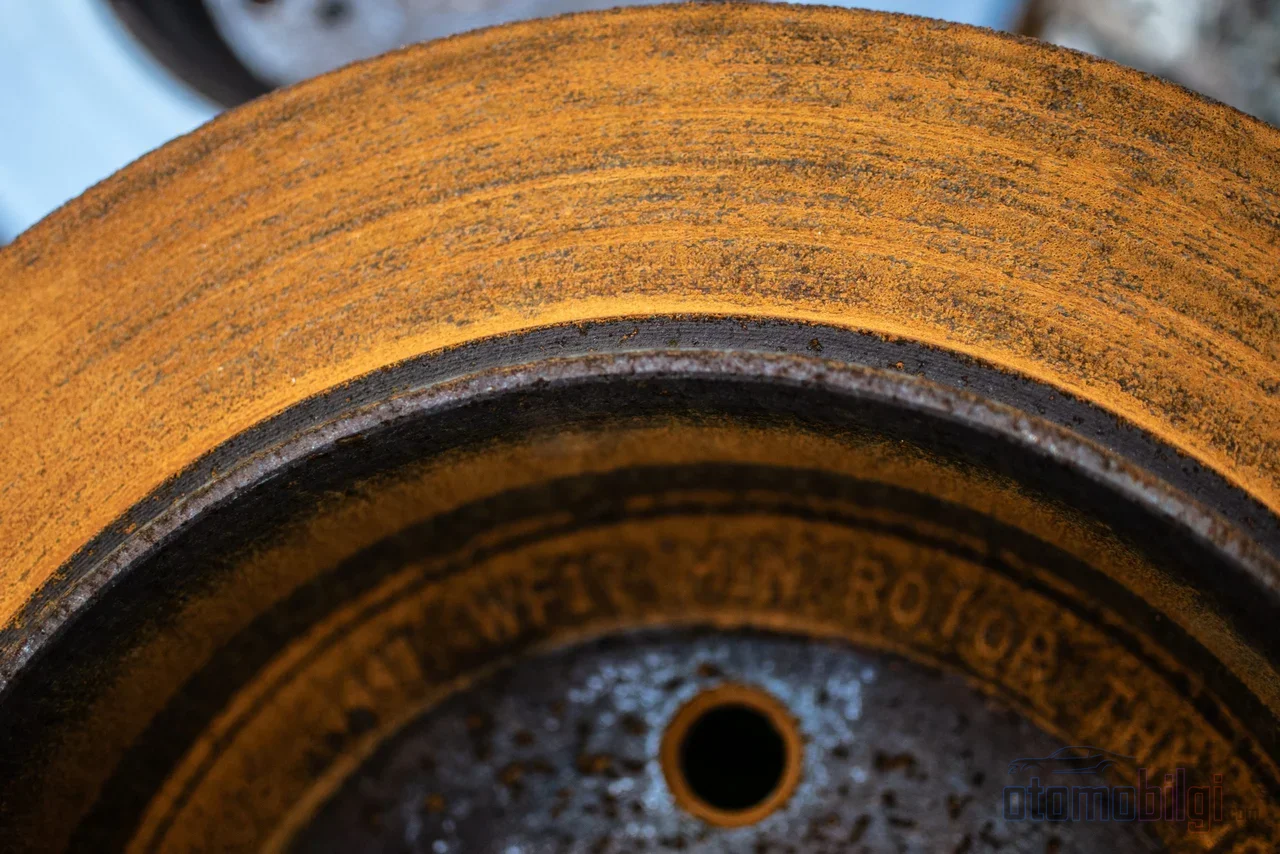
Here is the part not written in the purchase brochures. Cast iron brake discs are prone to corrosion, and their cleaning depends on pad contact: as the pad rubs against the disc surface, the rust layer is wiped away. In an electric vehicle, the mechanical brakes are almost never engaged, so the discs do not get this cleaning action, and the rust layer on them thickens. In a gasoline car, the discs heat up during braking and vaporize surface moisture; in an electric vehicle, this self-repair mechanism also largely does not work.
The result may be cosmetic in the short term, but expensive in the long term. Even in a short time and with light use, slight rust accumulation is visible; if neglected, the situation grows. Typical failures observed in services are:
- Pad and disc surfaces deteriorating early due to rust
- Delamination of the friction material, that is, the pad separating from its backing plate
- Caliper seizure due to dried lubricant - caliper replacement is a far more expensive procedure than routine brake service
- Brake fluid that has absorbed moisture and lost its performance
- Hardening of the surface of lightly used pads (vitrification) and a decline in braking performance and comfort
In an electric vehicle, the enemy of the brakes is not wear, but neglect. The solution is simple from an engineering standpoint: systematically, for example once a week, perform deliberate and more aggressive braking to keep the disc surface clean, and have a professional brake inspection once a year. Brake fluid is hygroscopic; it draws in moisture even in a closed system. If your manufacturer does not give a replacement interval once every 18 months inspection and replacement is the cautious program recommended by experts.
Does One-Pedal Driving Harm the Brakes?
One-pedal driving sets regeneration so aggressively that the car almost comes to a complete stop when you lift off the accelerator. It is excellent in terms of driving comfort; however, it is rated worse for the brake disc, because it almost never calls on the friction brake. The critical point is the paste on the inner band of the disc where the brake pad makes contact - when that zone is never cleaned, corrosion advances there first. Microscopic pockets of rust can accumulate over time on disc surfaces that never warm up, weakening their structural integrity.
To balance things out: there is no solid evidence that one-pedal driving directly causes mechanical damage to the braking system; the topic is discussed on user forums, but the posts there are largely experiential opinions. The systematic approach is this: use one-pedal mode freely, but consciously add braking maneuvers that clean the disc surface to your driving routine. The two are not mutually exclusive.
The Misconception That "Electric Vehicles Need No Brake Maintenance"
This is the sentence I hear most often from those switching from gasoline cars, and it is not realistic. The hydraulic system, rotors, and calipers remain in place; in emergencies and hard braking, the friction brake is still the sole carrier - in an electric vehicle that is heavier than an equally sized gasoline car due to the battery, emergency braking stresses the brake pads more than anything else. Stop-and-go traffic also engages the friction brake more often; in highway-dominated use, the pads barely wear at all. So the equation EV = no pad replacement ever does not hold for every usage profile. Also, because the vehicle runs silently, brake noise is more noticeable; service centers prefer low-noise, low-dust pad formulations, and since electric vehicle braking systems are designed to work together with regenerative braking, pad material requirements can also differ.
Brake Maintenance Checklist for Those Switching from Gasoline Cars
- Take pad replacement out of your routine budget; you may not even see ten years. Add disc measurement to every annual service instead.
- Have a professional brake inspection once a year; calipers, hoses, and hydraulics are the subject of that inspection.
- At least once a week, clean the disc surface with several strong braking maneuvers - especially if you drive with one pedal.
- Do not neglect the brake fluid schedule; if the manufacturer gives no interval, an 18-month calendar is a sensible upper limit.
- Ask for brake items to be listed separately on the invoice; no standard invoicing practice has yet formed in this area in Türkiye, so you make the check.
In short, the braking system of an electric vehicle largely winks at you on pad costs, but in return demands regular and conscious maintenance discipline. The owner who applies what the data says wins in the long run, both in terms of safety and wallet.
Sources
- How Does Regenerative Braking Work? - Pod Point
- Brake Pad Lifespan of Electric vs. Combustion Vehicles - Zohama
- Why EV Brakes Last Longer, But Still Require Regular Service - Rand Automotive
- EV Brake Pad Life: Myths vs Reality - Asimco Global
- EV brakes: why regenerative braking rusts your discs - Autonext
- One-Pedal Driving: Does It Damage Your EV Brake Discs - Autodoc
- Why EV Brake Discs Corrode - EV Experts
- EV Brake Rotor Corrosion - R1 Concepts
- Brake maintenance on electric vehicles - Textar
- What Is Regenerative Braking and Why Is It Important? - Borusan Oto
- Brake System Differences in Electric Vehicles - Otofrenim
- Parts of Electric Vehicles That Require Maintenance - Sigortaladım
- Auto Service Price List - Oto Pratik
- Electric Car Maintenance vs. Petrol Cars - Auto-Inc
- Electric car servicing and maintenance 2026 - Autotrader UK
- How Often Do Electric Vehicles Need Maintenance? - BUSC MMS