Does Unauthorized Maintenance Void the Warranty on an Electric Car?

The moment electric vehicle owners turn to an independent shop instead of the dealership usually comes with the first periodic maintenance invoice. There is no oil filter, spark plug, or belt in front of the vehicle; the maintenance list gets shorter, but a labor charge still sits opposite the invoice. It is precisely at this point that most drivers ask the same question: if I have my vehicle serviced somewhere other than an authorized service center, what happens to that 8-year battery warranty in particular? The answer is not one word long; because the electric vehicle warranty itself is not a single piece either.
In an electric car, the warranty is typically structured in three layers: the vehicle warranty, the battery warranty, and the warranty on the electric motor and controller. The durations vary from layer to layer; while vehicle and electric component warranties are commonly in the 2-3 year and 20,000-40,000 km range, the market standard for the high-voltage battery is around 8 years. Each of these three layers reacts differently to unauthorized intervention. That's why the correct version of the question "does the warranty break" is this: which warranty breaks with which procedure?
What Does Unauthorized Maintenance Put at Risk, and What Doesn't It?
The short answer becomes clear when unauthorized maintenance is divided into two separate categories. Procedures on the tires, brake pads, cabin filter, suspension, and 12V electrical side generally cause no problems as long as they do not touch the high-voltage system. Any intervention on the battery, electric motor, inverter, and high-voltage wiring, however, can directly end the warranty coverage of that system. The distinction in between is clearly defined in most manufacturers' warranty specifications, and for a conscious driver, the decision map lies in being aware of these two lists.
Highlights
- The high-voltage battery warranty market standard is 8 years; some brands offer a mileage limit of up to 250,000 km.
- The SOH threshold is usually 70% of the original capacity; a pack that falls below it is repaired or replaced.
- The annual periodic maintenance cost of electric vehicles is on average 45% lower than that of diesel vehicles.
- High-voltage systems typically operate in the 400-1,000 V range; these systems require occupational safety and competence.
- EU and US regulations stipulate that qualified independent maintenance alone cannot void the warranty.
Procedures That Can Be Freely Performed: Tires, Brakes, Suspension, and the 12V Side
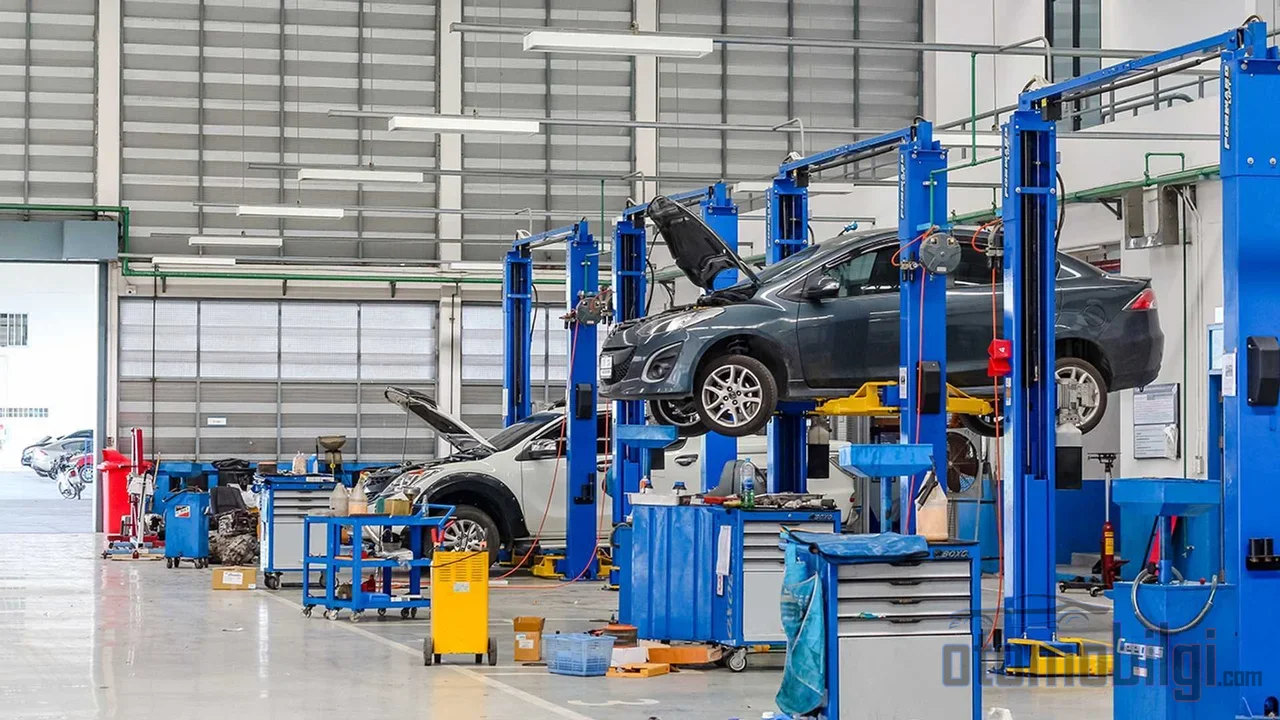
Compared to internal combustion vehicles, the electric vehicle has a noticeably reduced maintenance schedule: fewer moving parts, almost no oil and filters to replace. Most of the remaining routine work is mechanical in nature and falls into the safe-to-do list:
- Tire replacement, rotation, and balancing (within manufacturer-approved sizes)
- Brake pad and disc procedures; thanks to regenerative braking, their replacement intervals are longer than in gasoline vehicles
- Wear parts such as the cabin filter, wipers, and bulbs
- Suspension components
- Accessories connected to the 12V side, such as dash cams and lighting
Having these jobs done at an independent shop does not count as a warranty cancellation on its own. In the US, the Magnuson-Moss Warranty Act prohibits manufacturers from forcing consumers to use their own service centers and prevents warranty terms from being abused to the vehicle owner's detriment. Australian consumer legislation and the European Union's block exemption regulation also point in the same direction: if the manufacturer's service schedule is followed and original or equivalent-quality parts are used, independent maintenance does not void the warranty. However, there are two nuances. First, legal protection does not cover all parts under warranty; second, in the event of a rejection, the burden of proof effectively falls on the vehicle owner. That is why the rule is simple: the invoice and work order for every job done at an independent shop must be kept, and the digital service record must be kept up to date. A lack of service history is one of the most common grounds for rejecting warranty claims in various markets around the world.
Gray Area: Improper Parts and Incorrect Tire Sizes
The list of permitted operations does not apply to "every part." Fitting tires in a size not recommended by the manufacturer can disrupt speed sensor calibration and lead to a controller fault; the resulting fault code reads like a record of unauthorized intervention. Similarly, a third-party GPS tracker connected to the main wiring harness or CAN bus line without isolation can produce electrical noise and generate fault codes. The intuitive rule is this: part replacement is free, intervention in the electrical architecture is risky.
Layer Tied to the Authorized Service Requirement: Battery, Motor, Inverter and High Voltage System
The high voltage systems of electric cars typically operate between 400 and 1,000 volts. This is many times higher than a household outlet and by definition requires special training and safety procedures. In some countries, occupational health legislation distinguishes non-high-voltage maintenance from work on high voltage systems as two separate categories of competence; separate requirements are defined for workshops servicing the high voltage side. This technical reality also forms the backbone of warranty policies.
Anyone outside the authorized network opening or working on the battery pack, battery management system (BMS) or high voltage wiring directly terminates the warranty coverage of the relevant system. Critical components are sealed with labels indicating intervention, and data such as how many times they have been accessed is stored in ECU logs; in other words, there is no such thing in practice as an "undetectable" intervention. Given that the battery pack represents roughly 40-60% of the vehicle's value, the risk is not just the warranty - it is the vehicle's single most valuable component. After the warranty is voided, battery replacement is a procedure that can reach five-figure, and in some markets six-figure, invoices.
Where Battery Warranty Is Measured: The SOH Threshold
Battery warranty is tied not only to time and mileage but also to a performance threshold. Manufacturers commit that the pack will retain at least 70% of its original capacity throughout the warranty period; packages falling below this threshold are repaired or replaced. Gradual capacity loss above the threshold is considered normal degradation and cannot be claimed. Some manufacturers go even further and commit to restoring the pack to a fixed SOH value, or to the 80% threshold, whichever is higher, in case of excessive loss. It is important to remember that battery warranty operates independently of the vehicle warranty; the 12V auxiliary battery is usually covered by the standard vehicle warranty, not the battery warranty.
| Manufacturer | Battery Warranty |
|---|---|
| Renault | 8 years / 160,000 km |
| Hyundai | 8 years (fully electric models) |
| BYD | 8 years / 250,000 km |
Behaviors That Void the Warranty: From Neglected Maintenance to Counterfeit Chargers
Unauthorized technical intervention is only one of the main reasons for warranty cancellation. The risks that vehicle owners unknowingly trigger spread across a much wider spectrum:
- Amplifiers connected to the high-voltage bus bar or accessories powered by a traction battery; are classic triggers of warranty cancellation.
- Use of a non-certified charger or a homemade adapter; The BMS records every charging event, and some manufacturers' chargers feature cryptographic authentication. When a counterfeit device is detected, a fault code is logged and the battery warranty is permanently voided.
- Skipping periodic services or going outside the authorized network; the service record is proof that the vehicle has been properly maintained.
- Constantly discharging to 0% depth; leaves permanent chemical damage in the cells and is considered user misuse. The ideal daily charging range is the 20-80% band.
- Software interventions into BMS, cell, or motor controller parameters; result in immediate warranty loss.
- Leaving the vehicle uncharged for storage longer than 30 days; can cause the pack to be permanently disabled and excluded from coverage on the grounds of storage neglect. A 50-60% charge is recommended for long-term parking.
Items such as water damage and physical damage are not a matter of warranty but of insurance; if floodwater reaching the battery above its IP rating can be determined from BMS records, the claim can be denied. As for fast charging, being moderate is enough: Heavy daily use of DC fast charging accelerates degradation but does not by itself void the warranty. The smart practice is to reserve daily tasks for slow AC charging and save DC fast charging for road trips.
The Economic Balances: Why Independent Workshops Are Tempting, Why the Risk Is Calculated
The economic basis for electric vehicle owners' pursuit of unauthorized maintenance is real: the annual periodic maintenance cost of electric vehicles is on average 45% lower than their diesel counterparts, and the gap widens even further on the energy side; for 20,000 kilometers a year, charging expenses are a tiny fraction of the fuel cost for the same distance. On the other hand, in some markets, the criticism persists that annual periodic maintenance for electric vehicles is a de facto imposed practice; vehicle owners citing the small number of moving parts question the labor charges billed against a short maintenance list.
The reasonable solution in this tension is to shift mechanical work to competent independent workshops that issue invoices, while keeping the high-voltage side within the authorized network. Some manufacturers also offer incentives such as an additional annual repair warranty in return for periodic maintenance performed at authorized services; such advantages should also be factored into the total cost of ownership. If a warranty claim is rejected, a written rejection letter and the warranty clause relied upon must always be requested; for vague grounds such as user misuse, it is possible to appeal to the manufacturer's regional customer service management and consumer arbitration mechanisms.
Clear Answer: Does Unauthorized Maintenance Void the Warranty?
Unauthorized maintenance does not by itself void the warranty as long as it does not touch the high-voltage system and the manufacturer's maintenance schedule and parts quality are preserved; however, any intervention made outside the authorized network to the battery, motor, inverter and high-voltage wiring can permanently end that system's coverage. When making the decision, the criterion is not brand loyalty but the system's voltage layer: the 12V and mechanical side is a safe-free zone, while anything above 400 volts is authorized-service territory. Invoice-keeping discipline and correct charging habits are just as decisive as the choice of service; the BMS records everything, and the records are the strongest evidence for both the manufacturer and the vehicle owner.