Why Does the 12V Battery Drain in an Electric Car?
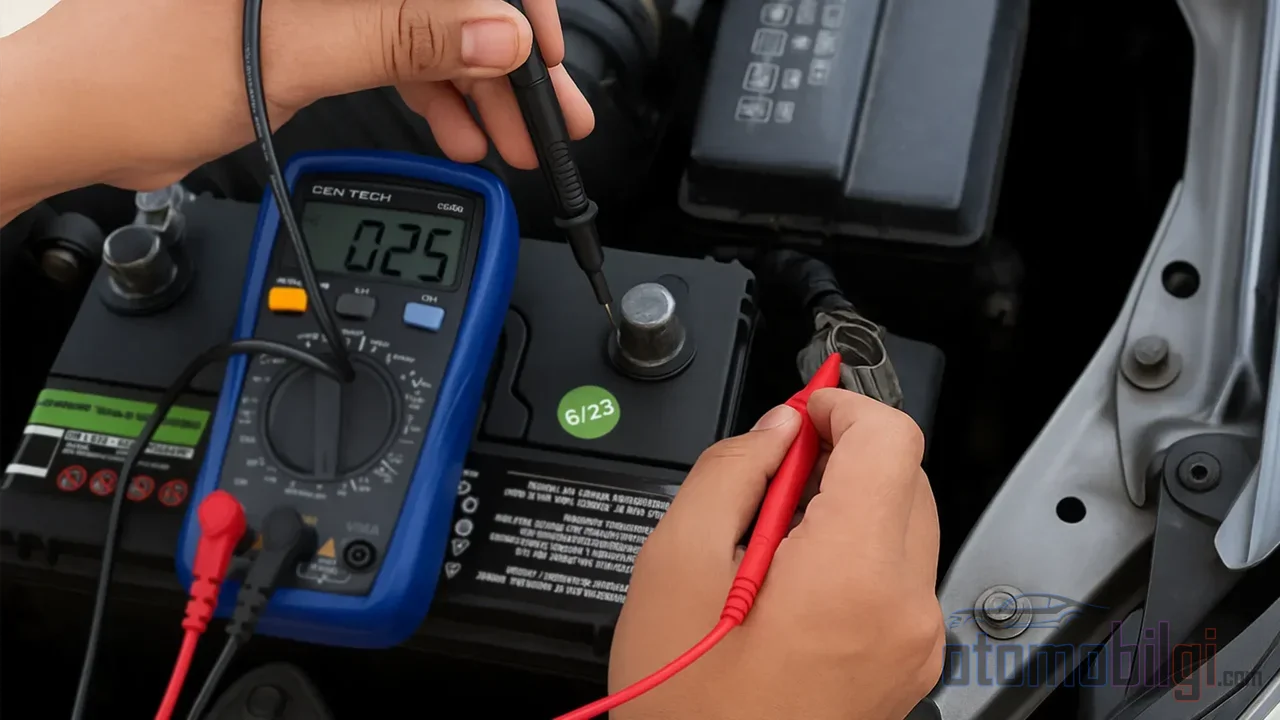
Your main battery shows 90 percent charged on the dashboard, so you have no range anxiety - but the car won't even open its doors. This is the most striking paradox of electric vehicle ownership: the component that leaves you stranded is usually not the giant lithium-ion pack, but that small 12V battery you see when you pop the hood. So what is century-old lead-acid technology doing in a vehicle worth thousands of dollars that runs on hundreds of volts? And most importantly: why does this battery run flat at exactly the moment you need it most?
Two Separate Electrical Systems: What Does the 12V Battery Actually Do?
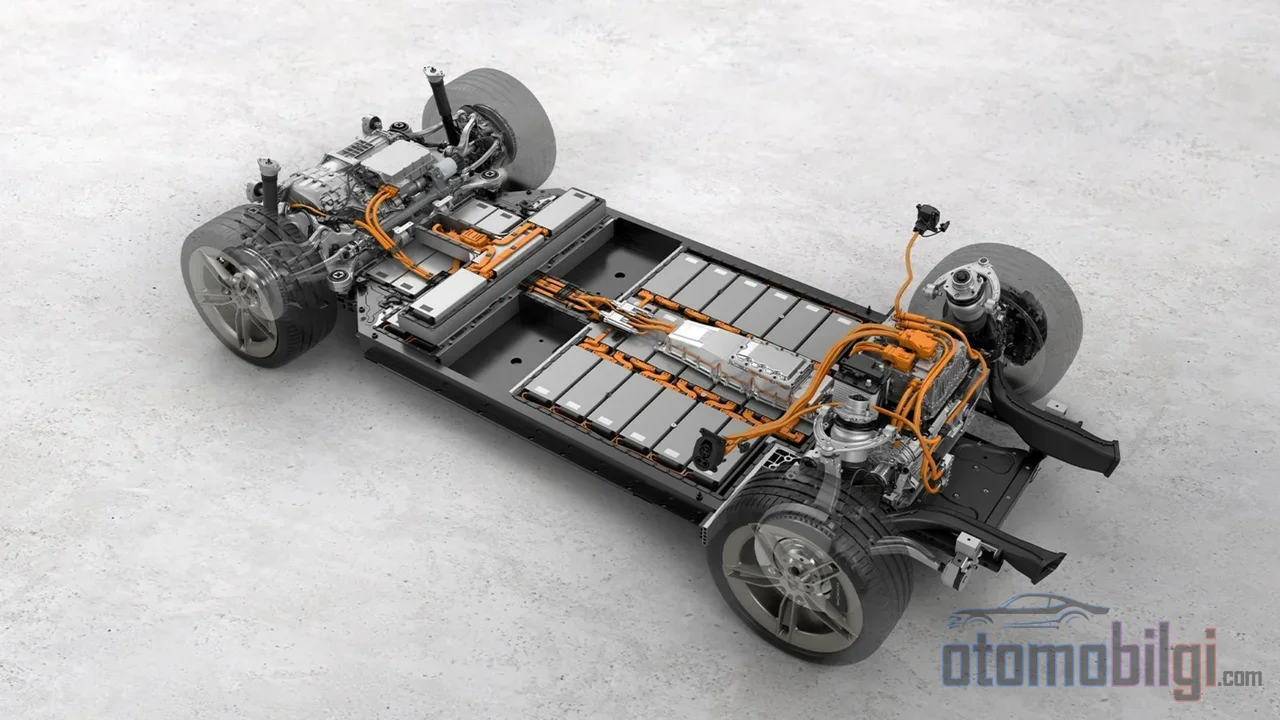
An electric car operates with two independent electrical circuits. Propulsion is provided by the main lithium-ion battery, typically at 400V - or 800V in newer models. However, components such as infotainment, electric locks, windows, climate fan, airbags and advanced driver assistance systems run at 12V or below. In other words, the car's electronic brain is fed by a familiar low-voltage network, completely separate from the high-tech propulsion system.
The most critical task of the 12V battery is waking the car up before ignition. When you start the vehicle, the first things that need to be powered are the contactors and inverter that connect the high-voltage circuit to the main battery - and these draw power from the 12V system. The contactor is the safety component that disconnects the high-voltage battery from the circuit in the event of a possible collision; its operation depends on the 12V battery. The practical consequence of this architecture is harsh: when the 12V battery dies, the vehicle will not start even if the main battery is fully charged; in some cases, you cannot even begin charging by plugging in the charging cable.
There is a similar distinction on the charging side: the alternator found in conventional cars does not exist here. The 12V battery is charged by a DC-DC converter that steps down the voltage from the main battery; while the vehicle is at a charging station, the 12V battery is also usually topped up at the same time.
Key Takeaways
- If the 12V battery runs flat, the vehicle will not start even when the main battery is full - the contactors are powered by 12V
- Up to 96.5 percent of a lead-acid battery is recyclable
- The 12V battery warranty is usually covered under the 3 year / 36,000 mile vehicle warranty; it is separate from the 8-year battery warranty
- Jump-starting is only done on the 12V side - never connect it to the main battery
Why Still Lead-Acid?
Lead-acid technology, the first commercially rechargeable battery, invented in 1859, continues to exist in the electric vehicle era. There is sound engineering logic behind this.
The cost and safety balance
A DC-DC conversion system that would produce 12V directly from the main battery is more expensive than a lead-acid battery in most cases. The safety side is even more decisive: powering systems close to passengers from 400 or 800V is risky; the 12V battery physically isolates the high voltage from critical low-voltage systems. Simplicity is also an advantage: the battery management system (BMS) in a lithium 12V battery can shut the battery down in case of out-of-spec operation, and this can immobilize the vehicle. The simplicity of lead-acid means reliability here. What's more, up to 96.5% of a lead-acid battery's weight can be recycled - still a leading rate among battery technologies.
The shift to AGM, EFB and lithium
The most common type in electric vehicles is AGM, which is maintenance-free and offers roughly twice the lifespan of standard lead-acid; EFB and deep-cycle types are also used. In newer models, the switch to lithium-ion 12V batteries has begun - Tesla and Hyundai are examples of this.
Why the 12V Battery Drains: Five Typical Scenarios
The root of the problem is often not a single fault, but several consumption mechanisms working together.
- Self-discharge: A parked lead-acid battery naturally loses its charge over time; electric vehicles are not immune to this.
- Parasitic drain: Telematics, connectivity modules, thermal management and software updates draw current even when the vehicle is stationary. Devices that stay plugged in constantly, such as an OBD2 reader, are also added to the list.
- Long-term parking: A 12V battery left unattended can be depleted within just a few days. There have been cases of dead batteries in vehicles waiting for weeks in dealership parking lots; one manufacturer addressed the problem with a software update, increasing the frequency of 12V charging from the traction battery during idle periods.
- Modules that fail to enter sleep mode: The inability of the telematics or infotainment unit to enter standby mode creates a feeling of a faulty part, but actually leads to the battery dying. The solution chain is parasitic current measurement, a software update, and replacement via a 12V battery test.
- Temperature: In vehicles parked outdoors for long periods, the thermal management system may kick in, and this circuit can drain the 12V battery.
In electric vehicles, the 12V battery's job is actually harder than in an internal combustion car: it performs deeper cycles and gets less opportunity charging while driving. That's why testing the 12V battery at every periodic maintenance is a sensible habit.
OTA Updates: The Most Overlooked Cause
Wireless (OTA) software updates are a modern and insidious source of 12V depletion. During an update, the vehicle's electronic systems stay awake for a long time, and the battery can drain noticeably. A failed OTA can drain the 12V battery and mimic a battery failure; the correct diagnostic sequence is to charge first, then stabilize the system.
Ownership experiences illustrate this picture: a Kia EV6 owner experienced a 12V failure after a software update; it was found that removing the battery, letting it sit for a while, and reinstalling it reset the 12V charge calibration. On some brands, on the contrary, updates that fix 12V problems have been reported by users. This two-way relationship between software and the battery is the new normal of electric vehicle ownership.
Failure Symptoms: How Do You Know the Battery Is Dead?
Diagnosis usually comes with a gradual and clear series of symptoms:
- The vehicle doesn't unlock with the remote key or phone, door handles unresponsive
- When the door is opened with the physical key, the screen is off or turns on and then goes dark
- Multiple electronic systems are throwing meaningless faults at the same time
The last item is critical: When the 12V weakens, electronic modules can produce false faults caused by low voltage. The battery should always be checked before replacing any part. A physical inspection is also informative: oxidation on the terminals, fluid leakage, or swelling is a sign of a serious fault. A dead 12V battery does not directly pose a fire or explosion risk to the main battery; however, since the vehicle becomes inoperable, the indirect consequences are serious.
How to Jump-Start?
First, the rule: an electric vehicle can be jump-started, but only via the 12V auxiliary battery. Never connect jumper cables to the high-voltage main battery. The method follows the same logic as with internal combustion vehicles:
- Place the vehicle on level ground and turn off all electronic systems.
- Connect the red (+) cable first to the positive terminal of the electric vehicle's 12V battery, then to the donor vehicle's positive terminal.
- Connect the black (−) cable to the donor vehicle's negative terminal.
- Start the donor vehicle and put the electric vehicle in the ON position.
- Once the vehicle is running, remove the cables in the reverse order of installation.
The reverse is also possible: an electric vehicle can jump-start another vehicle, provided certain rules are followed - but the limitations in the manufacturer's manual must definitely be checked.
Where Does the 12V Battery Stand Within the Warranty Coverage?
A common confusion needs to be cleared up here. The 12V auxiliary battery is generally covered under the standard vehicle warranty ( 3 years / 36,000 miles on many manufacturers) and is not the same thing as the 8-year main battery warranty. On the main battery side, the picture is more generous: In the US, a minimum of 8 years/100,000 miles (10 years/150,000 miles in California and CARB states) is offered, while in Europe a warranty of typically 8 years/160,000 km is provided; some manufacturers commit to replacement or repair when capacity falls below 70 percent.
However, the battery warranty only covers factory defects. Wear caused by usage or a problem in the vehicle's charging system may fall outside the coverage - which is why the underlying cause of the battery's failure should also be examined at the service center.
Short Answer: Why Won't the Vehicle Start When the Main Battery Is Full?
The electric vehicle's operating chain works like this: when you press the start button, the 12V battery powers the high-voltage contactors and the inverter; the contactors close, the main battery comes online, and the vehicle is ready to drive. When the 12V battery dies, the first link in this chain breaks: the high-voltage pack cannot be physically connected. Therefore, if the vehicle won't start while the main battery is full, the first suspect is almost always the 12V battery - and the solution lies in a jump-start performed in the correct order, followed by checking the battery's condition.
The Future of the 12V Battery: Could It Soon Become History?
The industry is currently split into two camps. In Europe, a decision has been made to ban lead-acid batteries in new vehicles after 2030; manufacturers are turning to 12V lithium-ion batteries or virtual 12V battery architectures that eliminate the physical battery entirely. The engineering math is convincing: removing the physical 12V battery takes about 13 kg out of the vehicle and increases the load capacity by 2.4 percent. With the lithium transition, the weight and lifespan advantages are balanced against the increased cost.
On the other hand, advocates of the lead-acid side predict the technology will stay, arguing with cost, simplicity, and recyclability. While the debate continues, the practical reality does not change: most electric vehicles on the road today have a 12V battery, and it remains one of the most unexpected sources of failure in ownership. If you are going to park your vehicle for weeks, do not overlook the 12V battery.
Sources
- Why Do Fully Electric Vehicles Use 12V Battery?
- Why Do EVs Still Need 12 V Lead-Acid Batteries?
- Why Electric Vehicles Still Need Lead Acid Batteries
- Is the 12V Lead-Acid Battery Dead?
- Failed OTA Updates and the 12V Battery
- What Warranty Does An EV Battery Cover
- A guide to jump starting an EV
- Can a Dead 12V Battery Damage Your EV's Main Battery?
- 12V Battery Problems in Electric Vehicles
- Why Does the 12V Battery in an Electric Vehicle Run Out?