The Only Approved Method for Towing Electric Cars, Including Teslas
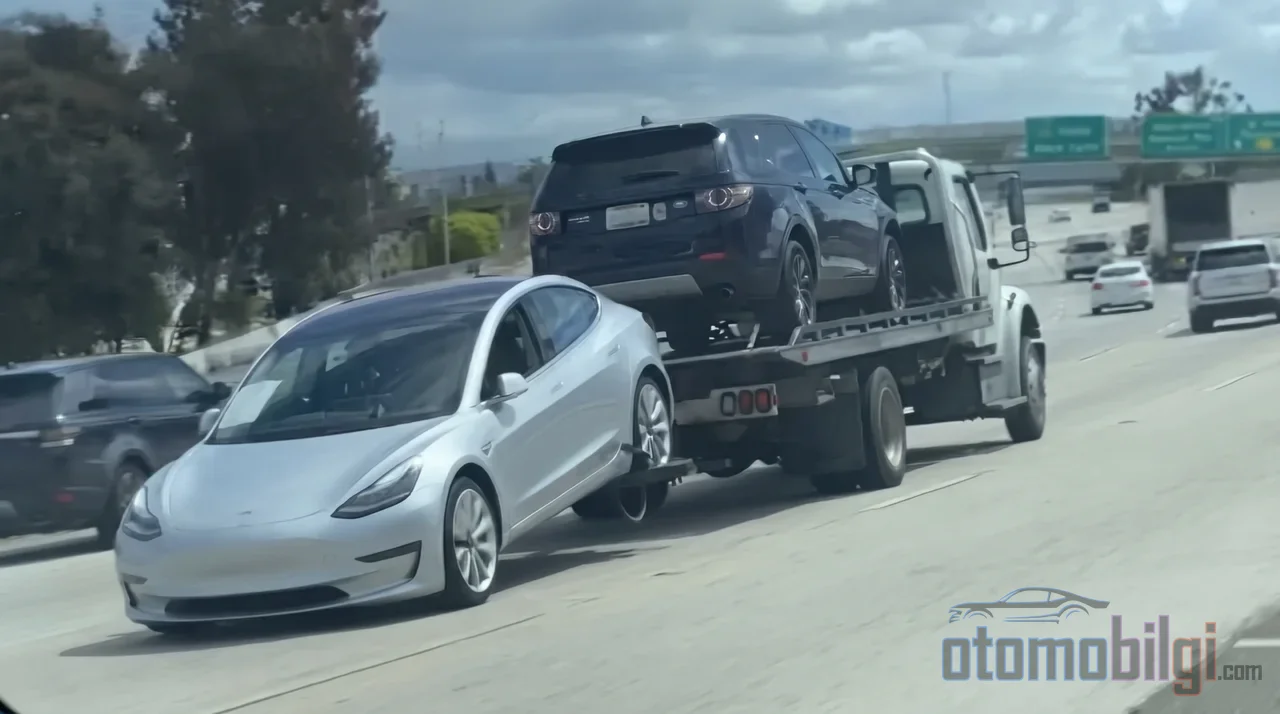
Towing a broken-down electric vehicle with a rope may seem like the most natural rescue method at first glance; that's how it's been done with gasoline cars for years. However, with an electric vehicle, this reflex can be a costly technical mistake. Because electric cars have no classic transmission and no true neutral gear: the electric motor is directly connected to the wheels, and the moment the wheels turn, the motor starts turning as well. So does an electric car really get damaged when towed, or is this risk exaggerated? On this page, we explain step by step the technical answer to the question, the speed and distance limits set by manufacturers, and the right decision you should make the moment you break down.
Why Is Wheel-Based Towing Risky for Electric Vehicles?
In an internal combustion car, shifting into neutral mechanically disconnects the engine from the wheels; while being towed, the engine remains inactive, independent of its idle state. In an electric vehicle, this separation does not physically exist. As the wheels turn, the motor turns too, and by the nature of the regenerative braking system, the motor tries to feed the electricity it generates back into the battery. When the vehicle is off, this flow is uncontrolled; unregulated electricity generation threatens the inverter that manages the power flow between the motor and the high-voltage battery, as well as the Battery Management System (BMS).
The second problem is lubrication. The high-speed gears and bearings in an electric motor are lubricated and cooled by a pump that only engages when the vehicle is running. In an electric vehicle being towed while off, the motor turns without either lubrication or cooling; this leads to overheating and mechanical failure. In short, the damage accumulates not at a single point, but simultaneously in three separate components (motor, inverter, battery management system).
A common misunderstanding also needs to be corrected here: placing the gear lever in the N position does not make towing safe. In most electric vehicles, the N position only releases the parking brake and allows the vehicle to roll; it does not disconnect the motor from the wheels. For the same reason, it is also not safe for another vehicle to tow your electric car with a rope.
Highlights
- There is no true neutral gear in an electric vehicle; while the wheels turn, the motor turns too, generating uncontrolled electricity.
- The only universally approved method for long-distance towing is the flatbed tow truck.
- Emergency towing limits vary by model: there are speed limits of 5-25 km/h and distance limits ranging from 10 m to 20 km.
- Drivetrain and battery damage resulting from improper towing falls outside warranty coverage.
- Since the high-voltage battery is located under the vehicle floor, securing straps must be attached to the tires.
Safe Towing Methods: Flatbed, Dolly, and Wheel Lift
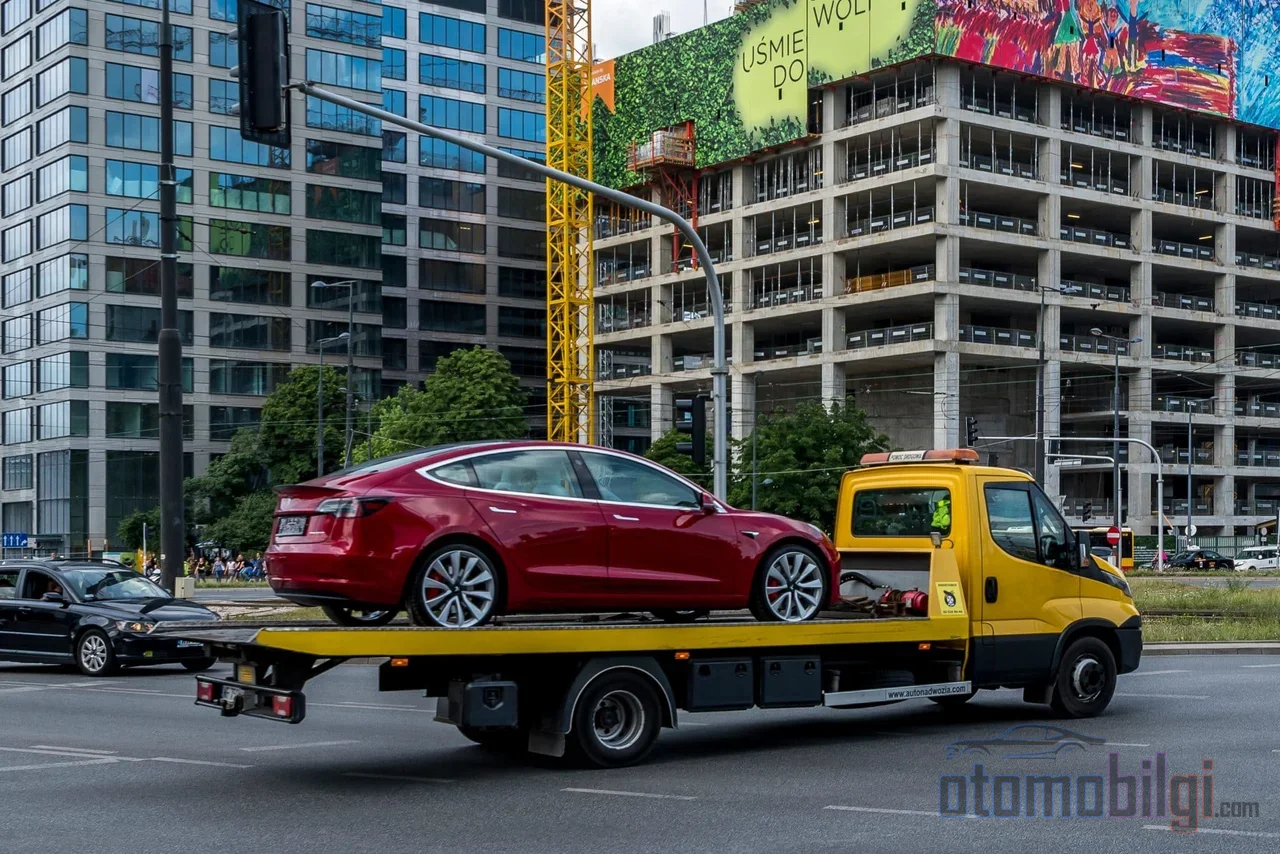
A flatbed tow truck, where all four wheels are lifted off the ground, is the only universally approved method. While the wheels are in the air, the motor does not turn, the regenerative system does not engage, and unwanted electricity generation is eliminated. This is the preferred solution for the vast majority of modern electric vehicles, including Tesla, Nissan, Ford, and Hyundai. Tesla allows towing in its owner's manual only on a flatbed platform or trailer for all its models, from the Model 3 to the Cybertruck; it does not recommend any other method. Tesla also features a special Transport Mode that disables the parking brake for loading the vehicle onto the platform.
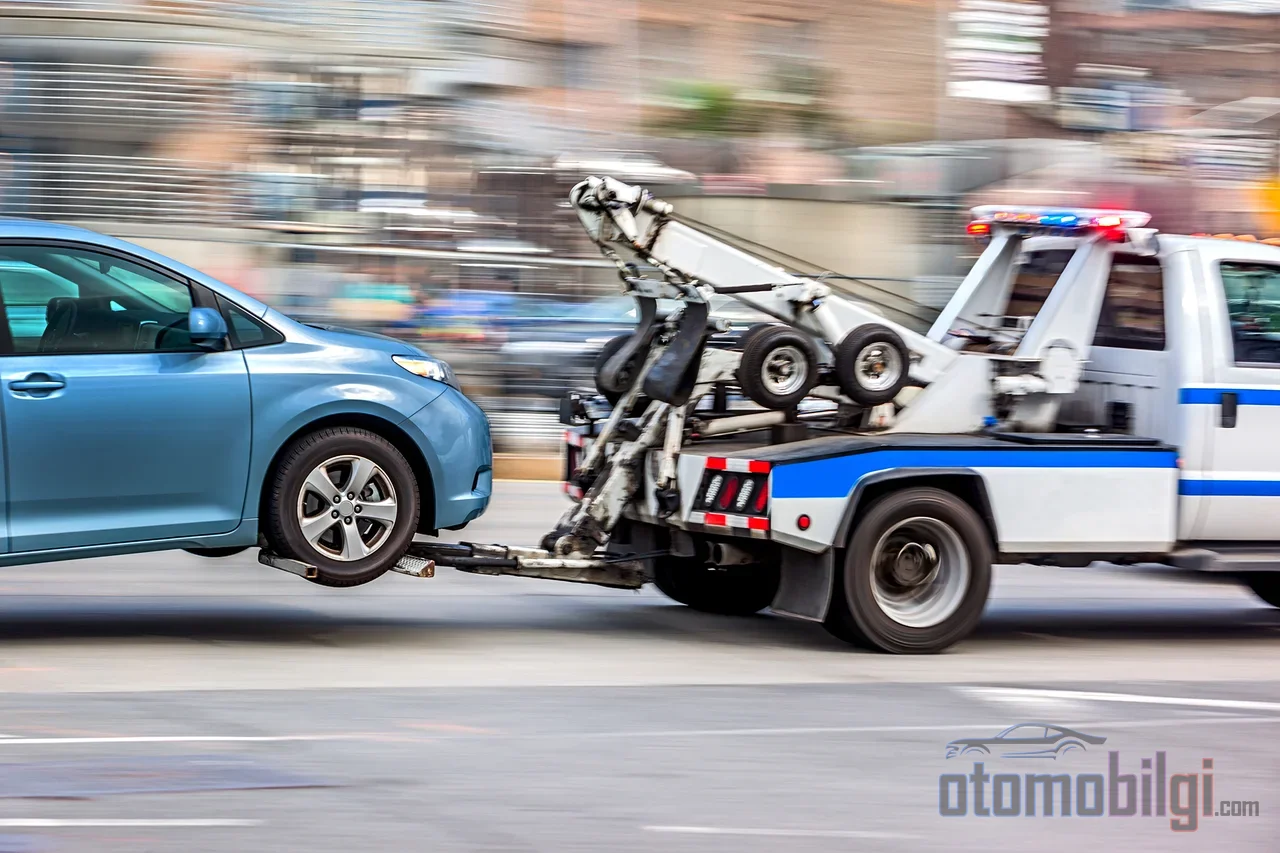
The method known as a tow dolly, which lifts only two wheels, is conditionally acceptable: only on front-wheel-drive electric vehicles and when the driving wheels are fully off the ground. In dual-motor, all-wheel-drive (AWD) models, since there is a motor on both axles, a standard dolly cannot lift all the driving wheels; in AWD vehicles, no wheel should remain on the ground, otherwise both the power electronics and the AWD system suffer serious damage. Similarly, wheel-lift systems can only be used if they can safely keep the driving wheels off the ground.
Manufacturers' Emergency Towing Speed and Distance Limits
So what if your vehicle is completely immobilized and the flatbed is still on its way? For this scenario, manufacturers allow short-distance emergency towing with a tow ring; but the limits differ noticeably from model to model. While some manuals permit limited towing with two wheels on the ground, Tesla does not allow any method that keeps any wheel on the ground. Therefore, the figures in your vehicle's own owner's manual are the final reference; the table below summarizes the official limits of common models.
| Vehicle | Permitted towing condition | Speed limit | Distance limit |
|---|---|---|---|
| Kia EV6 | Loading/positioning onto a tow truck only | Below 5 km/h | 10 m |
| Volkswagen ID.3 | Emergency only | Walking pace | 100 m |
| Volvo EX30 (towing mode) | Short recovery | 5 km/h | Short distance to avoid battery damage risk |
| Kia (CD, 2023) | In N position, parking brake released | 25 km/h | 20 km |
| Kia (SG2KV, 2023) | Emergency towing | 15 km/h | 1.5 km |
The difference between these figures should not be underestimated: while one manual permits up to 25 km/h, the same speed on another model may cause the battery to charge incorrectly and lead to vehicle damage. The general safety principle is this: the driving wheels must never remain on the ground; if there is no alternative, the manufacturer's limits must be strictly observed, the N position must be selected, and the parking brake must be released. If the electronic parking brake (EPB) does not release normally, the vehicle should be taken to an authorized service center on a flatbed without taking any risks. One more detail about the electrical system during towing: the power system must be completely shut off before the vehicle is towed, because many electric vehicles remain in standby mode even when parked.
Protecting the Battery During Loading onto the Tow Truck
When the right tow truck arrives, the job is not yet done. The high-voltage battery is located in the battery tray on the underside of the vehicle; therefore, hooking onto the chassis or suspension components during loading and securing onto the tow truck can directly damage the battery tray. Securing straps should only be attached over the tires. This one-sentence rule can protect a battery module worth tens of thousands of liras.
Pre-loading preparation is also a simple sequence of a few steps: shut the vehicle down completely, shift into N, release the parking brake. In vehicles with side and curtain airbags, there is another point to pay attention to: the rollover sensor may trigger the airbags while the vehicle is left in a certain ignition position; because of this risk, the recommended ignition position during towing should be checked in the manual. Some manufacturers also require that the vehicle be transported to an authorized service on a flat platform without being tampered with if the electronic parking brake does not release normally.
Things to Watch Out for in the Insurance and Roadside Assistance Process
When you break down on the road, there is a practical distinction you need to know before calling for help by phone: towing service is not included in the standard coverage of mandatory traffic insurance. Towing and assistance services are part of the roadside assistance package offered alongside the comprehensive insurance policy; in traffic insurance, they can only be included under the additional services or assistance special conditions section, with the coverage and limits defined in the policy. When you call the call center, the vehicle recovery service nearest to the policyholder is dispatched; the most important thing to do at this point is to clearly state that the vehicle is electric and that a flatbed tow truck is required. This single sentence prevents the turnaround of a tow truck arriving with the wrong equipment and saves you a lost hour.
Also, an electric vehicle with a depleted charge can of course be transported; in this case, an authorized service or a professional towing service should be preferred, and again a flat platform or wheel carrier should be used. Searching for a rope solution in a hurry means adding a second fault to the fault that needs fixing: in the event of drivetrain or battery damage caused by improper towing, you lose the validity of the warranty and are left with a serious repair bill on the vehicle.
Does an Electric Vehicle Get Damaged While Being Towed? The Clear Answer
The clear answer to the question is this: if an electric vehicle is towed with its wheels on the ground and its motor rotating, yes, it is seriously damaged; if it is transported on a flatbed tow truck, no, it carries no risk at all. Towing with wheels on the ground is acceptable only in emergency rescue scenarios where the vehicle must be moved a short distance for safety reasons, and within the speed and distance limits set by the manufacturer. In long-distance towing, the only correct method is the flat platform.
The decision chain you will apply the moment you break down on the road is also based on this logic:
- Stop the vehicle safely and shut the power system down completely.
- When calling the towing service or the insurance call center, say that the vehicle is electric and request a flatbed tow truck.
- Put the vehicle in N, release the parking brake; if the EPB does not release, do not intervene in the vehicle.
- Ask for the securing straps to be placed over the tires; do not allow hooks to be attached to the chassis or the battery tray.
- In forced short tows, do not exceed the speed and distance limits in the manual.
One final note: check from today whether towing service is included in the roadside assistance package alongside your comprehensive insurance, or in the additional services section of your traffic insurance. Instead of trying to find the manual page at the moment of a breakdown, preparing these two pieces of information in advance is the cheapest yet most effective insurance of electric vehicle ownership.
Sources
- Kia Owners Manual - If the electric vehicle needs towing
- Kia EV6 - Towing, What to Do in an Emergency
- Volvo EX30 Support - Having your vehicle towed
- Volkswagen ID.3 - Instructions for towing
- GOV.UK - Recovery operators: working with electric vehicles
- Engineer Fix - Can Electric Cars Be Flat Towed
- Sigortaladım - Points to Consider in Towing Service for Electric Vehicles
- İnci Sigorta - Which Policy Includes Towing Service