How Does the Comprehensive Insurance Claim Process Work for Electric Cars?

The picture that emerges when an electric vehicle is involved in an accident can be very different from that of an internal combustion car: while the body damage may be relatively minor, the condition of the battery located underneath alone can determine the fate of the file. Does the repair cost exceed the market value, or not? Will the insurance company have the vehicle repaired, or write it off as scrap? The answers to these questions depend on the actions taken in the first hours and first days after the accident.
The comprehensive insurance damage process for an electric car follows the same steps as for a conventional vehicle: notification, appraisal, adjuster report, repair approval, payment. However, once the battery is involved, each step becomes more technical, more expensive, and more contentious. This page explains the process step by step, with measurable figures; it also covers what needs to be watched out for in order not to lose your rights.
The 5 Business Days Rule for Damage Notification: Why Is It So Critical?
The first and harshest hurdle in the process is time. In comprehensive insurance, the damage notification must be made within 5 business days from the date the risk materializes or the date you learn of the damage. If the deadline is exceeded, the scope of coverage and payment terms may be adversely affected; in practice, loss of rights may occur. In other words, no matter how shocked you are after the accident, the calendar does not stop.
The basic documents you should have with you when making the notification are as follows:
- Accident report
- Copies of the driver's license and vehicle registration certificate
- Comprehensive insurance policy and premium receipt
- Alcohol test report
- Police report (if the accident was handled by the police)
Once all the documents are received, the insurance company opens a damage file and gives you a file number. Record this number; it will be requested at every point of contact throughout the process. There is also a technical detail: the notification must be made personally by the policyholder named in the policy. Applications made through damage tracking centers with power of attorney are not accepted; providing your IBAN details in advance for the payment also speeds up the file.
Highlights
- The damage notification period is 5 business days; missing it can lead to loss of rights.
- Adjuster assignment is carried out through the central EKSIST system as of April 1, 2026.
- If the repair cost exceeds 60-80% of the market value, the vehicle is considered an economic total loss.
- As of July 1, 2026, the use of original parts in repairs is the rule; the burden of proof lies with the insurer.
- In comprehensive insurance, payment is made within 10 business days after the documents are completed, and in any case no later than 45 days from the notification.
Adjuster Assignment and Appraisal: How Does the Process Work in the EKSIST Era?
After the notification, the insurance company takes the vehicle in for inspection. The adjuster usually meets with the vehicle within 1-2 business days after the notification. There is a critical technical detail here: the address where the appraisal will be done must be the authorized service or repair shop where the repair will take place. Leaving the vehicle in the wrong place delays the process.
How does the adjuster inspect the vehicle?
Modern damage assessment is not a job done by eye alone. Along with the expert's visual inspection, laser and 3D chassis measuring systems, paint thickness gauges, endoscopes, OBD-II readers and computerized appraisal software are used. This software calculates damaged parts, labor times and costs based on a standardized database; and the report is prepared in accordance with this format. Once the report is ready, it must be completed within 3 business days for traffic insurance and within 5 business days for other motor vehicle insurance such as comprehensive coverage.
The report includes whether the vehicle is repairable or a total loss, which parts will be replaced or repaired, labor times and costs. The report can be viewed via e-Government; however, this viewing is for informational purposes only and does not constitute an official document. Also, know this: you have the right to object to the expert report, and this right has a time limit - it must be exercised within 3 business days from the date the report is uploaded to the system. If no result is achieved, the Insurance Arbitration Commission or a lawsuit comes into play.
What has EKSIST changed?
Expert assignment is now done through a centralized system. In traffic insurance, if the damage amount exceeds one tenth of the minimum material coverage ( 40,000 TL for 2026), expert assignment is mandatory; in comprehensive coverage, the requirement applies in cases of severe damage and total loss (write-off), with no monetary threshold. Once an expert has been assigned to a file, a second expert is not appointed - therefore, the quality of the first report is extremely important. The policyholder also has the right to request an expert assignment, and the insurance company pays the fee of the first expert assigned through the system.
Expertise Specific to Electric Vehicles: Why Is the Battery the Deciding Factor in the File?
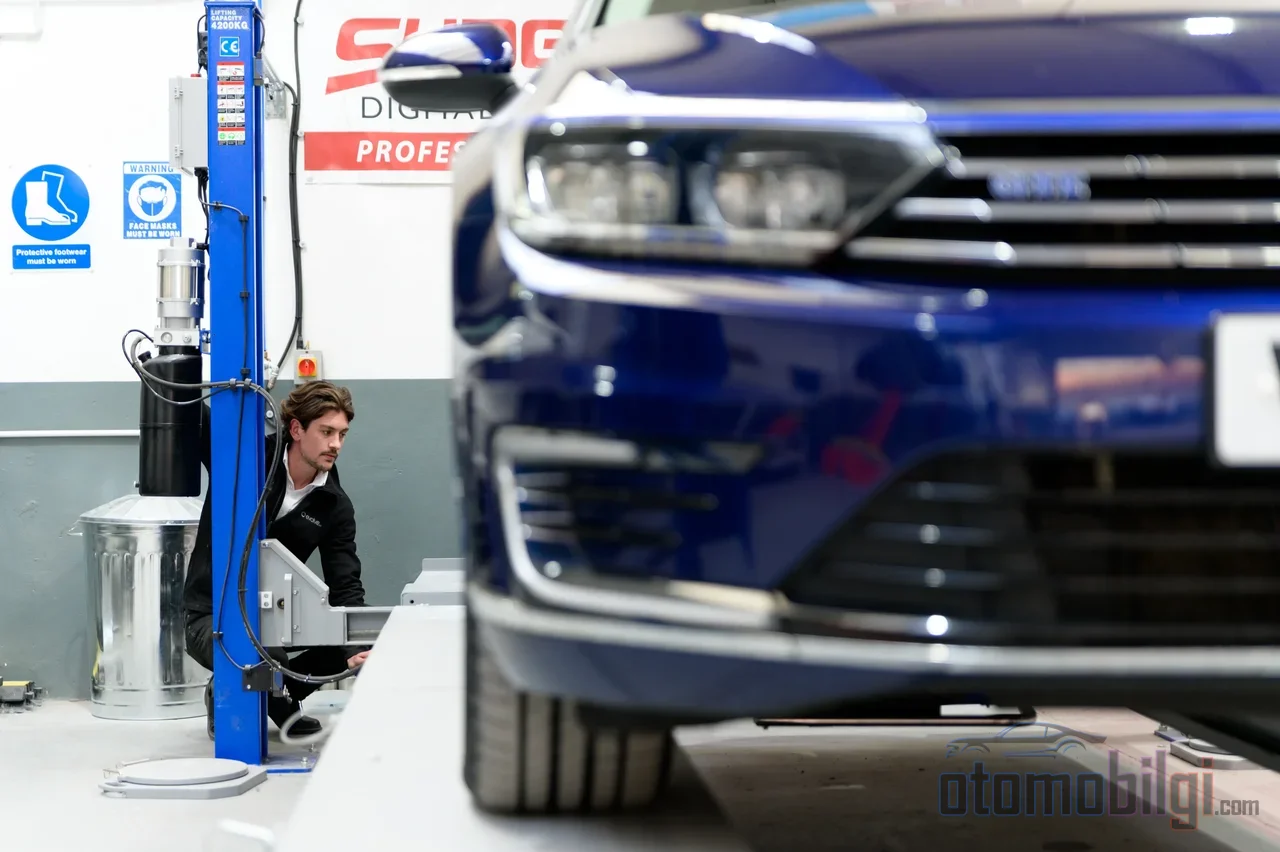
In an internal combustion vehicle, the cost of an accident may be limited to the bodywork; in an electric vehicle, however, the high-voltage battery located in the underbody can change the entire economics of the accident. For this reason, the most critical step in electric vehicle appraisal is battery health (SoH) analysis. During the appraisal, the battery's health and lifespan, motor power and drivetrain are tested. During the damage process, the vehicle inspection and battery check are carried out jointly by the expert and the authorized service; the duration varies depending on the extent of the damage.
If a battery module is damaged, the bill grows quickly: battery packs are expensive and their repair requires expertise. When the repair cost exceeds 60-80% of the market value, the vehicle is considered an economic total loss under comprehensive coverage practice and is assessed as salvage. In electric vehicles, reaching this threshold is possible even in relatively minor accidents; the expense of the battery and the difficulty of specialized service open the path to a total loss decision even if the rest of the vehicle is intact.
Here a controversial but decisive detail comes into play: if you have a previously obtained battery health report, this report changes the vehicle's salvage value. If the policyholder buys back the totaled vehicle, the payout amount is affected by this as well. So the battery assessment determines not only the "repair or total loss" question, but also the amount of compensation in the total loss decision. Documenting the battery's condition before the accident strengthens your hand on the day of the damage.
How Does the Authorized Service and Original Parts Requirement Affect Compensation?
Where the repair will be done and with which parts is written not on the first pages of the policy but in its most decisive lines. Comprehensive coverage does not guarantee original parts or brand-authorized service in every case; the compensation method, service and parts preference must be clearly stated in the policy. Policies that direct you to authorized service have higher premiums; the premium is kept lower when a contracted service is chosen.
In contrast, under the new General Terms, as of July 1, 2026, the use of original parts in repairs is the rule. Equivalent or used parts can only be used with the policyholder's approval or when the original part cannot be procured; proving that the part could not be found is the insurance company's responsibility. With the regulations that came into force on the same date, the repair cost and depreciation value were combined into a single expert report; in addition, the depreciation claim became automatic, and the calculation is done by the expert. Intermediary agencies handling the damage were removed from the process; the process is carried out directly with the insurance company.
For severely damaged vehicles, there is one additional requirement: As of July 1, 2026, no compensation is paid without presenting a registration document stamped "withdrawn from traffic." On the payment side, there is also a practical distinction: at a contracted service, compensation is paid to the service; at a private service, it is paid to the policyholder; in that case, you cover the repair cost first and then receive the compensation.
How Long Does Payment Take and Why Is It Delayed?
Under comprehensive coverage, payment is made within 10 business days after the documents are complete and the damage has been assessed; in any case, it must be completed within at most 45 days from the date of notification. In practice, many files are closed within 10-15 days. When a file reaches the "closed-payment" status, the compensation has become final; the payment order has been sent to the bank, and the transfer usually takes 1-3 business days.
There are three classic reasons why payment is delayed:
- Missing documents - the clock does not start until your file is complete
- Objections raised to the expert report
- Investigation process - when alcohol suspicion, possibility of intent, or inconsistencies in statements are found, the file is sent for investigation and the period may be extended
The third item is the least understood and can be summarized in a single sentence: when there is doubt, the clock does not run. For this reason, having consistent statements and complete accident-related documents is the fastest "technical" accelerator.
How Does a Damage Record Affect the Next Premium?
The comprehensive coverage premium is not a static figure; it changes in an annual cycle through the no-claims step system. Every claim-free year moves you up one step and lowers the premium; a damage claim, however, lowers the step and causes a surcharge - that is, a premium increase. For drivers who frequently have accidents and constantly open claims, a premium increase is inevitable. Driving history and the no-claims discount step are among the most decisive inputs in calculating the comprehensive insurance premium.
The practical conclusion drawn from this is economic: for a small scratch or minor body damage, paying for the repair out of your own pocket is often more cost-effective compared to the step and premium loss that could last for years. Opening a claim file for every damage creates a longer-term cost than the repair bill at that moment.
Practical Checklist to Avoid Losing Your Rights After an Accident
At every step of the process, there is a right that can be lost. The following list orders the precautions that must be taken from the first moment of the accident until the payment day:
- Safety comes first: secure the surroundings and take measures to prevent the damage from growing.
- Photograph the accident; keep the date and time stamp on. Make sure license plates, vehicle positions, brake marks, and environmental factors are in the frame; if possible, record a 360° video.
- Fill out the accident report form completely and accurately.
- Report the claim within 5 business days, in person as the rights holder; provide your claim file number and IBAN information.
- Ensure that the appraisal is carried out at the service center where the repair will be done.
- You can request the appointment of an appraiser; the fee of the first appointed appraiser belongs to the insurer.
- Be sure to review the appraiser's report and, if there are points you disagree with, file an objection within 3 business days.
- In case of severe damage, do not forget to prepare the registration document stamped "withdrawn from traffic" for compensation.
Conclusion: The First 5 Business Days and the Battery Report Are the Two Locks of the Process
The comprehensive insurance damage process for electric vehicles takes the skeleton it inherits from the classic vehicle and makes it far more sensitive due to the battery. The work to be done in order after an accident is as follows: ensure safety and document the scene, report the damage in person within 5 business days, keep your vehicle at the correct service center where the appraisal will be done, review the appraiser's report and object within 3 business days if necessary, and in case of severe damage keep the registration document ready. Payment must be made within 10 business days after the documents are completed, and no later than 45 days.
Two elements specific to electric vehicles sharpen this scheme. First, since battery health analysis is the heart of the appraisal, the damage cost can quickly climb to the 60-80% threshold of the market value, and a total loss decision may arise even if the rest of the vehicle is intact; the SoH report in your hands affects both this decision and the compensation amount. Second, since mid-2026, original parts are the rule in repairs, and the depreciation calculation has been automatically tied to a single appraiser's report. Knowing your policy's service and parts terms before the accident is your strongest card on the day of the damage.
Sources
- Comprehensive Insurance Damage Repair Process: From Appraisal to Payment (2026)
- Damage Payments and Required Documents, Damage Process and Follow-up
- How Is Damage Assessment Done? What Should Be Done First
- How Does the Damage Process Work for Electric Vehicles?
- Damage Procedure
- General Terms of Motor Vehicle Comprehensive Insurance
- EV Total Loss Valuation: Why the Battery Changes the Sum
- EV Battery Repair Issue 2026
- Electric Car Insurance in 2026
- Original Parts and Service Selection in Comprehensive Insurance