Why Is Comprehensive Insurance for an Electric Car Calculated Differently Than for a Gasoline One?
Share This Page
Comprehensive insurance for an electric car is calculated differently from a gasoline one; because the premium is the product of the three variables the insurer assumes - damage cost, damage frequency, and repair time - and all three of these items diverge in an electric vehicle compared to a gasoline one. The battery is the most expensive part of the car; its repair can only be done at authorized service centers, parts supply takes a long time, and even a small impact requires a full inspection of the high-voltage system. Result: for two vehicles with the same insured value, the risk - and therefore the premium - is priced with a different formula than for a gasoline car.
Highlights
- The battery alone can account for up to 40% of the vehicle's value; this is the main determinant of the insurance premium.
- In Türkiye, battery replacement for entry-level and mid-range models falls within the 30,000 - 100,000 TL range; higher in models with larger capacities.
- Fully electric vehicles receive a 10% premium discount on traffic insurance; the real price difference is on the comprehensive insurance side.
- The no-claims discount is granted to the person, not the vehicle; after the policy ends it can usually be transferred within 2-3 months. can be transferred within.
- Underbody impacts may exclude battery damage in standard comprehensive coverage; policy exclusions must be read in writing.
Why is electric vehicle insurance priced differently from gasoline vehicles?
The insurance premium is formed by the insurer pricing the risk: how often does damage occur with this vehicle, what does each damage cost, and how long is the vehicle unavailable during repair? For an electric vehicle, the answers to these three questions diverge from a gasoline car. On the repair cost side, the most critical element is the high-voltage battery; even a small underbody impact may require the battery pack to undergo a detailed inspection. A simple visible dent on the front bumper requires radar calibration of the collision sensors, enlarging the labor item.
The second point of divergence is the repair ecosystem. The number of service centers capable of intervening in the battery and high-voltage system is limited; this expertise drives labor costs up. Parts supply times can run above those of gasoline vehicles, and as the vehicle's service wait lengthens, the risk assumed by the insurer also grows. Even with the same insured value, this ecosystem difference is enough for the risk - and the premium - to be calculated differently.
The insured value itself is also determined mechanically: the monthly updated insurance value list of the Insurance Association of Türkiye is taken as the basis. The list covers average second-hand values based on vehicle age and model; it does not include breakdowns for mileage, damage history, or cosmetic condition. For this reason, the quote for the same vehicle can change from month to month; comparing quotes within the same month is a healthy approach.
The criteria that determine the premium: battery, power, and coverage choice
A comprehensive insurance quote for an electric vehicle adds a few EV-specific criteria on top of the items you see for a gasoline car. Along with the brand and model, battery capacity and motor power (kW) are inputs to the premium; the additional coverages you choose - battery coverage, wallbox charging unit protection, cyber protection - and the deductible preference directly affect the price. Your claims-free history determines the discount under the same logic as for a gasoline car.
Median comprehensive insurance prices compiled from actual policies at the start of 2026 show how these criteria play out in practice:
| Vehicle (model year) | Claims-free record | Median comprehensive premium |
|---|---|---|
| Tesla Model Y 2025 | 0% | 18,461 TL |
| Togg T10X 2023 | 0% | 26,006 TL |
| MG4 | 30% | 23,939 TL |
| VW ID.4 | 30% | 19,592 TL |
| BYD Atto 3 | 40% | 18,624 TL |
| Dacia Spring | 40% | 15,822 TL |
| Citroën e-C3 | 60% | 12,815 TL |
| Hyundai Ioniq 5 | 60% | 21,224 TL |
The table clearly reveals two logics. First, despite a higher claims-free discount, vehicles remaining in the expensive segment can have a higher premium than a vehicle in the cheap segment; vehicle value and battery cost can outweigh the discount tier. Second, between two vehicles with similar claims-free levels, there can be a difference of tens of thousands of lira; the source of the difference is largely the insured value and expected repair costs.
The international picture points the same way: with 2024 data, the average new battery cost has reached £7,235; the average annual EV insurance in the US is about 49% higher than for a gasoline car. The entire difference is not premium, but seeing the baseline difference is useful for expectation management.
How is battery damage covered under the policy, and which exclusions are critical?
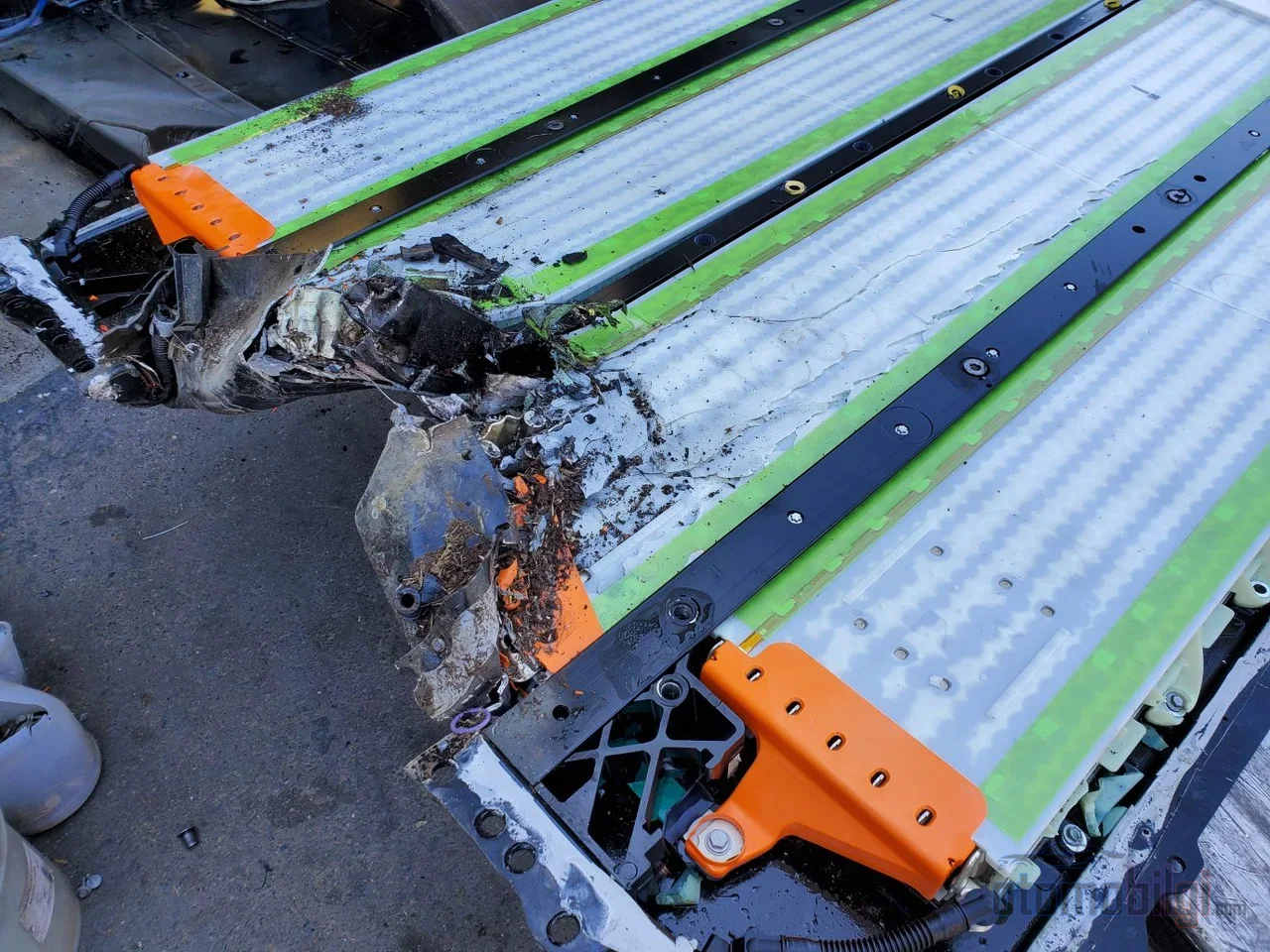
Battery coverage is not standard in every policy - this is the most common mistake point in electric vehicle insurance. Some policies cover battery damage only under specific risks (such as collision, fire, flood); standard insurance may exclude battery damage resulting from an underbody impact. Since this is precisely one of the most realistic risks in urban use, it is necessary to read the written form of the exclusion clauses before signing the policy.
The second condition to watch out for is the authorized service rule: battery repair or replacement must be done at an authorized service in order to count as covered. An intervention performed at a non-authorized service leaves the costs to you. The third heading is the boundary between insurance and manufacturer warranty: battery damage from an accident, theft of the charging cable, or flood-related high-voltage damage is the job of insurance; battery health (SOH) dropping below the warranty threshold and manufacturing defects are the subject of the manufacturer warranty. The common warranty scheme in Türkiye is 8 years/160,000 km; at some brands the period extends to 10 years, and one brand offers a warranty with an 8-year/200,000 km and 70% SOH condition.
There are also examples where additional coverages are worthwhile: some companies cover charging cable damage and theft, with protection up to 15,000 TL provided a police report is submitted. Policies that include mobile charging coverage can provide a stranded vehicle with a roughly 20-30 minute charge, delivering up to 80 km of range, once a year. As for the question of repair versus replacement, it is such a conundrum that in international experience, replacing the battery instead of repairing it often turns out to be cheaper; this is a factor that pushes up both the expected damage cost and the premium.
In traffic insurance, the picture is reversed
The fuel type is not a determining factor in mandatory traffic insurance premiums; the premium is calculated based on the tier. Moreover, a 10% premium discount is applied in traffic insurance for 100% electric vehicles. Although a 1.5% increase in maximum premiums came into effect in October 2026, the discount for electric vehicles is preserved. In the Bursa example, in the car-electric category, the ceiling premium for tier 1 is 39,299 TL, while at tier 8 this figure drops to 8,361 TL.
Since price differences can arise between companies for the same tier, comparing several quotes during the renewal period is still a meaningful way to save. There is also an EV-specific detail on the roadside assistance side: for vehicles requiring a flatbed tow truck, roadside assistance costs can increase; it is worth asking whether the roadside assistance coverage in your policy is suitable for a high-voltage vehicle.
Vehicle transfer and no-claims discount: who does the insurance go with?
The most commonly misunderstood issue when selling a vehicle is the no-claims discount. The rule is clear: the no-claims discount is granted not to the vehicle but to the person using it. If the vehicle is replaced with a new one registered to the same person, the discount can be carried over to the new policy; however, if the vehicle is transferred to another person (except a spouse), the discount does not go with it. Legislation also does not mandate a transfer right for the second vehicle; some companies build up the discount with arrangements such as a 30% discount step at the end of the first claim-free renewal in comprehensive coverage.
- Transfer the discount: If the new vehicle is purchased in the same person's name, request that the no-claims discount be transferred to the new policy; this can usually be done within 2-3 months from the policy's expiration.
- Transfer the existing policy: At the time of sale, a transfer notification must be made to the insurance company so that the valid comprehensive policy follows the vehicle; otherwise, the coverage and premium obligations remain unclear.
- Check the traffic insurance: Mandatory traffic insurance remains in effect with the vehicle; the new owner assumes the renewal responsibility.
- Prepare the documents: As of November 1, 2025, old-type driver's licenses must have been renewed in order to be able to use the insurance at the time of a loss.
Pay attention to the calendar on the depreciation side as well: as of July 1, 2026, a new era began in vehicle depreciation loss payments, and a 2-year statute of limitations from the date of the accident applies for depreciation claims.
How to lower the premium: deductible, telematics, and the right coverage choice
Ways to lower an electric vehicle's comprehensive insurance premium are simply the same logic applied to gasoline cars, adapted to EVs. The most effective levers are:
- Policy with deductible: You agree to cover damage up to a certain amount yourself; the premium drops noticeably.
- Preferred repair network: Policies with authorized service providers that have high-voltage expertise offer advantages in both price and turnaround time.
- Telematics / safe driving discount: Products that earn premium discounts based on driving data are also being applied to EVs.
- Enclosed parking declaration: Accurately reporting your vehicle's parking conditions works in your favor in risk pricing.
- Coverage trimming: Remove add-on coverages you don't use; but never give up battery and charging cable coverage, even as a last resort.
When buying a used electric vehicle, the insurance process starts from scratch: requesting a battery health (SOH) report from the authorized service makes both the purchase decision and the comprehensive insurance quote process easier. The price-coverage balance must also be read honestly: an EV's comprehensive insurance may seem expensive at first glance; but when you factor in the high repair costs you would face in the event of damage and the limited network of specialized service centers, most of the difference is simply the price of the real risk. There is also an expectation for the future: some industry executives argue that insurance will become cheaper over time as autonomous driving capability and control mechanisms in electric vehicles advance; insurers are expected to gradually reflect more in their pricing the data showing that the smaller number of moving parts and advanced driver assistance systems reduce accident frequency.
Before the purchase decision: practical checklist
- Check in writing which risks the battery coverage in the policy includes, as well as the depreciation (underinsurance) clause.
- Ask about the authorized service requirement for battery work and the charging cable/theft limits.
- Verify whether the roadside assistance coverage is suitable for EVs, including flatbed towing.
- Since the comprehensive insurance value list is updated every month, compare quotes within the same period.
- For used vehicles, request the authorized service's SOH report; note the schedule for transferring the no-claims discount to the new vehicle.
An EV's insurance is not an expensive copy of a petrol car's policy; it is a separate calculation built for a different risk profile. A driver who acknowledges the battery's weight, the narrowness of the repair ecosystem, and parts lead times, and reads the policy accordingly, gets both the right coverage and a reasonable premium.
Sources
- Electric Vehicle Comprehensive Insurance Prices 2026: How to Lower Them?
- Get a Quote Now for Electric Vehicle Comprehensive Insurance Prices
- Things You Need to Know Before Getting Electric Vehicle Comprehensive Insurance
- Comprehensive Insurance Value List Archive - Türkiye Insurance Association
- Electric Vehicle Comprehensive Insurance
- Electric Vehicle Traffic Insurance 2026
- Mandatory Traffic Insurance for Electric Vehicles
- Current Traffic Insurance Ceiling Prices
- No-Claim Discount
- Things You Need to Know About the No-Claim Discount
- No-claim discount in comprehensive insurance when buying a new car
- Electric Vehicle Insurance Rates - NAIC
- Compare Electric Car Insurance Quotes
- Electric Car Insurance in 2026
- Battery Life and Replacement Costs in Electric Vehicles
- A New Era in Vehicle Depreciation and Damage Payments
- Should You Buy a Second-Hand Electric Vehicle?
- Comprehensive Insurance for Electric Vehicles: Battery Damage and Special Coverage