How Does an Insurance Expert Inspect a Vehicle? Behind the Scenes of Damage Assessment

Share This Page
An insurance expert (adjuster) is the person who inspects your vehicle's damage on site after the damage claim is filed, lists the damaged parts one by one, decides whether to replace or repair them, and ties the cost calculation into a report. The adjuster is the referee in the insurance damage process: repair is carried out in the light of their report. In this article, we walk you step by step through the behind-the-scenes of your damage file, the criteria the adjuster uses, and how to appeal a report.
Highlights
- In traffic insurance, if the damage amount exceeds 40,000 TL, an adjuster must be assigned; in comprehensive insurance, there is no monetary limit for severe damage and write-off cases.
- The report is completed within 3 business days for traffic insurance and 5 business days for other insurances once the file is ready.
- For a vehicle to be classified as a write-off, the repair cost must exceed approximately 60% of its market value.
- An objection to the adjuster's determination can be filed within 3 business days from the notification of the report.
- No adjuster fee is requested from the policyholder; the insurance company covers the cost of the first adjuster.
From Damage Claim to Adjuster: How Does the Process Begin?
After an accident, the first task is to report the damage. The general terms of the comprehensive insurance policy usually require you to report within 5 business days; missing this deadline can negatively affect your coverage. The insurance company that receives your report assigns an adjuster to your file. The adjuster usually inspects the vehicle within 1-2 business days; therefore, it is best not to start repairs before the adjuster arrives, because parts removed before the inspection make it harder to identify defects and damage.
The inspection location is flexible: the adjuster can see the vehicle at the service center, in a parking lot, or at a location agreed upon by the parties. The damage is photographed and the damaged parts are listed. And here is the most important innovation of 2026: As of April 1, 2026, adjuster assignment has been connected to the centralized EKSİST system. In ZMSS, as of August 1, 2026, if the insurance company does not make an assignment within 1 business day after the damage report, the right holder can submit an adjuster assignment request via e-Devlet. Instead of the old habit of calling the company by phone and waiting for an adjuster, going through the system is now the faster route.
When Is an Adjuster Mandatory?
- Traffic insurance: If the damage amount exceeds one tenth of the minimum material coverage, i.e. 40,000 TL for 2026, an adjuster is mandatory.
- Comprehensive insurance (Kasko): An adjuster is mandatory in cases of heavy damage and total loss (write-off); there is no monetary limit.
- Damage below the limit: An adjuster is not mandatory, but the policyholder can request one if they wish.
Know this detail from the start: once an adjuster has been assigned to a file, a second adjuster is not assigned to the same file. The insurance company pays the fee of the first assigned adjuster; you will not be asked to pay.
What Criteria Does the Adjuster Use to Inspect the Vehicle?
On the adjuster's desk, along with you, are the vehicle, the policy, and the registration information. The headings of a standard inspection report are well defined: vehicle and policy information, driver information, alcohol status, the cause and nature of the damage, the fault ratio and the form of the inspection. The inspection can be done on-site, remotely, or based solely on documents; whether the place that carried out the repair is authorized or a contracted service is also recorded in the report. In other words, the adjuster looks not only at the impact point but at the entire file.
The heart of the report is the damage calculation, which is divided into sections: parts and materials cost, repair and installation labor, additional equipment damage, and non-automotive damage. For parts items, a distinction is made between original, equivalent, and reusable parts; for each item, a replacement, repair, or mobile repair option is specified, and any discount application is factored into the calculation. VAT is added on top of these, and the damage amount in proportion to your fault ratio emerges. The damage calculation is like a report card: every line rests on a defensible justification.
How Is the Market Value Determined?
The basis of total loss and diminished value calculations is your vehicle's market value. The adjuster does not determine this value out of thin air: they research prices through authorized dealer second-hand units, used car dealerships, and online portals; they compare vehicle value lists dated to the accident and current ones. Your vehicle's mileage, damage history, and usage pattern are also reflected in the result. As someone who has been following this business for thirty years, let me say: in the past, market value determination relied largely on the adjuster's experience and network; now list comparisons and system records set the standard, which puts both the adjuster and the policyholder at ease.
Parts Replacement or Repair? How Is the Decision Made?
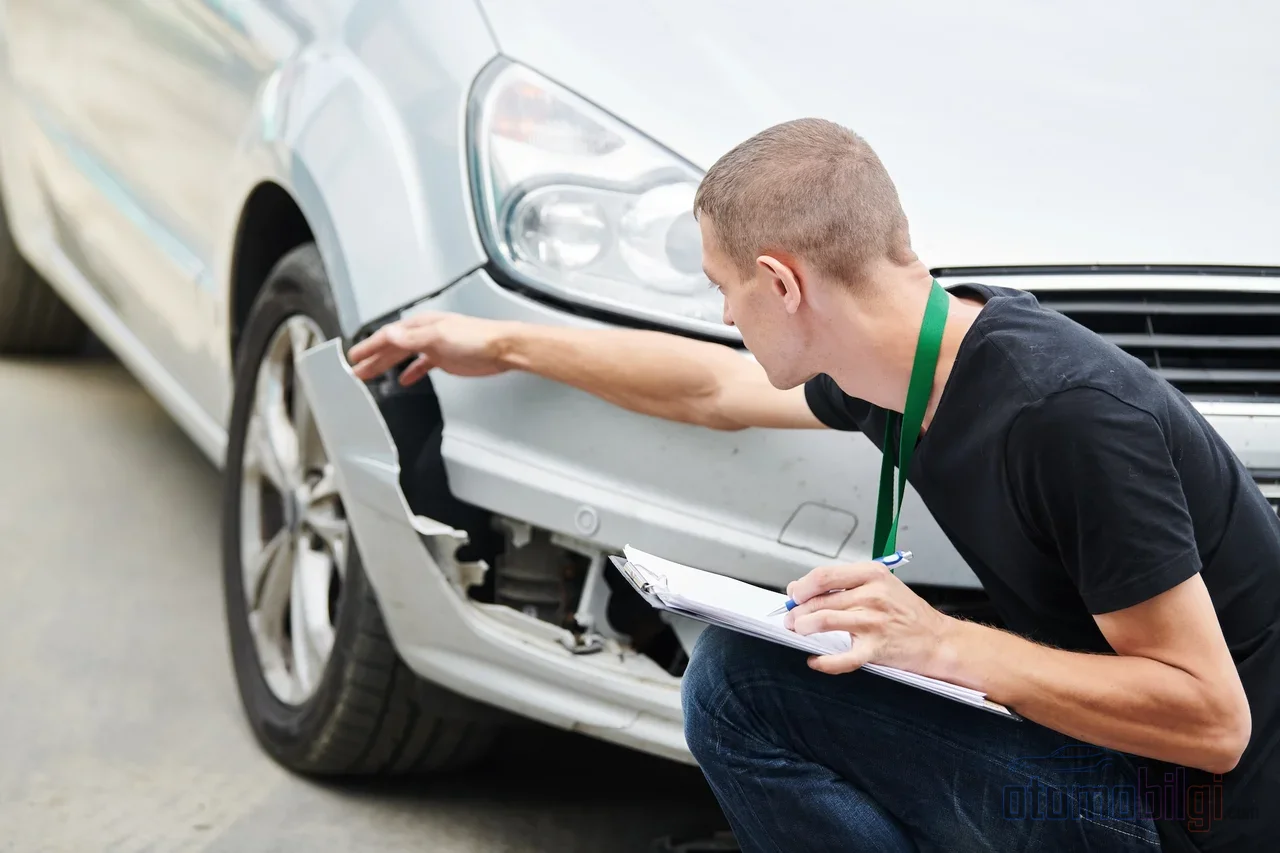
This is the question policyholders ask most. The general approach is clear: if the damaged part can be repaired, repair takes priority; this lowers the cost. If the part is beyond repair, replacement follows. But can equivalent or recycled parts be used? The new Traffic Insurance General Terms, which entered into force on 1 July 2026, take original parts as the basis on this matter. Equivalent or recycled parts come into play in only two situations: the consent of the entitled party, or the technical impossibility of replacing the damaged part with an original one. The burden of proof lies with the insurance company, and even if the application results in an increase in the vehicle's value, this difference cannot be deducted from the compensation.
Diminished value is now included in the same report: the damage repair cost and the vehicle's diminished value are determined together in a single adjuster report, with no separate application required. When calculating the diminished value, the adjuster separates past damages that are reflected in TRAMER from those that are not, examines the parts subject to diminished value one by one (parts that were repaired and painted, replaced and painted, or repaired without painting), and uses market analysis to calculate the difference between the pre-accident and post-accident second-hand sale value.
Minor, Major, and Total Loss: How Is the Extent of Damage Determined?
Minor damage refers to damage that is quick and relatively inexpensive to repair and does not affect the vehicle's safety: dents on the body, and items like a headlight or bumper that can be replaced on their own. Major damage means workmanship extending to the structural elements hanging behind the bumper, the frame, and the safety equipment; in these files, the comparison between the repair cost and the market value becomes critical.
The threshold beyond this comparison is drawn by the total loss limit. According to the new rule, when the repair cost exceeds approximately 60% of the vehicle's post-accident market value, the vehicle falls under total loss. In the report, the reason for the major damage is also explained: which safety and critical parts were damaged, and the ratio of the repair cost to the market value are documented. For vehicles determined to have major damage, no compensation is paid without presenting the registration document stamped withdrawn from traffic. This paper is the piece that ensures the file is locked for payment at the end of the process; remember, missing documents really do eat up time: in 2025, approximately 15% of damage files in the country were delayed due to missing documents.
When Is the Payment Made?
After the report is issued, the process speeds up. In traffic insurance, the legal payment period with complete documents is 8 business days; the repair cost is paid to the authorized service, and the diminished value is paid directly to the entitled party. In comprehensive insurance, payment is usually made within 10 business days after the documents are completed and the damage is finalized; in any case, the maximum limit is 45 days from notification, and in practice, many files are concluded within 10-15 days. Also add the 1-3 business day transfer time after the payment instruction is given to the bank.
How to Object to the Expert Report?
You have read the report and cannot accept it. You have rights, and you must exercise them within the deadline. Under EKSIST, objections to the expert findings can be made within 3 business days from the notification that the report has been uploaded to the system; objection to the diminished value report is also made within the same period and through the system. Following your objection, an objection appraiser or referee appraiser may be appointed. If your first objection is rejected, you can request a second appraisal; if you are proven right, the cost is passed on to the insurance company. The policyholder also has the right to appoint their own appraiser. The door remains open until the end on the objection path: if rejected, it is possible to apply to the Insurance Arbitration Commission or file a lawsuit.
The form of the objection determines the outcome. Instead of shortcuts like signing with blanks in the attachment to avoid signing the report or trying to reach an agreement by phone, do the following:
- Prepare your objection in writing and with justification; specify which page of the report and which damage item you are objecting to.
- Show the difference in amount numerically: clarify the difference between your own estimate and the report amount.
- Present counter-evidence: such as an independent service quote, a parts price quote, or a market value research.
- Write a clear demand: summarize in one sentence which item you want corrected.
You can view your report from the Private Insurances screen on e-Devlet; but this screen does not constitute an official document; in the event of a discrepancy, the insurance company's records prevail. For objections, rely on official records in your correspondence.
Practical Ways to Avoid Delays
Years of observation show that what slows down most files is not the report but the paperwork. Fill out the accident report completely; if you are expecting payment from the other party's insurance, follow up until the fault percentages become final. If you have a severe damage file, plan the registration document and the removal-from-traffic process early. Know that you do not need to file a separate application for depreciation, but state your claim clearly in your material damage application. Finally, measure the deadline correctly: report deadlines only start working once the file is ready; as long as documents are missing, that clock does not even start running.
Conclusion: See the Appraiser Not as the Opposing Side, but as Part of the Process
The appraiser is not someone who single-handedly decides the fate of your damage file; they are a technical expert framed by legislation and a standardized report template. Knowing their language makes you prepared: report the damage on time, gather the documents completely, read the report line by line, and notify any points you disagree with in writing with justification within the 3-business-day objection period. Once you establish this routine, the process moves far more predictably than it appears at first glance.
Sources
- SEDDK – Circular on Appraisal Report Templates in Motor Vehicle Insurance 2026/11
- Sigortam.net – Damage Payments and Required Documents
- Aksigorta – Comprehensive Insurance Damage Repair Process: From Appraisal to Payment (2026)
- Arabam.com – Total Loss Rules Changing in Comprehensive and Traffic Insurance
- Handan Sayan Özgül – Objecting to the Depreciation Appraisal Report After July 1, 2026
- Altaks Broker – How to Object to an Appraisal Report?
- Dijipol – Traffic Insurance Damage Documents