Electric or Gasoline? The Real 5-Year Cost of Ownership
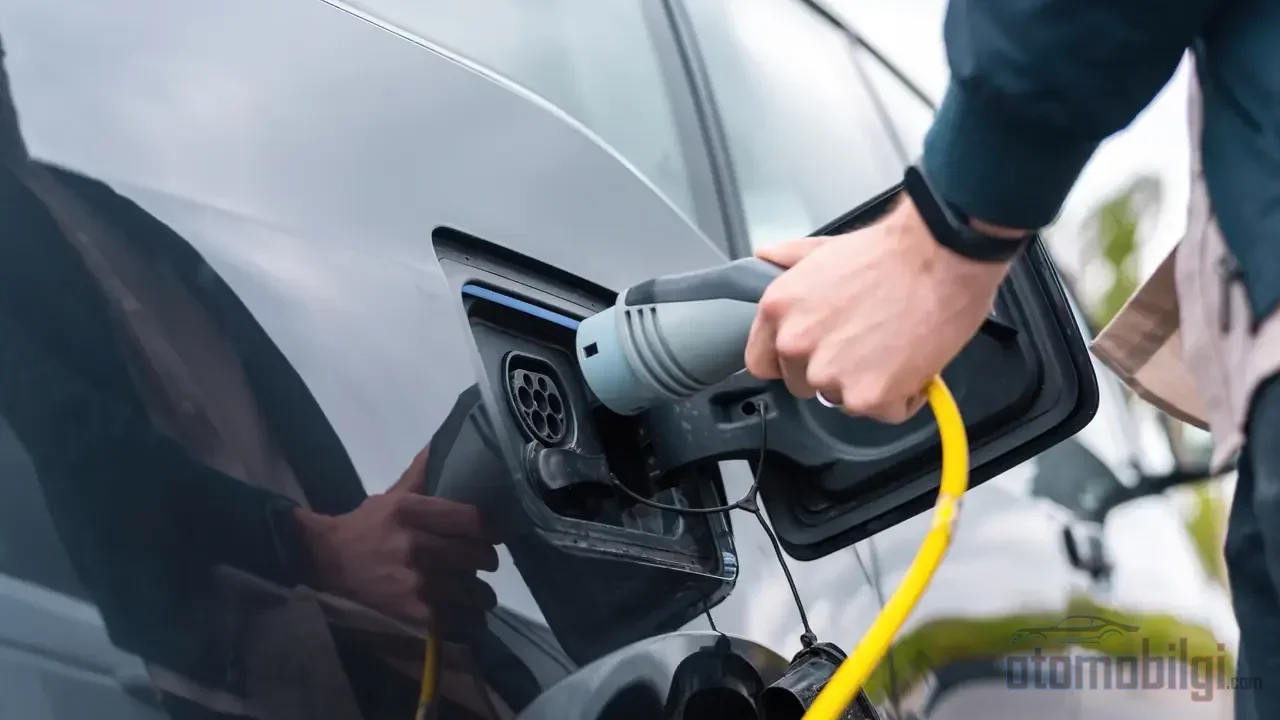
Share This Page
Over a five-year period, an electric car charged at home offers a significantly lower total cost of ownership than its petrol equivalent; however, this advantage depends on three variables: energy cost, the maintenance difference, and second-hand depreciation. For a driver without access to home charging who relies mainly on fast-charging stations, the fuel savings practically disappear, and high depreciation can reverse the calculation. So the right question is not "which is cheaper," but "which is cheaper for your usage profile."
Highlights
- Home AC charging per 100 km 1.16 TL/km, while in the petrol equivalent 9.22 TL/km level (September 2026 calculation)
- Electric vehicle maintenance costs can be 30–50% lower than petrol vehicles
- Electric vehicle motor vehicle tax is at a rate of 25% of a similar fuel-powered vehicle
- For a charging unit in an apartment parking lot, a simple majority approval is now sufficient
- In some models, 3-year depreciation is in the 35–40% range
Energy Cost per 100 Kilometers: The Backbone of the Calculation
The largest line-item difference in total cost of ownership is energy, and here the picture is sharper than expected. In a calculation based on September 2026 prices, 100 kilometers of a vehicle in the same segment with home AC charging costs 115.62 TL (1.16 TL per km), while in the petrol version this figure rises to 922.34 TL (9.22 TL per km). For a driver covering 15,000 km a year, this difference alone means annual savings approaching the hundred-thousand-lira mark.
However, the assumption behind this figure is critical: electricity must be obtained at home and on a night tariff. Covering the same 100 km with public DC fast charging is a completely different story. In 2026 station tariffs, the Tesla charging network is at 10.40 TL/kWh, while for other brands it is at 13.00 TL/kWh level; considering that an average electric vehicle consumes 15–20 kWh per 100 km, the cost per fast charge settles in the 150–260 TL range. This is a figure close enough to close the per-km gap with petrol. A sample calculation with April 2026 data confirms this: a petrol compact consuming 5.4 L/100 km spends roughly 42,973 TL on fuel over 10,000 km, while the energy bill of an electric vehicle covering the same distance mainly with fast charging comes very close to this figure.
The efficiency side of the charging method must also be factored in. AC charging involves an 8–12% loss and DC fast charging a 3–5% loss; that is, you charge somewhat more efficiently at the station, but the unit price difference wipes out this small advantage. The summary logic is: if you have home charging, the electric car wins; fast charging narrows the advantage.
Maintenance: The Simpler the Motor, the Shorter the Bill
An internal combustion engine vehicle has dozens of wearing parts such as oil, filters, spark plugs, belts, clutch, exhaust, and intake systems; most of these do not exist in an electric car. Oil changes, gasket and valve issues do not appear on an electric vehicle's maintenance list, and service intervals are significantly longer. Manufacturers set electric maintenance costs compared to petrol/diesel vehicles at 30-50% lower positions it. With period figures: the annual maintenance of an average gasoline car 7,000-10,000 TL, the total two-year maintenance cost is in the 25,000-30,000 TL band; over the same period, electric cars come in clearly below that. Over a five-year ownership, both vehicle types go through roughly two major periodic services.
However, the proposition "electric = cheap maintenance at every brand" is not accurate. In one MG owner's complaint, a price of 20,000 TL was quoted for four years of maintenance; in other words, the brand's service policy, parts pricing, and warranty terms can significantly change the calculation. Before purchase, checking the periodic maintenance price list of your chosen model alongside its gasoline equivalent is the most reliable way to estimate the bill five years later.
Insurance: Why Is EV Comprehensive Insurance Structured Differently?
In 2026, the comprehensive insurance premium for a new vehicle is shaping up in the range of 10,000-40,000 TL , and the main factor determining where electric vehicles fall within this range is the battery. Since the battery cost makes up a significant portion of the vehicle's value, electric vehicle comprehensive insurance policies have become more detailed than standard vehicles since 2025. Battery coverage, charging-related risks, and differences in roadside assistance coverage are the main items that distinguish EV comprehensive insurance from gasoline. Compared with a gasoline car of equal value on the same list, the premium may differ; before signing the policy, you need to ask how a battery damage scenario is covered.
On the traffic insurance side, the picture is more neutral: the premium is determined by factors such as vehicle group and usage type; being electric alone is not decisive. Internationally, too, EV premiums are seen to be moving in line with gasoline vehicles, and EV-specific policies are becoming widespread. Not expecting an overwhelming difference between the two vehicle types in a five-year comprehensive insurance calculation is a realistic starting point.
MTV and SCT: How Long Will the Tax Advantage Last in 2026?
The tax side is the electric car's most predictable advantage. By law, the annual motor vehicle tax (MTV) of electric vehicles was 25% of the amount for fuel-powered vehicles of similar age and power; this rule applies only to MTV, while the SCT on a new purchase is a separate calculation and depends on engine power. In 2026, the revaluation rate was lowered from the previous year's 25.49%to 18.95%; in other words, the pace of MTV increases slowed. For electric models with low engine power, the annual MTV starts from 3-4 thousand TL . As a historical reference, the example MTV amount given for electric vehicles under 70 kW aged 1-3 years was at the level of 1,437.50 TL .
On the SCT side, the critical threshold is engine power. Vehicles under 160 kW gain a cost advantage with the 25% SCT bracket; in upper-segment and high-power examples, the tax burden grows rapidly, so much so that in one premium example calculation, with 375,000 TL in SCT, the total first-year tax burden exceeds 389,000 TL, can reach that level. In short, the tax advantage is class-based: if you buy a reasonably powerful and reasonably priced EV, the annual motor vehicle tax and the special consumption tax contribute significantly to the savings, but as you move up to the premium segment the advantage erodes.
Depreciation: The Item That Can Flip the Equation
The most uncertain and most impactful item in the five-year total cost of ownership calculation is the resale value. Today's picture works against EVs: after 3 years, some popular models show 35-40% depreciation, while some new brands' second-hand valuations are not yet backed by an established price history. One of the main mechanisms behind this rapid depreciation is the price cuts on new EVs dragging down the used market; new car campaigns and low-interest financing are also weakening used car demand. On the other hand, interest in Türkiye is strong: the electric car fleet grew by 53% between August 2025 and August 2026, and environmental awareness, fuel costs, and a developing charging infrastructure are keeping the used market alive.
The counterargument is also worth noting: there is a view that as the market shifts to new EVs, gasoline cars will depreciate even faster in the future. If this scenario plays out, today's depreciation gap could close or even reverse. The practical takeaway is this: if you are buying an EV, do your calculation by assuming a conservative resale value at the end of five years, and factor in that the battery health report will directly affect the used car price.
Home Charging Installation: The Prerequisite for the Advantage
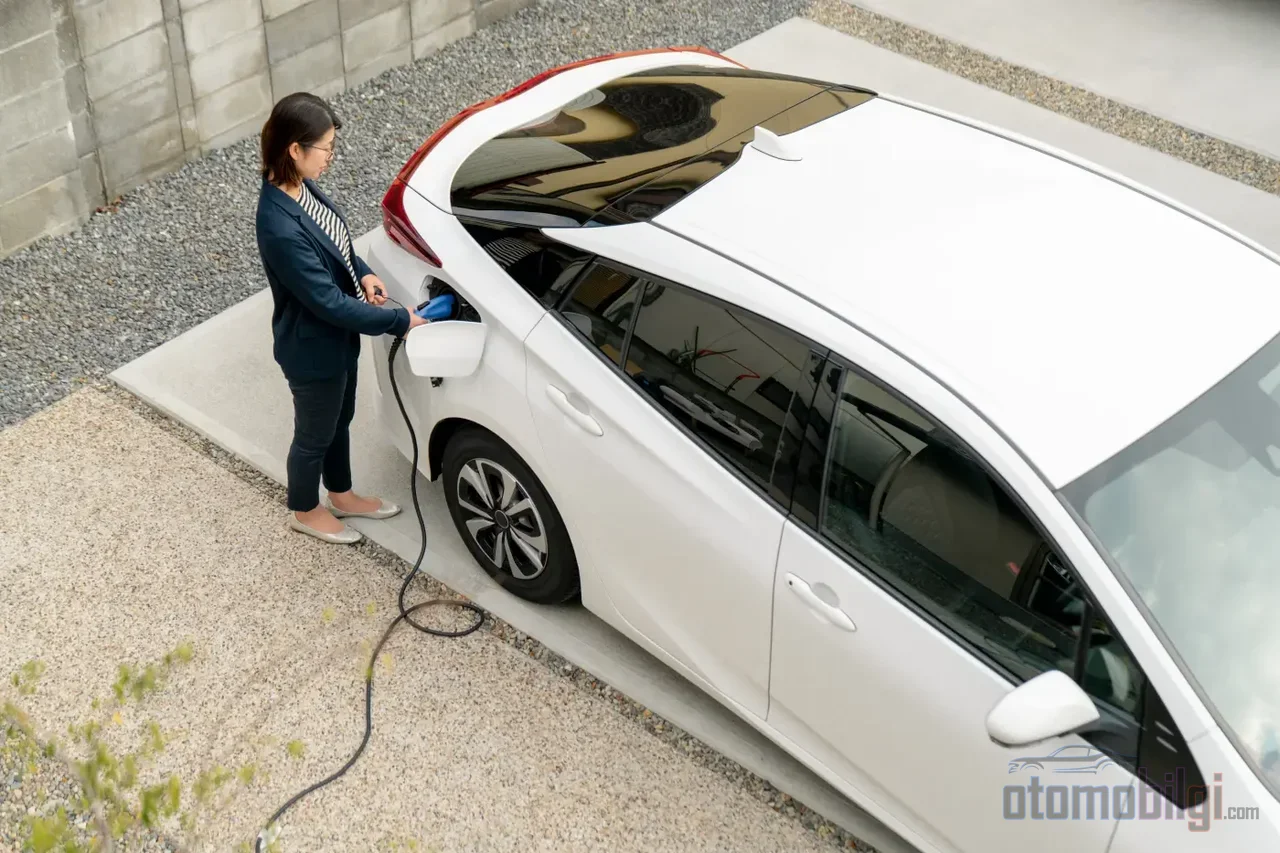
All of the energy savings above depend on being able to install home charging. The cost of a home-type AC charging station is 30,000-50,000 TL; including a 7 kW installation, the total can reach 50,000-100,000 TL. This investment swallows a significant portion of the first year's fuel savings, but pays for itself in two to three years. Installation in apartment and residential complex shared parking lots was officially made easier in 2026: approval by a simple majority of property owners (more than half) is now sufficient, and unit/land requirements have been relaxed. Still, installation cannot be done without the approval of the property owners; the process starts with a needs analysis and feasibility study, then proceeds with management approval, site survey, installation, and electrical connection.
The 5-Year Total Picture: How Do You Do Your Own Calculation?
When we put all the items together, the overall picture of the comparison can be summarized as follows:
| Item | Electric (home charged) | Gasoline |
|---|---|---|
| Energy per 100 km | ~116 TL | ~922 TL |
| Annual maintenance | 30-50% lower than gasoline | 7,000-10,000 TL |
| Comprehensive insurance | Similar, with detailed battery coverage | Standard policy |
| Annual motor vehicle tax | 25% of the equivalent fuel-powered vehicle | Full amount |
| Depreciation | 35-40% over 3 years (depending on model) | Relatively slow |
| Installation cost | 30,000-100,000 TL (home charging) | None |
Simple TCO logic consists of five steps: purchase price + five years of energy + five years of maintenance + comprehensive insurance and annual motor vehicle tax + charging installation − the estimated resale value at the end of five years. An international segment analysis shows that electric vehicles pull ahead in almost all four segments by the fifth year; however, in the SUV segment this cannot be guaranteed. When doing your own calculation, clarify three questions: How many kilometers do you drive per year? How much of your electricity will you get at home, and how much at charging stations? And at what price estimate will you sell after five years?
Which Profile Makes an EV Worth It?
- Drivers who can charge at home or at work and drive 10,000-20,000 km per year: clear gain.
- Those who cannot install charging in their apartment building and rely mostly on fast charging: the fuel savings practically disappear.
- Those buying models under 160 kW at reasonable prices: the VAT/annual tax advantage is reflected directly in the calculation.
- Premium and high-power models: the tax and depreciation advantage narrows considerably.
Conclusion: The Decision Depends on Your Tariff
Over a five-year ownership window, an electric vehicle is clearly cheaper than a petrol car under the right conditions; the full set of conditions is access to home charging, reasonable motor power, and a conservative resale value assumption. When even one of these three is missing, the advantage erodes quickly; especially as the gap between fast-charging tariffs and petrol narrows, the claim "electric is always cheaper" becomes indefensible. When you plug your own mileage and tariff into the calculator and tables in the sources below, your personalized answer becomes clear within a few minutes.
Sources
- Fuel Cost Calculation 2026 - Furkan Şevki Arıcı
- Electric Car vs Petrol Car: Cost Comparison In 2026 - Pod Point
- Electric Vehicle Maintenance Costs - Arabalar.com.tr
- 5-Year Cost Estimate for Electric Vehicles - Voltify
- Electric Vehicle Maintenance - Volkswagen Passenger Cars
- Is the maintenance of electric cars cheaper? - Kia Türkiye
- MG Türkiye maintenance fee complaint - Şikayetvar
- New Car Comprehensive Insurance Prices 2026 - Süper Sigortam
- Differences between electric and gasoline car insurance - Enuygun Sigorta
- Electric Vehicle MTV and ÖTV Tax Rates - BYD Türkiye
- 2026 Electric Vehicle MTV Table - İşletme Rotası
- 2026 Electric Vehicle Expenses - Sigortaladım
- 2026 Electric Vehicle ÖTV and MTV - Beefull
- Electric Vehicle Cost of Ownership 2026 - Otomerkezi
- Interest in Second-Hand Electric Vehicles in Türkiye - Otosec
- Charging units in apartment buildings and residential complexes - ÇŞİ Ministry
- Charging stations for residential complexes and apartment buildings - Tuncmatik
- Charging station price list 2026 - DonanımHaber
- Home charging station guide 2026 - OSARJ
- Global EV Outlook 2025 - IEA
- April 6, 2026 fuel costs - Instagram / Emre Çuhadar