How Much Are You Really Paying at the Charging Station?
Share This Page
The amount you pay at a public charging station is the kWh unit price multiplied by the energy you charged; as of October 2026, this price averages 9.83 TL/kWh for AC charging and averages 13.44 TL/kWh for DC fast charging, and on top of the unit price, a per-minute occupancy fee may be added if you leave your car in the socket after charging is complete. In other words, the bill for the same 60 kWh battery can double depending on where and how you fill it up.
Highlights
- Average AC charging 9.83 TL/kWh, average DC fast charging 13.44 TL/kWh (October 2026).
- The same energy with home charging costs 240-360 TL; a full charge at high-power DC can reach 1,300-1,500 TL.
- At some operators, the occupancy fee starts 15 minutes after charging is complete; at DC sockets it can rise to up to 10 TL per minute.
- As of July 1, 2026, credit card payment is mandatory at DC units on highways and state roads.
- In vehicles that rely heavily on high-power DC charging, battery degradation can progress up to an average of 3.0% faster per year.
How Are Charging Station Prices Determined?
Four fundamental variables determine the station price: charging type (AC or DC), the operator's tariff policy, location, and the power level applied. Stations on highways are generally more expensive than those in the city; some operators also apply tiered tariffs based on power - DC above 150 kW is sold at a higher unit price than below 150 kW. Looking at the operator's cost side, the logic becomes clear: the sales price is generally positioned at 2-3 times the electricity purchase price, and this difference comes from covering the power electronics and infrastructure investment at DC stations.
The market structure also affects the price. In Türkiye, as of July 2026, there are approximately 334,768 electric vehicles compared to about 36,361 charging sockets, and the two largest networks hold roughly half of the market. Prices staying high in regions with limited competition is a natural consequence of this concentration.
Where Does the Price Difference Between AC and DC Come From?
With AC charging, the converter is in the vehicle, so the station consists of low-cost hardware; power capacity is at most around 22 kW . With DC, the converter is inside the station and energy is delivered directly to the battery; power rises to the 50-400 kW range. This power electronics, cooling, and grid connection investment is a permanent cost item reflected in the kWh price. According to October 2026 comparison data, the lowest AC tariff is 5.90 TL/kWh and the lowest DC tariff is 9.73 TL/kWh; the difference between the two averages is around 3.61 TL/kWh . The fact that DC is on average 25-45% more expensive than AC is therefore not arbitrariness, but a direct reflection of infrastructure costs.
2026 Operator Tariffs: Who Charges What?
The tariffs of the major charging networks in Türkiye differ noticeably from network to network. The current ranges published on official tariff pages and compiled by comparison platforms in October 2026 are as follows:
| Operator | AC (TL/kWh) | DC (TL/kWh) |
|---|---|---|
| ZES | 10.99 | 12.99 (DC-1) / 16.49 (DC-2) |
| Aksa Charge | 9.90-10.90 | 11.99-13.99 |
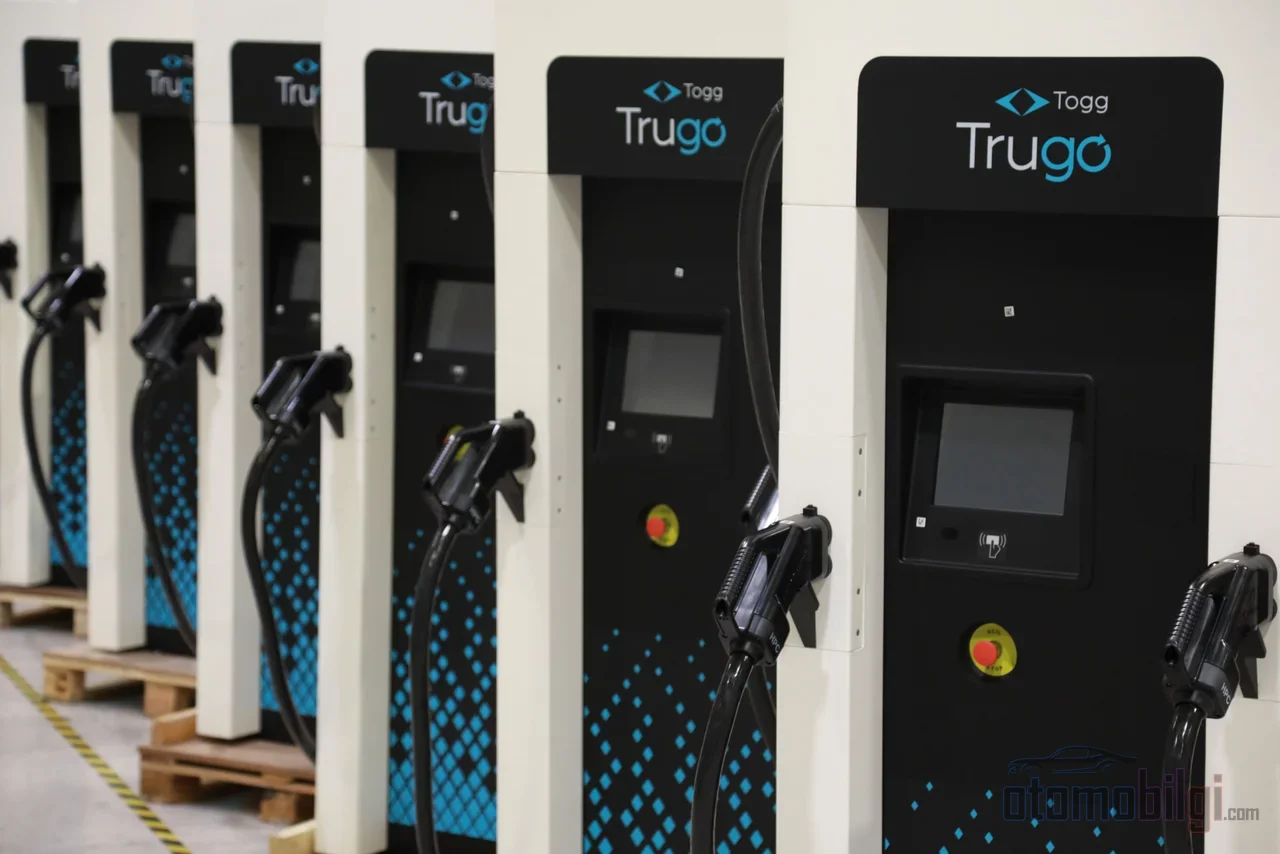
| Trugo | starting from 9.95 | 13.78 (up to 150 kW) / 15.36 (above 150 kW) |
| Eşarj | - | ~13.50 |
| AstorCharge | - | 12.49 |
| Shell Recharge | - | 15.99 |
| Tesla Supercharger | - | ~9.40 |
| Market range (October 2026) | 5.90-11.19 | 9.73-16.49 |
VAT is included in most tariffs, but prices can vary depending on the station, unit type, and time of day. It is normal to see a difference between a highway station and an urban unit even within the same network. For this reason, the most useful habit in daily practice is to check the unit price of that socket in your operator's app before starting the charge; most apps show the price on the charge initiation screen.
How Much Does a Full Charge Cost You?
The calculation is a simple multiplication: battery capacity (kWh) × unit price. Togg T10X's 88.5 kWh long-range package generates a bill between 1,300-1,500 TL when fully charged with high-power DC tariffs. With a 60 kWh battery, the picture goes like this: with AC 480-540 TL, with standard DC 660-780 TL, with ultra-fast DC 720-840 TL, at home with a residential tariff 240-360 TL.
The most common transaction during the day is not a full charge, but a partial charge from 20% to 80%. On a 60 kWh battery, this means 36 kWh of energy, which corresponds to approximately 484 TL at an average DC price. It is useful to memorize this scenario; because a typical expense at a highway stop is exactly this.
Why Does Home Charging Cut the Cost to One Fifth?
Home charging operates on a residential electricity tariff, so it sits at roughly half or below the station's unit price: according to the data, home charging is in the range of 2.33-6 TL/kWh and can drop to around 3 TL with the night tariff. Filling a 75 kWh battery at home costs 175-260 TL , while the same job on high-power DC can reach roughly five times that. The practical conclusion is clear: in regular daily use, home charging is the main source, and the station is a tool for long trips and emergencies. If you complete most of your monthly distance by charging at home at night, your DC spending remains a marginal item in your budget.
When Do Subscription Tariffs Make Sense?
Detailed, publicly available tariff information about the official subscription plans of major networks in Türkiye is still limited; the current situation suggests that some operators offer discounted tariffs with membership. Yet international practice gives an idea about the threshold value: according to calculations in Europe, a public charging subscription can pay for itself from about one session of use per month, and it can be tried risk-free with no-commitment plans. The same logic can be applied to Türkiye: compare the monthly fee of the discounted tariff on the network you use with the discount amount on the kWh volume you consume at the normal tariff. If your monthly DC consumption is regular and high (for example, one long trip per week), a subscription may pay off; for a user who charges one or two sessions a month, it usually does not.
One more note: As of July 1, 2026, credit card integration becomes mandatory at all DC charging units on highways and state roads. Outside the app, the direct card payment option also makes using a backup operator easier, so your subscription decision does not force you to rely on a single network.
Occupancy Fee: The Hidden Item on Your Bill
The most wallet-burning detail of the charging station economy is the occupancy fee, which has nothing to do with the kWh price. If you do not move your vehicle after charging is complete, the charge is added to your bill as a separate per-minute item. Practices vary among operators:
- %3,0 15 minutes after charging ends, and on DC sockets it can reach 10 TL per minute; users are alerted via mobile notification.
- Another major network has a tiered cap system: after 15 minutes 150 TL, at 30 minutes 300 TL, at 45 minutes 450 TL, at 60 minutes 500 TL.
The math is striking: half an hour of forgotten parking can cost nearly as much as an average DC session. Moving your vehicle as soon as charging finishes is the fastest way to lower the unit price. That is why stopping DC fast charging at 80% delivers a double win: it protects the battery and also prevents the slower charging speed after 80% from keeping you at the socket for a long time and dragging you into occupancy fees.
Does DC Fast Charging Damage the Battery?
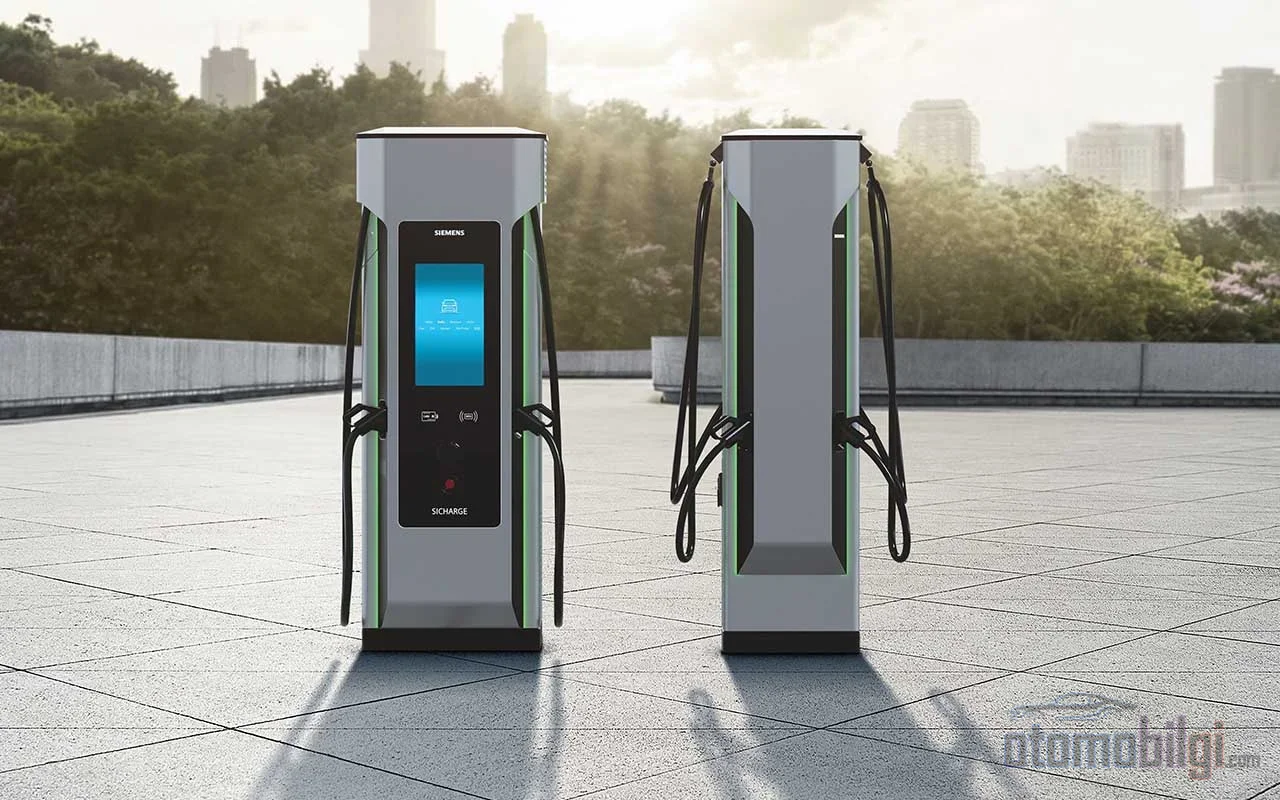
The question is asked with legitimate technical curiosity, because high current increases battery heating, and prolonged DC fast charging measurably raises the battery's internal temperature. But the magnitude of the measured effect turns out to be smaller than the common belief. According to fleet data, vehicles heavily reliant on DC charging above 100 kW show additional degradation of up to 3.0% per year, while older measurements showed that more than three fast charges per month increased degradation by only about %0.1 over two years. Long-term observations also confirm the effect exists but remains small; even the technical literature on power management considers the total impact practically insignificant compared to Level 2 AC.
My take: using DC at highway stops is not something to anxiously avoid for the battery's sake; but a usage pattern dependent on multiple DC sessions per day deserves optimization, both in terms of cost and heat. The practical routine is simple: plug in before dropping below 20% as much as possible, keep DC sessions within the 20-80% range, and complete the rest at home.
Station Etiquette: The Queue, the Cable and the Unplugged Charger
Charging stations are shared infrastructure and operate more through de facto etiquette than written rules. The basic four are:
- If your charging is complete, free up the spot immediately; risking an occupancy fee while a vehicle is waiting for the socket is both penalized and disrespectful.
- Leave the cable tidy: dropping the plug on the ground or leaving the hose tangled steals the next user's time.
- It is not a parking space; parking your non-charging vehicle there defeats the station's sole purpose.
- Unplugging someone else's car while it is charging is unethical and open to legal dispute; for queue management, tracking station status in advance with apps like PlugShare is a far better solution.
These courtesy rules become vital on holiday routes with long queues and in regions where charging points are scarce. On the payment side, the infrastructure has largely gone digital: mobile app, credit card, QR code, and in-app billing options are widespread. Still, before joining the queue, verifying that the socket type is compatible with your vehicle and that the unit is operational is the cheapest measure that shortens waiting time.
The Right Balance for Your Own Usage Scenario
Divide prices into three categories with engineering rigor. The first is base cost: home charging, the cheapest option per kWh on a residential tariff, should cover the majority of your range. The second is road cost: highway DC charging is the price of buying convenience; use the 20-80% window and eliminate idle-fee risk. The third is risk cost: a forgotten socket is penalized at dozens of lira per minute, so be sure to enable your notification settings. For someone who lives mostly on home charging with a 60 kWh vehicle, station spending is a small line on the monthly bill, but for someone without home charging access, comparing subscription-based tariffs and choosing the lowest-priced network can mean hundreds of lira a month. Multiply the figures by your own battery size; the right balance is found through inference, not guesswork.
Resources
- Prices - ZES
- Charging Fees 2026 | Electric Vehicle Charging Prices AC/DC
- Electric Vehicle Charging Prices 2026 - Comparison
- electric vehicle charging prices 2026
- 2026 Electric Vehicle Charging Station Prices and Cost Guide
- Electric Vehicle Charging Fees 2026: How Much is 1 kWh in TL?
- Charging Prices 2026 | Cheapest Charging Station Comparison
- EV Battery Health Study
- Impacts of Fast Charging
- Everything changes for electric vehicle users after July 1
- Charging Station Etiquette Rules
- Electric vehicle charging etiquette