Does Fast Charging Damage an Electric Car's Battery?
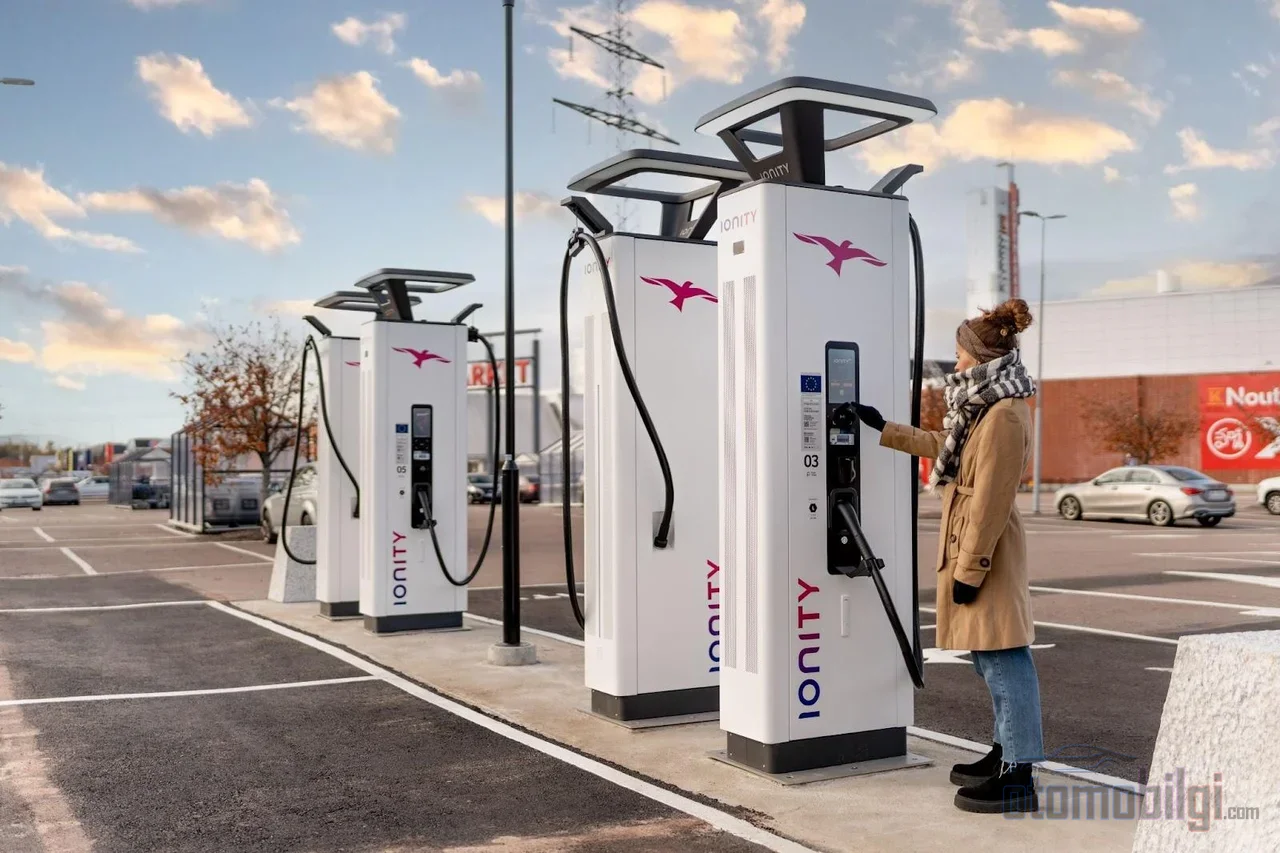
Share This Page
Short answer: With reasonable use, DC fast charging causes immeasurably little damage to the battery in a modern electric vehicle. It is true that high current degrades cell chemistry under laboratory conditions; however, the battery management system and temperature control in vehicles, along with more than twelve years of real-world fleet data, show that fast charging does not cause the capacity loss feared. The real enemy of the battery is not speed, but bad charging habits.
Highlights
- In 12 years of vehicle data, no difference in range loss was found between those who mostly used fast charging and those who never used it.
- In the analysis of a fleet of 22,700 vehicles, the average battery loss was only 2.3% per year.
- Fast charging above 0 °C can cause up to 10% capacity loss in a short time; low temperature is more decisive than speed.
- The main causes of degradation: constantly charging to 100%, discharging down to 0%, and parking the vehicle in extreme heat.
- The number of high-speed charging stations in Türkiye has reached 16,650; all 81 provinces are connected to the charging network.
Does fast charging damage the battery? Why the laboratory and real life tell different stories
This question has two different answers, and both are correct. If you look at the cell level, high current really does trigger degradation mechanisms. However, on the scale a driver perceives - that is, how many kilometers of range the battery loses per year - the difference remains negligible in most vehicles. The bridge between the two is built by the control electronics and thermal management system inside the vehicle.
Lithium plating: the real risk of fast charging
During fast charging, lithium ions are pushed very quickly toward the anode, that is, the graphite electrode. If the anode cannot absorb these ions at the same rate, the ions accumulate on the surface as metallic lithium. This is called lithium plating and it creates two problems: the amount of cyclable lithium decreases, meaning capacity drops; and if the deposit grows irregularly, a safety risk arises. Experimental data show that this effect is threshold-based: at 25 °C, plating does not occur at moderate charging rates, while it increases with charging speed at high rates in the 3-5 C range. Moreover, this damage is concentrated especially in the first cycles; in later cycles, the main cause of capacity loss becomes the thickening of the interface layer called SEI, which grows over time and consumes lithium.
There is also the temperature variable, and its effect is greater than speed. In cells charged at low temperatures, plating intensifies dramatically: fast charging at 0 °C can cause a loss of almost 10% of usable capacity in a short time. Compare: while cycle life in the cold is exhausted in approximately 90-140 cycles, it is measured at over 2000 cycles at 45 °C. This is exactly the reason why laboratory results appear pessimistic.
BMS and thermal management: why the vehicle works so that it does not harm you
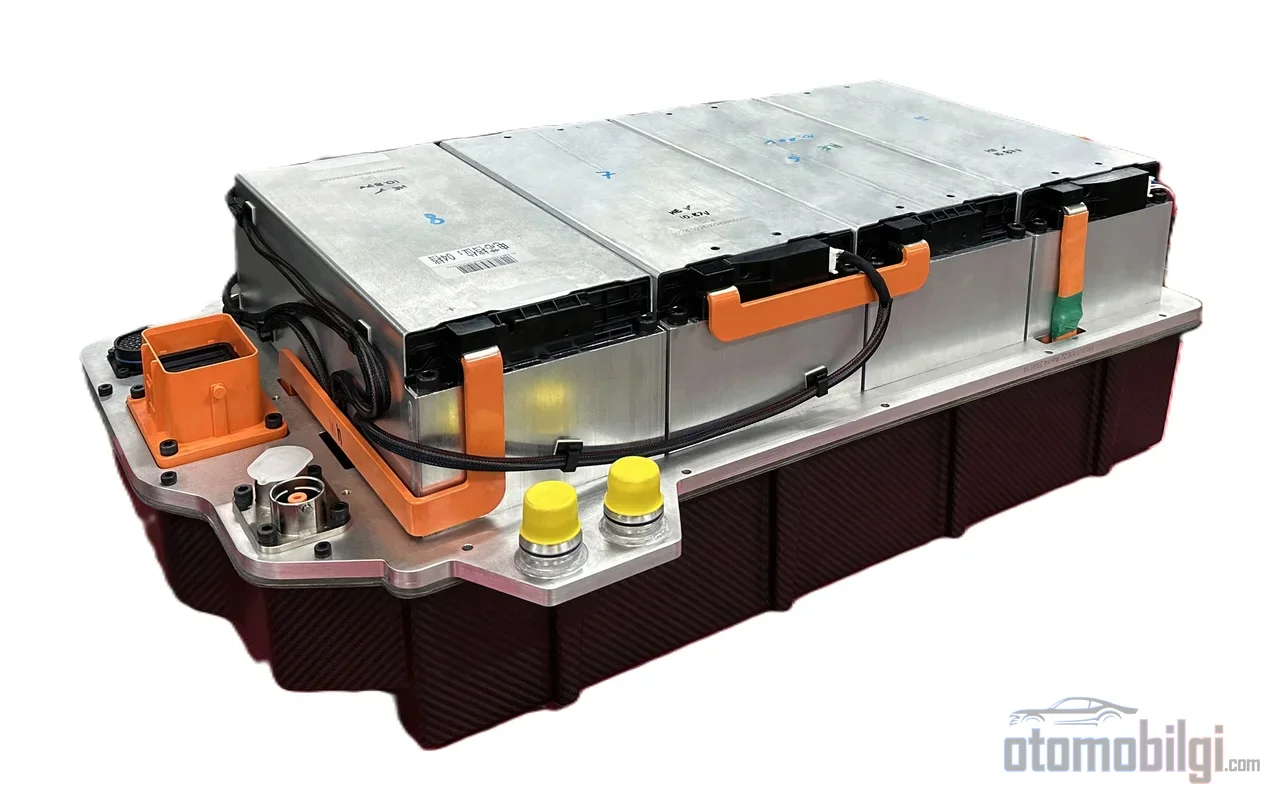
There is a very critical difference between a bare cell in a lab environment and a vehicle on the road: the battery management system (BMS). The BMS continuously monitors cell voltages, temperatures, and state of charge throughout charging. If the battery is too cold or too hot, or if the cells cannot handle high current at a high state of charge, the system limits the power offered by the station on its own. So even in a 350 kW cabinet, your vehicle will not accept that power if its battery is not ready - that is why the charging curve slows down toward the end of charging and starts with low power in the first minutes of winter.
The second layer is cooling. High current generates heat in the cells' internal resistance; without effective cooling, the battery cannot even be charged at very high speeds. Liquid-cooled thermal management systems keep the cell temperature below the upper limit, suppressing both plating and SEI growth. In modern vehicles with good thermal management, the negative effect of fast charging is largely compensated; in older or entry-level vehicles without active thermal management, the effect can be more pronounced.
What does field data say? The result of 12 years of observations
Although the theory looks pessimistic, large-scale real-world usage data paints a completely different picture. In an analysis that has tracked more than 12,500 vehicles since 2012, no statistically significant difference in range loss was found between vehicles that completed more than 90% of their range with fast charging and vehicles that never used fast charging at all. This does not contradict the cell laboratory's findings; it shows that in a real vehicle, where the BMS and thermal management come into play, the effect does not remain visible on a meaningful scale.
The picture on the fleet side is a bit more nuanced. In a large data set of more than 22,700 vehicles, the average battery loss came out at 2.3% per year, and high-power DC charging stands out as the factor with the largest effect. But look at the magnitude: in vehicles that fast-charge more than three times a month, the increase in two-year degradation was measured at only 0.1%. In the same data set, when DC charging's share of total charging exceeded 12%, average capacity loss rose to around 2.5% - a measurable figure, but not one that should keep you from using the vehicle. In a more specific measurement, two Nissan Leafs fed only with DC charging showed a degradation rate 16% higher than AC charging; this also confirms that the effect exists but varies from vehicle to vehicle.
To summarize: academic studies generally accept that fast charging accelerates degradation; in the long term, normal charging is the gentlest strategy for battery life. Field data, on the other hand, says the difference in modern vehicles is not in the percentages but at a decimal-point magnitude you would barely care about. When the two are read together, the picture becomes clear: fast charging is not something to be feared - when used in moderation, it is a negligible cost.
What really wears out the battery: not speed, but habits
In practice, three habits determine battery life and are more important than the type of charging plug you choose:
- Constantly charging to 100%: At high state of charge, cell stress accelerates degradation. Leaving the car sitting at 100% for long periods means the damage comes more from the duration at this level than from frequency.
- Draining down to 0%: Deep discharge stresses the cell chemistry as much as a high state of charge.
- Parking in extreme heat: It is not Plugfied, but a full battery sitting for hours in summer heat degrades far more than fast charging.
Manufacturers' recommendations also fit this framework. Renault recommends keeping the charge between at least 15% and at most 80%, and only going up to 100% before a long trip; Volkswagen and Kia similarly recommend the 20-80% range. LFP chemistry batteries are an exception: in some models, regularly charging to 100% may be needed for cell balancing - whatever your manual says takes precedence.
Fast charging on long trips, AC charging at home: a realistic strategy
The practical question is: when should you use which? The answer starts with knowing the nature of the two charging types.
| Feature | AC (slow) charging | DC fast charging |
|---|---|---|
| Where it should be used | Home, workplace, long-term parking | Highway stops, commercial areas |
| Effect on the battery | The gentlest, supports battery life | Negligible when used in moderation |
| Average price in Türkiye | 8-9 TL/kWh | 11-14 TL/kWh (HPC higher) |
| Typical frequency of use | Every day | Long trips, emergencies |
On long trips, DC fast charging is undeniably invaluable; repeating it every evening in daily use unnecessarily accelerates degradation. There is also a measurable approach to trip strategy: charging in shorter and more frequent stops, split into 2-3 hour driving blocks, gives better results than one long stop. In winter, running the battery heating for 30-60 minutes before setting off, while the car is plugged in, preserves the power of the first fast charge and cell health - because feeding high current into a cold battery is the single most damaging scenario.
In daily use, leaving the job to AC is right for both the battery and your wallet. AC charging at up to 22 kW has no measurable negative effect as long as good habits are maintained; charging at home overnight on off-peak electricity costs half the price of a DC station.
The fast charging network in Türkiye: is it still an excuse?
The biggest argument for limiting fast charging used to be infrastructure; that argument is rapidly evaporating in Türkiye. As of October 2026, 185 brands provide charging services in the country, with 47,908 sockets across a total of 13,140 charging stations. Under a public program, 1,053 fast charging stations were established across all 81 provinces; the number of high-speed charging stations in the country has reached 16,650. On the pricing side, AC stations average in the 8-9 TL per kWh band, while DC fast charging runs in the 11-14 TL range; at leading operators, standard DC is around 12.99 TL and high-power charging is around 16.49 TL. This picture makes fast charging comfortable for long trips while clearly preserving AC charging's advantage for daily use, both for the battery and for cost.
Bottom line: use fast charging as a tool, not a worry
The damage of fast charging to the battery is a small and measurable cost, unlike tales of mythic proportions. The only scenario that truly makes it harmful is feeding high current into a cold battery and repeating this every day. The rest is simple: keep to the 20-80% range, make 100% and 0% the exception, avoid parking the car in the heat, and use fast charging on long trips with peace of mind. With this strategy, your battery loses only a few percentage points per year; that means a battery that shares the same lifespan as the vehicle.
Sources
- Study on Lithium-Ion Battery Degradation Caused by Side Reactions in Fast-Charging Process
- EV Study Reveals Impacts of Fast Charging
- EV Battery Health: Key Findings from 22,700 Vehicle Data
- Will fast charging your EV kill its battery?
- Charging strategies and battery ageing for electric vehicles
- Does fast charging affect EV battery life?
- BMS for EVs
- Fast Charging & EV Battery Degradation Myth: 2025–2026
- Electric Vehicle Battery Lifespan
- How to extend the battery life of electric vehicles?
- The Impact of DC Fast Charging on Your EV Battery
- Optimal DC Fast-Charging Strategies
- EV Battery Health: The Essential Guide
- Number of high-speed charging stations for electric vehicles in Türkiye
- All Electric Vehicle Charging Companies in Türkiye
- Electric vehicle charging prices 2026