Why Does a Vehicle Sometimes Draw 7 kW, Sometimes 150 kW? The Difference Between AC and DC Charging
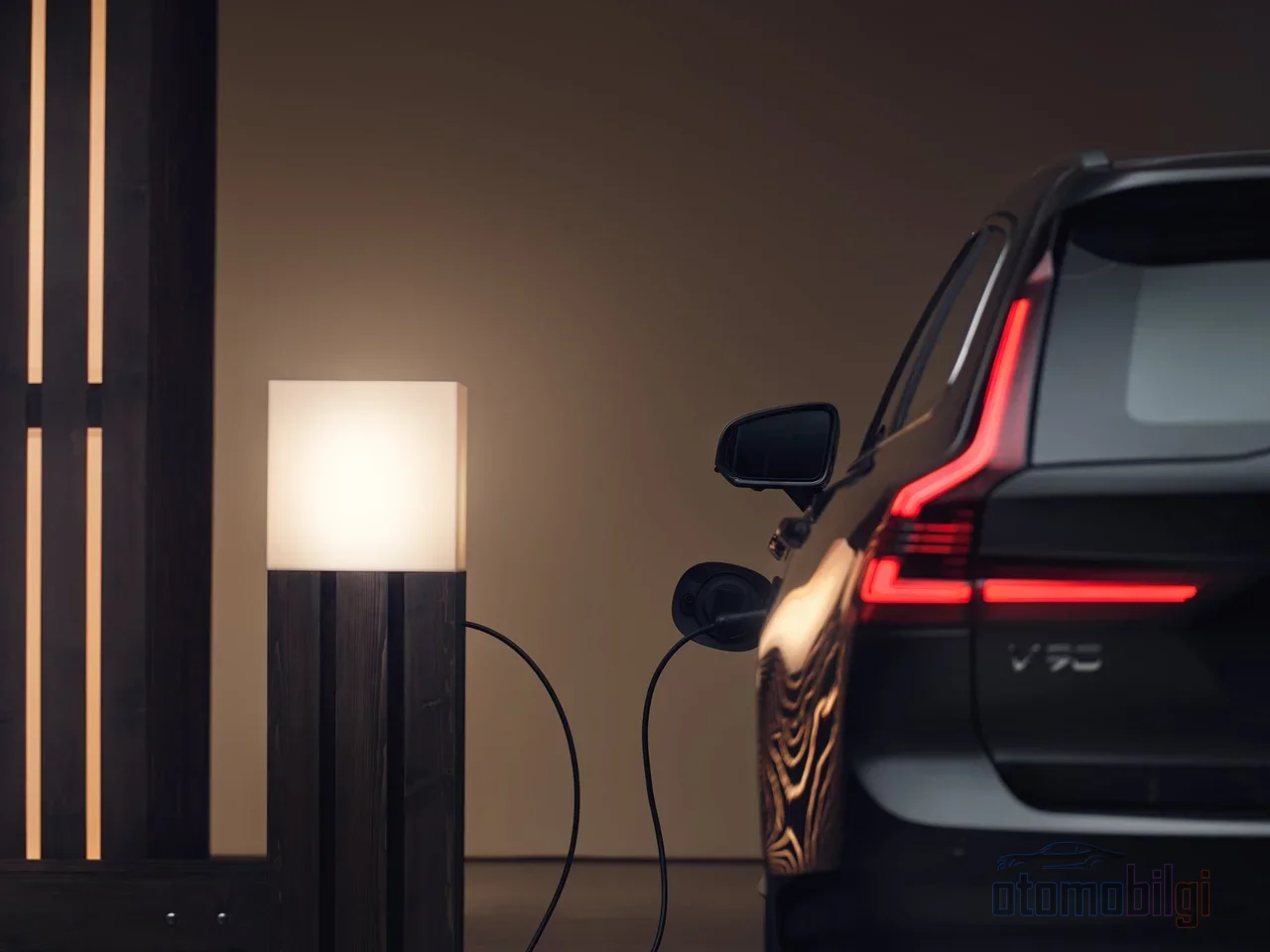
Share This Page
Your electric vehicle sometimes draws 7 kW, sometimes 150 kW; because with AC charging the speed is determined by the onboard charger inside the vehicle, while with DC charging it is determined by the battery management system. The job of converting the alternating current (AC) from the outlet into the direct current (DC) that the battery can store is assigned to the vehicle in AC charging, and to the station in DC charging. Whichever side has the converter, that side sets the ceiling of the power drawn.
Highlights
- AC charging speeds are typically 3.7-22 kW ; the onboard charger sets this limit.
- DC fast charging starts from 50 kW; at high-power stations, outputs above 350 kW are seen.
- Charging speed is measured in kW, stored energy in kWh; the two are different things.
- The slowdown after 80% is not a fault, but an engineering choice that protects the battery.
- As of July 2026 in Türkiye, there are 13,140 public charging stations.
What Is the Difference Between AC and DC Charging?
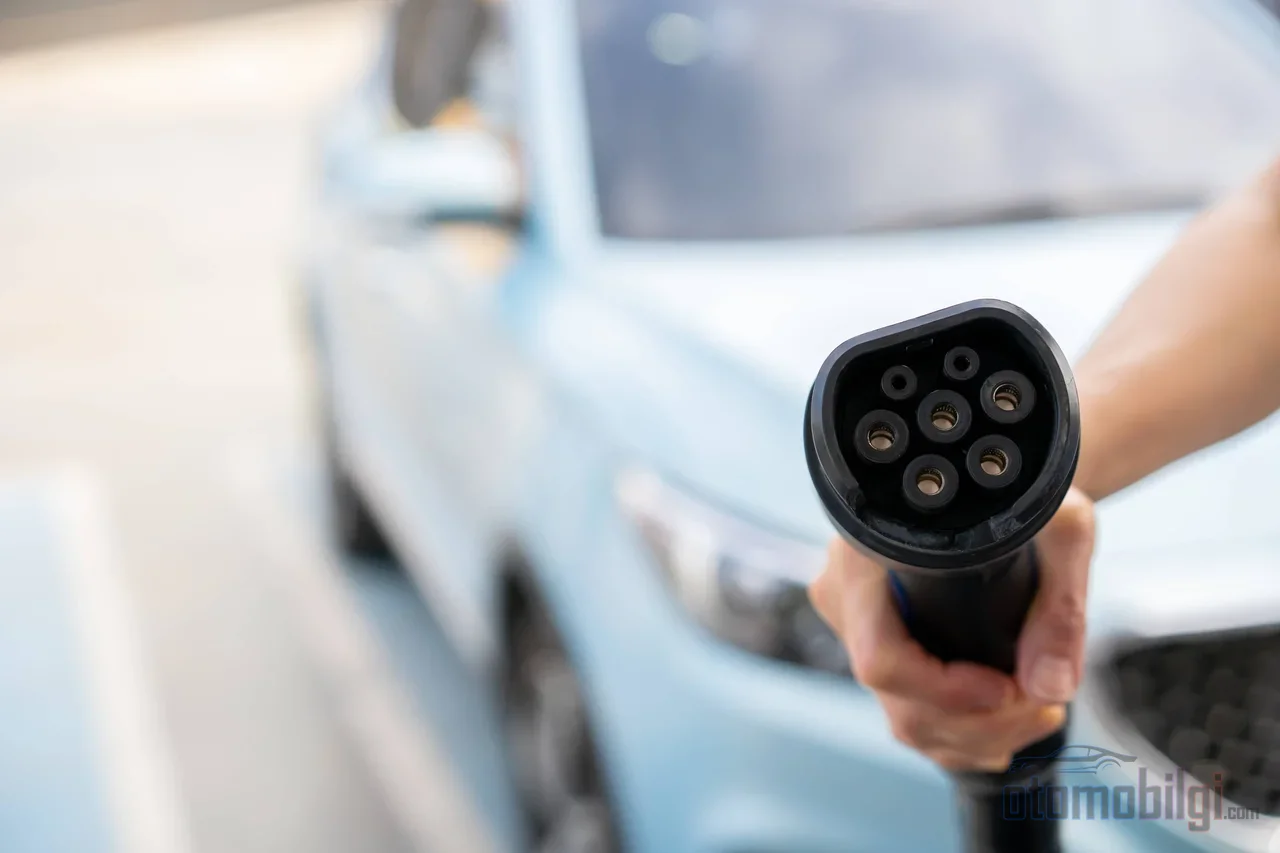
The electricity coming from the grid to your home is alternating current: the direction of the current changes periodically. Electric vehicle batteries, however, store only direct current, that is, electricity flowing in one direction. The bridge between these two types of current determines the entire charging experience.
With AC charging, grid electricity reaches the vehicle's charging port as alternating current. The conversion from AC to DC is done by the onboard charger inside the vehicle; this unit also regulates the current and protects the battery. With DC charging, the conversion takes place inside the station, and direct current is delivered straight to the battery. The onboard charger is bypassed - that is why DC charging is much faster.
In short: the speed limit of AC charging is drawn by the converter inside the vehicle, and the speed limit of DC charging by the station's power. The same vehicle drawing 7 kW at a home outlet and 150 kW at a highway fast charger stems from this architectural difference.
Why Does My Car Draw Only 7 kW at a 22 kW Station?
The capacity of the onboard charger is more decisive than the wallbox or the station. For example, a vehicle that accepts 11 kW AC draws approximately 11 kW even when connected to a 22 kW station. The station's promise does not matter; the vehicle applies its own ceiling. Most passenger vehicles support AC charging in the 3.7-11 kW range, and only a few models accept the full 22 kW; some vehicles' onboard units can never exceed 7.2 kW under any conditions.
There is a small but critical distinction here: charging speed is measured in kW , while the amount of energy transferred to the battery is measured in kWh . Charging for one hour at 7 kW adds roughly 7 kWh of energy to the battery. Charging overnight from a wall outlet runs at the "sometimes 7 kW" speed, and this is more than sufficient for most daily scenarios.
Home Wall Outlet or Wallbox?
On the home side, speed is also limited by the phase structure of your electrical installation: 3.7 kW and 7.4 kW units require single-phase, while 11 and 22 kW units require a three-phase infrastructure. A 7.4 kW wallbox fills a vehicle with a 60 kWh battery in roughly 8 hours - an ideal equation for overnight charging. As of 2026, a 7 kW AC installation costs around 50,000-100,000 TL, 11 kW around 80,000-150,000 TL, and 22 kW in the range of 150,000-250,000 TL.
Let's clarify one point: You cannot install a DC charger at home. Because their power requirements far exceed a home's electrical installation, DC units are located at public stations; since installation and operating costs are high, their prices are also higher.
The Charging Curve: Why Does Power Drop as the Percentage Rises?
Every electric vehicle has its own unique charging curve: the power it can draw changes as the battery fills. At low charge - around 20% - the battery charges much faster; as it approaches 80%, the speed drops. Behind this slowdown are battery protection protocols such as voltage limits, increasing internal resistance, and thermal protection. The main motivation is simple: to protect the battery.
This slowdown is noticeable: the final 20% segment can take as long as the first 80%. Some charging networks significantly reduce power at 80% to protect battery health; users report that beyond this point power drops to single-digit kW values. Very cold or very hot weather also pushes the system to reduce power.
The effect of temperature is also true at the manufacturer level: actual charging speed and duration depend on battery temperature and weather conditions. That is why some electric vehicles feature rapid-charging preconditioning; when a fast-charging station is set as a destination in navigation, the battery is brought to its ideal temperature before arrival.
Two Scenarios in Numbers: AC at Home, DC on the Road
The performance of the same vehicle in two different charging scenarios is the best illustration of the difference. Take, for example, a compact electric SUV:
| Scenario | Charging Type | Power | Duration |
|---|---|---|---|
| Overnight charging at home | AC | 11 kW | Approximately 7 hours 15 minutes to 100% |
| Fast-charging station | DC | 150 kW and above | As fast as 18 minutes from 10% to 80% |
| High-power DC | DC | Up to 220 kW | Varies according to the charging curve |
As can be seen, an 11 kW AC charge at home comfortably reaches full capacity overnight; a 150 kW DC station gathers range in 18 minutes within the 10-80% window. The two do not race; they divide the work.
Charging Plugs and Infrastructure in Türkiye
There are four basic plug types in total: for AC, Type 1 and Type 2, and for DC, CHAdeMO and CCS. Type 1 is common in American-origin vehicles, is single-phase, and supports up to 7.4 kW; in Türkiye, the standard plug on the AC side is Type 2, while on the DC side CCS has become the de facto standard.
The infrastructure is growing rapidly: As of July 2026, the country has 13,140 public charging stations, 20,864 DC sockets and 27,044 AC sockets. The number of high-speed charging stations established through support and incentives reached 16,650 in 2024, up from 5,000. Usage scenarios have also become established: DC fast charging at fuel stations, high-power DC on highways, AC+DC smart power management in fleets, and multi DC+AC arrangements in commercial centers are becoming widespread. For installation in apartment buildings and residential complexes, approval from the electricity distribution company and working with EPDK-licensed firms are required.
Which Charging Makes Sense in Which Situation?
There is no single "better" option; the right question is choosing the right charging for the right scenario:
- Daily use: AC charging is ideal - cost-effective, battery-friendly, and completely sufficient overnight or when parked all day.
- Long distance: DC fast charging is the right choice - it typically adds range with a 20-40 minute break.
- Home installation: The home's phase structure determines the wallbox speed; single-phase 3.7-7.4 kW, three-phase 11-22 kW.
- Battery life: Regular AC charging is gentler on the battery; intensive DC use can increase heat and long-term wear.
There is a measurable nuance regarding DC's effect on the battery: the risk of heat and wear mainly becomes significant with intensive use - for example, in fleet operations. For an average user driving long distances a few times a week, the effect is very small. Practical takeaway: stopping the charge at 80% is usually the right habit both for performance and battery life; although AC's power may seem low, it generally doesn't make a difference in daily use.
Conclusion: Your Vehicle, Your Station and Your Battery Together Determine Charging Speed
It is not a single device but a chain that determines the kW value you get: the station's power, the vehicle's built-in charging unit, and the battery's current charge level and temperature. The weakest link in the chain sets the speed. AC at home and work, DC on the road; being careful not to exceed 80%; preparing the battery before fast charging in cold weather - these three rules eliminate most of the frustrations arising from wrong station choices.
Sources
- AC vs DC Charging: What Are The Differences?
- AC vs DC EV Charging - bp pulse
- AC vs DC Chargers - EVSE Australia
- AC vs. DC Charging: What's the Difference? - Roam Charging
- What Is an Onboard Charger? - Bemis E-V Charge
- 7kW, 11kW or 22kW EV Charger? - Amina Charging
- How Station Amperage and kW Affect EV Charging Times - Blink Charging
- Why EV charging slows down after 80% - Paua
- The 80% Rule - WiTricity
- Guide to EV Charging - AAA
- All EV Charging Companies in Türkiye - Tümşarjlar
- Number of High-Speed Charging Stations Reaches 16,650 - Anadolu Agency
- EV Charging Connector Types - WallboxTR
- Home Charging Station Guide (2026) - OŞARJ
- How to Set Up EV Charging at Home - Cetaş
- Charging Station Installation for Your Home - Ece Enerji
- How to Install a Charging Station in an Apartment Building - Bolt Energy Solutions
- EV Charging Station Types - Charge Teknoloji
- AC vs. DC Charging - Porsche