How Much Does EV Charging Cost? Home vs. Station Cost Comparison
Share This Page
Electric vehicle charging is a cost item that varies significantly per kilometer depending on the scenario: while the cost of 100 kilometers at home on the night tariff comes to around 40-55 TL , the same distance at a public DC fast charging station can exceed 150 TL. In other words, the same vehicle, same battery, same road - the difference depends entirely on where and at what tariff you get your energy. This guide puts home charging with a wallbox, free or discounted charging at the workplace, and highway-side fast charging on the same scale; it converts the calculation from kW price to TL.
Highlights
- Home charging is roughly 3-4 times cheaper than DC fast charging.
- A full home charge of a 75 kWh battery costs roughly 175-260 TL .
- Public prices: AC ranges from 8-9 TL/kWh, DC from 11-14 TL/kWh .
- EPDK ended power-based pricing and switched to a single-tariff period in February 2026.
- A 20-80% charging range can extend battery life by up to 20% .
Basic Calculation: From kWh Price to 100 Kilometers
The cost calculation itself is a simple two-variable formula: battery capacity (kWh) times the TL you pay per kWh. Filling a 60 kWh battery at a residential tariff of 3.50 TL/kWh costs about 210 TL ; since this vehicle offers 400 km of WLTP range, the share of 100 kilometers comes down to ~52 TL. With different tariff and consumption assumptions, the 100 km cost for home charging sits somewhere in the 37-55 TL range.
The second variable is the vehicle's consumption. Electric vehicles typically consume 14-22 kWh/100 km ; capacities vary between 35-120 kWh . A small city car and a large, heavy SUV naturally do not pay the same amount at the same station. That's why we will use 100 kilometers as a common yardstick in the comparisons below - brand-independent, equal for everyone.
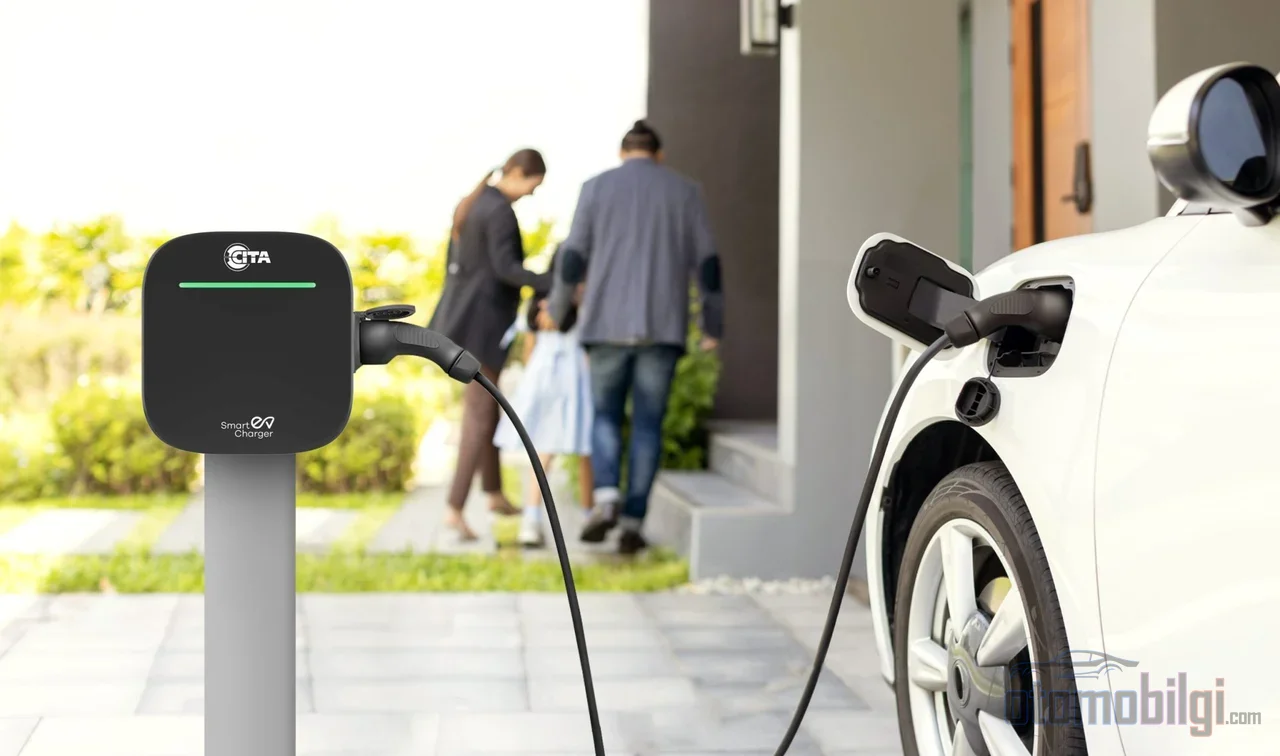
Scenario 1: Overnight Charging with a Wallbox at Home - The Cheapest Option
Home electricity is the most economical of the three scenarios. In the tiered residential tariff, the monthly tier up to 240 kWh is ~2.33-2.54 TL/kWh, and above that around 3.45-3.82 TL/kWh . When you spread your charging over the night and the first tier of the month, the cost of 100 kilometers easily drops below 40 TL . For comparison: the same range in a gasoline vehicle costs around 300-400 TL ; home charging provides nearly a tenfold advantage.
The hardware side is a one-time investment. An ordinary wallbox device is in the 7,200-25,000 TL range, with the total budget including installation averaging 20,000-40,000 TL. Higher-power home-type stations are more expensive: an 11 kW unit 80,000-150,000 TL, a 22 kW unit 150,000-250,000 TL. By an empirical calculation, the fast-charging premium the average driver pays at stations pays back the wallbox investment itself within a few years.
What about apartment buildings?
In a detached house, the process is limited to the suitability of the electrical infrastructure; in an apartment building, management approval is required and the capacity of the shared infrastructure becomes decisive. This is the only practical obstacle that doesn't appear in the cost table but could delay your decision.
Scenario 2: Workplace Charging - Free Energy During the Day
Charging your car where you park it during working hours comes down to a simple equation: if your employer offers charging for free, you pay 0 TL for your 100 kilometers. On a discounted tariff, only a small gap remains compared to the home rate. On the corporate side, AC station installation is estimated to account for 60-80% of the total upfront cost; in return, it provides employee loyalty and a competitive advantage. Studies also point to a 10-15% increase in property value at sites with charging infrastructure - and it would be right to read this from the perspective of a business decision, not an employer promise.
The daily user's picture is clear: if regular charging is available at work, your home-rate charging needs are left to the weekend and short top-ups; the share in your monthly energy bill shrinks noticeably.
Scenario 3: Public Stations - The Price of Speed
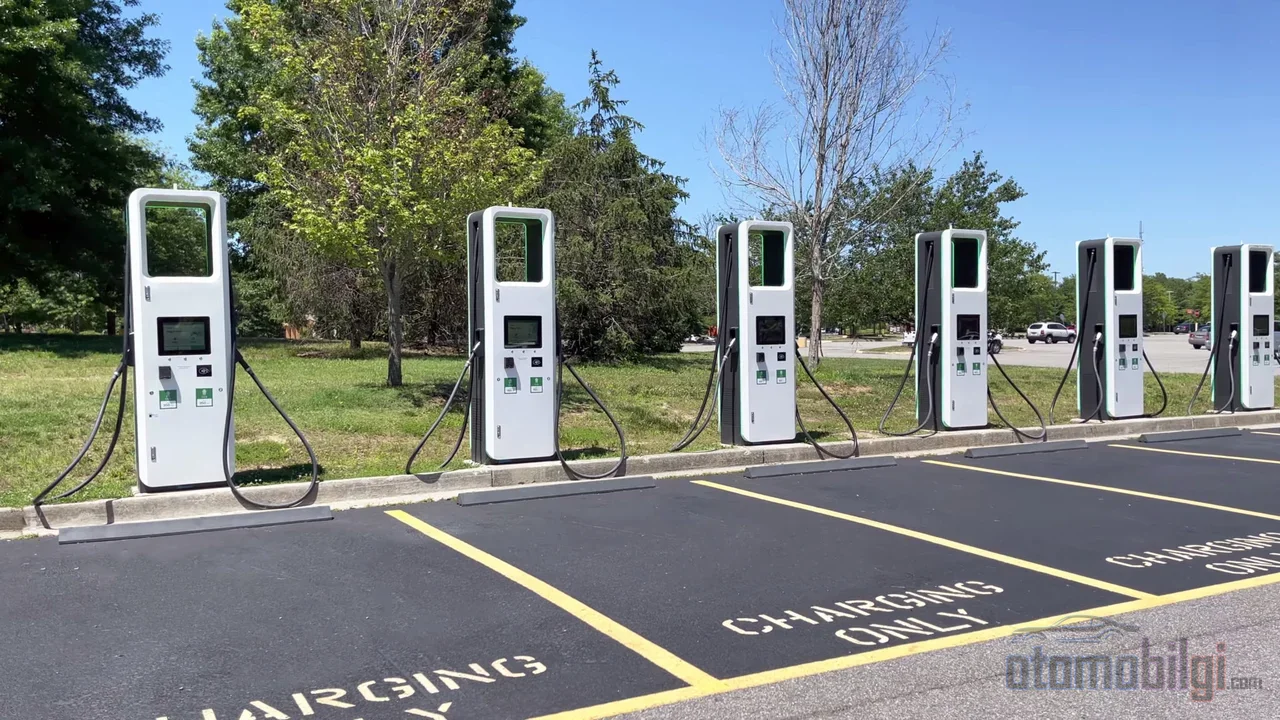
There is a technical justification for public charging being expensive: DC fast charging units operate in the 50-400 kW power range, and power electronics and grid connection push infrastructure costs upward. Operators generally sell at 2-3 times the electricity purchase price. A similar picture exists internationally; according to IEA's Global EV Outlook data, public fast charging can be up to 240% more expensive compared to residential rates.
| Charging point | Approximate price (TL/kWh) | 100 km cost* |
|---|---|---|
| Home (night, residential tariff) | 2.33-3.82 | ~40-55 TL |
| Public AC (11-22 kW) | 8-10 | ~120-140 TL |
| DC fast (50-120 kW) | 11-13 | ~155-185 TL |
| DC ultra-fast (150-400 kW) | 12-16.50 | ~170-230 TL |
*100 km cost is based on an assumed consumption of 17-18 kWh/100 km; kWh prices are March 2026 market averages and vary by operator, location, and time.
How are operator tariffs shaping up?
The tariff structure of the two major networks in Türkiye gives a snapshot of the sector. One network's price list prices DC charging between 12.00-14.98 TL/kWh, varying by location; its updated list shows 13.78 TL up to 150 kW and 15.36 TL above that. The other major network positions AC charging at 9.99 TL, standard DC at 12.99 TL, and high-power charging (HPC) at 16.49 TL. There are also more modest prices where fast charging is not widespread: certain networks offer DC charging to Tesla owners in the ~9.40-10.40 TL/kWh band.
A concrete example proves the consistency: Togg T10X (88.5 kWh battery) pays approximately 1,359 TL for a full charge on a unit above 150 kW, and ~1,459 TL at an HPC station. Filling the same energy at home costs roughly a third, depending on the tariff.
Beware of the idle fee
Some of the major networks apply a time-based extra fee to drivers who do not remove the vehicle from the unit after charging is complete: starting at 150 TL from the 15th minute and reaching 500 TL at the 60th a tiered penalty applies. With fast charging, time is money too; the vehicle's reduced charging speed once you reach 80% is the silent line item in total cost.
EPDK Regulation: What Changed in February 2026?
When reading the cost table, you also need to know the regulatory framework. EPDK, on February 12, 2026, approved a comprehensive amendment to the Charging Service Regulation. Three headlines stand out: pricing by power for AC and DC units is ending in favor of a single tariff period; card payment becomes mandatory on highways; and a "dynamic pricing" era is beginning. Charging service prices will continue to be set freely, but the new regulation opens the door to location- and time-based variable pricing.
The practical result for users is this: in the coming period, the same station's prices at 10:00 AM and 2:00 AM may differ; the habit of charging at low night rates may become rewarding not only at home but at stations as well. Much-discussed rules such as the operator terminating charging above 85% state of charge are not yet settled implementation details; worth following.
Converting to an Annual Bill
A driver covering 1,500 km per month consumes roughly 225 kWh of energy per year. If this entire load is covered at home, the monthly cost is ~776 TL; if covered entirely by DC fast charging, ~2,925 TL . In annual projections, figures such as ~8,700 TL at home with the tier 1 tariff, ~12,900 TL with tier 2, and ~27,000 TL for a user mainly at AC stations are calculated. The difference between them is the heart of the electric vehicle economy: the car is the same, the decision is the tariff mix.
To manage cost fragmentation, independent comparison platforms and some brands' official cost calculators based on WLTP consumption make your job easier. The tables in this guide are designed so they can be reused with only the kWh column updated when prices change - in this category, data has a shelf life of no more than six months.
Does Cheap Charging Harm the Battery? Cost-Focused Habits
The good news is that the most economical scenario is also the gentlest on battery health. The battery is the vehicle's most expensive component; its replacement reaches 300,000-600,000 TL in global examples. Staying within the 20-80% charging range can extend battery life by up to 20% . A large-scale analysis of more than 22,000 electric vehicles measured the average battery degradation rate at 2.3% per year and flagged high-power DC fast charging as the most significant risk factor.
There is also a counterargument: it is claimed that fast charging has "very little" effect on range loss because modern vehicles' battery management systems monitor temperature and automatically reduce charging power. The pragmatic point where the two views meet: AC charging - the home and workplace scenario - except on long trips; make fast charging the exception. To measure its return, you can do a scenario calculation like this: a vehicle charged to 100% every day and frequently using fast charging loses 30% losing capacity, a vehicle that adopts the 80% limit and home charging runs with a 20% loss over 10 years - in the long term, with the calculation of delaying battery replacement, this means a difference on the order of ~100 thousand TL . Exceptions, such as 100% charging posing no additional risk in vehicles with LFP batteries, are also determined by your vehicle's manual.
Conclusion: The Right Mix, The Lowest Bill
The cost optimization formula can be summarized in three lines: carry your fixed routine with AC charging at home or work, save fast charging for long trips and emergencies, and recheck tariffs during periods when pricing shifts to dynamic models. A 100-kilometer distance can vary between 40 TL and 200 TL depending on the energy source - the economics of electric vehicle ownership operate based on this mix rather than the vehicle's price.
Sources
- How Much Does Electric Vehicle Charging Cost? Is Home or Fast Charging Station More Advantageous? - Acamar
- Electric Car Charging Costs, Prices and Fees: How Much? - Sigortam.net
- 2026 Electric Vehicle Charging Station Prices and Cost Calculation Guide - Atak Market
- Electric Vehicle Charging Prices 2026: Current List Based on AC and DC kWh - OŞARJ
- EV Charging Prices and Current Tariffs - Trugo
- Prices - ZES
- Electric Vehicle Charging Service Regulations - EPDK
- Electric Vehicle Charging Cost: 2026 Current Guide - Mubeenergy
- 2026 Electric Vehicle Charging Cost: At Home and at the Station - Araclo
- Electric vehicle charging - Global EV Outlook 2026 - IEA
- EV Battery Health - Geotab
- Battery Life in Electric Vehicles - Bridgestone
- Charging Electric Vehicles to 100% Every Day - WAT Mobilite
- Home-Type Electric Vehicle Charging Station Guide (2026) - OŞARJ
- How to Set Up Electric Vehicle Charging Stations at the Workplace - WAT Mobilite