Does Summer Heat Wear Out an Electric Car?
Share This Page
Summer heat doesn't strain an electric car as much as winter does; but it tires it in a different way. Range loss is usually small - about 5% at 32 °C, and on average 17–18% above 38 °C. The real issue is not range, but the battery aging faster at high temperatures. Measuring these two effects separately - one a practical comfort matter in the short term, and a battery health matter in the long term - is the most efficient way to get through summer comfortably.
Highlights
- The lithium-ion battery's optimum operating range is 15–30 °C.
- Range loss at 32 °C is ~5%, above 38 °C ~17–18%
- Cooling down a hot car takes 3–5 kW, maintaining the temperature takes ~1 kW whether
- A few PSI of low tire pressure can reduce range by up to 10% can reduce it by up to
- Most manufacturers' battery warranty is 8 years/160,000 km
Why summer loss is smaller than winter: the math of the difference
When we talk about winter range, we speak of losses of up to 40%; in summer this figure rarely reaches 10%. The physical explanation is simple: the air conditioner's job is to close the temperature difference between the cabin interior and the outside. In summer this difference is around 20–25 degrees, while in winter it can exceed 50 degrees. Heating and cooling are applied to the same cabin volume, but one side's load is several times the other's: heating a cabin at -7 °C can require 4–10 times more electricity than cooling.
The heat pump doesn't behave as you'd expect in this equation. The heat pump is optimized to heat cold air; in summer heat it performs the air conditioner's job but offers no advantage over an ordinary air conditioning system in this area. In real-world data, vehicles with heat pumps show on average slightly higher range loss at high temperatures than those without. Not surprising: it's natural for a system designed for winter to carry a marginal cost in summer.
Let's clarify this: the primary cause of summer range loss is the energy spent on the air conditioner that keeps the car on the road. In other words, the loss is temporary and controllable - an item you can directly intervene in by reducing speed, pre-cooling, and parking in the shade.
The air conditioner's cost to range: the first cooling is expensive, maintaining it is cheap
The air conditioner's consumption is not a single fixed number; it differs greatly in two stages. Bringing a car waiting at 95 degrees down to a comfortable temperature momentarily requires 3–5 kW of power - that's close to half the load of fast charging. Holding that comfort level, however, requires only about 1 kW . So starting a journey with a cool car is more efficient, both in terms of range and comfort, than trying to cool under high load during the journey.
In an electric vehicle this is less of a problem than in a gasoline car. In a gasoline car, the AC compressor draws power from an engine that is already running hot; in an electric vehicle there is no extra load like engine waste heat, and the cooling system works with its own efficiency. That's why range doesn't drop noticeably - at least up to 32 °C - and the main item of loss is that short high-power window caused by the initial cooling.
The winter comparison framework is consistent: in cold weather, HVAC consumption can rise to 20-50% of total energy. Summer air conditioning is a relatively cheap item in this picture. In short, there is nothing to fear from air conditioning; when run at the right time, its cost is quite reasonable.
What happens to a vehicle parked in the sun: chemical aging and vampire drain
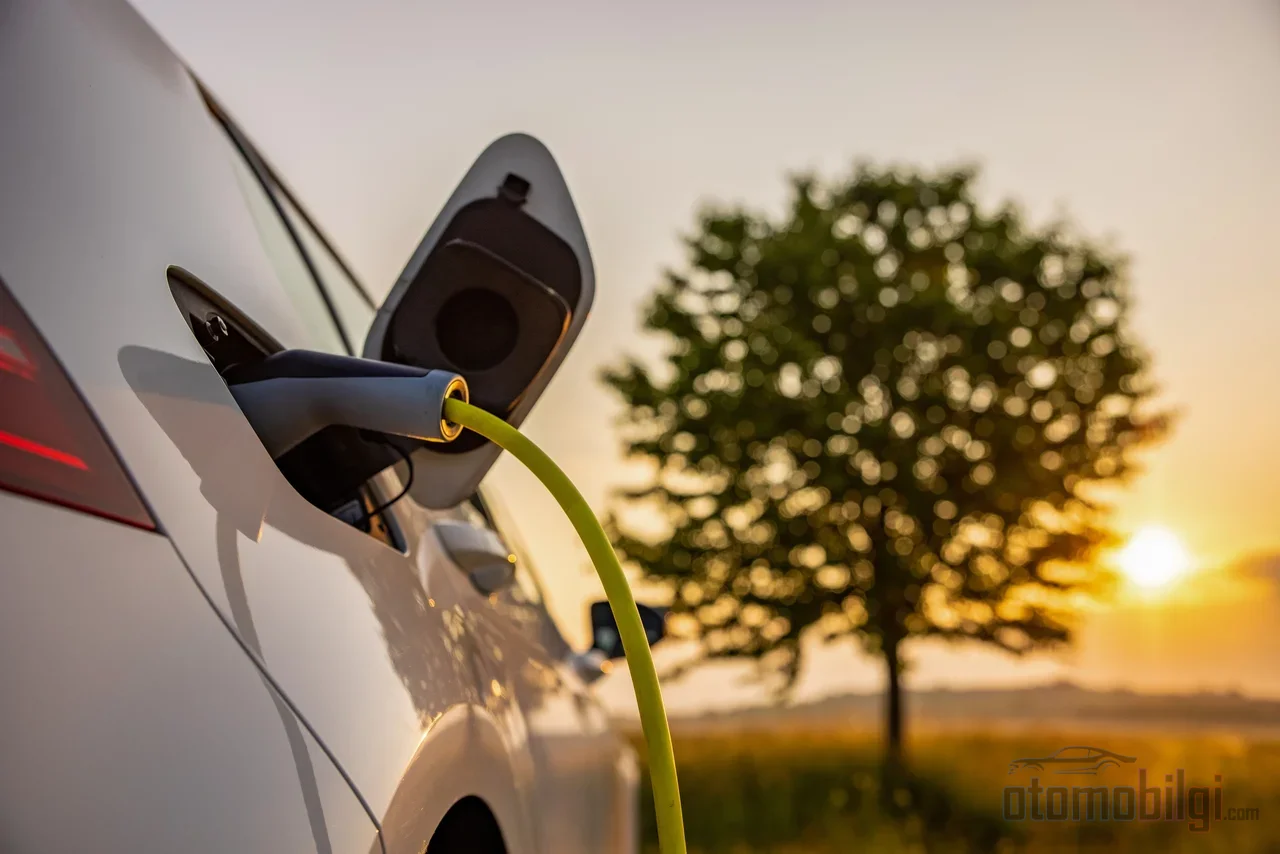
In an electric vehicle waiting in a hot parking lot, two separate effects operate at once. The first is chemical: as cell temperature rises, the reactions inside accelerate and the battery materials consume their calendar life faster. The second is electrical: the vehicle's thermal management system draws power from the battery to keep the cells cool. This "vampire drain" causes the charge level to drop faster than you expect while parked.
The truly risky combination is this: high charge level plus high temperature. Letting a battery sit at 90-100% full in summer heat is the scenario that strains the battery fastest. In hot climates, batteries that sit at a high charge for long periods are the group that degrades fastest. The practical takeaway is a clear rule: if the vehicle will be parked for a long time, it 50-80% should be left within the range and not abandoned in the sun fully charged. The opposite extreme is also risky - letting it sit at a very low charge is not recommended either, because the vehicle funds the cooling work from the battery again.
Owners of vehicles using LFP (lithium iron phosphate) chemistry can breathe a little easier: LFP cells are less sensitive to heat than the common NMC chemistry and degrade more slowly at high temperatures. For NMC owners, finding shade is not merely a comfort choice but part of battery strategy. In regions of Türkiye where the sun beats down directly, such as Antalya and Alanya, parking in the shade should be as fundamental a habit as winter tires.
Fast charging in the heat: how real is the risk?
The effect of DC fast charging on battery health is one of the most debated topics in the EV world. The picture the data paints needs to be read two ways. On the one hand, vehicles that rely heavily on fast charging above 100 kW have been measured to have an annual degradation rate up to 3.0% higher. On the other hand, some vehicles that fast-charge for the vast majority of their charging time showed no significant difference. The point of compromise is this: the risk lies not in fast charging alone, but in its combination with temperature and charge level.
The logic chain goes like this: high current generates heat through the cell's internal resistance. If the battery is already hot, it becomes harder for the thermal management system to dissipate this heat, and the cells operate in a range vulnerable to fatigue. When charge levels outside 20-80% are added to this - especially above 90% - the degradation process accelerates.
The practical translation for the summer months can be summarized in three sentences:
- Avoid fast charging during the hottest hours (around midday); leave it to the cooler hours - morning and evening.
- Prefer AC charging (Level 2) at hotel, home, or workplace parking; low current heats the battery less.
- Never connect fast charging when the battery is very hot or at extreme levels such as 5% or 90%.
Pre-conditioning: a cool cabin without stealing range
The summer side of pre-conditioning is less well known than winter heating, but it works on the same logic. Cabin pre-conditioning runs the air conditioning while the car is plugged in, powered from the grid. The result: a cool cabin and a full battery when you set off - that expensive 3-5 kW initial cooling is paid for by the electric grid, not by your range. This single habit practically eliminates the biggest item of summer range loss.
Battery pre-conditioning does a different job: it brings the cells to their ideal temperature before charging. Cooling (or heating in winter) the battery before entering a DC fast charging stop on a long journey shortens charging time and also protects the cells from the riskiest range. If your vehicle has this feature, letting it trigger as you approach a fast charging stop is the technically correct way to use it.
Long summer journey: the tire, load and speed triangle
Long-distance holiday traffic in summer brings factors other than temperature onto the stage in the range equation. The first is tire pressure: in hot weather tire pressure naturally changes, and tires inflated a few PSI low can reduce range by up to 10%. Because electric vehicles are heavier than similar vehicles, this sensitivity is greater than in gasoline cars. Checking pressure on cold tires before a long journey should be the first item of the summer routine.
The second is speed - and its effect is greater than that of temperature. Reducing speed by just 10% can extend range by up to 30%; especially on the highway, aerodynamic drag increases with the square of speed, so this coefficient should not be underestimated. A speed band of 108-110 km/h instead of 120 alone can offset the summer range loss combined with air conditioning load.
Third is load and thermal planning. A highway journey with a loaded trunk, four passengers and 40-degree heat requires a 15-20% buffer in your range plan even in the most favorable scenario. When planning the route, aligning charging stops with cooler hours - an early morning departure, a lunch break while the car is plugged in - reduces both waiting time and battery stress.
| Factor | Effect magnitude | What to do |
|---|---|---|
| 32 °C temperature | ~5% range loss | Normal use, no precautions needed |
| Above 38 °C | ~17-18% range loss | Pre-cooling, park in the shade |
| Parked in the sun + 100% charge | Accelerated battery aging | Keep it in the 50-80% range |
| Fast charging in the heat | Increased risk of degradation | Schedule for cooler hours and AC charging |
| Low tire pressure | Range loss of up to 10% | Check before setting off |
Summer routine for owners in hot regions
For those living in the Mediterranean and Southeast, these suggestions are not tips but a list of daily habits. Let us summarize briefly:
- Shaded parking: If possible, a covered or shaded parking area; the difference between ground and air temperature determines both cabin comfort and cell life.
- Shift charging hours: Schedule home charging for early morning or late evening; both the grid and battery temperature are more favorable.
- Pre-cooling while plugged in: Run the air conditioning from the grid just before setting off, and save the range for the road.
- Park charging level: If the car will sit for days, leave it at around 50%; do not hand it over to the summer heat at 100%.
- Tire pressure: Check it once a month and before every long trip, on cold tires.
One final reassurance note: most manufacturers protect the battery with an 8-year/160,000 km warranty, and some newer models have extended this limit to 10 years/200,000 km. Moreover, the active thermal management systems in modern vehicles - including closed-loop liquid cooling that optimizes in real time based on ambient temperature and battery load in some 2025 models - monitor the cells for you. Summer heat does tire the battery, yes; but with proper parking, proper charging hours, and proper speed habits, this fatigue remains a far smaller concern than the one you fear in winter.
Sources
- How Hot Summer Weather Affects EV Range
- Do extreme heat or cold affect electric vehicle batteries?
- How Summer Heat Affects EV Battery Range And Charging
- EV Battery Health Study: New Data on Fast Charging
- Energy consumption of mobile air-conditioning systems
- Tire pressure impact on EV driving range
- Using Electric Vehicles in Summer: What You Need to Know
- How to Protect Your EV Battery in Hot Summer Weather?