The Fine Print in EV Battery Warranties: What's Covered and What's Not
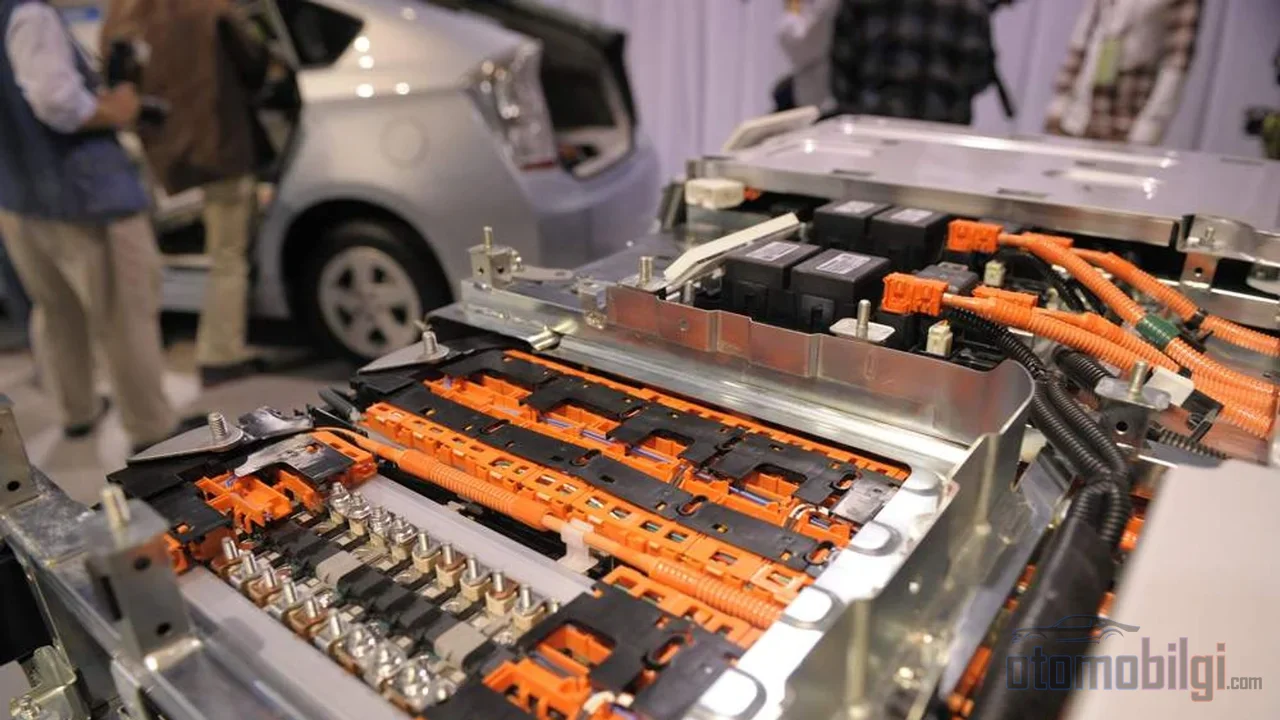
Share This Page
Electric vehicle battery warranty is, typically, 8 years or 160,000 km a commitment to repair or replace the battery if its original capacity drops below 70% or if a material or workmanship defect emerges. In other words, if your battery degrades gradually and does not fail before reaching the threshold, the warranty does not kick in; even when it does, the coverage, transfer conditions, and exclusions vary significantly from manufacturer to manufacturer. On this page, we go through each of these details that affect your ownership decision.
Highlights
- At most manufacturers the capacity threshold is 70%; while on GM models it is 60%.
- The European standard is 8 years / 160,000 km; Hyundai offers 10 years / 160,000 km on models after 2020.
- At Tesla, the warranty follows the vehicle and transfers to the new owner; this is not the case with every brand.
- In electric vehicles produced after 2016, the rate of battery replacements needed is below 1%.
- In Europe, an out-of-warranty battery replacement typically falls in the range of €5,000-15,000 .
What Does the 70% Threshold Mean, and How Is It Measured?
At the heart of battery warranties lies a single number: the capacity threshold. The warranty provides a commitment to repair or replace the battery if its original energy capacity drops below a certain percentage. At most manufacturers this threshold is 70%; meaning that a vehicle that starts with 60 kWh earns the right to a replacement if its battery drops below 42 kWh within the warranty period. The exception is on the GM side: on the Chevrolet Equinox EV, Blazer EV, Cadillac Lyriq, and Chevy Bolt, the threshold is 60% - this has been characterized as the weakest battery warranty of 2025 in comparisons.
The measurement of the threshold is not an estimate either. The range estimate on the dashboard is not accepted as a measurement; capacity is documented through a scan performed with the manufacturer's own diagnostic software and an official capacity report. In a warranty claim, battery test results, capacity measurements, and charging history records are filed. In practice, this means a diagnostic scan requested from the dealership's authorized service.
The most commonly overlooked point is this: A battery at 71% gives you no rights under a warranty with a 70% threshold. Normal, gradual degradation is outside the scope of coverage; only "excessive" loss that falls below the threshold is covered. A battery at 70% is also not defective - the measured energy capacity does not indicate a flaw or imminent failure. With a healthy battery management system, the vehicle remains usable; for a battery in the 60-70% band, the replacement decision is a matter of economic calculation.
Comparison of Manufacturers' Warranty Conditions
Even though duration and mileage may seem similar, the capacity threshold and coverage details create the decisive difference. Here are the known conditions of prominent manufacturers as of 2026:
| Manufacturer / Model | Duration / Mileage | Capacity Threshold |
|---|---|---|
| Hyundai (after 2020) | 10 years / 160,000 km | 70% |
| Rivian | 8 years / 175,000 miles | 70% |
| Tesla Model 3 LR / Performance, Model Y | 8 years / 120,000 miles | 70% |
| Tesla Model 3 RWD | 8 years / 100,000 miles | 70% |
| BMW | 8 years / 160,000 km | Not specified |
| Volkswagen | 8 years / 160,000 km | 70% |
| Ford, Nissan, Toyota, Volvo, Polestar and others | 8 years / 100,000 miles | 70% |
| GM (Chevrolet, Cadillac EV) | - | 60% |
Hyundai's rationale is clear: EV batteries degrade over time; their commitment is that the loss during the warranty period does not exceed 70% of the original capacity. Rivian, on the other hand, was chosen as the best battery warranty option in 2025 comparisons thanks to covering all internal components of the high-voltage battery. Tesla also offers a Battery Extended Service Agreement that extends 24 months / 30,000 miles beyond the end of the original warranty.
The Situation in Türkiye
The conditions in the Turkish market are reflected on the brands' local pages as follows: Renault 8 years / 160,000 km, Tesla with a minimum 70% capacity condition during the warranty period on some models, and Kia offering a 5-year or 150,000 km capacity guarantee across its electric lineup. Keep in mind that conditions may vary by country: a brand that offers 10 years/160,000 km in Europe may commit to a shorter period in another market. Since there is no centralized battery warranty legislation in Türkiye and dealer practices effectively determine the rules, reading the written terms in the contract before purchasing is not a wish but a necessity.
Transfer to a Second Owner: Does the Warranty Follow the Car or the Owner?
This is the most critical question in the used EV market. The general rule is that the warranty is tied to the vehicle and runs from the first sale; at major brands, the 8-year protection is transferred to second and third owners. Tesla explicitly commits to this: when the vehicle is sold new, the New Vehicle Limited Warranty follows the car and passes to the new owner.
But the picture is not this clear with every brand. With some manufacturers, coverage may drop to the standard limited warranty when the vehicle changes hands; with others, the transfer may become completely void. Before buying a used electric vehicle, verify the warranty terms in writing.
In Türkiye, the practical checklist consists of three items: on a vehicle with an ongoing warranty, be sure to request the warranty documents; verify with an authorized service that the warranty is still valid based on the first registration date and current mileage; and confirm the battery state of health (SoH) percentage with an inspection report. Take the number, not the mood.
Usage Errors That Void the Warranty
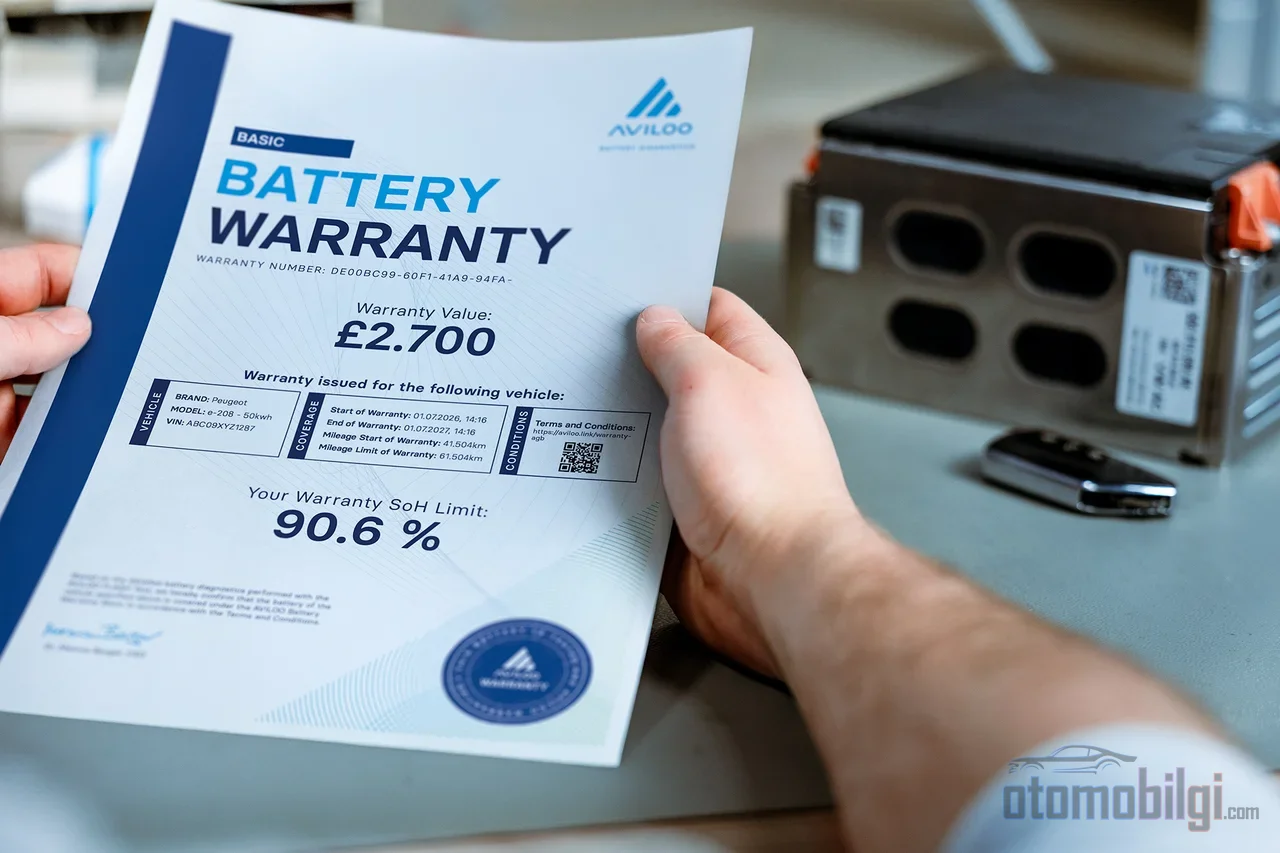
A warranty is a commitment given in return for proper use; the party that violates its terms loses the protection. The items manufacturers exclude from coverage are part of an intersecting list:
- Physical damage: A battery whose structural integrity is compromised in an accident is out of coverage. Even if a vehicle declared a total loss by the insurer is repaired and returned to the road, it remains entirely out of warranty - not just the battery. That is why checking the vehicle history and damage record is essential in the used market.
- Unauthorized intervention: Intervention in the battery by a service not authorized on behalf of the manufacturer and modifications made to the battery management system (BMS).
- Wrong equipment and usage: Use of non-approved charging equipment, failure to follow the manufacturer's charging rules, floodwater and flood damage, exposure to extreme heat, improper maintenance.
- Deep discharge: When the battery drops to 0%, manufacturer rules typically require it to be plugged in within 24 hours. Leaving the vehicle completely empty for a long time can lead to a BMS lock and warranty risk.
- Failure to comply with maintenance conditions: In some batteries, cooling system fluid replacement or battery conditioning at specified intervals may be mandatory for the warranty to remain valid.
Mercedes-Benz is transparent on this matter: it clearly states that a claim may be rejected if the damage is found to result from a non-warranty factor such as improper use. Get maintenance requirements in writing when purchasing - a fluid replacement interval learned later can turn into a rejected claim. Also, don't confuse the 12V auxiliary battery with the battery warranty: it is usually covered under the standard vehicle warranty, typically 3 years/36,000 miles.
What Gets Replaced in Case of Failure: A Single Module or the Full Pack?
In warranty claims, whether the battery is replaced entirely or at module level is the topic readers debate most and manufacturers clarify the least. In practice, the picture looks like this: the rate of full pack replacement under warranty is low - below 1-2%. In service practice, full pack replacement (remove-install-program-verify) is a standard process and reduces the vehicle's return rate to service; however, it is also known that some manufacturers may settle for replacing only the faulty modules. Which method is chosen is usually left to the manufacturer's discretion in the warranty contract; remember that the phrase "repair or replacement" in the contract covers this flexibility.
In an out-of-warranty scenario, costs are decisive. If only 1-2 modules are faulty, an independent shop can perform module-level repair for $1,000-3,000 ; however, in old or low-volume models, a remanufactured full pack may remain the only option because a replacement module cannot be found. For full pack replacement, the typical range in Europe is €5,000-15,000; some cost analyses give a range of $10,000-20,000. These figures can exceed the market value of an old electric vehicle - but remember, a failure does not always require full replacement.
So How Many Batteries Are Actually Being Replaced?
All this weight of warranty terms rarely comes into play in practice. Field data from approximately 20,000 electric vehicles shows that less than 1% of vehicles produced after 2016 required a battery replacement; before and in 2015, this rate was around 13%. Another reality: the rate of pack replacement under warranty is very low. In other words, the battery warranty functions in daily use more as a pledge of confidence than an insurance policy - but in the ownership decision, it is still the firmest ground, especially for those planning to keep the vehicle for a long time.
The direction of the growing market is also on record: after China's new safety standard, Chery has extended battery coverage to lifetime for the first owner expanded. The way conditions are evolving suggests that the fine print will become even more decisive in the future.
Our Battery Warranty Advice: What to Check Before Signing
Approaching it from an engineering perspective, a warranty is a vector made up of four parameters: duration, mileage, capacity threshold, and exclusions. Even if three of them are good, the fourth can burn you - a 60% threshold seriously erodes the value of a 10-year commitment. When buying a new vehicle, get the capacity threshold and maintenance conditions in writing; when buying used, have the authorized service verify the warranty's transfer conditions based on the first registration date and mileage; throughout the vehicle's service life, avoid deep discharge and use only approved charging equipment. When all this is done, statistics show that your likelihood of ever needing the warranty is already very low.
Sources
- Vehicle Warranty | Tesla Support
- High Voltage Battery and Drive Unit Extended Service - Tesla
- What Warranty Does An EV Battery Cover
- How to Navigate Warranty with EV Batteries
- The Best EV Battery Warranties in 2025
- Electric Vehicle Battery Lifespan and Replacement
- How Long Do Electric Car Batteries Last?
- Is an EV battery useless at 70–80% state of health?
- Does replacing an EV battery always cost more than the car's value?
- Does an EV battery warranty transfer to the second owner
- Used Electric Car Warranty Transfer
- EV Battery Warranties Explained
- EV Battery Module Replacement vs. Full Pack Swap
- EV Battery Replacement Cost in 2026
- Can EV Batteries Be Repaired Instead of Replaced?
- How OEMs Manage EV Battery Warranty Claims
- Mercedes-Benz EV Battery Warranty FAQ
- First EV owners get lifetime battery warranty after China's new safety standard
- Electric car battery warranties explained
- EV Battery Warranties 2026
- Electric Vehicle Battery Lifespan - Renault Türkiye
- Electric car battery lifespan - Kia Türkiye
- Should You Buy a Used Electric Vehicle? Battery Health and Inspection
- What to Look for When Buying a Used Electric Vehicle