How Do OTA Updates Work in Electric Vehicles
Share This Page
OTA (Over-the-Air) updates mean your electric car receives software over the internet without going to a service center. Thanks to this technology, range, charging speed, driver assistance systems and infotainment can improve over time; however, some features are now being unlocked through subscriptions. This page explains which updates arrive for free, which ones are paid, and your consumer rights in Türkiye.
Highlights
- Tesla increased the Model X range from 527 km to 564 km with software alone (2020.4 update).
- The Cybertruck's DC fast charging capacity increased by 20% with an OTA update.
- BMW charged $18 per month for front seat heating; the subscription lasted less than a year and was acknowledged as a mistake.
- The Mercedes-Benz EQE offers up to 80 HP of power increase via a paid subscription.
- In Türkiye, if the hardware promised in advertising is not present in the vehicle, you have 4 separate rights under Law No. 6502.
What Exactly Is an OTA Update and How Does It Work?
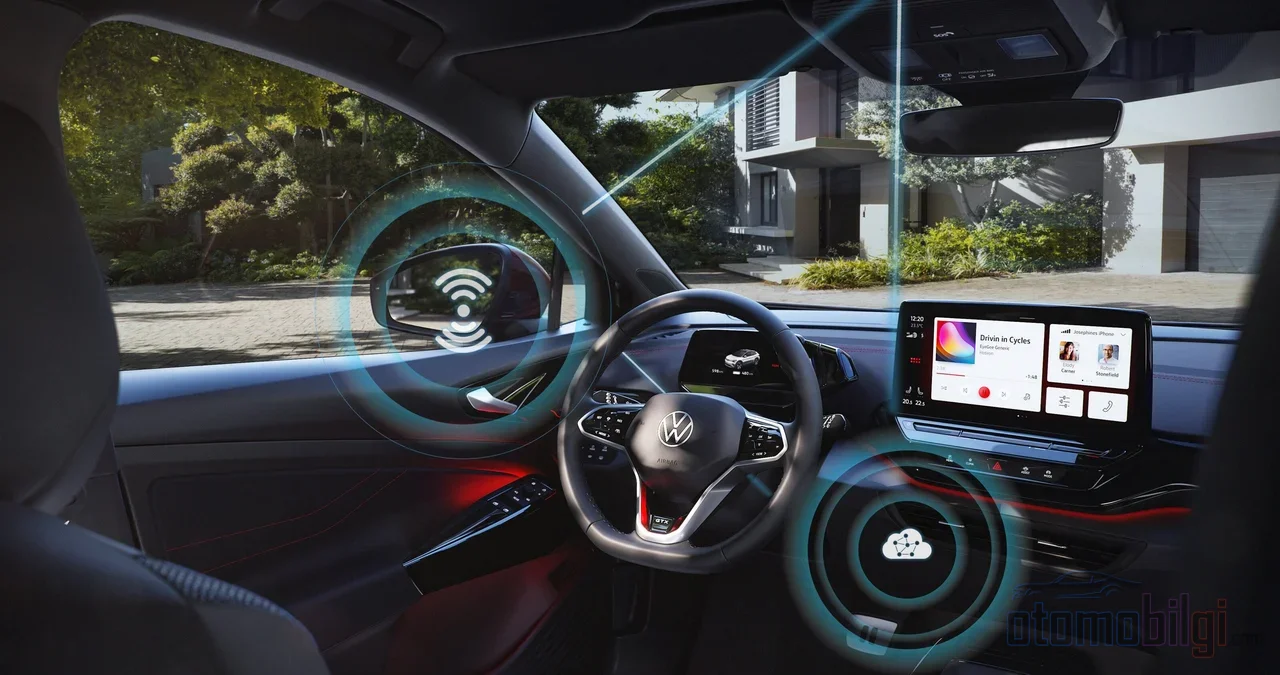
Just as your smartphone's operating system update is a process, an OTA update works on the same logic at the vehicle level. The vehicle connects to the manufacturer's server over Wi-Fi or a cellular connection, downloads and installs the update package. While a conventional car requires a dealership appointment, a service day and usually a fee for software changes, in an electric vehicle this process is mostly completed in your garage while your car sleeps.
The process consists of four steps: First, the vehicle or the mobile app sends you a notification. The download phase of the update takes place over a secure connection; a stable Wi-Fi network is recommended for large packages. For installation, the vehicle must be parked, and critical driving systems are temporarily shut down during this time. In the final step, the vehicle restarts. While small patches take a few minutes, comprehensive updates can take several hours.
From an engineering perspective, this is the result of a fundamental change in the automobile's architecture. While the engine and transmission control units in traditional vehicles are almost never remotely accessible, in the new generation electric vehicles known as software-defined vehicles, most of the battery management, power electronics and driver assistance systems are controlled through the software layer. The International Energy Agency summarizes this transformation with the following logic: vehicles are turning into software platforms where premium features are accessed by subscription, like smartphones.
Does Your Car Really Improve Over Time? Range and Charging Speed Examples
This is the first question from readers switching from gasoline cars: can a car, for example, actually get better in its second year? For electric vehicles, the answer is clearly yes in some areas. The most striking example is Tesla's 2020.4 software update: the Model X range increased entirely through software from 527 km to 564 km, while the Model S went from 373 miles to 390 miles. Not a single screw was physically removed; the battery usage strategy and software calculations were changed.
The picture is similar on the charging side. Tesla increased the DC fast-charging capacity of the Cybertruck by 20% with an OTA update; 15-minute fast charging added extra range of between 128 and 136 miles depending on the version. An update in October 2022 changed the battery management controls, allowing charging at higher power. The speed of battery preconditioning and the optimization of charging curves are also in the hands of the software.
Beyond range and charging, updates deliver tangible improvements in these areas as well:
- The accuracy of range estimation can be improved.
- Regenerative braking behavior can be refined.
- The energy efficiency of HVAC (climate control and cabin heating) systems can be optimized.
- ADAS systems such as lane keeping, adaptive cruise control, and automatic emergency braking can be enhanced.
- Cybersecurity patches and recall fixes that can be resolved via software can be delivered.
The last item should not be overlooked. In the United States, the share of recalls fixable via software rose from 6% to 15% over the last five years, and a significant portion of that share is resolved via OTA. In practice, this means that instead of lining up at the dealership over a fault, the problem has been fixed when you press your vehicle's button in the morning.
Free or Paid? The Cost Side of Updates
The basic rule is this: bug fixes, safety patches, and performance improvements are generally included in the purchase price and come free of charge. Premium features, performance boosts, or new functions may require a subscription or a one-time purchase, depending on the manufacturer's preference. The line is not drawn the same way by every manufacturer and it changes over time; even Tesla's free upgrade package distributed to owners in 2026 shows that its definition of "free" on that model varied by model and ownership status.
Examples from the paid side are concrete. The Mercedes-Benz EQE offers a power increase of up to 80 HP via software in the US market, through a paid subscription. Tesla charged a $1,195 one-time fee for a particular speed-boost update; this was one of the first major known examples of the tendency to sell performance via software. In other words, what was once done on gasoline cars with exhausts and engine chips turns into a button on the store screen in electric cars.
| Update / Feature | Type | Price |
|---|---|---|
| Bug fixes, safety patches | Free | Included in the purchase price |
| Tesla 2020.4 range increase (Model X) | Free performance update | No charge |
| Cybertruck charging speed increase | Free OTA update | No charge |
| Mercedes-Benz EQE power increase | Subscription | Subscription fee (US) |
| Tesla speed-boost update | One-time purchase | $1,195 |
| BMW heated front seats | Subscription (discontinued) | $18 per month |
Why Should I Pay a Subscription for a Heated Seat Already in the Car?
This question sparked the industry's fiercest debate, and the answer closely concerns all buyers. If a heating element physically built into a car seat can be switched on and off with a software switch, the manufacturer can turn that hardware into a continuous revenue stream from the start instead of charging for it upfront. BMW charged $18 per month for front seat heating, $180 per year, $300 for three years, and $415 for unlimited access. Features like lane tracking and automatic steering were also included in subscription packages by some brands.
User reaction was harsher than expected. Buyers refused to accept the idea of paying a monthly fee for the heating element in their seat after paying the full price of the vehicle. BMW's heated seat subscription lasted less than a year, and the company admitted it was a mistake; however, it did not abandon the subscription model entirely - it only backed down when it came to heated seats. An occasional dissenting voice is also heard: opinion pieces in some publications argue that the recurring revenue model is justifiable for manufacturers' sustainability. Market feedback, for now, shows the opposite.
The economic background of the debate rests on ambitious targets. Industry forecasts say that by the 2040s, digital services could earn manufacturers $3.5 trillion per year and could account for 40% of total revenue (compared to 3% today). That target means that in the future, more features will be kept behind the door and sold key by key. When buying a car, asking which hardware is actually present and which is locked behind software is now part of the purchasing process.
The Situation in Türkiye: Togg, Regulations, and Your Consumer Rights
Türkiye is not staying outside this transformation. Togg sends regular OTA updates to its T10X and T10F models; with TruOS updates, improvements came to the charging experience, the 360° camera, multimedia, and energy management. Through a dedicated OTA page for the T10X, which version brings which new features is announced transparently. Whatever brand you buy your electric car from, asking the seller about the update history is a good habit; software support will become an increasingly decisive criterion in second-hand valuation.
On the legal side, matters have become clear in favor of consumers. A new regulation protecting consumers in the import and sale of electric cars came into force in November 2023. The Ministry of Commerce issued advertising suspension decisions against misleading ads for electric cars in 92 cases and imposed a total of 15.8 million TL in administrative fines. In other words, if a feature promised in an advertisement is missing from the vehicle you receive, this is not merely an ethical issue but a violation that triggers administrative action.
At the individual level, your rights are defined by Law No. 6502 on Consumer Protection. If a feature shown in the advertisement is missing from your vehicle, you can choose one of four options:
- Refund of the price - reverse the sales contract.
- Price reduction - deduct the value of the missing feature.
- Free repair - have the missing hardware or function completed.
- Replacement - be given another vehicle with the same features.
There is not yet any specific regulation in Türkiye against features locked behind a subscription; regulatory debates in the EU and the US in this area have not yet become law. Therefore, before signing a contract, clarifying in writing which features are permanent and which depend on a time-based subscription is the strongest protection you have.
Are Updates Safe? Pre- and Post-Installation Checklist
OTA updates rarely cause problems, but they are not zero risk. The most commonly reported issues are failed or incomplete installations (in which case the vehicle may become temporarily unusable), bugs that come with the new version, and phone integration or accessory incompatibilities. For some manufacturers like Tesla, software updates are not optional; one update that allegedly cut range by up to 20% and led owners to file a lawsuit has sparked debate - this claim should be treated as an unverified case with legal proceedings still ongoing.
To reduce the risk, the steps to take before installation are simple:
- Read the release notes; know what has changed.
- Keep the battery above 50%.
- If possible, use a stable Wi-Fi network.
- Never interrupt the vehicle once installation has started.
After installation, check five points as well: charging speed, displayed range, new warning lights, differences in driving and regenerative braking, and phone app and accessory connectivity. If you notice any unexpected change in any of these, noting it down with the manufacturer's service line creates a record of a potential problem.
A Clear Answer for Readers Coming from Gasoline Cars
Two questions, two clear answers. First: yes, your electric car really does improve over time - range estimation, charging speed, driving assistance and the interface improve with OTA updates; and this costs you nothing. Second: putting a software lock behind a car's physical hardware, on the other hand, is not an improvement but a pricing strategy; the heated seat case showed that this model is not sustainable in the public eye, but it has not disappeared from the industry entirely.
Practical advice can be summed up under three headings. When buying the vehicle, distinguish between the included hardware and locked features, and have this written into the contract. During use, install updates over a stable connection, at the right battery level, and check afterwards. And if a feature promised in advertising is missing, Law No. 6502 grants you four rights - knowing this is your strongest card at the negotiation table.
Sources
- OTA Software Updates on EVs: Can They Fix Problems or Create Issues - EV Experts
- How Software Updates Are Reshaping Your EV Experience - LinkedIn
- How updates increase EV range - IrishEVs
- The Tesla Cybertruck Is Getting Big Charging Improvements - InsideEVs
- Latest Tesla OTA Update Increases Charging Speed - CleanTechnica
- Carmakers Charge for Speed Upgrades in a Tesla-Led Trend - Business Insider
- BMW Commits to Subscriptions Even After Heated Seat Debacle - The Drive
- Subscription Pricing Coming to Features Your Car Already Has - Business Insider
- Vehicle software and software-defined vehicles - IEA
- Tesla Just Gave Every Owner Free Upgrades - EVCube
- Togg T10X OTA - Togg
- Reklam Kurulu cezaları - Ticaret Bakanlığı
- Elektrikli otomobil ithalatı ve satışında tüketiciyi koruyan düzenleme - Anadolu Ajansı
- Reklamdaki Donanım Araçta Yoksa Tüketici Hakları 2026 - Araclo
- OTA Güncelleme Nedir? - Oto Panorama