Original Part or Equivalent Part for the Windshield?
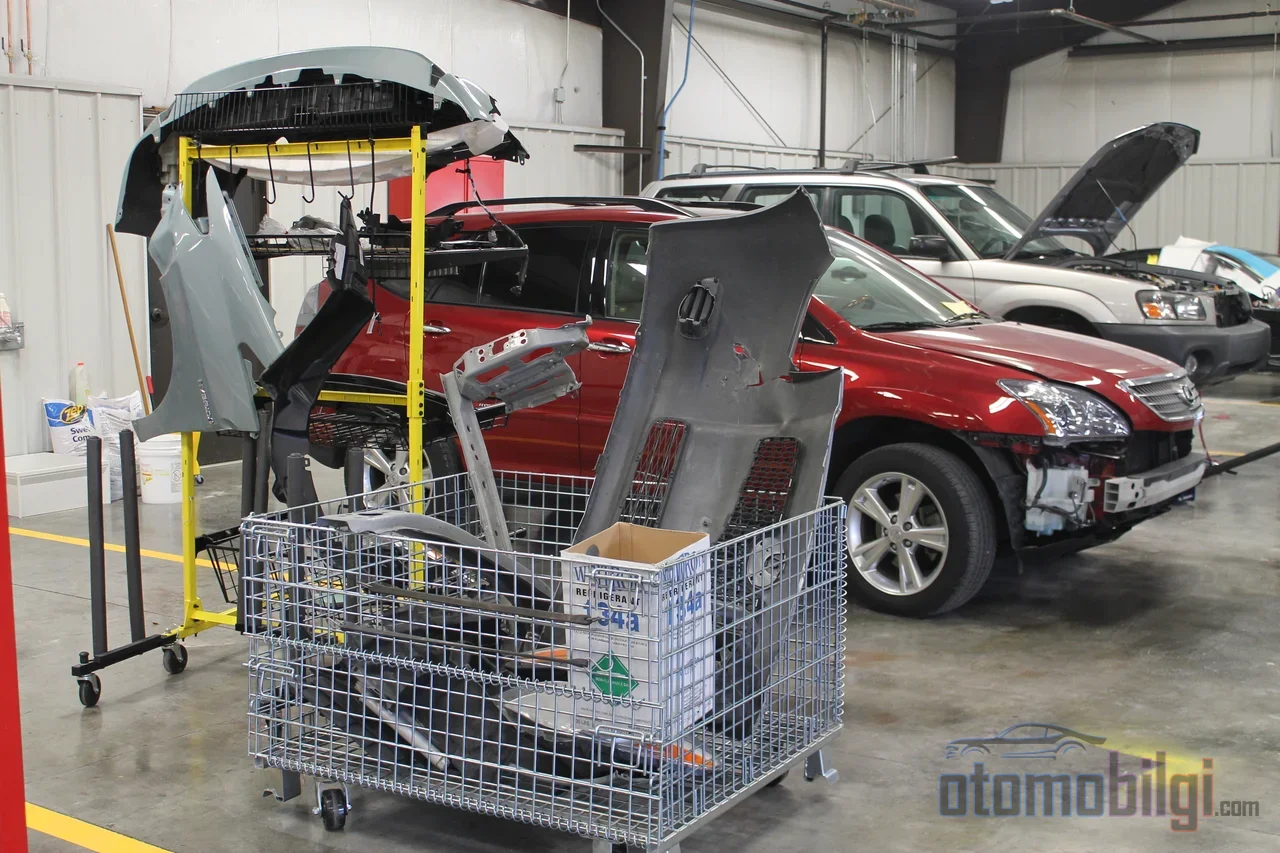
When you gather quotes to renew your comprehensive insurance policy, two prices come before you: one noticeably cheap, the other noticeably expensive. Most of the difference is usually hidden in a single line: which part will be used in damage repair. This line determines whether an original part or an equivalent part will be fitted to your vehicle at the time of an accident, and directly affects the possibility of paying the bill out of your own pocket. On this page, we explain step by step what that line means, how it relates to the premium, and the question you should ask before extending your policy to avoid losing your rights.
What Are Original Parts and Equivalent Parts, Really?
So that everyone speaks the same language in this discussion, the definitions must first be clarified. An original part is a spare part produced at the same quality as the parts used in the vehicle's production or assembly and according to the manufacturer's standards; known in the industry as OEM, it is a product that comes from the manufacturer's own supply chain. An equivalent part, on the other hand, is a part manufactured by a company other than the original producer, but compared to the original in terms of mass, dimensions, material, and functionality, with this comparison certified by an accredited organization. The critical point is this: an aftermarket part without a certificate is not considered an equivalent part. The equivalent part is a category that stands on the strength of its certificate; not every substitute product circulating in the market falls within this definition.
Two more concepts come into play. An unbranded original spare part is a product manufactured to the same standards as the vehicle's spare parts but bearing no brand logo; it is more expensive than an equivalent part. A reusable part, meanwhile, is an undamaged, traceable used part coded under the Regulation on the Inspection of End-of-Life Vehicles. In other words, the question of "original or equivalent" covers a much wider spectrum than it appears.
Highlights
- An equivalent part is a product certified by an accredited organization; an uncertified aftermarket part is not considered an equivalent part.
- In traffic insurance, if an original part is fitted to the vehicle, replacement is as a rule also done with an original part; the burden of proof lies with the insurer.
- In comprehensive insurance, vehicles younger than 3 years take priority for original parts, while older vehicles take equivalent parts.
- What determines the rule to be applied is not the date of the accident but the date the policy was issued.
- If the part item is not clearly stated in the policy, the cheap-looking quote will cause problems at the time of damage.
How the Rule Works in Which Insurance: The Separation Between Comprehensive Insurance and Traffic Insurance
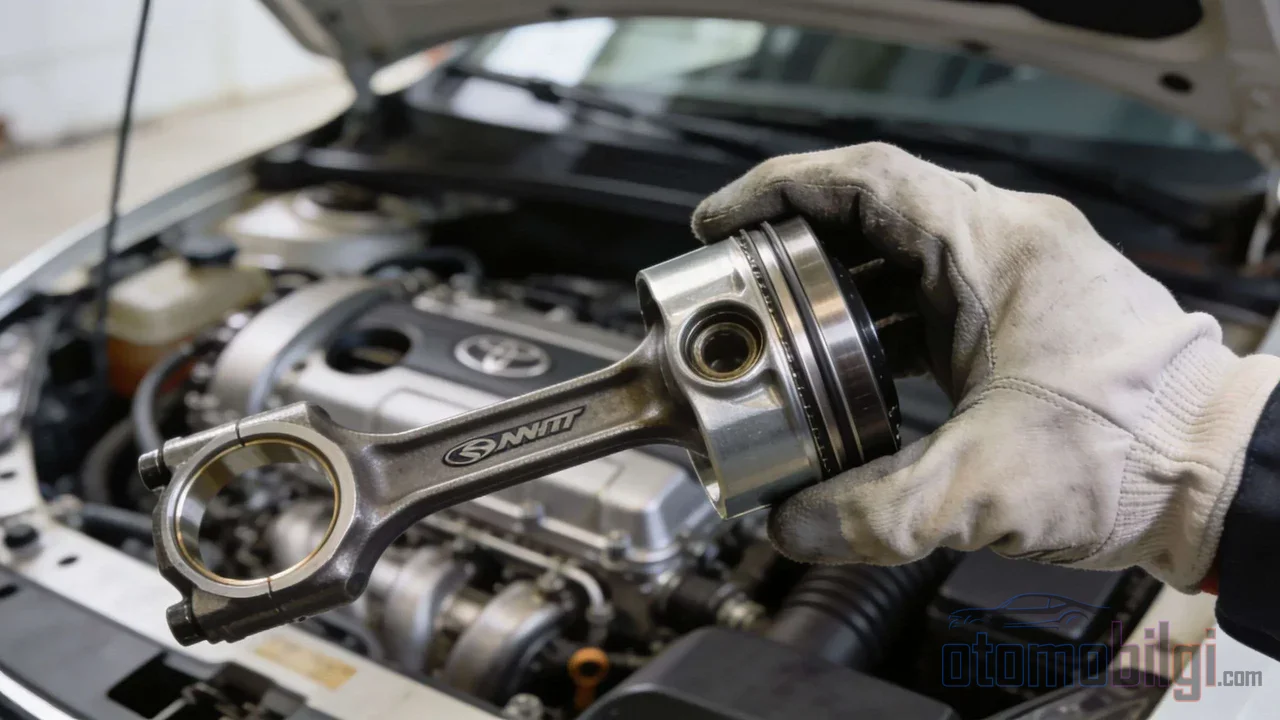
The most common mistake here is to treat traffic insurance and comprehensive insurance as subject to the same rules. The two are separate worlds. Mandatory traffic insurance covers the other party's damages and its prices are subject to state supervision; comprehensive insurance, on the other hand, covers your vehicle's own losses, meaning events such as collision, theft, and fire, and is priced on the free market. The rules also differ when it comes to parts.
The rule in force in traffic insurance
The current provision in clause 2.2.1 of the Traffic Insurance General Terms entered into force with the amendment published in the Official Gazette dated December 4, 2021. Accordingly, if the damaged part is original and cannot be repaired, the part is replaced with an original one. Moving to an equivalent or reusable part requires either the approval of the right holder or the practical impossibility of replacing it with an original; the burden of proof lies with the insurer. If the damaged part is not original in the first place, an equivalent or reusable part is used; if the repair is carried out with an original part even though an equivalent is available, the insurer's liability is limited to the price of the equivalent part. In both cases, even if the repair results in an increase in the vehicle's value, this difference cannot be deducted from the compensation; the general terms explicitly prohibit this.
In casco insurance, the determining factor is the clauses
Casco is a contract of insurance, and the general rule applied in traffic insurance does not work here exactly the same way. In casco, the age rule comes into play: if the damaged part in a vehicle younger than 3 years cannot be repaired in an accident, priority is given to the original part; if the original cannot be found, an equivalent part or an original part obtained from vehicles that have completed their service life is used. For vehicles older than three years, priority shifts to the equivalent part. Beyond this, what is decisive is the clause written in your policy: if an equivalent part is explicitly agreed upon in the policy, the insured's separate consent is not required; if it is not specified, or if the insured objects, an original part may have to be used. Another subtlety lies in the timing: what determines the applicable rule is not the date of the accident, but the date the policy of the vehicle causing the damage was issued. The previous text applies to policies concluded before December 4, 2021.
Why Premiums Differ: How Is the Part Item Specified in the Policy?
The use of equivalent parts generally provides a premium advantage; behind lower premium offers, this preference is usually what lies. With thirty years of observation, I can say that the industry never gives discounts for free: every reduction in the premium means buying a flexibility from you at the time of a loss. What matters is purchasing this flexibility knowingly.
One of the confusing points is that which workshop will perform the repair and which part will be used are two separate items. In a casco offer, the service line and the part line should be read separately; a policy guaranteeing authorized service may not necessarily include a commitment to original parts. The part type must be clearly stated in the policy. If it is not stated, an offer that seems cheap today will prove costly tomorrow at the claims desk.
The question to ask before renewing the policy is a single, clear sentence: Under what conditions and what type of part will be fitted to my vehicle in a claim repair, and at what stage will my approval be obtained? The written answer to this question is the strongest basis for any dispute that may arise later.
What the Judiciary Says: The Framework of the Council of State and the Court of Cassation
The legal ground in this field has been shaped largely by the courts. The 2015 general terms gave priority to equivalent parts; The annulment of the Council of State's 15th Chamber's June 27, 2018 ruling was finalized with the Council of State's Plenary Session of Administrative Litigation Chambers' March 16, 2020 decision. The amendment introduced in 2020 containing the concept of "reusable part" was also annulled. The Council of State 8th Chamber The decision of the Department dated November 23, 2022, while annuling the regulation that gave precedence to equivalent parts in replacement under all conditions, stated that there is no legal basis for fitting used parts to third parties' vehicles without their consent, and that it constitutes an unlawful restriction on property rights. In addition, the Plenary Session of Administrative Litigation Chambers suspended the implementation of the "reusable part" clause in the general terms. As a result, from 2021 onwards, insurance companies are required to obtain the vehicle owner's approval regarding which part will be installed.
The Court of Cassation 4th Civil Chamber Civil Chamber points in the same direction. In its February 17, 2025 decision, it was emphasized that the insurer must prove that the parts are not original or that compliant equivalents exist, and that if this cannot be proven, the damage will be repaired with original parts; listing parts as equivalent in the expert report alone does not count as approval. In a 2017 decision, the Chamber stated that actual loss could only be achieved by using entirely original parts in the repair of the vehicle, and in another 2022 decision, that if the supply of equivalent parts is stipulated in the policy, the equivalent price will be taken into account in the cost calculation, but for parts with no certified equivalent, original prices will be the basis. In its January 2025 decision, it was recalled that in comprehensive insurance, the repair location clause is decisive, and if repairs are carried out at a non-contracted service, the difference remains with the insured.
Brakes and Suspension: The Safety Side of the Part Debate
The part issue is not merely a matter of money; some parts are a direct component of driving safety. The brake system, airbag, seat belt, steering and suspension fall into this category, and uncontrolled, undocumented aftermarket products in these areas pose a serious risk. A poor-quality brake pad can lose grip when heated; uneven braking, rapid wear and disc damage follow. Expert recommendation is clear: for safety-critical parts, OEM or certified premium-grade equivalents should be preferred. Equivalent parts on the bodywork may be a debatable choice; on the brake line, it is not.
Step-by-Step Checklist to Avoid Losing Your Rights at the Time of Damage
A few steps taken before the repair process begins resolve most of any future dispute in advance. The order matters:
- Document the originality of the damaged parts with photos and service records.
- Check the expert report line by line; pay attention to what is written in the parts list.
- If you do not approve the use of equivalent parts, notify this in writing.
- Do not sign the approval form placed in front of you without reading it.
- In files involving the other vehicle, find out the policy start date; the applicable rule is determined by that date.
- Request the repair cost and the depreciation of value as separate items; these two concepts are different from each other.
The order in the objection process is also clear: first, a written application is made to the insurance company, and this is a precondition for filing a lawsuit. If the result is unfavorable, the Insurance Arbitration Commission comes into play; in non-arbitration matters such as the installation of unauthorized parts, the Consumer Arbitration Committee is applied to, and for 2025 the limit for this route is 149,000 TL; objection to the committee's decision is made at the Consumer Courts. As for comprehensive insurance renewal: renewal can be done within the 15-30 day window before the policy expires; if you renew before the expiration date, your no-claims discount is preserved.
Short Answer: Original or Equivalent Parts in Comprehensive Insurance?
Let's get to the heart of the question: your policy largely determines which part is fitted to your vehicle under comprehensive insurance. For a vehicle younger than three years, the primary equivalent of an unrepairable part is the original part; for a vehicle older than three years, priority shifts to the equivalent part. If your policy explicitly states equivalent parts, you are deemed to have consented to this; if it does not and you object, the original part route is followed. Proving your consent is the insurer's responsibility, and a list in the expert report does not substitute for this proof. With the new regulations that entered into force on 1 July 2026, the damage and depreciation-of-value processes began operating through the EKSIST system; depreciation of value calculation entered a stage automated by the expert. That is the rule; the rest is about asking that one-sentence question before signing your policy.
Sources
- How Is the Original Part Price Difference Recovered? The Equivalent Part Condition
- What Is the Equivalent Part Practice and What Are Its Conditions?
- What Is the Equivalent Part Application and Its Conditions?
- The Difference Between Original and Equivalent Parts in Comprehensive Insurance
- Original Part or Equivalent Part? The New Rule After 2026
- Equivalent Part Application and Conditions
- How Is the Original Part Price Difference (Damage Difference) Recovered? 2026
- What Is the Comprehensive Insurance Equivalent Part Application?
- What Changes on 1 July 2026 in Vehicle Damage and Depreciation of Value