Why Torque Is Independent of Revs in an Electric Motor
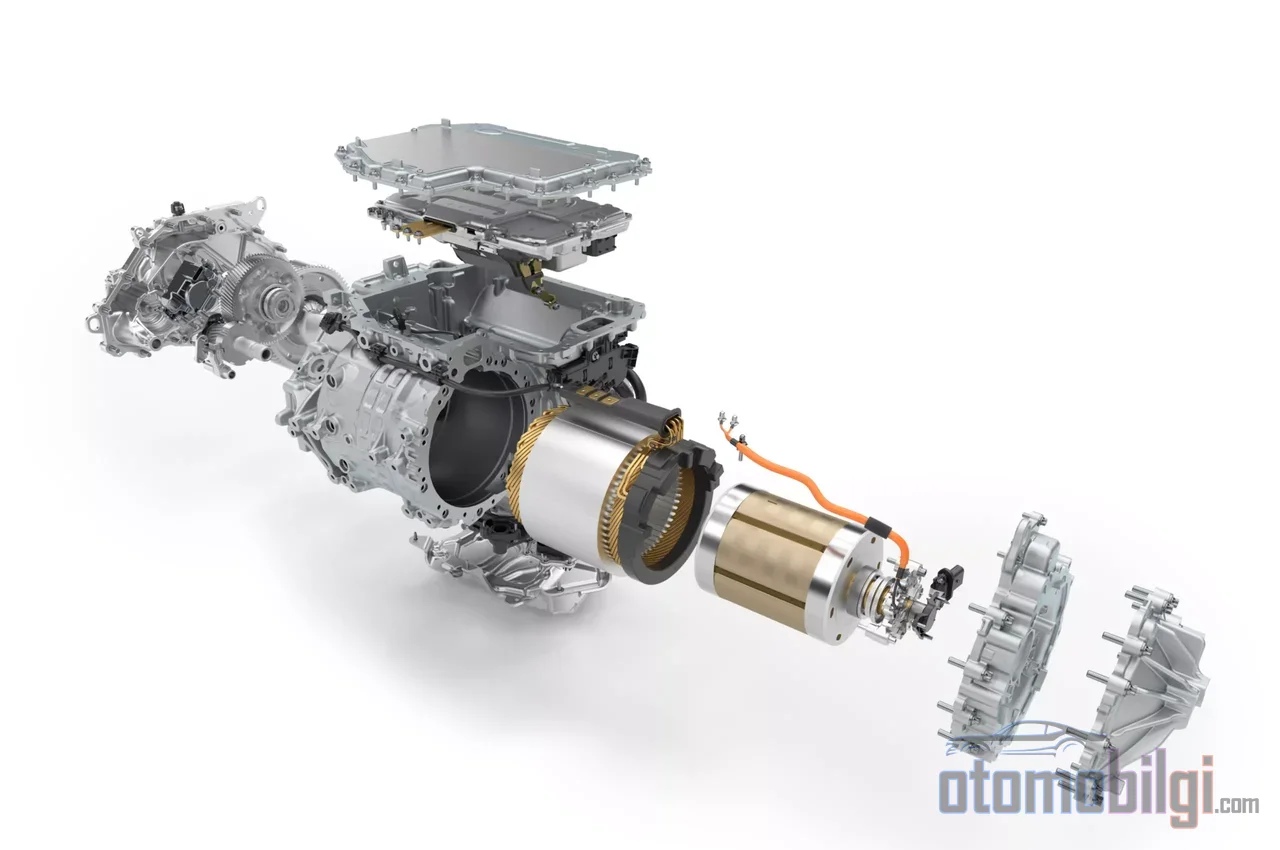
That instant push you feel the moment you press the accelerator pedal is what surprises first-time electric car drivers the most. To get the same feeling in an internal combustion car, you need to rev the engine, shift into the right gear, and sometimes wait for the turbocharger to kick in. In an electric car, however, there is no waiting. So where does the instant torque in an electric car come from? The answer lies not in a single component; it is hidden in a chain where physics, the reduction gear, the inverter, and software work together.
On this page, we will break that chain down link by link: we will first look at how the electric motor produces torque, then the difference in torque curves compared to internal combustion engines, then the role of the single-speed transmission and the inverter, and finally how software shapes that feeling.
Why Can an Electric Motor Produce Torque at Zero RPM?
In an internal combustion engine, torque is the product of a complex chain of processes: air is drawn in, fuel is injected, the mixture burns, and the piston pushes the connecting rod to turn the crankshaft. Each link in this chain takes time; moreover, combustion occurs efficiently only within a certain RPM range. When the engine is stopped or at very low RPM, this chain does not operate at full efficiency.
In an electric motor, the situation is fundamentally different. Torque is directly proportional to the current flowing into the motor and is independent of speed. Even if the rotor is not spinning, the moment current is applied, the stator's magnetic field forces the rotor poles into alignment; the twisting force is present before the shaft has turned even its first degree. No air is awaited, no fuel is injected, no turbo needs to spool up. The moment current flows, torque is there.
A critical concept here is back-EMF, that is, the voltage the motor generates within itself as it spins and which works against it. At zero RPM, back-EMF is zero; therefore, the entire voltage applied to the motor can be devoted to producing current and magnetic field. As RPM rises, back-EMF grows, the effective voltage delivered to the motor falls, and its torque capacity decreases. In short, this is the character of the electric motor: the strongest twisting potential in a stationary motor, production that becomes progressively harder as it spins.
At this point, an honest engineering detail should also be added: at zero RPM, power is zero, because power is the product of torque and RPM, and there is no RPM. Part of the energy delivered to the motor at this stage turns into I²R losses in the winding resistance. So the accurate statement is that the motor can produce full torque at zero RPM, usable instantly and at full capacity; this nuance is usually skipped in marketing language.
Highlights
- In an electric motor, torque is directly proportional to current and can be produced at full capacity from zero RPM.
- In modern electric cars, reduction gear ratios are typically in the 8:1 to 12:1 range.
- In industrial measurements, torque response time is shorter than 5 milliseconds, with repeatability on the order of 1%.
- The single-speed reduction gear multiplies the motor's torque by the ratio, after losses, and delivers it to the wheels.
- Software can deliberately limit torque to protect the battery and drivetrain.
Torque Curve Comparison: Electric Motor or Internal Combustion Engine?
The clearest visual tool distinguishing the two engine types is the torque curve. The internal combustion engine's curve draws a peak: torque rises within a certain rev band, reaches its summit, and then falls. As an example, a gasoline engine can produce roughly 180 Nm at 1000 rpm and around 235 Nm at about 3500 rpm; the difference in between requires the driver to be in the right gear at the right moment.
The electric motor's curve, on the other hand, begins like a flat plateau. Peak torque comes from zero rpm and stays constant all the way to base speed, that is, across a wide rev range. Once past base speed, torque gradually decreases, especially in the field weakening region. In practice, this means the electric car steadily maintains its traction force from standstill to mid speeds.
Another consequence of this plateau curve is the need for gears. The electric drivetrain delivering consistent torque across a wide rev range eliminates the need for a multi-speed gearbox. The same cannot be said for the internal combustion engine: a gasoline vehicle running on a single fixed ratio accelerates slowly and hits the rev limiter at high speeds; the gearbox exists precisely for this reason.
Reduction Gear: How Does a Single Gear Become a Torque Multiplier?
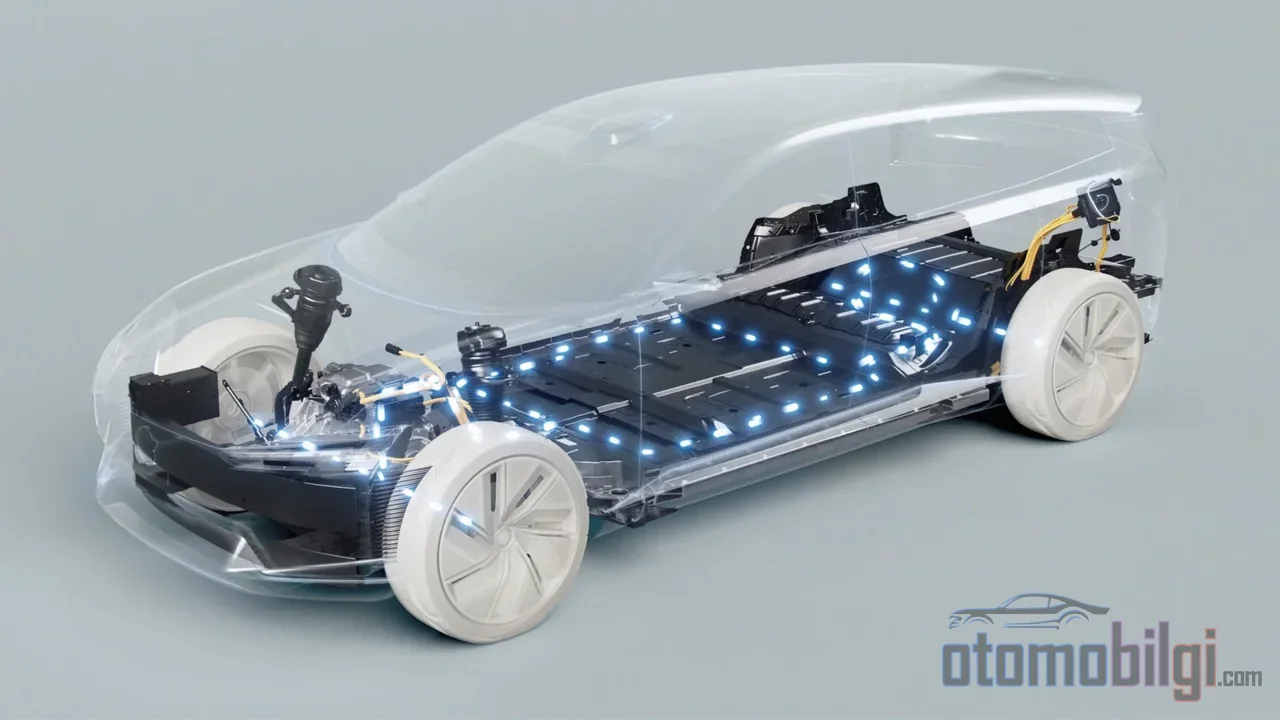
Most electric cars have no transmission in the classic sense; instead, they have a single-ratio reduction gear. This reduction gear has two tasks: to bring the motor's thousands-of-rpm speed down to a usable level for the wheels and to multiply the motor's torque.
The arithmetic is simple. If the motor produces 200 lb-ft of torque, a 10:1 reduction gear delivers this value to the wheels as roughly 2000 lb-ft after losses. In modern electric cars, ratios are typically in the range of 8:1 to 12:1; a 9:1 ratio means the motor turns nine times for each revolution of the wheel. Wheel torque is roughly the product of motor torque, reduction gear ratio, and drivetrain efficiency.
Another reason a single gear is sufficient is that the electric motor does not idle. When the vehicle is stationary, the motor is not turning; and at the moment of launch, since full torque arrives from zero rpm, the notion of downshifting for launch simply disappears. It should be remembered that the internal combustion engine is weak around idle and therefore needs a torque multiplier for launch; the electric motor eliminates this need entirely.
Inverter: What Happens in the First Milliseconds?
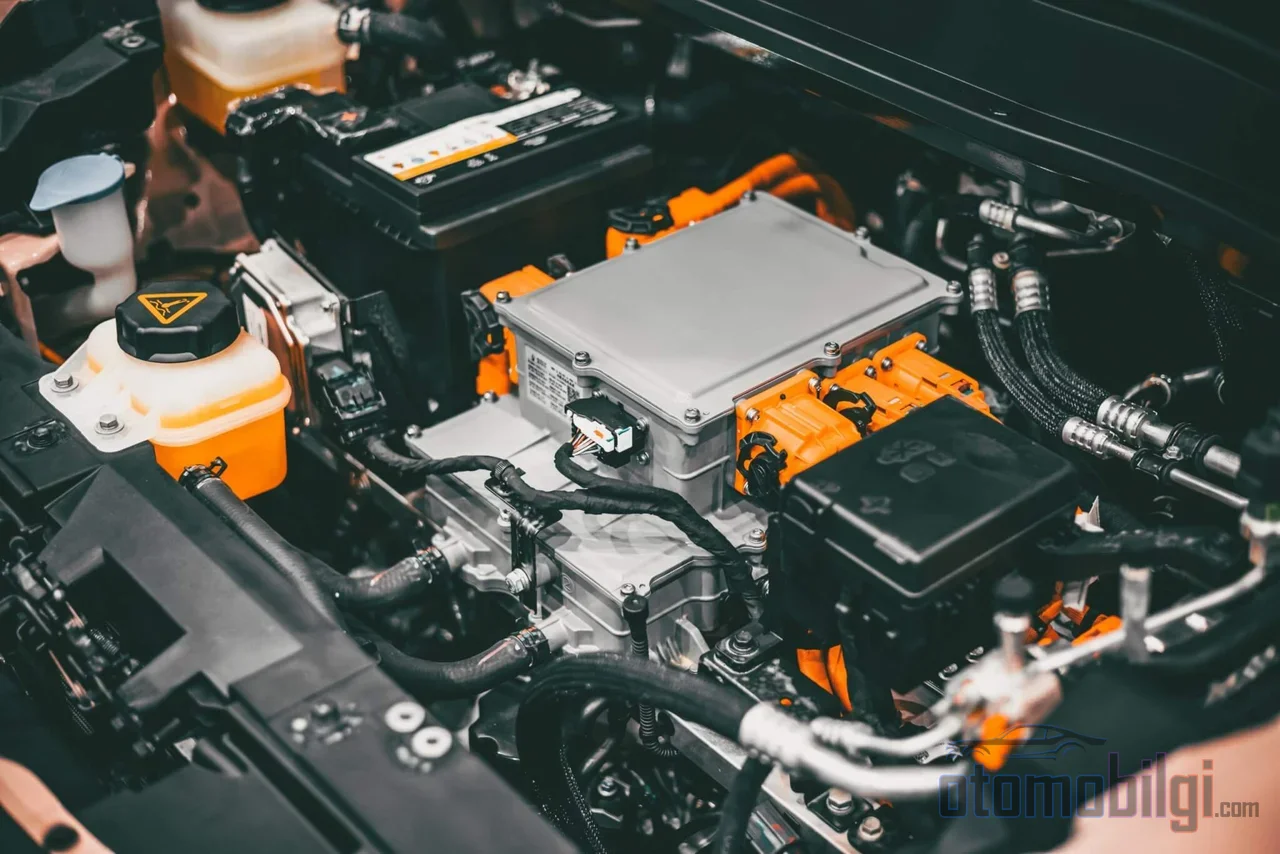
The least talked-about hero of the instant torque feel is the inverter. This power electronics unit, which converts the direct current from the battery into controlled three-phase alternating current using IGBT or MOSFET switches, directly regulates the motor's speed and torque. Launch, stopping, direction change; all happen with the inverter's commands.
On the control side, PWM, that is, pulse width modulation, is used: the switches open and close millions of times so that the average voltage in a given switching period equals the desired voltage command. Switching times are on the order of nanoseconds; in a modern 400 V system the DC bus voltage is approximately 540 V, and the switching occurs on a time scale of 100 nanoseconds. Industrial drive measurements give the concrete counterpart of this speed: torque response time is shorter than 5 ms, with repeatability on the order of 1%.
The controller software also controls by separating the components of current and torque; this separation provides a sharper torque response and higher starting torque. The time between your press of the accelerator pedal and the force being transmitted to the wheels is far below the blink of an eye, and this speed is the technical counterpart of the instant response you feel.
Why Does the Software Deliberately Restrict Torque?
Full torque is not used in every condition just because physics allows it. Manufacturers control torque directly at the software level through the inverter's current limits, and they can draw a power limit at any point they choose below the motor's thermal limits. The reasons for these limits are concrete.
- Loss of traction: during hard acceleration, front-wheel-drive electric cars can experience wheel slip; the software restricts torque at low speeds to prevent this. It is known through user measurements that some models limit their torque output below approximately 45 mph.
- Battery protection: when the battery output power drops below a certain threshold, the torque delivered to the wheels can be pulled below the deliverable torque; this approach is also described in the patent literature.
- Lifespan of the drivetrain components: the full available power is not used at every moment; limit values are set to balance wear.
In dual-motor vehicles, the role of the software grows even further: with torque vectoring, how much force each motor will produce is distributed instantaneously. If the vehicle exceeds its grip on a slippery surface, the system can deliberately reduce torque. In short, the instant torque feel is the product of engineering decisions as much as pure physics.
The Effect of Battery and Motor Type
Battery chemistry is not a direct player in this story; the source of the torque is the motor. The battery's share is how long it can supply the requested instantaneous current and up to what power threshold; some of the torque limitations above arise precisely from this threshold. The details of battery chemistries are a separate topic; it is enough to know this here: like every element in the power transmission chain, the battery also determines the upper limit of deliverable torque.
The motor type, on the other hand, shapes the character. Permanent magnet synchronous motors carry ready-made magnetic flux in their rotor, so they offer high torque density and efficiency approaching 97%; a 50 kW permanent magnet motor can weigh less than 14 kg. In induction motors, the flux is created by the stator inducing current in the rotor, so torque density is typically lower, with efficiency in the 90-93% band at optimal load. Whichever is chosen, the current-torque relationship at zero rpm does not change; what changes is only the efficiency with which they produce this torque.
The Driving Feel: How Is Instant Torque Felt on the Road?
The road-level outcome of this entire technical chain is clear. The moment you press the accelerator pedal, the motor is ready, and in most cases it is already at its maximum torque value; an ordinary electric car pulling away from a traffic light can pass nearly all high-performance conventional vehicles within the first few meters. That is because power exists not only in a certain rev range, but from the motor's very first rotation.
The feeling lies not only in the magnitude of the acceleration, but in the quality of the response. The electric drivetrain is highly responsive yet smooth in both accelerating and slowing down; the waiting and gear management the driver takes on in an internal combustion vehicle simply do not exist here. Regenerative braking completes this experience: the motor runs in reverse, recovering energy that would normally be lost as heat, and provides deceleration of up to 0.3 G; this effect, controlled through the pedal, is noticeably stronger than engine braking in a gasoline car. The low center of gravity adds its own contribution to cornering balance.
Short Answer: Where Exactly Does Instant Torque Come From?
To summarize: in electric cars, instant torque comes from the fact that torque in an electric motor is directly proportional to current and independent of rpm, from the single-speed reduction gear multiplying this torque by its ratio as it delivers it to the wheels, and from the inverter managing the current with a response time of under 5 milliseconds. The software also constantly measures this force according to traction, battery and durability conditions. The result is a drive force that arrives the instant the driver presses the pedal, with no waiting and no gear steps; the difference from the internal combustion engine's rpm- and gear-dependent chain arises precisely from this physical and systemic integrity.