One-Pedal Driving Habits in Electric Cars
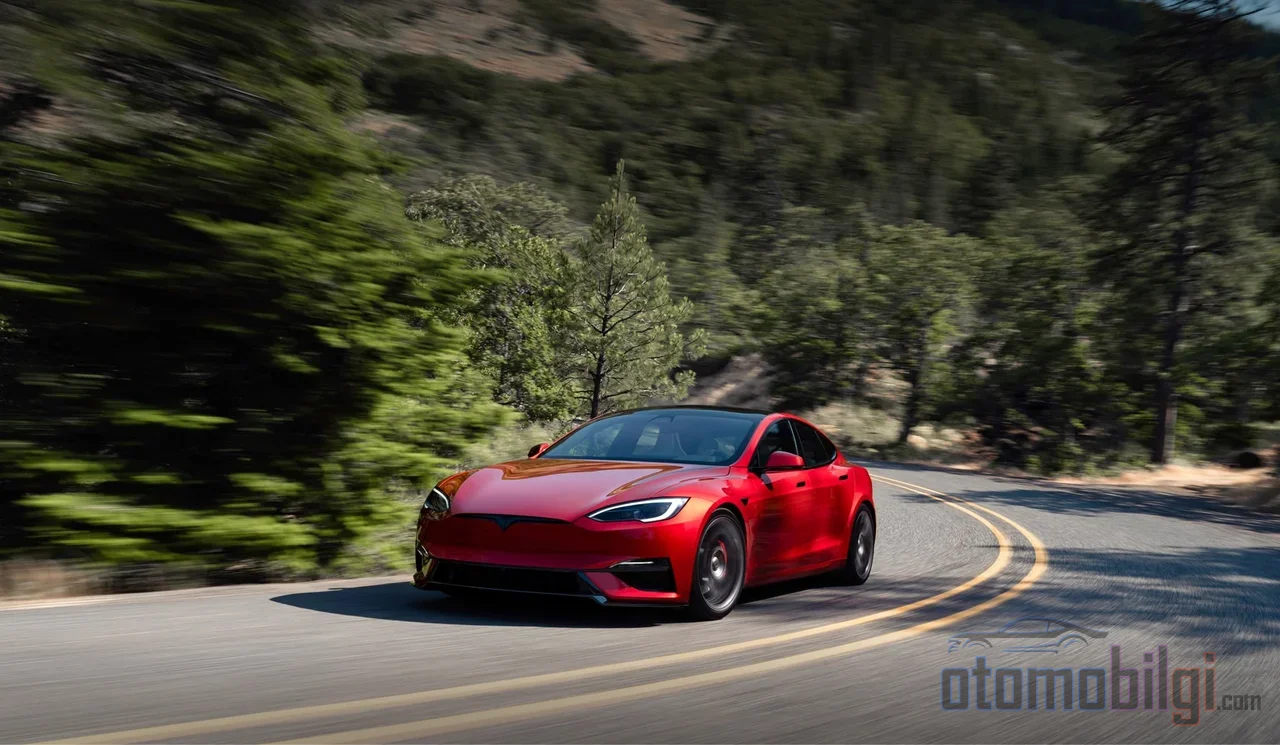
The picture facing a driver who switches from a gasoline car to an electric one is always the same in the first week: When the accelerator pedal is released, the car slows down on its own, even coming to a complete stop. Someone who has driven with two pedals for years has reflexes that are not prepared for this behavior, and the result is abrupt decelerations that turn heads in the first days. Yet this feature is not a shortcoming - it is the electric car's most efficient driving tool. A properly established one-pedal habit measurably increases range in the city, extends brake pad life, and reduces fatigue in stop-and-go traffic. This guide explains step by step how the system works, what the numbers show it gains you, and in which situations gasoline-driving reflexes mislead you.
How Regenerative Braking Works: The Logic of a Generator-Powered Bicycle Dynamo
The principle is simple. When accelerating, the electric motor draws energy from the battery and produces torque. When you release the accelerator, this relationship reverses: the wheels turn the motor, and the motor, now acting as a generator, converts the car's kinetic energy into electricity and feeds it back to the battery. Instead of being discarded as heat, braking energy returns to storage; this is the large-scale version of the same physics that a bicycle dynamo applies as resistance to the pedals.
However, physics draws a line here: No more energy can be recovered than was spent on accelerating. In other words, regenerative braking is not an energy source - it is merely a recovery mechanism. Energy returns only in proportion to how much you slow down; and a car cruising flat-out on the highway for hours gets no recovery because it never brakes. One-pedal driving is, in fact, the name of the strongest level of this regenerative braking: When the accelerator pedal is released, the car slows down enough to come to a complete stop without ever touching the brake pedal. The braking effect at the moment the pedal is released is about 20% of full braking; after the car stops, the mechanical brakes engage and hold the vehicle.
A critical point must be established here: Regenerative braking alone is not sufficient for a safe stop. Every electric car is legally required to have a mechanical braking system, and manufacturer manuals state it clearly: Regenerative braking must never be used in place of the brake pedal under any circumstances. The brake pedal is always active, and when pressed, it overrides regeneration. Even in one-pedal mode, the real emergency braking is still with the brake pedal under the right foot.
Highlights
- An average electric vehicle recovers about 22% of the energy it has previously used through regeneration.
- In city driving this figure rises to 30%, and in the best models exceeds 40%; on the highway it is only around 10%.
- On downhill descents, depending on the model, 35-50% of the energy returns to the battery.
- The braking effect when the pedal is released is about 20% of full braking; emergency stops are always made with the brake pedal.
How Much Range Does Regeneration Actually Add?
The numbers change sharply depending on the driving profile. In broad WLTP-based measurements, the average recovery came out to about 22% of the energy the vehicle had previously used. This is not a single fixed figure; it is a range that depends on where you drive. In stop-and-go city traffic, where regeneration is most efficient, recovery is around 30%, and exceeds 40% in the best models. On the highway, since braking is rare, the rate drops to only around 10%. Downhill descents are a separate category: depending on the model, 35–50% of the energy spent is returned during the descent, meaning you can recover most of the hill you climbed on the way down.
Two limiting factors change this picture noticeably in winter and on long journeys. The first is a full battery: When the battery is fully charged, the system has to protect it, and regeneration decreases significantly. The second is low temperature: A cold battery does not accept high charging currents, and recovery decreases noticeably during the winter months. The vehicle warns about this condition on the instrument panel; you should not expect a fixed percentage.
What you gain: Range, Brake Life and Traffic Fatigue
The list of benefits comes together along three axes. The first is range: Especially in city use, every stop-and-go cycle returns energy to the battery, and you drive farther on the same charge. The second is mechanical wear: Since the motor handles most of the braking work, the pads and discs are put under less strain, and wear-related maintenance costs decrease. For the same reason, particulate emissions from brake dust also decrease; the new Euro 7 standard, which limits particles from brake wear, is making this point a legal requirement. The third is comfort: In stop-and-go traffic, your right foot makes fewer moves between the two pedals, and speed control with a single input makes driving more predictable.
Let us give a reference point for comparison: Conventional hybrids can recover only 5–9% of their driving energy; fully electric vehicles, thanks to much larger battery capacity and motor control, recover both more and more aggressively. The concern that regeneration degrades the battery is a technically weak worry: The battery and control systems are designed with these charge-discharge cycles in mind.
How to Enable and Disable One Pedal in Different Brands?
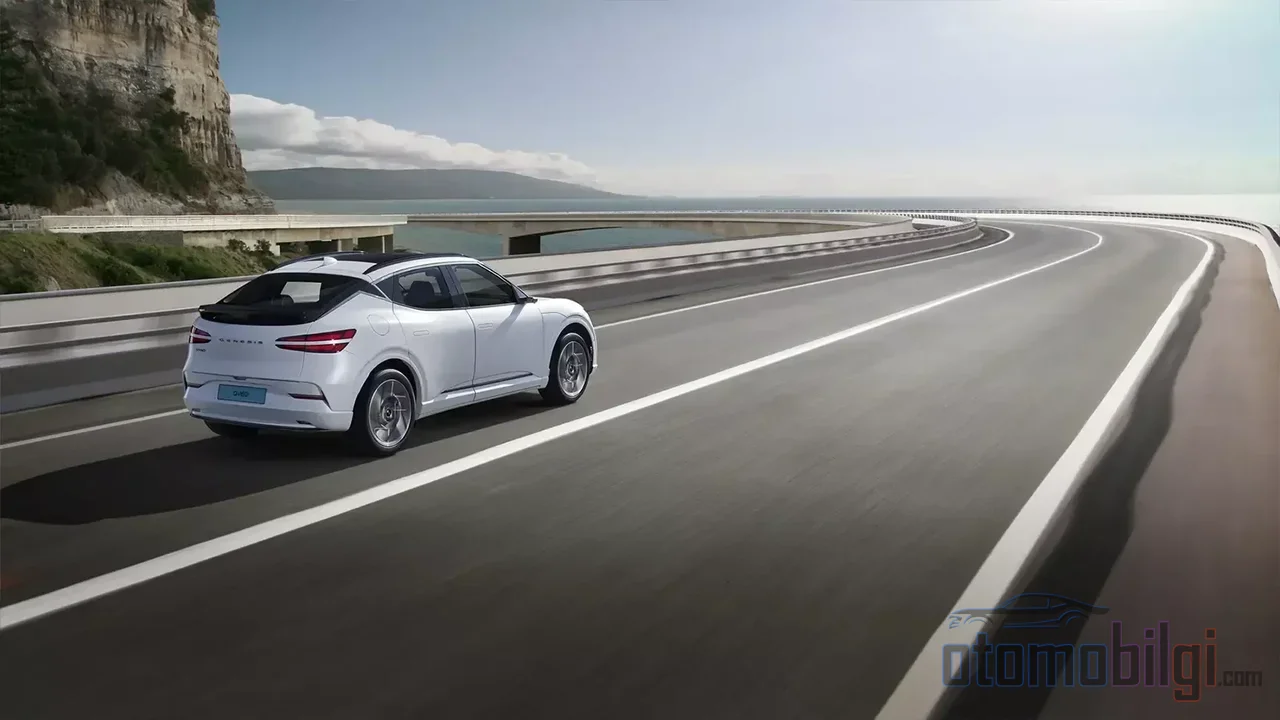
One-pedal driving is an optional feature in almost all electric vehicles; it can be disabled or its level adjusted. The examples show how the logic varies:
| Brand | Activation | Note |
|---|---|---|
| Renault | Press the paddle behind the steering wheel in D position and wait for the confirmation message | 5 levels; E level is One Pedal |
| Alpine A290 | G level from the rotary controller on the steering wheel | One Pedal is not retained when the motor shuts off |
| Hyundai | Hold the left paddle for longer than 1 second while coasting | known as i-Pedal |
| Tesla | Controls > Deceleration Mode from the Dynamics menu | Hold mode can be switched to Creep or Roll |
| Chevrolet | OPD button in D position | An icon appears on the instrument cluster |
The Renault example explains the mechanism well: In D/B mode, there are 5 levels extending from coasting with the paddles behind the steering wheel to maximum regeneration. When One Pedal is activated, the vehicle does not move unless the brake pedal is pressed while stopped; if it remains stationary for about 3 minutes, the parking brake engages automatically. When the ignition is turned off, the function also switches off. To turn it off, simply press the second paddle while driving. On the Hyundai side, regeneration can be reduced almost to zero using the paddles; i-Pedal is not enabled by default at every startup. GWM Ora calls this mode Single Pedal, Hyundai Motor Group calls it i-Pedal; the names differ, the logic is the same.
Four Situations Where the Gasoline Reflex Misleads You
Stopping on a hill
On a steep hill, releasing the accelerator pedal may not be enough to hold the car with one pedal. Manufacturer manuals clearly recommend using the brake pedal or the electronic parking brake. The reflex of a gasoline driver who stops with a half-hold does not work here; touching the brake pedal on top of a ramp is a necessity related not to the car but to physics.
Brake lights: The driver behind notices you later
Since you are not pressing the brake pedal, the classic brake light does not illuminate; only the perception of the driver behind carries your slowdown. International regulation closes this gap: At decelerations of 1.3 m/s² and above, brake lights must illuminate automatically; below 0.7 m/s² they may remain off. China's GB 21670-2025 standard has also made the brake light mandatory for regenerative deceleration above 1.3 m/s². Even so, being extra careful about the vehicle behind while slowing with strong regeneration and planning lane changes earlier should become the new habit of drivers switching from gasoline.
Slippery surfaces
On ice and snow, strong regenerative braking can cause the drive wheels to slip. Manuals recommend low regeneration levels: A/B on Renault, level C/D on Alpine. In winter driving, consciously choose your level according to the conditions.
Emergency stop
One pedal mode is not an emergency stopping tool; the braking performance of the pedal release effect is limited. In every emergency, press the brake pedal fully. When the vehicle stops, hold functions like Vehicle Hold keep the brake applied even when your feet are off the pedals.
The Safety Debate: Predictability or Dulled Reaction?
The debate has two sides. The view in favor emphasizes that the brake pedal is always active and that one pedal offers predictable speed control with a single input. The opposing view relies on more concrete data: A study published in a peer-reviewed journal in 2025 reports that one pedal mode showed lower safety performance in emergency scenarios compared to two-pedal mode, and points to the lack of systematic research on driving behavior in one pedal mode. The habit of rarely using the brake pedal is also associated with the risk of confusing the gas and brake pedals; in models where the brake light does not come on, the risk of rear-end collisions is also discussed. Driver experience is divided: Some drivers dislike this feature entirely, while others describe it as indispensable.
Regulators are also on the move. China is banning the use of one-pedal mode as the default driving option as of 2027. The practical takeaway for readers is clear: One-pedal driving should be a preference, you should not tie your reflexes to a single input, and you should know that you can always turn this mode off from your vehicle's settings menu. There are even examples of examiners requesting one-pedal mode to be turned off during driving tests; two-pedal driving remains a valid foundational skill for muscle memory.
Acquiring the Habit Safely, Step by Step
The method is the same as an engineering mindset: Gradual introduction, controlled testing, then scaling up.
- Start at a medium level. Begin with a medium setting, not maximum regeneration; get used to the intensity of deceleration.
- Try it over short distances. Make your first attempts on quiet, low-traffic routes; get accustomed to silent driving and the different brake feel.
- Test at a traffic light. Release the gas from a distance and observe whether the vehicle comes to a complete stop; if it does not, increase the level or cover the remaining distance with the brake.
- Watch the instrument panel. Regeneration decreases when the battery is full or very cold; take the system's warning seriously.
- Start early on long descents. Choose your level before beginning a downhill descent, watch the warnings, and use the brake in a controlled manner if necessary; continuous braking heats up the discs and defeats the purpose of regeneration.
- Adjust according to your profile. Strong regeneration in the city, soft regeneration or coasting on the highway; lower the level on wet and snowy surfaces.
Let us also give a clear answer to the efficiency question: One-pedal driving is not the most efficient mode in every condition. On the highway, braking is rare, so regeneration's contribution is low; early coasting and constant speed give better results here. In stop-and-go city traffic, however, strong regeneration and one-pedal driving measurably recover more energy. Correct use is not loyalty to a trend, but choosing the level that suits your driving profile.
The conclusion can be summed up for a driver coming from a gasoline car in this sentence: One-pedal driving is the process of a driver who has learned to press the brake pedal learning to slow down through the gas pedal. This system, which can recover roughly one-fifth of the energy, extends brake pad life, and relaxes your foot in traffic, is a safe and efficient tool when adopted gradually; as long as respect is shown for the brake pedal's authority on steep slopes, slippery surfaces, and in emergencies.
Sources
- Regenerative Braking and One-Pedal Driving in EVs Explained
- Regenerative braking system - Renault user manual
- Driving – Regenerative braking system – Alpine user manual
- Tesla Model Y – Braking and Stopping (user manual)
- Hyundai – One Pedal Driving (user manual 2025)
- Chevrolet – How to Use One-Pedal Driving
- One-pedal driving feature – Renault
- One-pedal or two-pedal: Does the regenerative braking... – Accident Analysis & Prevention (J. Ma et al., 2025)
- One-Pedal Driving Is Being Banned in Electric Vehicles
- Regenerative braking – Wikipedia