Electric Car Preheating: From the Plug or the Battery?
On a cold January morning, the thermometer is below zero and you are getting into your car. The windows are fogged up, the steering wheel is ice cold, and the range indicator has dropped significantly overnight. At exactly this moment, one of the questions electric vehicle owners argue about most in winter comes up: should I preheat from the plug, or from the battery? The difference between the two options seems small, yet it is an engineering decision that directly affects range and the electricity bill.
On this page, we compare the two energy sources of preheating - technically known as preconditioning - with numbers: heating from the grid while the car is plugged in, versus heating from the battery before driving. In which scenario is your range preserved, why does your fast-charging speed plunge into a deep freeze, and how do you set up scheduled heating from the mobile app - we examine it step by step.
What Is Preheating: Cabin or Battery?
Preconditioning is not a single task; it covers two separate jobs. Battery preconditioning brings the battery pack to the ideal temperature, especially for DC fast charging. Cabin preconditioning, on the other hand, heats the interior before you set off; in summer it is also used in the opposite direction, for cooling. Although both are triggered from a single menu in most vehicles, the energy calculations are not the same.
The ideal operating range for lithium-ion cells is approximately 15-35°C. Outside this window, the cell chemistry loses efficiency. A battery left at -5°C on a winter morning can offer neither its range nor its charging capability at full performance. Preheating is precisely the active method for reclaiming this window.
Highlights
- Preheating done while the car is plugged in draws energy from the grid, so range is unaffected.
- Preheating done correctly can recover 20-30% of the cold's range penalty.
- At 0°C, a 150 kW battery accepts only 40-60 kW of charging power until it warms up.
- In a Norwegian winter test, 24 vehicles averaged 38% below their WLTP range at -32°C.
- Preconditioning typically takes 20-30 minutes.
Plugged In or Unplugged: The Energy Source Difference
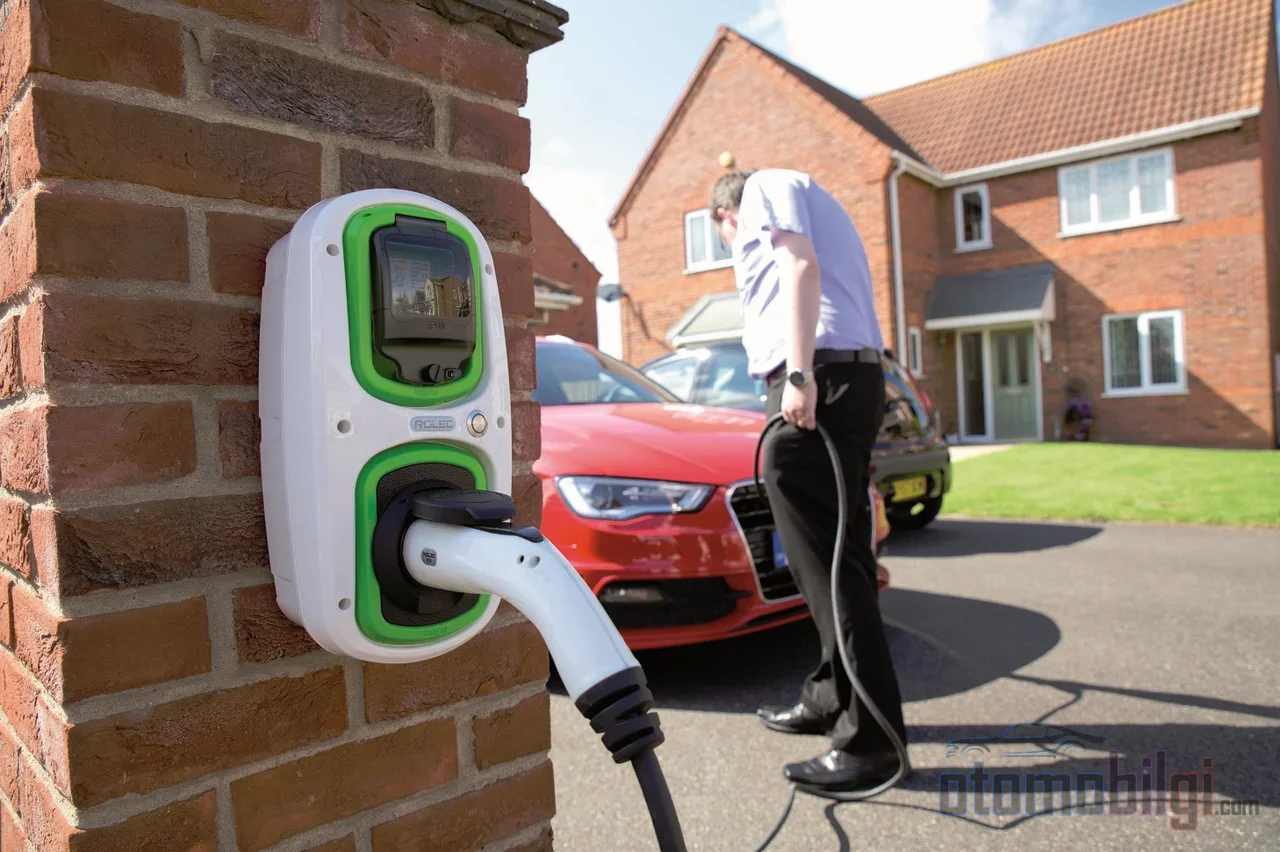
The rule is simple, and engineering logic points the same way: when preheating is done while the car is plugged in, the energy is drawn from the grid, that is, from the charging source. It does not come from the battery, so range is unaffected. Heating done while unplugged, however, takes its energy directly from the battery, and every kilowatt-hour comes off your range. The same heating process is written to two different line items of the budget in the two scenarios.
According to user data, preheating typically consumes 2-3 kWh at about 4 kW of power over 30-40 minutes. With winter highway consumption, this corresponds to roughly 6-12 km of range. The number may not seem big; but supplying this energy from the grid instead of the battery means keeping a free extra share of your range every morning.
The comparison that clarifies the difference between the two scenarios can be summarized in this table:
| Criterion | Preheating while plugged in | Preheating from the battery |
|---|---|---|
| Energy source | Grid (charger) | The vehicle's battery |
| Range impact | None | Approximately 6-12 km of loss |
| Typical consumption | 2-3 kWh (30-40 min) | 2-3 kWh (30-40 min) |
| Most suitable use | Before the morning departure | None |
| Point to watch | Hours when the electricity tariff is expensive | You need to allow range margin |
One more nuance is this: heating while plugged in may not have the full power of the charger available if it is fed by a low-power outlet at home. Slow 120V Level 1 charging cannot meet the entire power requirement of preconditioning; a 240V wall unit, on the other hand, handles this job comfortably with up to 11.5 kW of power. In other words, for plugged-in heating to work fully, the charging infrastructure must also deliver sufficient power.
The Cold Range Reality: What Do the Numbers Say?
To understand the value of preconditioning, one must first look at the magnitude of winter range loss. At around 0°C, the average range loss is around 20-25%; at -10°C this figure rises to 30-40%. Most of the loss comes not from the battery itself, but from cabin heating. The picture changes depending on battery chemistry: NMC chemistry offers 15-25% less range at 0°C compared to ideal conditions, while LFP chemistry, which is more sensitive to cold, can show losses of up to 25-35% at the same temperature. At around -20°C, the battery can lose an estimated 20-50% of its normal range.
Real-world testing confirms this picture. In its winter test conducted at -32°C in January 2026, the Norwegian Automobile Federation found that 24 new electric vehicles averaged 38% below their WLTP ranges. But the interesting half of the same test was this: most vehicles whose batteries were pre-heated reached their normal 10-80% charging times, and six beat those times. One vehicle set a charging speed record faster than its own summer run. So the cold seriously steals from range; but preconditioning, especially in charging speed, erases a significant portion of this penalty.
Preconditioning done correctly can recover 20-30% of the cold's range penalty. The efficiency engineering here runs on two fronts: a heat pump heats the cabin with far less energy than resistive heating and increases range by about 10% at 0°C. Seat and steering wheel heaters, meanwhile, provide personal comfort while consuming almost no energy; slightly restricting cabin heating and turning these on is the most practical saving combination for winter mornings.
How Does Battery Temperature Affect Fast Charging?
In a cold battery, internal resistance increases. The battery management system (BMS) throttles the power it will accept in order to protect the cells; that is why a frozen vehicle charges at around 30-40 kW, far below what the hardware can technically take. A concrete example: at 0°C, a battery with 150 kW peak capacity may accept only 40-60 kW until it warms up. This difference can add 15-25 minutes at a fast charging stop in winter.
The reason for the power restriction is not arbitrary. If charging is attempted at high power on a battery that is not warm, metallic lithium accumulation forms on the anode, i.e. lithium plating, and this is permanent damage. This is precisely why the BMS steps in aggressively. Preheating is not only a comfort feature; it also serves a protective function for battery health.
Correct timing before fast charging
Manufacturers' recommendations are close to each other at this point. Chevrolet recommends starting fast-charge preparation 30 minutes before reaching the charging station, or 60 minutes before if the temperature is below 20°F (about -7°C), for the best results. Tesla, on the other hand, recommends setting the route 30-45 minutes before the fast charging point, so that the battery is ready on arrival. In contrast, AC, that is, slow home charging, requires no battery preconditioning: power levels are low and an overnight charge already gives the pack time to recover on its own.
Scheduled Preheating from the Mobile App: Setup
There are three main ways to trigger preheating: entering a fast charging point into navigation (the vehicle prepares the battery automatically), setting a planned departure time (the vehicle plans backward and readies the battery and cabin for that moment), and manual triggering from the mobile app. In daily use, the second method is the most efficient: scheduled preheating is set to finish just before departure, and the vehicle is left plugged in if possible.
- In the app, select your vehicle and go to energy or climate controls.
- Set your departure time; in some apps, the preconditioning duration is limited to a maximum of 60 minutes.
- Customize the cabin temperature; in most models, this setting also triggers battery heating.
- If you use scheduled charging, set it together with the target temperature; the vehicle expects to be connected to the charging connector.
- Leave the vehicle plugged in and ensure the heating is done from the grid.
Brand app architectures differ. In a Tesla, preconditioning starts automatically when navigating to a Supercharger; this is one of the most consistent implementations. The Hyundai IONIQ 5 and 6 prepare automatically via navigation and can also be triggered manually from the app. A similar setup exists for the Kia EV6 and EV9. The Volkswagen ID. family is triggered by navigating to a compatible charging point. The BMW i series and Renault rely on setting a departure plan through their own mobile apps. For all vehicles, turning on heating about 20 minutes before setting off in winter via the app, while plugged in, is a practical daily routine.
Frequently Asked Questions and Counterarguments
Does preheating work when not plugged in?
It works; however, the energy comes from the battery, not the grid. Preheating every day is worthwhile before daily driving in cold weather, and becomes less necessary in mild conditions. The most valuable moment is before fast charging on a cold day. In summer, the same function can also be used for cabin and battery cooling; again, doing it while plugged in is the most efficient way. Turning on interior heating while charging also ensures that less energy is drawn from the battery when setting off.
Does every vehicle have preconditioning?
Most modern electric vehicles have some form of preconditioning; cabin pre-heating is common, but automatic battery preconditioning is not available on every model. The 2026 winter test revealed that some vehicles have no battery preconditioning at all. For those living in cold regions, this is an important item to check when making a purchase decision.
Wasted energy?
The critical view also hits a valid point: if the battery is within its ideal temperature range and there is no serious DC charging plan, the energy spent on preconditioning goes to waste. Its impact is limited to very slight negative effects on range. One opinion suggests charging smartly at night and heating the car without unplugging it: if charging is complete, heating from the battery could be an alternative to expensive grid electricity drawn during the day. Heating while plugged in also has a cost side: it consumes grid electricity during expensive tariff hours. The solution is to place the heating between the cheap-tariff night hours and the departure time.
Conclusion: The Plug Answer, the Battery Balance
Briefly and clearly: when plugged in, the energy source for pre-heating is the grid and range is not affected; when unplugged, the energy comes from the battery and is drawn from the range. That is why heating while plugged in is always preferred as a rule; heating from the battery, on the other hand, can be an economical alternative if charging is complete and electricity tariffs are expensive.
The practical winter routine can be reduced to three steps: leave the car plugged in overnight, set the planned departure time in the app, and on long journeys enter the route into navigation 30-45 minutes before reaching the fast-charging target. Pre-heating, rather than accepting winter range loss as fate, is the most effective tool for actively defending your range and charging time; as long as you consciously choose which source the energy comes from.
Sources
- What is EV Battery Pre-Conditioning?
- EV Preconditioning Helps You Charge Faster And Drive More Comfortably
- What Is Preconditioning an EV?
- Recover Up to 30% of Lost Winter Range
- What's the best way of warming up your electric car?
- The charger is rarely what decides how fast your EV charges
- Preconditioning energy usage - plugged in vs. unplugged