Winter Charging Tactics for Those Switching from Gasoline to Electric
Share This Page
Electric vehicles can travel up to 10% to 39% less than their official range figures in real winter road conditions; the main source of the loss is not the battery slowing down in the cold, but mostly heating the cabin. This page goes through, one by one, the tactics needed to make winter charging practice systematic - preheating, charge percentage management, tire pressure, and long-distance planning. 10% to 39% of Highlights
In real-world road tests, winter range loss was measured in the
- 14–39% band. Cabin heating can push the total range drop at -18°C up to
- 55–60% Cold weather can slow charging speed by 20–50%
- Planning rule: calculate with 75% of the published range and arrive at your destination with
- 10–20% charge. In daily use, the charging range is 20–80% ; in winter do not go below 20%
- . How much does range drop in winter: the real picture in numbers There is no single headline number for the amount of loss, because it varies greatly depending on the model, heating use, and road type. Large-scale tests give us a band: in real-world road tests between -7°C and -15°C, 14 electric models traveled 14–39% less than their official figures. At the best end of the band were the
Chevrolet Silverado EV
and Polestar 2 (-14%), while at the weakest end were the Volvo XC40 Recharge (-39%), Toyota bZ4X (-37%), and Hyundai IONIQ 5 (-36%). Dynamometer tests paint a similar picture: at 20°F (approximately -7°C), an average 39% range drop and 35.6% efficiency loss were measured; the mild reference was 75°F. In milder conditions the loss shrinks: around 0°C the typical loss is 15–25% ; around 4°C it is approximately 25%
compared to mild weather. An important detail is that the reduction begins before reaching freezing point. In the Norwegian Automobile Federation's winter test with 20 vehicles, the average loss was ~20%; the best car stayed 9% below its WLTP range, while the weakest managed to achieve only 70% of its range. The band that will be useful in practice is this: in the best conditions, loss is 10–20% ; in typical winter conditions, 20–35%
; when short trips, freezing weather, and snow combine, over 35%. Snow and wind add another 5–10% on top of this. The loss is not unique to electric vehicles either: gasoline vehicles also experience a ~15% worsening in fuel economy when going from 25°C to -6°C in city driving; on trips of 3–4 kilometers, this can rise to up to 33% . The difference is this: a gasoline car's loss shows up as consumption, while an EV's loss appears directly in range - which is why it is noticed more. Why does range drop: battery chemistry or heating? Two mechanisms are at work at the same time. The first is physical: cold slows the chemical reactions in the battery, internal resistance increases, and the vehicle may limit power until the pack warms up. Dense air's aerodynamic drag and the rolling resistance of snow and mud consume extra energy; regenerative braking also feels weak in a cold pack. by up to 33% lost. Here's the difference: a gasoline car's loss shows up as fuel consumption, while an EV's loss appears directly in range - which is why it's noticed much more.
Why does range drop: battery chemistry or heating?
Two mechanisms are at work at the same time. The first is physical: cold slows the chemical reactions in the battery, internal resistance increases, and the vehicle may limit power until the pack warms up. Dense air's aerodynamic drag and the rolling resistance of snow and mud consume extra energy; regenerative braking also feels weak in a cold pack.
The second, and the bigger one on most drives, is cabin heating. At -7°C, cold weather alone reduces range by roughly 20% while maximum cabin heating adds an additional ~25% drop on top of that; between -18°C and -20°C, the total drop with maximum heating reaches 55–60%. On short trips, cabin heating can consume energy comparable to moving the vehicle; in extreme cold, heating can use up to 40% of the battery capacity. So the main culprit behind the "it doesn't hold a charge" feeling is often not the battery, but the system that heats the windows and cabin.
How much difference does a heat pump make?
A heat pump significantly reduces heating demand compared to resistive heating. However, this advantage shrinks at very low temperatures: the colder the air, the less heat the heat pump can extract from it, and the system drops to efficiency close to resistive heating. When buying a vehicle, a heat pump is a good investment; but even in a vehicle with a heat pump, winter tactics remain valid.
Preconditioning: the highest-return winter habit
Preconditioning is a single action that directly improves both range and charging speed, and its logic is simple: if you heat the car while it's plugged into the charger, that energy comes from the grid and doesn't touch the range stored in the battery. Most electric vehicles precondition the battery to a fixed target temperature - typically ~25°C - because a warmed battery charges at its design speed, while a cold battery cannot accept sufficient power until it warms up. In one road test, vehicles gained an average of 100 km (~28% SOC) of range in a 15-minute DC fast charge; in the same period, the Tesla Model 3 added over 200 km - this isn't a targeted brand-model difference, it's the work of battery temperature and the charging curve.
In practice, there are three ways:
- Enter a fast charging station as a destination in the navigation; many vehicles automatically heat the battery as you approach. Some brands also have a separate battery preconditioning function for this.
- Heat the car with climate control/preconditioning while it's plugged in before setting off in the morning; the cabin stays warm and range is preserved. Practitioners recommend turning it on about 30 minutes before use and then completing the charge.
- Charge after driving (while the battery is warm), not after a long park; a warm pack accepts charge faster.
Why do charging times lengthen in winter, and what should you do?
Cold weather can slow charging speed by 20–50% depending on temperature, because battery chemistry works inefficiently below about 15°C. This is not a malfunction, but the vehicle's battery protection strategy: since pushing a fast load onto cold cells can cause long-term damage, the system restricts power and raises the acceptance rate as the cells warm up.
The practical outcome can be summarized in three points: time fast charging breaks right after driving; plan your charging based on the morning departure percentage, not on length; keep the charging area clear of snow and ice. In daily charging, the 20–80% range (the "80 rule") reduces long-term battery wear and also applies in winter.
Charging percentage management: lower and upper limits in winter
In winter, the lower bound of the recommended range is raised: do not let the battery drop below 20%. There are two reasons for this. The first is long-term battery health; the second is keeping a guaranteed reserve of power to heat the cabin - if the heating cuts out on the road, both comfort and safety are affected. On the upper side, an interesting correction is needed: in very cold weather, the battery management system can reserve ~15-20% of the capacity to heat the battery. So when you leave in the morning showing 100%, you actually have less energy; setting off with a full charge compensates for this loss. The summary of Turkish winter usage guides points in the same direction: in winter, leave at 90% and charge before the charge percentage drops below 15% .
Tires, pressure and garage: small items that need to be accounted for
For every 10°F (approximately 5-6°C) drop in temperature, tire pressure decreases by about 1 PSI . Low pressure increases rolling resistance and reduces range; checking once a month in winter takes a few minutes and quietly closes off a hidden source of range loss. Winter tires, meanwhile, are not a comfort matter but a safety matter for electric vehicles: high torque and high weight make winter tires mandatory for grip and stability on wet and snowy surfaces.
Small but measurable measures also come into play: clearing snow from the roof and body reduces both weight and aerodynamic drag; parking in a garage or under cover keeps the pack's temperature higher in the morning than parking outdoors - a battery that starts warming up from a higher temperature preserves both range and charging speed in the first kilometers of the day.
Driving and heating balance: heat the seat, not the cabin
Cabin heating is the most expensive comfort item because it heats the entire air. Seat and steering wheel heaters, on the other hand, provide the same sensation with far less energy because they touch your body directly. This is the first move for drivers who want to save range in winter: keep cabin heating low, direct the heat to your body.
The second move is speed. Dropping from 120 km/h to 105 km/h on the highway yields more energy savings than expected; similar savings have been measured with a reduction from 70 to 65 mph . Since aerodynamic drag increases with the square of speed, this is engineering intuition, not luck. The third move is driving rhythm: in the first 10-15 minutes of the trip , drive gently while waiting for the pack to warm up; regenerative braking also returns to its former strength as the pack warms. Finally, combine errands - instead of heating the car four times a day, aim for one longer stop, because every cooling-heating cycle pays for it in range.
Long-distance planning: how to set up a winter route in Türkiye?
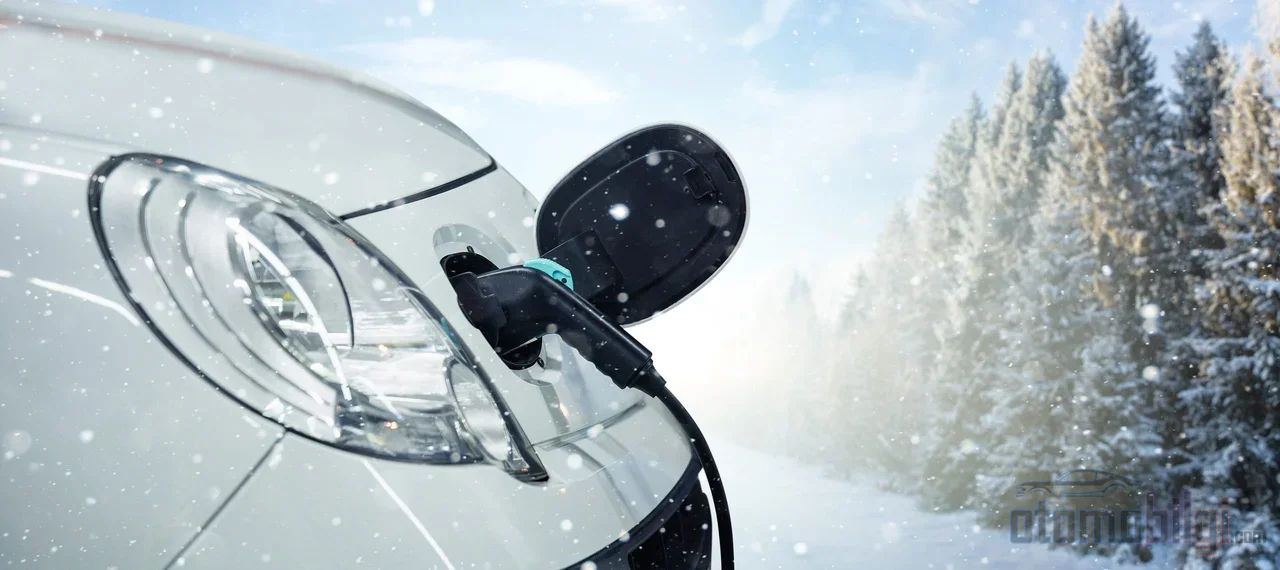
Long-distance travel is possible in winter but requires a different discipline than summer planning. The basic rule is summarized in three bands: plan with 75% of the published range ; arrive at each destination with 10-20% charge enter; if there is snow and wind, lower your target by one level. Winter travel with an electric vehicle requires more comprehensive planning than in summer; low temperatures also cause traction control systems to engage more frequently, which is normal.
In Türkiye, two geographies call for two different plans. In coastal provinces, wet weather and temperatures hovering around 0°C keep the loss in the 15-25% band; the main thing to watch is winter tires and braking distance on wet asphalt. In Eastern Anatolia, a second variable comes into play: the region's charging station network is relatively sparse. The combination of severe cold and sparse stations becomes critical in long-distance planning - choose a more cautious range buffer (with over 35% loss possible), enter charging stops into navigation so the batteries preheat automatically along the way, and apply the never-go-below-20% rule strictly here.
A practical checklist before departure protects you from most of this:
- Preheat the car while it is plugged in; set off with a warm battery and a warm cabin.
- Finish charging at 90% during the day; never go below 20%.
- Measure tire pressures in the cold; have winter tires fitted.
- Clear snow off the body; park in a garage if possible.
- Keep the highway speed limit around 105 km/h; consolidate tasks into a single stop.
The "charge isn't holding" misconception and frequently asked questions
The most common complaint a new electric vehicle user reports in winter is the range shown on the display rapidly melting away on the road. The single thing to understand here is this: the displayed range is an estimate shaped by past consumption and conditions. Winter loss 10-39% is a predictable physical phenomenon within this band; it is not a "faulty charge" or a "broken battery" but seasonal physics. In winter, a ~10-20% drop is accepted as normal, a manageable and predictable level.
Does the battery freeze in winter, and does its lifespan shorten?
Freezing of a healthy battery is highly unlikely; its chemical composition and operating temperature range prevent this. Cold does not by itself negatively affect battery lifespan: the slowing of reactions is temporary, and capacity returns when the cells warm up. Charging in winter is also safe; the only difference is that it may take longer.
How cold counts as "very cold"?
There is no single cutoff point; however, below -20°C you need to increase the dose of precautions: more frequent preheating, navigating to fast chargers to trigger automatic battery heating, and choosing the most conservative band in range planning. In Türkiye this scenario is real in the eastern provinces; in coastal and inner western regions, conditions around 0°C are mostly managed with standard tactics.
Conclusion: winter range loss is a manageable engineering problem
Winter range loss is a natural part of electric vehicle ownership; but it is not an irregular loss, it is a band that can be predicted with temperature, heating use, and road type. Connecting preheating to charging, adjusting the charging window to winter conditions, shifting heating to the seats and steering wheel, and planning with 75% of the published range puts most of the loss under the software's control. The remaining difference is not the display, it is physics - and once you know how it is calculated, it no longer worries you.
Sources
- EV Range In Cold Weather: How Much Range Does An EV Lose? - Eleport
- Cold Weather EV Range Loss - Real Data 2026 | EVRatio
- Does Cold Weather Affect the Performance of your Electric Vehicle? - Ekoenergetyka
- How Does Cold Weather Affect Electric Cars? - CUPRA
- 5 Top Tips: Maximise EV Range in Winter - DriveElectric
- EV Charging in Cold Weather - EnergySage
- How to charge your EV in cold weather - Pod Energy
- EV Range in Winter: Myths and Realities - Point S
- Winter Tips for Electric Vehicle Owners - Efficiency Maine
- Countering common myths about electric vehicles - Clean Energy Canada
- Winter EV Driving Tips - EcoFlow
- How does Cold Weather Affect EV Performance - Geotab
- The advantages of using winter tires on an EV - Michelin
- Warming cold batteries fast - Breathe Batteries
- The Fleet Manager's Guide to Winter EV Performance - Range Zero
- Canadian winter best practices for preconditioning battery - Tesla Motors Club
- Chilly Charging: 5 Cold Weather Tips for EVs - EVgo
- Why do EVs charge slower in winter - Osprey Charging
- Understanding your EV's winter range - LoveElectric
- How Do Hot & Cold Temperatures Affect EV Range? - Mazda
- Can You Drive an Electric Car in Winter? - Borusan Next
- Tips for Electric Vehicle Drivers in Winter - Volkswagen Passenger Cars
- 7 Practical Ways to Reduce Winter Range Loss - Wat Mobility
- Electric Vehicle Winter Use: Range and Maintenance Guide - Volti
- How Much Do Electric Vehicle Ranges Shrink in Winter? - Skywell Türkiye
- Electric Vehicle Technology, Economy and Transportation - DergiPark (S. Öztürk)
- Does the range of electric cars decrease in winter? - Besen Group
- Why do electric vehicles lose range in winter? - Go-Electra