Why Does Your Electric Car Go Shorter Distances in Winter?
Share This Page
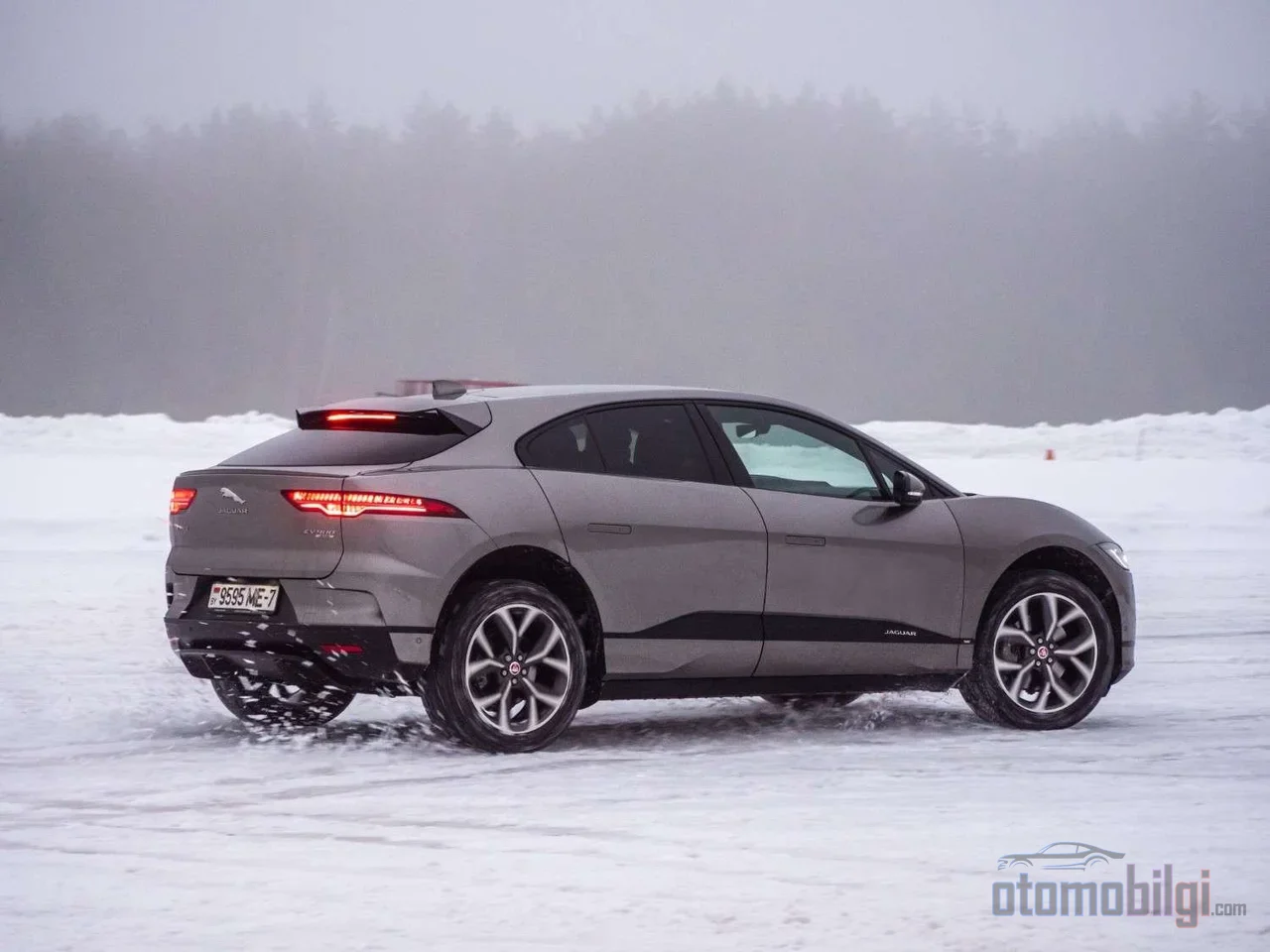
Your electric car goes less far in winter, because the biggest share of range loss is not the battery but cabin heating: around 0°C the average loss is 20-25% , while at -10°C with the heating on, this figure can climb to 27-40% . In this article we break down the components of the loss one by one, clarify which are temporary and which are permanent, and correct common misconceptions inherited from gasoline car habits with numbers.
Highlights
- At 0°C, electric vehicles retain on average 78-80% of their range, and roughly 70% at -7°C.
- A heat pump produces 3-4 units of heat per unit of electricity; but its advantage melts away below -10°C.
- A cold tire creates 13.6% higher rolling resistance than a warm tire.
- Winter range loss in daily use is temporary; it does not cause permanent damage to the battery.
- Preheating the battery for 10-15 minutes before arriving at a charging station noticeably shortens fast charging time.
How Much Is Lost: Real Figures, Not Half of What's Perceived
The most reliable picture of winter range loss comes from real-world vehicle telemetry. According to a winter study tracking data from more than 30,000 electric vehicles in the US, at freezing point vehicles retain roughly 78-80% of their range; when temperatures drop to -7°C, this figure falls to about 70%. The best-performing model retained 88% of its range at 32°F, while the worst stayed at 69%. The band is this wide between models because there is no single variable determining the loss: the heating system, battery management, and comfort optimization are tuned differently from model to model.
European winter tests from 2026 confirm the picture. In 14 electric models tested in Canada in the -7°C to -15°C range, losses varied between 14% and 39% ; the Polestar 2 and a Chevrolet model achieved the best results. Norway's El Prix winter test ran 24-25 models in record-breaking cold down to -32°C, and the Kia EV2 prototype won the test. On average: real winter range is 25-35% lower than the WLTP figure measured in summer conditions.
The practical takeaway from this is simple: the perception that range drops by half does not match the data. Manufacturers' official statements point in the same direction; they indicate that losses generally stay between 10-25%, approaching 40% only in very cold conditions. The same figures coming out differently in different tests is not a contradiction, but a matter of different measurement conditions: a 27% average measured at -10°C with the heating on and a 10% loss measured on a mild winter day cannot be placed side by side in the same table.
Why Does the Biggest Share of the Loss Come from Cabin Heating?
In a gasoline car, heating in winter is almost free: engine waste heat warms the cabin air, and its contribution to fuel consumption is negligible. An electric vehicle has no such luxury. The motor is so efficient that it leaves too little waste heat to harvest; cabin heat is drawn directly from the high-voltage battery. A resistance (PTC) heater can consume several kilowatts at temperatures near freezing - which translates directly into lost range while cruising on the highway.
The fact that most of the loss comes not from the battery but from cabin heating shows the problem is more an engineering choice than a chemistry issue. And that is good news: by setting up the right heating strategy, it is possible to recover part of the loss.
How much does a heat pump actually gain?
A heat pump, instead of generating heat directly with electricity, is a heat transfer device that moves heat from outside into the cabin; therefore, for every unit of electricity it can produce 3-4 units of heat. Its real-world effect is measurable: vehicles with heat pumps retain 83% of their range in freezing conditions, while those with resistance heaters stay at 75% - a gap of roughly 8 points, close to 10%. In some comparisons, this gap is large enough to cut winter losses in half compared to a resistance heater.
However, one must be wary of the perception of advantage in every marketing claim. A scientific dynamometer study published in 2025 by Canada's environmental agency ran two versions of the same model - one with a resistance heater, Tesla Model 3 (2020), and one with a heat pump, Tesla Model 3 (2022) - and answered the question with numbers: The heat pump's range advantage varies between 1-15% depending on conditions, with driving-cycle averages in the 4-7% band. The biggest advantage appears around 0°C; in many cycles, the heat pump does the same job with less than half the power of the resistance heater. But at -10°C and -7°C cold starts the advantage shrinks, and at -10°C it can reverse entirely: when there is no heat left to draw from outside, the heat pump switches to inefficient mode. The proven practical conclusion is this: a heat pump is valuable equipment in a mild winter, but not a guarantee against polar winter.
Cold Battery Chemistry: The Difference Between Temporary Efficiency Loss and Permanent Damage
Besides cabin heating, there is a second component: the battery itself. The chemical reactions in lithium-ion cells slow down at low temperatures; internal resistance increases, discharge voltage drops, and the cell delivers less energy and power. This is called the growth of polarization in electrochemistry, and the same mechanism is why charging also slows down in the cold. The restriction of fast-charging speed in a cold battery is not a malfunction, but a behavior designed to protect the battery; once the battery warms up, the speed returns on its own. Similarly, the weakening of regenerative braking in the cold is normal - on an icy road, this limitation can push you to a longer braking distance than you expect, so compensate with the brake pedal, not out of habit.
Does winter loss harm the battery?
For everyday use, the answer is clear: The range loss experienced in winter is temporary and causes no long-term damage to the battery. When the weather warms up, the range returns to normal. It is important to clarify this distinction, because a gasoline car user's expectation is different: in a gasoline car, cold weather reduces efficiency but does not harm the tank; the situation is the same in electric vehicles.
Scenarios involving permanent damage occur under extreme conditions. In cells stored below -20°C, internal cracks or lithium plating - that is, lithium accumulating metallically on the anode surface - can cause permanent capacity loss. Repeated charging cycles at low temperatures also lead to the same risk. For daily driving, practical protection is enough to avoid this scenario: not leaving the vehicle idle for long periods in extreme cold or at a low charge, and not charging at high power in low temperatures.
Tires: An Underestimated but Measurable Share
When winter loss is mentioned, battery and heating come to mind, yet the four tires are also part of the bill. The main variable determining rolling resistance is not so much ambient temperature as the tire's own temperature; cold tires produce 13.6% higher rolling resistance than warm tires. Every PSI below the manufacturer's recommended pressure also increases this resistance and draws extra energy from the battery - since cold weather lowers pressure in winter, weekly pressure checks are a range investment.
The effect of winter tires on range remains relatively small in drivers' experience compared to other winter effects; both extremes tend to exaggerate in the debate. The certainty side is this: on heavy, torquey electric vehicles, winter tires measurably improve grip on slippery surfaces. Also, the energy class on the tire label is directly related to range - tires with a high rolling resistance class wear out the battery in every season.
Preheating While Plugged In: The Opposite of Gasoline Habits
In a gasoline car, the morning routine of start-warm up-go means wasted fuel. In an electric car, it is exactly the opposite: heating up a cold vehicle is more expensive than keeping it warm, and the smartest move is to draw this cost from the grid rather than the battery. Keeping the car plugged in while parked and preheating it via the app before setting off does not charge the range of the first kilometers to the battery. Leaving the charge at 70-80% while parked provides a sufficient range for both battery health and the preheating share.
- Use seat and steering wheel heating when the cabin temperature is low: person-directed heating uses far less energy than heating the entire cabin air.
- Perform battery preheating for 10-15 minutes before fast charging; many vehicles do this automatically when a charging station is entered into the navigation. This both increases charging speed and protects the battery from the damaging effect of high current at low temperatures.
- Reduce your speed on the highway by one step: at high speed, aerodynamic drag and heating load increase together.
Putting the loss components side by side clarifies the logic of the plan:
| Source | Effect | Character |
|---|---|---|
| Cabin heating (resistance heater) | The largest share; several kW in freezing conditions | Largely manageable with strategy |
| Heat pump | ~8% advantage in range preservation; 3-4x efficiency | Advantage decreases or reverses below -10°C |
| Cold battery chemistry | Temporary power and energy drop | Fully recovers in daily use |
| Cold/winter tires | +%13.6 rolling resistance (cold tires) | Relatively small but permanent share |
Realistic Expectations: How Should You Plan Winter Range?
Since winter temperatures in most regions of Türkiye range between 0°C and -10°C, the practical rule is this: 70–80% of the summer value shown on the range indicator plan accordingly, and in harsh winters in Central Anatolia and the East, lower this ratio to 60–70%. A vehicle with a WLTP range of 500 kilometers should leave you roughly 350–400 kilometers on a real winter day. In city use, most drivers won't feel this difference at all; the only scenario that truly challenges range planning is a long winter journey, and even there the solution is transparent: preconditioning, charging while plugged in, seat heating, and slightly more frequent stops.
This is exactly what drivers coming from gasoline cars miscalibrate the most. In the world of engine-powered vehicles, there is no such thing as losing 15% of the fuel tank in winter; in electric vehicles it is normal, and it consists of four elements whose causes are known, whose shares can be broken down, and all of which are manageable. Knowing the source of the loss is the fastest way to accept range loss.
Sources
- Best EV for Winter & Cold Weather Range
- A Comparison of Heat Pump and Resistive Heating Impacts... (EVS38, 2025)
- Lithium-Ion Batteries under Low-Temperature Environment (Luo et al., 2022)
- Evaluation of driving resistance and energy consumption (Song et al., 2025)
- Electric cars in winter: how much range do they lose?
- Electric Cars in Winter - Electric Car Scheme
- EV Winter Range 2026 - Wheelstreet
- EV Winter Range Canada 2026 - ThinkEV
- 25 EVs Were Range-Tested In Extreme Cold - InsideEVs
- How do EVs perform at -32°C? - FIA
- How do EVs perform in the cold? - GreenCarGuide
- Why Does Electric Vehicle Range Drop in Winter? - ChargeMate
- How tires impact your EV's range - Michelin
- Winter tires on an EV - Michelin Canada
- Rolling Resistance of Car Tires - Continental
- Why an EV Heat Pump Matters - Roadethos
- How much range do you lose in an EV in winter? - HonestRange
- Do Batteries Last Longer in the Cold? - Wiltson Energy
- What causes BESS battery degradation? - Solarif
- How To Maximize EV Range - Coltura