Battery Preheating: The Prerequisite for Fast Charging in Cold Weather
Share This Page
Battery preheating (preconditioning) is a thermal management function that brings an electric vehicle's battery to its ideal operating temperature before fast charging. The vehicle heats the battery before reaching the fast charging station entered into the navigation; this way, in cold weather, the battery can safely accept high power without its charge acceptance being reduced. The result is shorter charging time, preserved range, and longer battery life.
Highlights
- The ideal charging temperature is roughly in the 15-35°C range; a cold battery does not accept high current.
- Preheating usually takes 20-30 minutes ; in scheduled mode, it kicks in 30-60 minutes before the target time.
- A cold battery may start fast charging at ~50 kW ; a preheated battery immediately accepts 150 kW.
- When the air temperature drops below 10°C, preheating before DC fast charging is recommended.
- When plugged in, the heating energy is drawn from the grid, so range is not affected.
Why Does a Cold Battery Reject Fast Charging?
A lithium-ion battery works through chemical reactions. When the cell temperature drops, these reactions slow down, the battery's internal resistance increases, and both power delivery and charge acceptance decrease noticeably. This is not a design flaw; it is the electrochemistry's natural response to temperature. An electric vehicle heading to a charging station on a cold winter morning, no matter how much power the charger says it can deliver, has a battery that is not in a condition to take that power.
Vehicles manage this situation with a power limit. When fast charging is started on a cold battery, the system keeps the current low and gradually increases the power as the cells slowly warm up from the charging current itself. The net effect is a longer charging time: the vehicle has to spend part of the energy it receives from the station on heating the battery first. Considering that range loss in extreme cold can reach 40%, low temperature has a two-fold cost for an electric vehicle: more energy per kilometer and longer waits per stop.
The invisible risk of cold charging: lithium plating
The extended duration is the less important part of the story. When a high charging current is applied to a cold battery, lithium ions cannot settle properly on the anode surface and accumulate as metallic lithium. This phenomenon is called lithium plating and it is one of the best-known causes of irreversible capacity loss; in advanced stages it also poses a risk of internal short circuit. The damage cold charging causes is proportional to the charging speed - the faster you charge, the more the damage.
This is exactly where the main task of preheating comes in: bringing the battery to a temperature where it can safely accept a high charging current. Thus, fast charging becomes both fast and safe in terms of battery health.
How Does Preheating Work and How Is It Triggered?
The backbone of preconditioning is the battery management system, which has become standard in modern EVs. The BMS continuously monitors cell temperatures and, via the thermal management circuit, applies heating or cooling commands as needed. The energy used to heat the battery can also be recovered from the heat generated by the motor and power electronics during driving between charging stops; this approach makes thermal management part of the total energy budget.
The most common trigger: navigation
In most vehicles the system works automatically: when the driver enters a DC fast-charging station as a destination in the navigation system, the vehicle calculates the remaining travel time and begins heating the battery so that it will be at the ideal temperature upon arrival. The driver does not need to do anything else; thermal preparation becomes part of the drive.
Manual activation
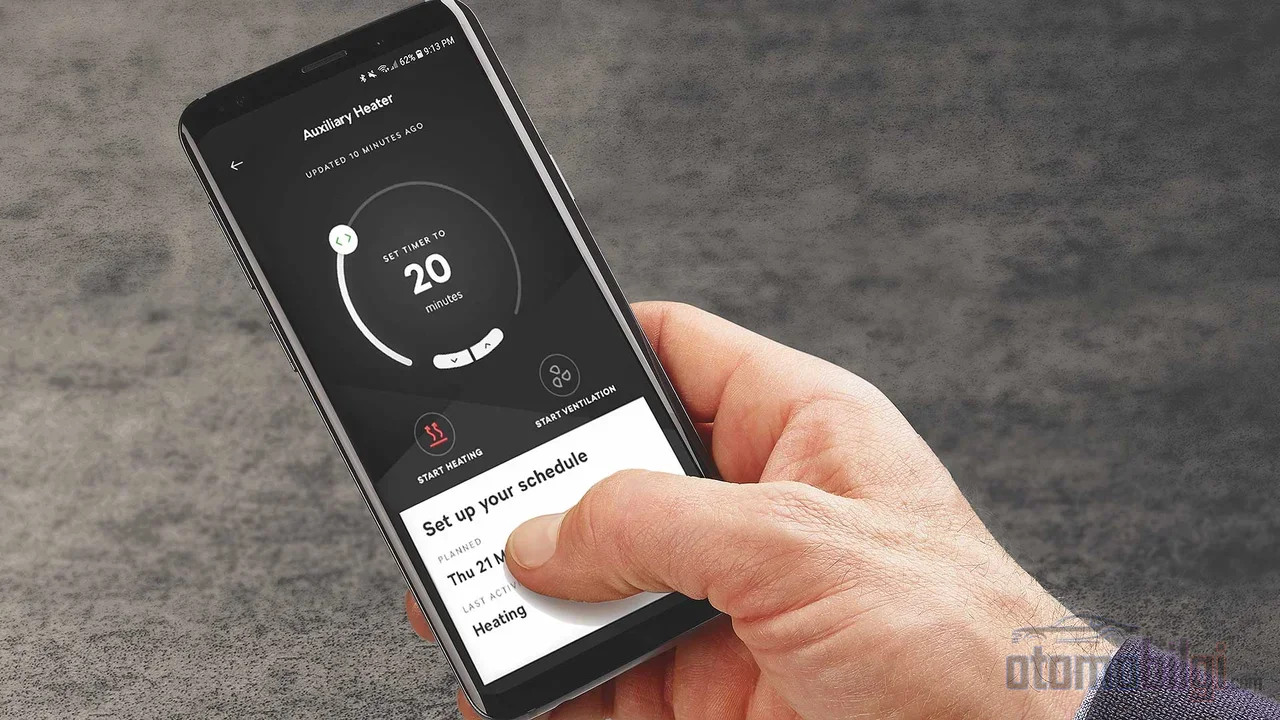
Things get a bit more complicated if the destination charging station is not on the map or if your route is variable. That is why many manufacturers also offer manual triggering: preconditioning can be started from the infotainment menu or via a connected smartphone app. The important point is this: some vehicles activate preconditioning only when a charging stop is selected through their own built-in navigation; if an external navigation app is used, the system may not be triggered. Checking your own vehicle's manual to see which scenario applies is a five-minute task that pays off on every winter journey thereafter.
Scheduled preconditioning
The third option is to delegate the timing to the system. In scheduled mode, preheating starts while the vehicle is plugged in, approximately 30-60 minutes before the target departure time. Since the energy comes from the grid, none of the battery capacity is consumed, the range is preserved, and the 12V auxiliary battery stays clear of unnecessary discharge cycles. Preheating performed on an unplugged vehicle, on the other hand, draws energy from the battery and, indirectly, from the 12V system; this can be an unwanted load after long parking periods.
Impact on Charging Time: How Big Is the Concrete Difference?
The most striking comparison comes from power measurements taken in cold weather: a preconditioned battery can accept 150 kW of power as soon as DC fast charging begins. An unconditioned battery starts at around 50 kW at the same station and only increases the power as the cells gradually warm up from the charging current. The most valuable part of the charging curve is the peak region in the first minutes; preheating prevents you from entering this region with a cold battery.
The difference is not the same under all conditions. In mild weather the gain remains limited; in moderate cold, user experiences point to a saving of 5-10 minutes per stop. By contrast, the difference is much greater with a battery parked outside overnight with a frozen core. The general rule is: as the outside temperature drops and the battery's initial temperature moves away from the ideal range, the return on preheating increases.
| Condition | Approach | Result |
|---|---|---|
| Preheated battery, cold weather | Starts charging at ~150 kW | Curved start from the foot to the summit, a short stop |
| Cold battery, no preheating | Starts charging at ~50 kW | Power increases gradually, session lengthens |
| Planned heating while plugged in | Energy is drawn from the grid | Range is preserved, time is shortened |
| Heating during driving | Energy is consumed from the battery | An instant range loan, a short stop |
Effect on Range: Does It Eat Your Range or Earn It?
An honest distinction is needed under this heading, because two different time horizons are involved. At an instant glance, preheating done while driving draws energy from the battery; in other words, you sacrifice some range on that journey. In the long run, however, the picture reverses: Preconditioning keeps the battery at its ideal temperature, reducing the total energy spent on heating and cooling and helping to increase the distance that can be covered on a single charge. Moreover, active battery heating strategies can increase range by 18.8% compared to self-heating during a cold start; thermal management supported by a heat pump, in turn, can improve range by up to 0°C at an outside temperature of 20%.
The practical takeaway is this: The range you pay to warm the battery until you reach the charging stop is compensated by the time you gain at the stop and by the battery capacity preserved in the long run. If you heat while plugged in, the cost already drops to zero. If you are planning a long winter trip, heating the cabin while plugged in before setting off is part of the same logic.
Battery Life: Why Is Every Charge Not Equal?
The least noticed but most valuable effect of preheating lies in its touch on battery life. It is known that fast charging in the cold leads to lithium plating, and this accumulation permanently reduces capacity; the damage increases in direct proportion to the charging speed. Keeping the battery within its ideal temperature range, on the other hand, reduces thermal stress and helps extend the battery's overall service life. Preheating the vehicle and battery in cold weather reduces energy loss and supports the battery staying healthy for much longer.
An objection is also raised against this picture: user views that pre-drive heating does not directly extend lifespan and that charging already heats the battery as a byproduct. It is also true that for drivers living in temperate climates and rarely exposing their battery to freezing temperatures, some vehicles have run flawlessly for years without preconditioning. The practical judgment depends on climate and usage pattern: For a user who fast-charges routinely every day and parks outdoors in winter, preheating undoubtedly produces value; for someone who parks in a garage at night and mostly uses AC charging, it may remain marginal.
When and How Should It Be Done? A Practical Guide
The situations where preconditioning produces value are clearly distinguished:
- When the air temperature 10°C drops below, especially before DC fast charging.
- After the vehicle has been parked outside overnight, while the battery is cold.
- Before a long winter journey and if there are fast charging stops along the route.
- In cases where charging is scheduled for the early, coldest hours of the day.
On the app side, there are three methods: entering a charging stop into the navigation (automatic), starting manually from the infotainment or the app, or scheduling it according to departure time. Doing this while the vehicle is plugged in is always the most efficient option. Heating has low energy consumption and is more than offset by the time saved on fast charging; however, since plug-free preheating is done through the battery and the 12V system, scheduled mode should be preferred especially after long parking periods.
A common question is whether preheating is necessary before AC and slow charging. The answer is no in most cases: slow charging puts far less strain on a cold battery and largely eliminates the need to heat the battery. On the other hand, remember that preconditioning is not only a winter task; in hot weather, it is also activated to cool the battery before charging when the battery temperature rises above the ideal range.
Conclusion: A Small Thermal Preparation, A Big Efficiency Gain
Battery preheating is a function that goes unnoticed on the dashboard but directly determines the charging experience. A cold battery starting to charge at 50 kW instead of 150 kW means losing the most valuable part of the charging curve; and the risk of plating goes beyond a cost in time to touch the battery's lifespan. In winter months, make it a habit to enter your fast charging stop into the navigation, use scheduled heating while the vehicle is plugged in, and know that no extra effort is needed for AC charging. Thermal management is an engineering decision in an electric vehicle that buys lifespan as much as performance - and using it correctly is in the driver's hands.
Sources
- What is EV Battery Pre-Conditioning? - Kia UK
- How Battery Preconditioning Affects EV Performance and Testing - Midtronics
- How do I precondition my battery for DC Fast Charging? - Ford
- Electric vehicle thermal conditioning functionality - Nissan
- Thermal management for hybrid systems and electric drives - Bosch Mobility
- The state of the art on preheating lithium-ion batteries - ScienceDirect (Wu 2020)
- Battery thermal management strategy utilizing a secondary heat pump - ScienceDirect (Lee 2023)
- Lithium-Ion Batteries under Low-Temperature Environment - PMC (Luo 2022)
- Using Lithium Batteries in Cold Weather - RELiON
- How does cold weather affect electric vehicles? - HERE Technologies
- Why you need to charge your electric car more often in cold weather - TechXplore (March 2026)
- eMobility: thermal management - MAHLE