Technologies That Keep EV Batteries Cool: Cooling Systems
Share This Page
A cooling system in an electric vehicle battery is a thermal management architecture that typically keeps lithium-ion cells in the 20–40°C range, extending their lifespan, enabling fast charging, and reducing the risk of thermal runaway; while air cooling is simple and lightweight, liquid cooling, with its high heat transfer, is the de facto standard in modern EVs. This page compares the two approaches in terms of degradation, range, and charging time.
Highlights
- The ideal operating range for lithium-ion cells is typically 20–40°C; some manufacturer manuals use a 15–35°C band for charging
- Immersion cooling reduced peak temperature differences under test conditions by 91.3% during discharge and 94.44% during charging
- A heat pump can improve winter range by 10–30% compared to resistive heating
- Cold weather can reduce range by 10–15% in real-world use; combined with the heating load, the loss can reach up to 40%
- Preconditioning shortens charging time by bringing the pack to the ideal temperature before fast charging
Why is battery cooling so critical?
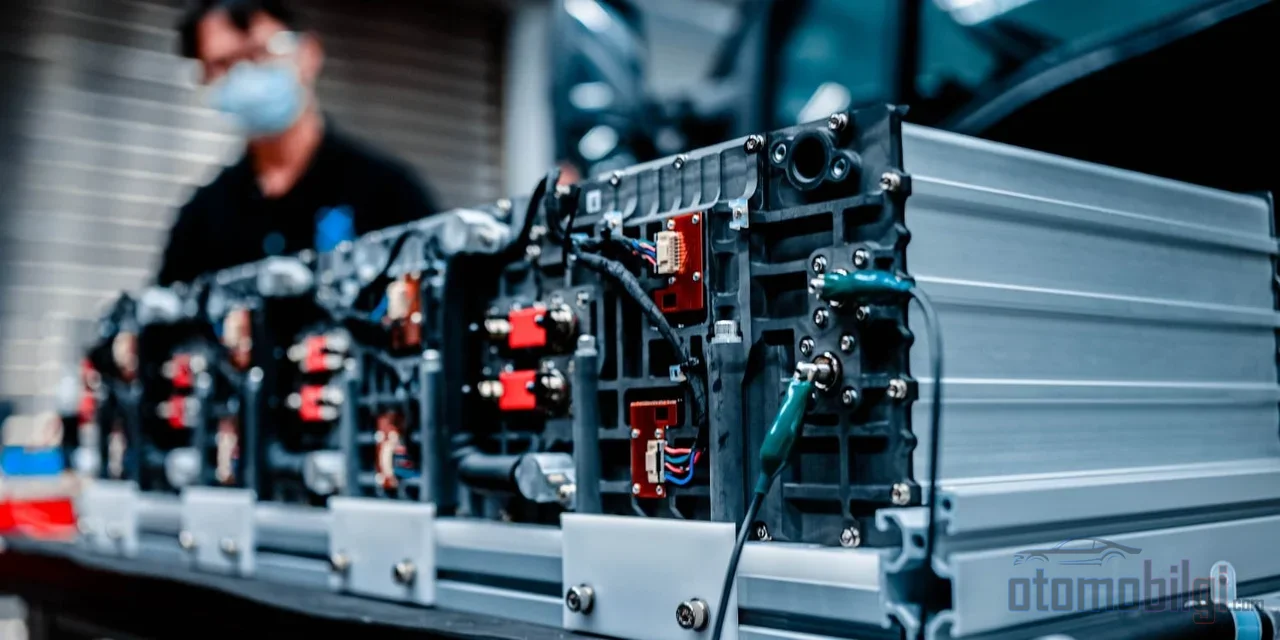
A lithium-ion cell is a system in which the rate of the electrochemical reactions inside it changes directly with temperature. When the temperature rises above the ideal band, unwanted side reactions accelerate: structural degradation at the cathode, uncontrolled thickening of the SEI layer on the anode, and most dangerously, lithium plating, which occurs as lithium ions accumulate on the anode surface as metallic lithium. At sufficiently high temperatures, these reactions can generate their own heat and turn into a self-sustaining chain reaction - thermal runaway; the result can be a fire or permanent damage to the pack.
The other end of the spectrum is also harmful. Extreme cold slows down ion kinetics within the cell and increases internal resistance; capacity drops, and efficiency and range decline. What is critical is not just the temperature itself, but also its distribution: when the temperature difference between cells within the pack grows, the hottest cells age faster than the others, and the pack capacity is pulled down to the capacity of the weakest cell. In engineering terms, if you will, the thermal management system has a threefold job: keeping the absolute temperature within the band, minimizing the difference between cells, and doing so at the lowest possible energy cost.
Air cooling: the trade-off between simplicity and limited capacity
Air cooling is applied in two forms. In a passive system, cells are cooled by natural convection or cabin air; in an active system, fans force air over the cells. The advantages are undeniable: low cost, little weight, simple maintenance, and zero risk of leakage. Early Nissan Leaf and VW e-Golf models represent this approach.
The problem is the physical limit of capacity. The amount of heat that can be carried by air is very low compared to liquid circulating in the same volume. This limit becomes costly in three places: in hot climates the system falls short, in high-power fast charging it cannot remove the heat generated, and hot spots form inside the pack. The high flow rate required for forced air also increases the parasitic energy consumption of the fans; in other words, the cooling starts eating the battery's own energy. The picture on the service side points the same way: module failures are more common in air-cooled packs, and in vehicles aged 10-15 years, module or pack replacement can come onto the agenda.
Liquid cooling: the standard of the modern EV pack
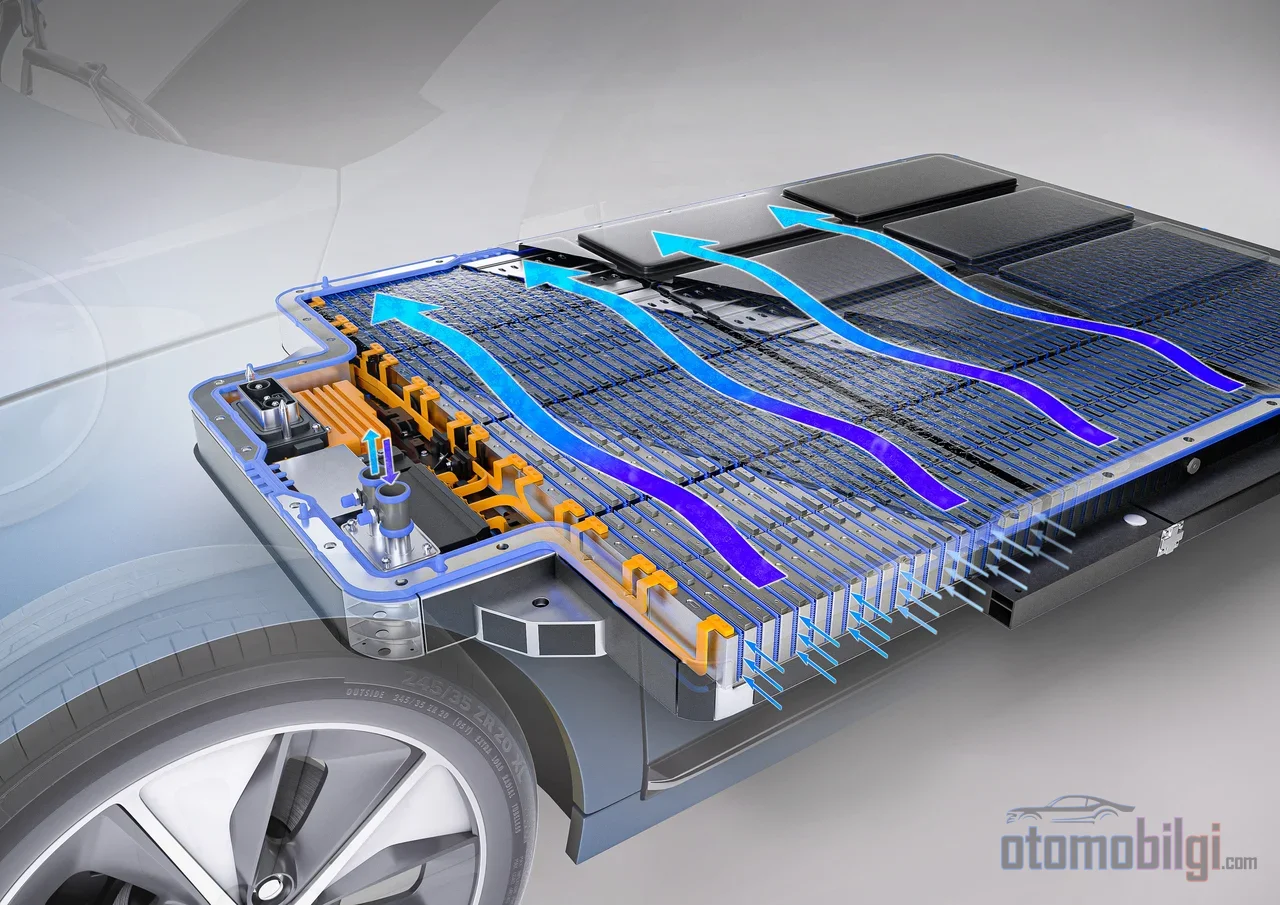
Liquid cooling means circulating a fluid that is far more capable than air at carrying heat through the pack. There are two basic architectures:
- Indirect cooling: The coolant passes through channels inside cold plates adjacent to the cells; heat is transferred to the plate by conduction, and from there to the liquid. This is the most common solution in the industry today.
- Direct / immersion cooling: The cells are immersed directly in a dielectric coolant. The conduction limit disappears, and the entire surface is cooled.
To give a concrete figure about the upper limit of charging performance, in an immersion-cooled module, peak temperature differences were reduced by 91.3% during discharge and by 94.44% during charging. This means a homogeneity that comes close to effectively eliminating the aging difference between cells.
There is a price: the pump, radiator and channels add cost and weight; the liquid circuit carries leakage and corrosion risk. That is why the fluid used in the circuit is a critical detail - EV cooling circuits use dielectric or low-conductivity special fluids to prevent an electrical short circuit in the high-voltage line in case of a leak. Standard antifreeze is not designed for this job and creates a serious safety risk. On the maintenance side, manufacturers require a coolant check annually or every two years; replacement intervals are specified at levels such as 80,000 miles (approximately 5-6 years), 8 years, or 150,000 miles (10-12 years) as examples.
The conclusion is clear: almost every manufacturer producing electric models today prefers liquid cooling. The industry trend has settled in this direction too - liquid cooling is standard in premium, high-performance and large-pack vehicles; air cooling is only meaningful in the budget segment and in temperate climates; in between, hybrid air+liquid solutions that combine both worlds are being developed.
Cooling plate architecture: side cooling or base cooling?
The performance of indirect liquid cooling is determined by where the plate makes contact with the cells. Cells are usually stacked at the cell level within the pack, while bottom (base) cooling plates are applied at the module level. Side cooling removes heat from the side face, which is the cell's largest surface; base cooling works through the bottom surface. The side approach is more advantageous in terms of heat path, but means more components, cost, and complexity per pack; base cooling is simpler and integrated with the pack structure, but has difficulty reaching the upper region of the cell. The choice is made according to the pack's power density, fast-charging target, and cost target.
There is intense engineering activity in this field in 2025-2026. A peer-reviewed study on multi-cooling-plate systems aims for uniform temperature distribution by optimizing the interactions between plates. Simulation analyses, meanwhile, point to a striking conclusion: structural optimization of the plate is far more effective than blindly increasing flow rate. Every step taken regarding channel geometry, plate thickness, and flow distribution means gains achieved without increasing pump power - and that is precisely the definition of efficiency in thermal management.
| Feature | Air cooling | Liquid cooling |
|---|---|---|
| Heat transfer | Limited | High |
| Temperature homogeneity | Hot spot risk present | Uniform module temperature |
| Fast-charging support | Weak | Supported |
| Thermal runaway risk | Higher | Lower |
| Cost / weight | Low | Adds pump, radiator, channels |
| Leakage risk | None | Present, managed with dielectric fluid |
| Typical use | Budget segment, mild climates | Standard in premium and large-pack EVs |
Fast charging and preventing overheating
DC fast charging is the moment of truth for the thermal management system. High current generates heat in the cells' internal resistance proportional to I²R loss; if the cooling cannot remove this heat at the rate it is produced, the controller throttles charging power and the time promised by the station is not achieved. In the worst case, insufficient cooling can escalate all the way to thermal runaway. In other words, fast-charging time is a function not only of the charging infrastructure but also of the pack's heat removal capacity - and this is one of the main reasons for the spread of liquid cooling.
Preconditioning: preparing for battle before charging
Most modern EVs bring the high-voltage pack to the target temperature as they approach a fast-charging station: heating it in cold weather, cooling it in hot weather. This process is called preconditioning and has two concrete benefits: DC charging can sustain higher power for longer, and battery health is preserved because the risk of lithium plating in a cold battery is reduced. In winter, simply entering the destination into the navigation before arriving at the station is enough; most vehicles recognize the route and start preparing the pack.
Charging behavior in hot weather
In hot climates, even the choice of hour makes a difference. When the ambient temperature is approximately 40°C or Charging during peak hours between 14:00 and 18:00, when temperatures exceed (105°F) and the sun strikes directly, puts maximum stress on the battery. The cooling system can absorb this load; but shifting the same heat load to the early morning hours to spare the system noticeably softens the degradation curve in the long run.
Heat pump integration: the winter range problem
Thermal management is not just about cooling; heating the pack in winter is also the system's job, and heating is one of the biggest enemies of EV range. Cold weather alone reduces range by increasing cell internal resistance, in real-world use by 10-15% ; when cabin heating is included, the loss can reach up to 40% . A resistive heater closes this gap expensively: every watt it consumes comes directly out of range.
This is where the heat pump comes in. Its working principle is to carry heat from the surroundings to the battery and cabin using the latent heat of the refrigerant; for every unit of electrical energy it consumes, it delivers more heat than resistive heating. Compared to resistive heating in winter range, it can provide an improvement of 10-30% and, by supporting battery thermal management, protects the pack from falling below the ideal band. In an integrated thermal architecture, the same compressor and refrigerant circuit handles cooling in summer and both heating and pack preheating in winter from a single system; this is an approach that reduces component count and weight, thus winning twice from an engineer's perspective.
Future technologies: phase change materials and beyond
Phase change materials (PCM), which promise a passive layer alongside liquid and air cooling, are one of the promising topics. The principle is elegant: as cell temperature rises, the material absorbs heat by spending it on its own phase change, and releases the heat back when temperature falls. It acts as a buffer that softens peak temperatures without energy input into the system; today it counts among future technologies on the research and development agenda. In practice, it will most likely be positioned not as a replacement for liquid cooling, but as its complement.
Further out on the scale stands immersion cooling's journey toward series production: laboratory results are superior, but dielectric fluid cost and pack sealing are engineering questions that must be solved for series production. The realistic picture for now is this: liquid cooling is the standard, air cooling is in the niche segment, hybrid solutions are in between, and technologies like immersion/PCM are candidates for the next generation.
How to tell if the cooling system is faulty and what to do?
Cooling failure usually reveals itself through silent but readable symptoms:
- Unexplained range loss
- Noticeably longer DC fast charging times
- Frequent thermal warnings; power restriction in some vehicles
- Coolant smell or signs of leakage
These symptoms should be taken seriously, because repeated thermal events lead to lithium plating, rapid SEI growth and cell imbalance, and the resulting capacity loss cannot be reversed with software - it is permanent. On the second-hand market, this also affects the purchase decision: air-cooled older EVs, especially in hot climates, may come with packs that have lived through such conditions. Asking whether coolant maintenance was performed in the service history is the cheapest insurance.
Conclusion: cooling is directly proportional to battery life
When you put the numbers side by side, the picture speaks for itself: the ideal band is 20-40°C, winter losses ranging from 10-15% up to 40%, 10-30% recoverable with a heat pump, and temperature difference reduction exceeding 90% with immersion cooling. The cooling system is the single architectural decision that simultaneously determines how quickly the battery degrades, the fast charging time, and its range. Air cooling still holds a place with its lightness and simplicity; but in the era of fast charging, the demands for high heat transfer, homogeneous temperature and measurable lifetime gains have settled liquid cooling indisputably as the standard. The practical takeaway for the buyer is simple: which system cools the pack of the vehicle you are buying, when the coolant maintenance was done, and whether you use preconditioning - the answers to these three questions largely estimate your battery's capacity eight years from now.
Sources
- EV Battery Thermal Management Systems Air Cooling vs Liquid Cooling Comparison
- How EV Battery Cooling Technologies Affect Vehicle Servicing
- Recent advances and challenges in electric vehicle Li-ion battery immersion cooling
- Comprehensive comparison study on battery thermal management
- Design optimization of multiple cooling plate battery thermal management systems
- Thermal management analysis of fast-charging lithium-ion batteries
- Analysis of an integrated thermal management system with a heat pump
- Side Cooling vs Bottom Cooling for EV Battery Packs
- Comparative Analysis of Cooling Effect of Battery Module Cooling Plate Structures
- Battery Thermal Management: Everything you need to know
- EV battery preconditioning explained
- EV Preconditioning Helps You Charge Faster
- Heat Pumps & EVs: The Ultimate Guide
- How heat pumps are reshaping EVs and HVAC
- How does cold weather affect EV battery capacity?
- Solterra in SoCal: Battery Care as Temperatures Rise
- EV battery thermal management challenges
- Types and Manufacturing Processes of Battery Cooling Plates