What Does an Electrolyte Actually Do in an EV Battery?
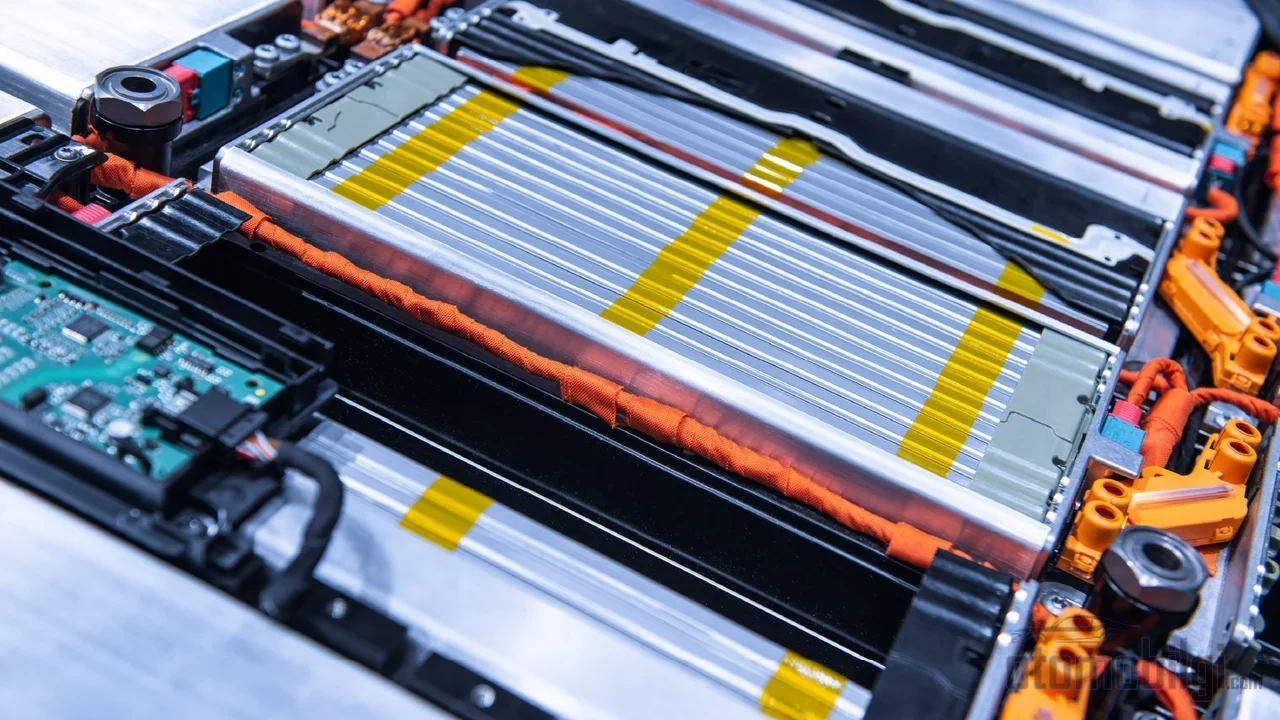
Share This Page
The electrolyte is the medium that allows lithium ions to shuttle between the cathode and the anode in a lithium-ion cell; it blocks electrons and opens the way only to ions. No matter how much the cathode chemistry is discussed, this is the silent worker that determines the cell's performance, lifespan, and safety. On this page, we break down the electrolyte's role inside the cell one by one, from ion transport to the SEI layer, and from additives to the transition to solid state.
Highlights
- Liquid electrolyte consists of three components: lithium salt, organic solvent, and less than 5% additives
- Conductivity at room temperature is typically at ~10 mS/cm level
- With optimized electrolytes, the operating range can be extended between −40 °C and 60 °C
- Electrolyte demand is expected to rise from ~1.42 million tons in 2024 to ~4.46 million tons by 2035
What Exactly Does the Electrolyte Do in the Cell?
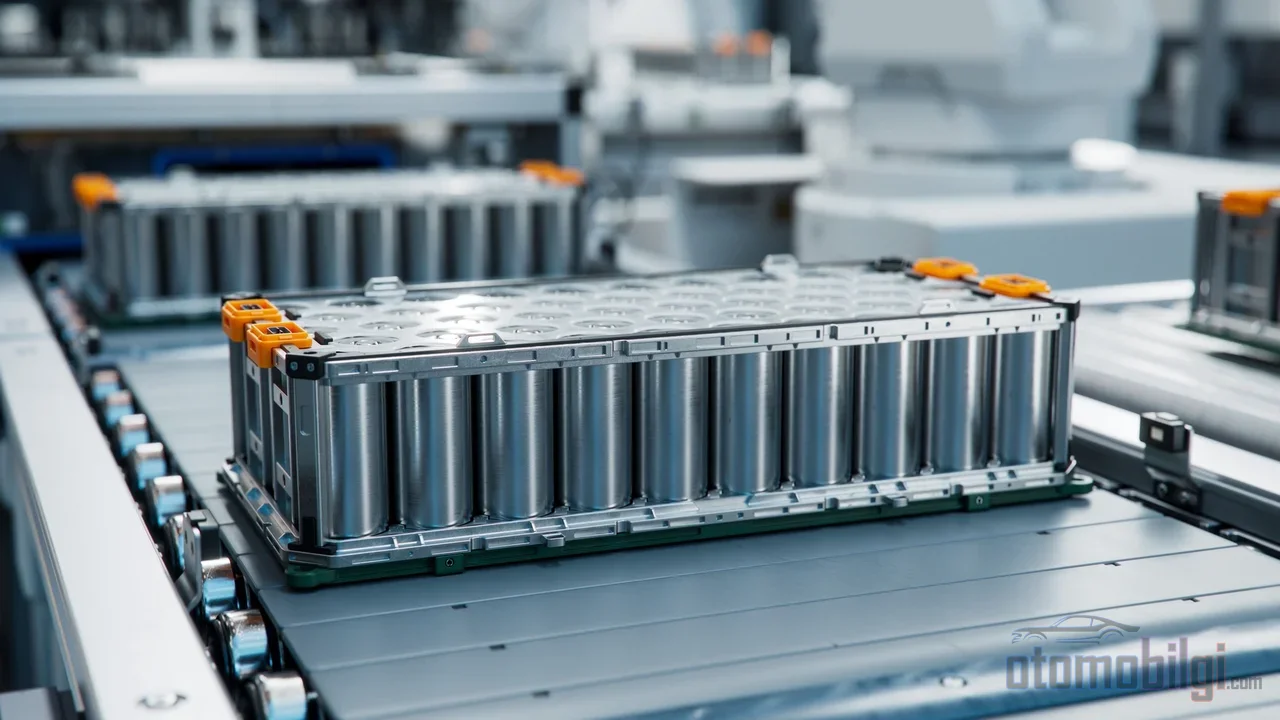
A lithium-ion cell's energy storage relies on ions shuttling back and forth between the two electrodes. During charging, lithium ions leave the cathode and move through the electrolyte toward the anode; during discharge, the process reverses. Because of this two-way oscillation, these cells are also called rocking chair batteries in the literature. Electrons, however, never pass through the electrolyte; they flow through the external circuit, producing the electric current that does the actual work.
The electrolyte's job is therefore two-sided: offering low resistance to ion transport while completely blocking electron transport. A medium that cannot meet both conditions at once either slows the cell down or brings it dangerously close to an internal short circuit. The standard solution in the industry for achieving this balance is the liquid electrolyte, and its place on the production line is remarkable: the electrolyte is injected in the cell's final assembly stage. After wrapping the separator, cathode, and anode, a transport medium for ions is formed; in other words, the cell becomes a system that lives with the electrolyte.
Another component working alongside it must also be remembered: the separator. By physically keeping the two electrodes apart, it prevents short circuits; its pores let ions pass through but not electrons. In lithium-ion separators, pore size is typically 30–100 nm, and porosity ranges between 30–50% . The electrolyte fills these pores; the separator's actual transport takes place thanks to the electrolyte.
The three components of liquid electrolyte
Standard liquid electrolyte consists of three pillars. The main carrier is the lithium salt, usually LiPF₆; it offers high ionic conductivity, good solubility, and chemical stability. On the solvent side, there are organic carbonates such as ethylene carbonate or dimethyl carbonate; ethylene carbonate's high dielectric constant plays a key role in dissolving the salt and forming the protective layer. The third pillar is the additives, which are important enough to deserve their own separate section below.
There is a reason why a single salt is not enough: in EV batteries, LiPF₆ is frequently combined with salts such as LiFSI, LiPO₂F₂, LiDFOP and LiBOB. One of these combinations, LiFSI, is particularly preferred for performance in cold conditions. From an engineering perspective, this is a compound system established because a single compound cannot achieve optimal results under every condition.
The SEI Layer: The Battery's Most Critical Invisible Part
During the first charge, the electrolyte forms a thin protective barrier on the anode surface called the solid electrolyte interphase, or SEI. Without this layer, the battery would not work: the electrolyte would keep making direct contact with the anode, and continuous side reactions would consume the cell. The SEI acts as a filter; it lets ions pass, rejects electrons, and performs a chemically fine-balanced job.
The problem starts here: the SEI is not a perfect, static layer. It continues to grow over cycles, and this growth exacts two costs. First, the growing layer consumes usable lithium; the SEI is described as the dominant source of capacity loss. Second, as the layer thickens, charge transfer resistance increases. An overly thick or irregularly formed SEI can disrupt internal current flow within the cell, leading to early degradation. Without the SEI the battery does not work, but its uncontrolled growth kills the battery.
That is why one of the most important goals of electrolyte formulation is to form a thin, dense and stable SEI during initial formation. Understanding the structure, composition and growth behavior of the SEI is central to extending battery life and improving safety. Cutting-edge research is more ambitious: the Battery500 consortium targets ~500 Wh/kg per cell, roughly twice today's industry standard; on the road to this goal, the connections between lithium anode thickness, electrolyte depletion and the SEI's structural evolution are being studied as a fundamental question.
Additives: Small Dose, Big Impact
The electrolyte's smallest component by volume is its biggest lever. Additives are typically added at less than 5% but directly optimize lifespan, safety and performance. The division of labor is clear: cathode-side additives suppress heat generation, anode-side additives manage the formation of the protective SEI layer, and inorganic additives reduce gas formation and lower internal resistance.
- Vinylene carbonate (VC): A common additive that forms a stable SEI layer on the anode.
- Ethylene carbonate (EC): A cyclic carbonate found in most electrolytes; its high dielectric constant helps protective layer formation.
- Inorganic additives: Reduce gas formation, lower internal resistance.
- Sulfur-containing compounds: An effective family of additives that can improve performance by participating in SEI formation.
The additives also have a role on the fast-charging side: compounds that reduce electrolyte resistance during charging and discharging allow higher charging rates. The scale of electrolyte demand shows the economic weight of this fine-tuning; demand in the industry is expected to rise from ~1.42 million tons in 2024 to ~4.46 million tons by 2035. The same growth also brings serious questions on the production and sustainability side of electrolytes; this issue is discussed as an open problem in the literature.
How Does Fast Charging Stress the Electrolyte?
Fast charging applies much higher current densities to the battery, pushing the electrolytes and electrode interfaces far beyond standard cycling conditions. Conventional electrolytes already operate near the limits of electrochemical stability; high current strains this limit and accelerates structural degradation. On top of that comes lithium plating: as the charging current increases, lithium starts to deposit metallically on the anode surface instead of settling properly into the graphite, playing a key role in degradation.
The electrolyte's share in fast charging can be described mechanically. The lithium ion moves through the electrolyte wrapped in solvent molecules; it must shed this wrapping before entering the anode. Electrolytes that make it easier to overcome this desolvation barrier directly improve fast-charging performance. The interaction between the electrolyte and the SEI is equally decisive: anything that slows ion transport at the interface increases the risk of plating at high currents.
In Cold and Heat: Wide Temperature Range Formulas
The drop in range in winter is largely due to the electrolyte. Carbonate-based liquids become viscous in the cold and lose ionic conductivity; ions slow down, and usable capacity and charging speed drop. The engineering goal is to break this bottleneck through formulation, and there are concrete results in this direction today: with optimized electrolytes, lithium-ion cells between -20 °C and 60 °C can perform well; one NCA cathode formulation extended its operating range to between -40 °C and 60 °C .
Extreme values are also coming in: with a formulated wide-temperature electrolyte, 91.7% capacity retention was achieved at -40 °C, and the same electrolyte delivered 192 mAh/g capacity to graphite at 10C. In lithium-sulfur chemistry, with low-temperature design, 86% capacity retention was possible after 100 cycles at -40 °C. 86% capacity retention was achieved. Wide-temperature electrolyte design requires balancing three fundamental factors at once; the formulas developed by Arizona State University researchers with sulfone eutectic mixtures are an example of electrolytes that operate stably across a wide temperature range.
Why Is the Electrolyte a Key Technology in the Solid-State Transition?
The promise of the solid-state battery rests on replacing the liquid electrolyte with a solid one. Solid electrolytes are non-flammable and leak-free; they eliminate the main fuel of thermal runaway risk. More importantly, they open the door to chemistries that hit stability limits with liquid electrolytes: lithium metal anodes and high-capacity cathodes become a genuine option thanks to the solid electrolyte. The energy density gain and the safety gain come through the same door.
But getting out through that same door is hard. The ion transport mechanism changes fundamentally: in ceramic electrolytes, lithium ions hop through the crystal lattice via vacancy or interstitial mechanisms; in polymer electrolytes, transport depends on the segmental motion of polymer chains. Each compound family carries different advantages and disadvantages, and electrolyte selection is the field's most critical engineering obstacle. There is an unresolved trade-off between high conductivity and structural stability; solid-solid contact surfaces are problematic, and the high impedance at the electrode-electrolyte interface is the fundamental performance bottleneck.
The realism factor also matters: most batteries that have reached the road stage are still semi-solid architectures. In fully solid-state form, the conductivity-stability trade-off and interface impedance remain open problems. For this reason, the liquid electrolyte will continue to be the cells' main conduction medium at least until the end of the 2020s; solid-state should be read not as a leap, but as a necessary evolution of electrolyte science.
| Feature | Liquid electrolyte | Solid electrolyte |
|---|---|---|
| Ion transport | Dissolution-based, ~10 mS/cm at room temperature | Vacancy/interstitial within the crystal or polymer chain motion |
| Safety | Contains flammable organic solvent | Non-flammable, leak-free |
| Anode option | Graphite, with plating risk | Allows a lithium metal anode |
| Weak point | SEI growth, thickening at low temperature | Interface impedance, conductivity-stability trade-off |
Frequently Asked Questions
How does the electrolyte transport lithium ions?
The medium in which the lithium salt dissolves in the solvent offers ions a conduction path while blocking electron flow. Electrons travel through the external circuit, ions through the electrolyte; this separation is the very essence of the cell's operating principle.
Why does cold weather reduce battery performance?
The electrolyte thickens and loses ionic conductivity; ion movement slows, and usable capacity and charging speed drop. Formulas optimized for wide temperature ranges can significantly reduce this bottleneck.
Does fast charging damage the battery?
High current can accelerate degradation through lithium plating and electrolyte stress. Electrolyte designs that lower the dissolution barrier and reduce resistance aim to limit this damage.
Conclusion: A Silent Component, A Decisive Difference
The electrolyte is the component that remains in the shadow of the cell's cathode and anode narratives yet touches every performance metric. The conductivity value determines range and charging speed, SEI behavior determines cycle life, thermal stability determines safety, and formulation breadth determines climate tolerance. The right question to ask when discussing the next generation of EV batteries is probably this: how will the electrolyte itself evolve?
Sources
- Electrolytes for Lithium Ions Transport - LG Energy Solution Battery Inside
- Lithium-Ion Battery - Clean Energy Institute, University of Washington
- How Battery Ions Move and Power Our Devices - Highstar
- What Is a Battery Electrolyte and How Does It Work? - Dragonfly Energy
- How Does the SEI Layer Affect Battery Performance - Samsung SDI Newsroom
- SEI and Battery Lifespan: A Double-Edged Sword - Ionworks
- Solid–Electrolyte Interphase During Battery Cycling - PMC/NIH
- Electrolyte Additives for EV Batteries - Highstar
- Electrolytes to Increase Operating Temperature Range - PNNL
- High-voltage lithium-ion battery with wide operating window - RSC
- Electrolyte Design Principles for Fast Charging - ACS Energy Letters
- How solid-state battery technology is changing energy storage - CAS Insights
- Accessing the bottleneck in all-solid-state batteries - Nature
- The urgent electrolyte sustainability challenges for EVs - PMC