Why Can't an Electric Car Sometimes Deliver Full Power?
Share This Page
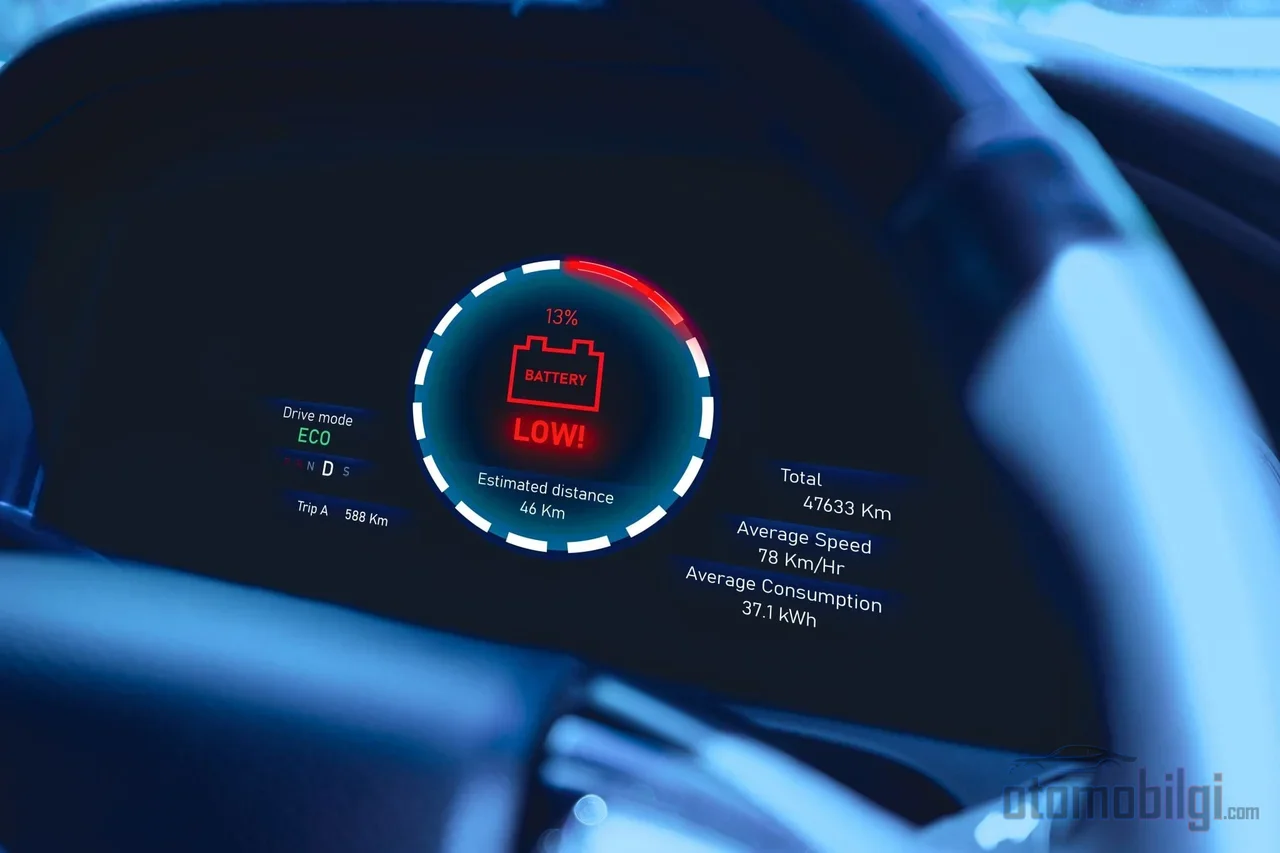
An electric car sometimes cannot deliver full power because when the temperature sensors on the battery, inverter, and motor detect that conditions are outside the safe operating range, the power electronics deliberately throttle the current and output power. This is called derating, or power limitation; it is not a fault, but a designed protection behavior that safeguards sensitive semiconductors and cells. A sudden drop in power on the dashboard most often means the system is doing exactly what it is supposed to do.
Highlights
- Power limitation has three main sources: a cold battery, excessive temperature and an overheating inverter/motor.
- The limitation threshold is not a universal temperature; it varies from manufacturer to manufacturer and from model to model.
- In cold weather, regenerative braking is reduced or temporarily shut off due to the risk of lithium plating.
- Temporary capacity loss returns when the temperature normalizes; repeated heat exposure accelerates permanent aging.
- An inverter that limits output on a hot day is usually working correctly; the real problem is limitation that occurs under entirely unexpected conditions and continuously.
What Is Derating and What Does the System Exactly Do?
Derating is when a power electronics system automatically reduces its output power when its internal temperature exceeds the safe operating limit. The mechanism applies three actions together: it sets current limits, lowers the switching frequency, and gradually reduces the output power. The goal is to prevent the semiconductors, capacitors, and other sensitive components from exceeding their thermal limits.
To make it concrete: an inverter sized for 5 kW at a 25°C ambient temperature may drop to 4.5 kW or lower at 40°C. This ratio is not the same for every product; it depends on the design's thermal margins. In a system designed with weak engineering, thermal margins are low, thresholds are reached faster, and performance degradation starts earlier. This is why two different inverters with the same power rating can produce very different results in real life.
In an electric vehicle, this picture cannot be reduced to a single component. The limitation trigger can be on the battery side, the inverter side, or the motor side; most of the time all three are evaluated together. This is precisely the task of the vehicle's thermal management system: to ensure that the battery, inverter, and motor can operate before going into power limitation mode or shutting down completely. Sensors are at the center of this architecture; all of the system's decisions are made based on the temperatures they read.
Current Limiting with a Cold Battery: Why Does Power Drop in Winter?
Cold weather slows down the chemical reactions inside a lithium-ion cell. When the reactions slow down, the battery cannot deliver current at the requested rate; this reduces both range and instantaneous power capability. Part of the range loss seen at temperatures approaching freezing is explained by this efficiency drop, and part by the fact that cabin heating is a significant energy consumer. In other words, part of the power limit seen on the dashboard in winter comes directly from the reduced current that the battery can electrically deliver.
Why does regenerative braking disappear?
The other face of the cold battery is on the charging side. A chilled lithium-ion battery cannot safely accept a large amount of charge without the risk of lithium plating; once metallic lithium starts to accumulate on the anode surface, the change is permanent. For this reason, the vehicle's control software reduces regenerative braking or temporarily disables it until the battery warms up. The driver notices this as a change in braking feel; some manufacturers offer settings that mimic the behavior of a conventional brake pedal to fill this gap. The same logic applies to fast charging: a cold pack settles for only a small fraction of the current it can accept, and the first section of the charging curve proceeds unexpectedly slowly.
Reading this behavior correctly is important: the restriction is a protective behavior designed to prevent damage to the battery. In vehicles with battery preconditioning, this limit is often not noticed at all because the pack is heated before charging.
Thermal Protection at High Temperature and the Distinction Between Temporary and Permanent Loss
The hot end paints a picture that is not as dramatic as the cold, but whose consequences can be more lasting. As ambient temperature rises, converter losses increase, the thermal margin in the system narrows, and power derating is triggered. The thermal management system works together with excessive temperature monitoring, automatic power limitation, and fault protection strategies to try to keep the battery and power electronics from leaving the safe window. When this window is exceeded, the protection that kicks in is two-stage: first power is reduced, and if the limit is exceeded, charging and discharging are temporarily stopped completely. A complete shutdown is a stronger safety response than a restriction and is not by itself proof of a fault.
The critical distinction in temperature management is the type of capacity loss. Temporary usable capacity loss is the BMS's temperature-related limitation and returns when the temperature returns to normal; repeated heat exposure, on the other hand, accelerates cell aging and leaves permanent capacity loss. For this reason, the limitations seen in a parked vehicle in the summer heat are often reversible, while repeating the same conditions many times genuinely shortens the pack's life.
There is another subtle point in the battery pack: the distribution of temperature matters as much as its magnitude. A uniform temperature distribution within the pack is decisive in terms of performance, life, and safety; a difference opening up between cells leads the system to impose restrictions based on the hottest cell. That is why thermal management is not just about cooling, but about cooling evenly. On the motor side, effective thermal management prevents more serious consequences: magnet loss in permanent magnets, aging of insulation materials, efficiency drops, and motor winding burnout do not occur thanks to these protections.
What Happens When the Inverter and Motor Heat Up?
The traction inverter is the component performing the vehicle's heaviest switching duty, and all of its losses convert into heat. The cooling strategy determines how quickly that heat is removed. Passive air cooling relies on natural convection and depends on the mounting location's airflow; forced air cooling requires ventilation and clearance; liquid cooling offers controlled heat transfer but is a more complex system. Whatever level the cooling capacity is at, the rate at which the inverter reaches its thermal threshold changes accordingly. A failure of the internal fan or a blocked heat sink can make the limitation visible even under conditions where it would never normally be seen.
On the motor side, derating is applied through a different mechanism: it is not the output power that is reduced directly, but the torque limit. The torque limit, in turn, is implemented by reducing the current entering the motor. This is what the driver feels: when the accelerator is pressed fully, the vehicle's response retains its previous acceleration character, but the ceiling has dropped. Reduced output on a hot day does not mean the inverter is failing; on the contrary, thermal derating is working exactly as designed. The problematic case is the scenario where the limitation appears under normal conditions, at reasonable loads, and continuously.
800V Architecture and SiC: Reducing the Heating Problem at Its Root
The fight against power limitation has an architectural dimension. The 800V architecture is a high-voltage design encompassing the battery, power electronics, and charging system; by transmitting the same power at a higher voltage, it lowers the current, reducing losses and heating. With this transition, manufacturers gain the advantage of halving charging times, reducing charging current and overheating. Less heating means reaching the thermal threshold later and a narrower limitation window.
The thermal challenge begins at the most critical point, the semiconductor junction temperature. The 200°C junction temperature capability of SiC semiconductors enables more compact cooling systems; more power can be switched within the same thermal budget. This dual combination, 800V voltage and SiC switching, is the engineering foundation behind modern vehicles' ability to deliver full power for extended periods. Still, the marketing table must be separated from the engineering table: in some vehicles, the stated voltage may be based on maximum system voltage rather than the nominal pack voltage; for full power conditions, the manufacturer's own documentation should always be the reference.
Why Do Manufacturers' Strategies Differ?
The derating threshold is not a universal temperature. A system's specified operating temperature range does not guarantee full power across that entire range; full power conditions are defined separately in manufacturer documentation. Even if two vehicles use the same cell chemistry, they can enter limitation at very different points due to different BMS thresholds, different cooling capacities, and different software strategies. For this reason, comparing one model's behavior in hot or cold conditions one-to-one with another model's behavior is misleading; model-specific limits should be taken as the basis.
The strategy itself is also a subject of debate. Most restriction thresholds used in commercial practice today are based on fixed temperature values, and because they do not take ambient conditions or usage patterns into account, they may remain more conservative than necessary. The academic side argues that dynamic control approaches that adapt to environmental conditions and anticipate heating could reclaim this share. On the other hand, there is a logic to manufacturers insisting on fixed thresholds: safety margins are defined according to the worst-case scenario. And a final correction: battery chemistry praised for heat resistance does not by itself prevent thermal derating; what determines it is the BMS, thermal enclosure, placement, and cooling method.
Is Power Reduction Normal or a Fault?
The answer to this question is divided into three questions. First: did the restriction occur under expected conditions? Reduced regeneration on a cold morning, a temporary power limit in summer heat, or a full thermal shutdown is the normal operation of the protection system; it does not mean the battery is faulty. Second: was the restriction withdrawn when the temperature returned to normal? Temporary loss of usable capacity reveals itself in this test; when the temperature returns to normal, performance is restored. Third: the frequency and context of the limitation. If a restriction that should not occur under the same conditions is seen repeatedly, that is a sign worth investigating.
Signs that support the suspicion of a fault include:
- An unexplainable and persistent reduction in range
- Unusually slow charging
- Increased phantom consumption when not in use
- Sudden power loss that cannot be explained by cold or heat
- Unusual sounds and smells
If one or several of these symptoms are observed, the vehicle must be evaluated by the service. Disabling the protections is not an option under any circumstances: removing BMS protections increases the risk of permanent degradation and thermal runaway. The solution to a heat problem is not to cancel the protection; it is to reduce heat exposure through shading, placement, and airflow.
Conclusion: Reading the Power Curve Is a Form of Engineering Literacy
Reduced power on the dashboard is often not the bad ending of a story, but proof that the system knows its own limits. Sluggish chemistry in the cold, a shrinking thermal margin in the heat, an overheating inverter cutting current, and the motor's torque limit being pulled back are all different faces of the same principle: a sensitive component is operated within its own safety window. Where the limits are drawn varies from manufacturer to manufacturer; but distinguishing whether a limit is temporary or permanent, and knowing which behavior to expect under which conditions, is the most practical diagnostic tool an electric vehicle owner has. The rule is simple: under expected conditions, a temporary restriction is normal; under unexpected conditions, a restriction that becomes permanent should be questioned.
Sources
- Cold Temperatures Affect an Electric Vehicle's Driving Range
- How Does Cold Weather Affect Electric Cars?
- Why Does Regenerative Braking Not Work in the Cold?
- Home Battery Derating in Hot Climates Explained
- Why Heat Derates Inverters, and How Storage Helps
- Inverter Overheating: Temperature Range, Derating
- EV Thermal Management and Sensor Technology Guide
- EV thermal management system
- EV Thermal Management Guide
- Impact of extreme climatic conditions on fast EV chargers
- Predictive temperature control of electric two-wheeler hub motors
- Derating Vehicle Electric Drive Motor and Generator
- Thermal Design Challenges in 800V EV Charging Systems
- What is 800V architecture?
- HEFT D3.1: Modular 800V powertrain architecture
- 800V Architecture
- Signs Your EV Battery Is Failing