Why Is the Onboard Charger Deliberately Designed to Be Small?
Share This Page
What determines an electric vehicle's AC charging speed at home is not the wall-mounted charging unit but the onboard charger inside the vehicle; this device is deliberately kept in the 7-22 kW band, meaning a narrow power range, because the heavy lifting of fast charging is handled by DC converters on the station side. In this article, we explain at the power electronics level what the OBC does, why it is designed small, and how DC fast charging bypasses it.
Highlights
- In AC charging, the power delivered to the battery is the smaller of the station's maximum power and the vehicle's onboard charger power.
- Typical OBC power classes are 7 kW, 11 kW and 22 kW respectively.
- The onboard charger is typically designed to be lighter than 5 kg and compact.
- In DC fast charging, the AC-DC conversion is done at the station; the OBC is bypassed and DC goes directly to the battery.
- In DC fast charging, peak powers range from 50 kW to 250 kW+ .
What Exactly Is an Onboard Charger and What Does It Do?
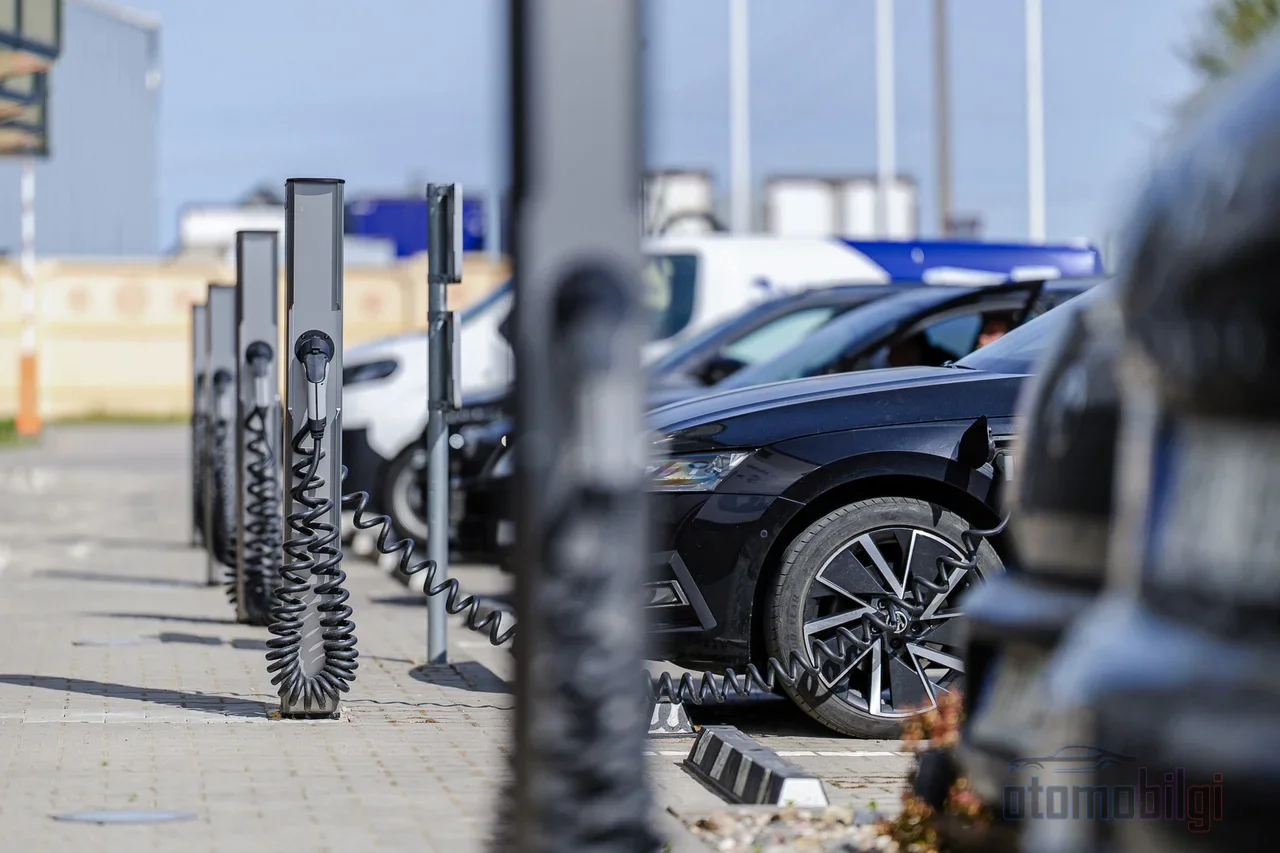
Wall units colloquially called "chargers" are technically not chargers; they are called electric vehicle supply equipment, or EVSE. The real charger is inside the vehicle: the onboard charger converts the AC power coming from the grid into DC power that can be stored in the battery. Beyond this task, it regulates voltage, communicates with the charging equipment, and continuously monitors the battery.
The wall unit's role is more modest: it communicates with the vehicle, determines the maximum current that can pass through the cable and the maximum current the OBC can accept, cuts power when no cable is connected, and shuts down the circuit in case of a fault. In other words, the box on the wall is a safety and connectivity unit; the vehicle does the conversion work. This distinction is the starting point of all charging speed debates.
Why Does the Vehicle Determine AC Charging Speed?
The onboard charger is the main limiting factor for AC charging speed. It determines and regulates itself the volts and amps to be sent to the battery. No matter how much power the charging station offers, the OBC never accepts power above its rated power: a vehicle with a 7.2 kW rating still charges at only 7.2 kW when connected to a station that can deliver 19.2 kW at 80 A.
In practice, AC charging power is shaped by the lowest of four limits: the cable, the vehicle's onboard charger, the number of phases reaching the outlet, and the supply. The power calculation is simple: volts × amps. 240 V × 30 A equals roughly 7.2 kW; at 48 A, this value rises to the 11.5 kW band. Every vehicle also has two different power values: the lower AC power and the higher DC power. The difference between these two values is a direct consequence of the architecture being split into two separate conversion paths.
Power Classes: Why Are the 7, 11 and 22 kW Bands So Common?
AC power classes on the market fall into three tiers. 7 kW is the standard for single-phase home environments, 11 kW is the choice of the three-phase home and small business side, and 22 kW is the fastest AC option offered by a three-phase connection. In pure power terms, 11 kW is about 57% faster than 7 kW; this difference means a time saving of around three to four hours in overnight charging.
| Power Class | Environment | Full Charging Time (approx.) |
|---|---|---|
| 7 kW | Single-phase home | Overnight |
| 11 kW | Three-phase home / small business | 5-6 hours |
| 22 kW | Three-phase, the fastest AC | 2.5-3 hours |
Going beyond these limits is possible at the manufacturer's discretion: while common models like the Nissan LEAF find a 7.2 kW OBC sufficient, the Lucid Air goes above this band with a 19.2 kW onboard charger. However, the spread of 22 kW AC stations remains limited due to the requirement for three-phase infrastructure and official approvals; in other words, the infrastructure also determines the ceiling.
How Does DC Fast Charging Bypass the Onboard Charger?
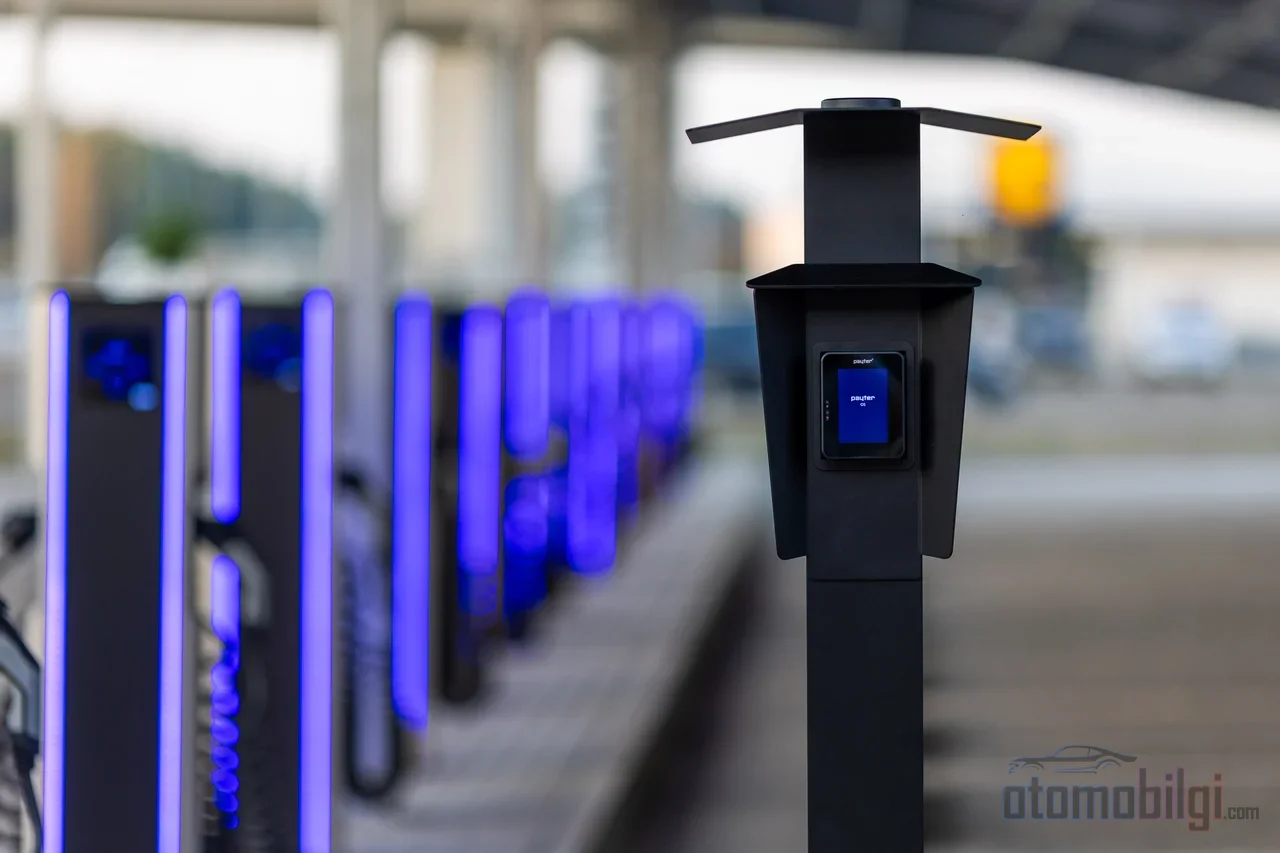
In DC fast charging (DCFC), the AC-DC conversion is done at the station, not in the vehicle. The converted DC is fed directly to the battery without ever passing through the OBC; in this mode, the vehicle manages the process through the battery management system (BMS). DC charging equipment, classified as Mode 4, does exactly this bypass job.
That's why in DC fast charging the power level is largely limited only by the station: peak speeds range from 50 kW to values above 250 kW. This is also the architectural logic behind not moving the conversion into the vehicle: the converter electronics at stations can be much larger and more powerful than anything a vehicle could carry. The car does not have to carry the heavy conversion hardware around with it every time.
Why Is the Onboard Charger Deliberately Designed Small?
In an EV, both carrying load and volume are limited; the onboard charger is typically designed to be lighter than 5 kg and compact. Exceeding this limit grows three costs at once:
- Cost: A higher-capacity OBC directly increases the vehicle's cost.
- Weight and volume: Every extra kilogram is a direct penalty in terms of range and packaging.
- Thermal management: Higher power means more heat to be managed; OBCs are designed with fan or liquid-cooled systems, and good cooling is critical for controlling the heat.
On the engineering side, there are also ways to reduce the size: in multifunctional chargers, sharing a common heat sink reduces total size. Advanced semiconductor technologies can improve the trade-off between power density and efficiency, but this comes at the cost of requiring gate-drive design, more careful thermal paths, and advanced magnetic components. In other words, shrinking is not "free"; every gain demands a payment in another engineering area.
Does the 800V Architecture Change This Picture?
The 800V architecture is a system decision encompassing the battery pack, DC-DC converters, and onboard chargers; it enables ultra-fast charging by providing higher charging power at lower currents and can bring the 10-80% range below 20 minutes. It is stated that at suitable stations, approximately 80% can be reached in 20-30 minutes with power above 200 kW; the architecture can support charging speeds of up to 350 kW.
The nuance to note is this: the speed that 800V provides is on the DC side. For AC and home charging, an 800V architecture offers no advantage, because the ceiling on the AC side is still set by the OBC's rated power. In fact, some bidirectional home charging units can manage a 400V DC battery but may not be able to manage 800V. A 400V vehicle being limited to 400V output when connected to an 800V station is another facet of the same logic: the limit is always the narrower side's vehicle.
Is Slow AC Charging Gentler on the Battery?
The presence of a small OBC should not be read as a flaw. AC charging is slow, but this slowness helps preserve battery health over the vehicle's lifetime; overnight home charging is the regime in which the battery is under the least stress. DC fast charging's speed advantage is indisputable and indispensable for long journeys, but for daily use, the adequacy of the AC side is beyond question.
It is also useful to know that low-power charging has a practical limit: some vehicles consume 100-200 W per hour to keep the system on during charging. This consumption disproportionately slows down charging set at very low power; in other words, not only the OBC's lower limit but also the vehicle's own constant load shapes the flow.
Conclusion: A Small OBC, a Correctly Divided Workload
The smallness of the onboard charger is not a deficiency but an architectural decision. In AC charging, the ceiling is set by the vehicle; in DC charging, the conversion is moved to the station, and the vehicle keeps only the data and control side for the battery. An OBC in the 7-22 kW band keeps weight, cost, and thermal load reasonable, while the real need for speed is met by the massive converters on the infrastructure side. This division is precisely why we see two separate numbers when reading an EV's charging values: one is the small but continuously working unit inside the vehicle, the other is the large power at the station that is never carried in the vehicle.
Sources
- What really limits EV charging speed? Not what you think!
- How Station Amperage and kW Affect EV Charging Times
- The Ultimate Guide to DC Fast Charging
- A system efficiency improvement of DC fast-chargers
- What Is an Onboard Charger?
- On-Board Charger - ScienceDirect Topics
- Limitations of Onboard Chargers in AC EV Charging
- What is an 800 V vehicle architecture?
- An Overview of 800 V Passenger EV Onboard Chargers
- 400V vs 800V Charging
- 7kW, 11kW or 22kW EV Charger?
- Understanding 7kW, 11kW, and 22kW Chargers
- Why Slower EV Charging Can Be Smarter
- Charging Levels, Onboard Charger kW, DC Fast