Camping with an Electric Car: What Can You Do with V2L?
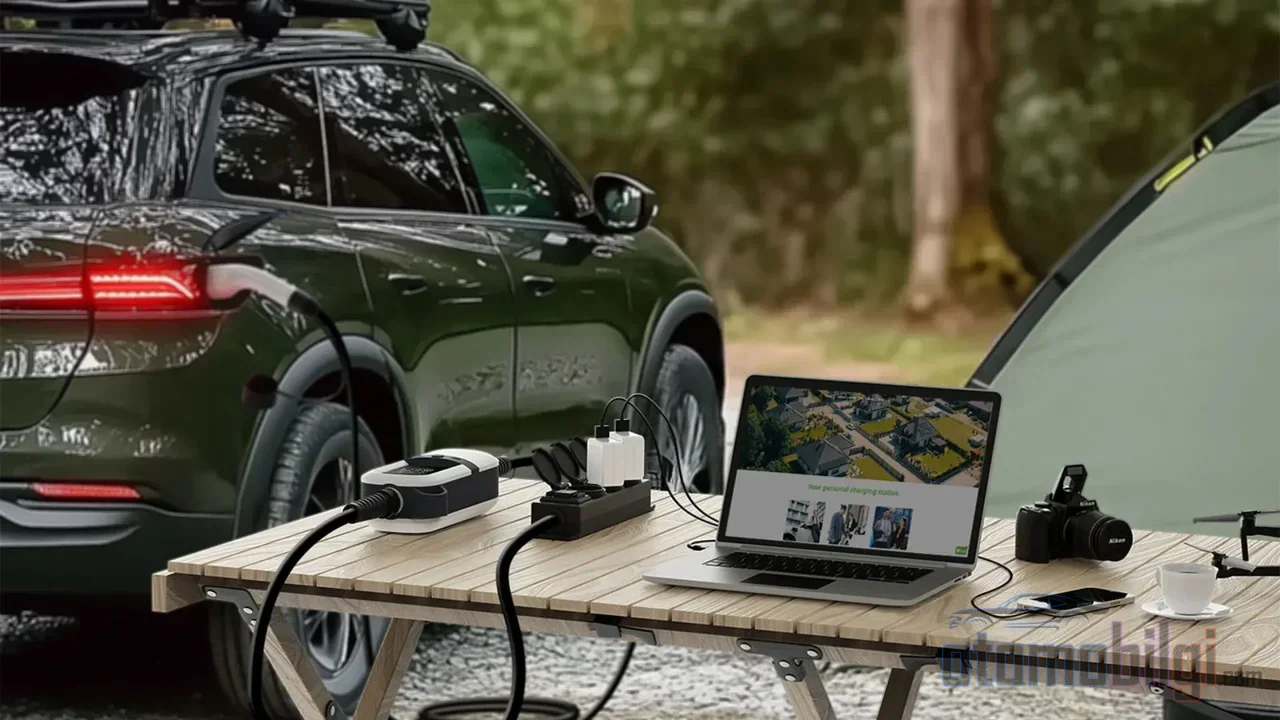
Do you remember the biggest annoyance at the campsite: the charcoal not lighting in the dark, the portable fridge's battery dying, waking up to cold water instead of the water heater in the morning. Electric vehicle owners are experiencing this scenario less and less. Because in some modern electric cars, the battery works not only to turn the wheels, but also to power devices at the campsite or during a power outage at home. This feature is called V2L, and it is one of the least talked about yet most tangible benefits of the ownership experience. So what exactly does V2L do, which vehicles offer it and at how many kilowatts, and how much range does it really cost to boil a water heater?
What Is V2L and How Does It Work?
V2L stands for Vehicle-to-Load, which literally means from vehicle to load: the feature that transfers the energy in an electric vehicle's battery to external devices. The conversion is done by the inverter inside the vehicle; the battery's direct current is converted into 230 V / 50 Hz alternating current. In other words, the current you see at the outlet is the same type as the one in the wall socket at your home.
Power limits vary from vehicle to vehicle, but the picture is clear: most models deliver output in the 1.8-3.6 kW range, and the ceiling is generally 3.6 kW. For a striking comparison, let's take a standard household outlet; it delivers about 2.3 kW of power. So a top-tier V2L output offers more power than an ordinary household outlet. That alone is enough to run a camp heater or a coffee maker without any trouble.
There are two ways to access this power. Some vehicles have an outlet integrated into the cabin or trunk; in others, an external V2L adapter plugged into the charging port is used. An important technical detail: the entire technology resides in the vehicle; the adapter is merely an interface. The DC-AC conversion takes place in the vehicle's inverter; a cheap adapter box performs no magic - on the contrary, a poor-quality interface can put the vehicle's electronics at risk.
It also helps not to confuse it with neighboring technologies. V2H powers the house; for that, a bidirectional wall charging unit and a transfer switch are required; the output power is typically 7-11 kW, and installation costs are around 5,000-10,000 euros as of 2026. V2G, on the other hand, makes it possible to sell energy back to the grid. The advantage of V2L is its simplicity: it powers a single device, requires no installation, and waits ready in your bag.
Highlights
- In most electric vehicles, the V2L output is in the range of 1.8-3.6 kW; a standard household outlet delivers about 2.3 kW.
- A vehicle with a 77 kWh battery can run a mid-sized camp setup for 2-3 days.
- Running a 1 kW load for 5 hours costs about 20 km of range in most vehicles.
- The systems shut off automatically when the battery drops to the 15-20% level; a reserve for driving is preserved.
- Tesla and the VW ID series do not offer built-in V2L.
Which Electric Vehicles Have V2L, and at How Many Kilowatts?
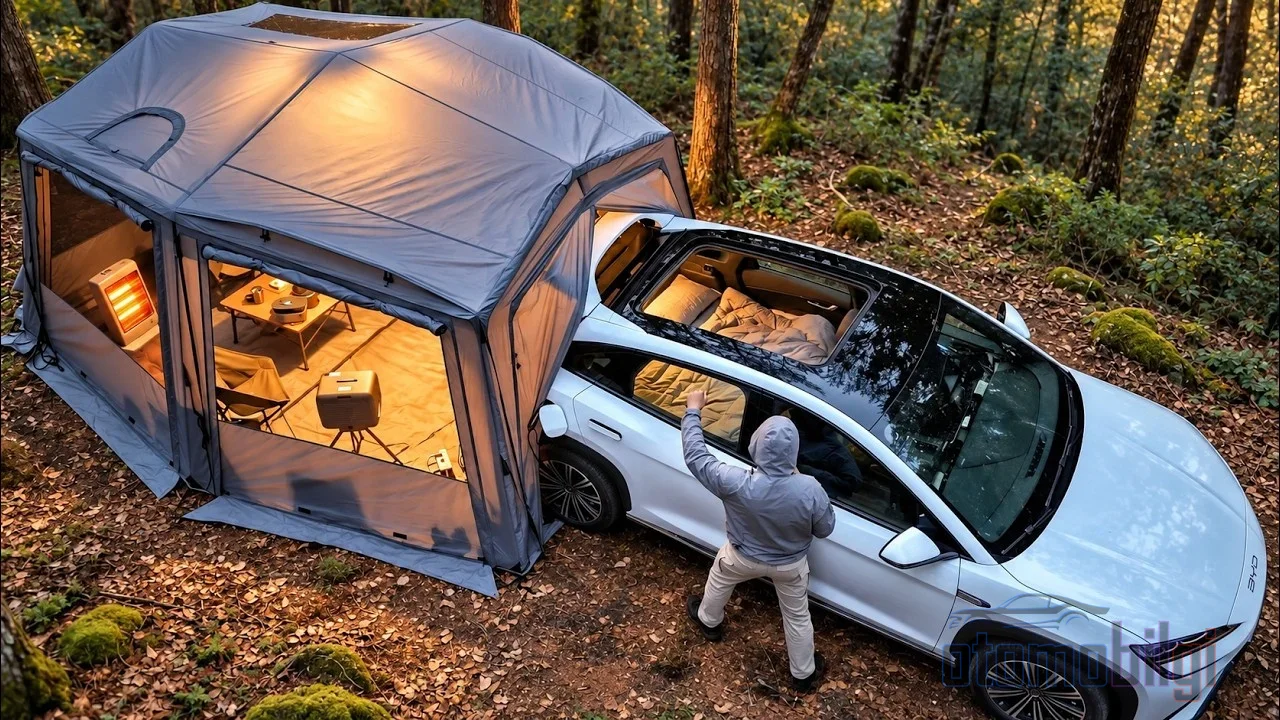
As of 2026, the power figures shape up as follows by model. The figures in the table are peak power figures from manufacturer manuals and official announcements; when considering a specific model, it's worth verifying the value in your own vehicle's manual, as it may vary depending on the trim level.
| Model | V2L Power | Note |
|---|---|---|
| Hyundai IONIQ 5 / 6 | 3.6 kW | Adapter is standard on Ultimate trim |
| Kia EV6 / EV9 | 3.6 kW | EV9 with 99.8 kWh battery |
| BYD Atto 3 / Dolphin | 2.2 kW | Adapter-type access |
| BYD Seal | 3.0-3.3 kW | Manual value should be verified |
| MG4 / MG ZS EV | 2.2 kW | - |
| Volvo EX30 | 1.5 kW | In-cabin outlet |
| Renault 5 E-Tech | 3.7 kW | - |
| Ford F-150 Lightning | 9.6 kW | Pro Power Onboard, a pickup-class exception |
The situation on the Turkiye side is also becoming clear. According to Hyundai's official page, the IONIQ 3 can deliver up to 3.6 kW of power through the interior 230 V outlet or via the external charging port. As for TOGG, V2L is available on all T10F vehicles; on the T10X it is offered only on newly produced vehicles, stated to be usable in production from July 2026 onwards. Most V2L outputs on the Turkiye market operate in the 3-3.7 kW range with a 230 V / 16 A, single grounded outlet configuration.
One warning concerns a popular misconception: Tesla (except Cybertruck) and the VW ID series do not support built-in V2L. The V2L adapters sold online for Tesla are actually third-party inverters connected to the vehicle's 16-volt low-voltage battery; they are not a system powered by the vehicle's main battery.
Camping with an Electric Car: A Realistic Consumption Calculation
The real value of V2L for camping and picnics comes down to knowing the wattage of your devices. Typical values are as follows: a camping fridge draws 100-200 W, a laptop 60 W, and a portable LED lighting set is almost negligible. The water heater is the monster of the list: it draws around 2,000 W but runs only a few minutes a day.
Let's set up a measurable scenario: a setup consisting of a camping fridge, LED lights, a coffee maker and a portable induction hob runs at a total of 1-1.5 kW. A mid-size EV battery can power this setup for 2-3 days. To make the numbers more concrete, let's take a 77 kWh IONIQ 5: if we start at 80% charge, we can run a 150 W fridge for about 400 hours, a 1.5 kW circular saw for about 41 hours, and camping devices in the 0.3-0.8 kW range for 75-200 hours. For a weekend camp, this is comfort that cannot be compared to a generator, and most importantly, it is silent.
The picnic and remote-work scenario is also noteworthy. A 300-500 W setup consisting of a laptop, monitor, internet modem and the occasional water heater can cover an entire work week with a fully charged vehicle. For those who work outside the city and use their vehicle as a mobile office in an area with weak electrical infrastructure, this is a realistic alternative.
How Much Does Battery Consumption Affect Range?
An energy source is not free; every kilowatt-hour drawn from V2L is energy that does not go to the wheels. The math is transparent: running a 1 kW load for 5 hours consumes 5 kWh, and in most electric vehicles this equals approximately 20 km of range. A longer-term example: running a 1 kW load for 8 hours amounts to 8 kWh; that is roughly 10% of a 77 kWh battery.
A technical nuance should not be overlooked either: the efficiency of V2L systems varies according to the load level. An academic study shows that system efficiency dropped from 72% to 63%, with efficiency decreasing as the current falls. In practice, this means: running the battery with continuously very low loads (such as only an LED lamp) wastes energy disproportionately. Operating with moderate loads yields more work per kilowatt-hour.
As for battery health, the picture is reassuring. Manufacturers keep V2L use within the normal warranty coverage, and the impact of a small number of energy cycles on long-term degradation is considered negligible compared to DC fast charging. A 60 kWh battery passing approximately 3,000 kWh per year through V2H is calculated to add about 50 full cycles per year; that is a light load class.
Safety Rules: Adapter, Fuse and Usage Limits
The convenience of V2L works together with simple electrical safety rules. In summary, the rules in the official Hyundai and Kia manuals are as follows:
- Do not use V2L outdoors when there is a risk of lightning.
- Do not power electric heating devices such as electric water heaters or toasters directly from V2L.
- Do not connect multiple portable power strips to one another.
- Follow the rules regarding the use of extension cords; do not use wet plugs and sockets.
Adapter selection should also be taken seriously. Adapters are specific to the vehicle; a Hyundai adapter may not be compatible with Kia, or vice versa. Certified products (bearing CE, UKCA, TUV marks and having an appropriate IP rating) should be preferred; cheap adapters from unknown brands can damage the vehicle's electronic system. It is also critical never to connect the V2L cable to another electrical system in any way, because there is no voltage or phase synchronization between the systems.
There are two more practical limits. The first is the cutoff threshold: the systems stop automatically when the battery drops to the 15-20% level, leaving a margin for driving. In most vehicles, the user can set these limits themselves within the 20-80% range; meaning V2L is not designed to leave you stranded. The second is that while V2L is running, the vehicle must be parked and in a special mode; when a gear is engaged, discharge shuts off for safety reasons. Additionally, medical devices and sensitive electronics should not be powered directly from V2L without a UPS buffer. On the insurance side, personal use (camping, occasional power outages) is generally covered, while commercial use - for example running tools with the vehicle at a construction site - may require a declaration to the insurance agent.
V2L in a Power Outage: How Useful Is It in an Apartment?
The outage scenario is V2L's most debated use case, and knowing its realistic limits is essential. V2L cannot power an entire home; the output power draws a strict boundary. A refrigerator, a few lamps, the internet modem, phone charging, and a small fan can be powered. Two reference points for scale: a 77 kWh EV can run a refrigerator, lights, the internet, and a few outlets for about 24 hours without interruption; it can power an average Danish household for more than 2 days. A fully charged 77 kWh vehicle is an astonishingly capable backup source compared to the winter consumption of an average household.
However, in an apartment setting, practical limits come into play. If the vehicle is on site and the V2L cable reaches the home, the system works; but when the vehicle is plugged into a charging station in an apartment parking lot, the right to unplug it is still a matter of debate, and the need for a home-type installation and an extension cable to power the whole house makes whole-home backup only a partial solution with the 3.6 kW ceiling power. Moreover, for users without plug-in access or who park on the street, electric vehicle ownership is already noticeably more cumbersome and expensive; in a power outage, V2L's value depends on the vehicle being near the home. In short, in an outage scenario V2L is a partial backup power source that keeps essential life lines running; it is not a substitute for a home generator.
Portable Power Station or V2L?
The comparison turns in most buyers' minds and becomes clear with numbers. An electric vehicle's battery is in the 60-100 kWh range; a typical portable power station is in the 1-3 kWh class. So a vehicle with V2L offers about 10 times the energy of a power station, and you don't need to make an additional purchase for it; the feature is already included in the vehicle. In activities that involve taking the vehicle along, like camping and picnics, V2L's advantage lies in its energy capacity.
The scenario where a portable power station wins is moving away from the vehicle: at the seaside or in a picnic area, where the vehicle cannot be parked kilometers away, a 1-3 kWh station carried in a bag can sit right next to the kitchen counter. A similar choice applies for caravan users; the differences between V2L, C2L, and C2C adapters, and the requirement that adapters be vehicle-specific, are matters that should be carefully evaluated when planning a caravan electrical setup. Accounts of Togg users running a vacuum cleaner at the campsite or drawing power from the vehicle as a quiet energy source instead of a generator are among the concrete examples of this use in Turkiye.
Is V2L Useful for You? A Short Answer for the Decision
V2L is a feature that requires no installation and transfers the energy in your electric vehicle's battery to external devices through a 230 V outlet; in most vehicles it delivers between 1.8 and 3.6 kW of power. At camping and picnics, it comfortably runs the fridge, lighting, and coffee maker for 2-3 days; during a power outage it keeps basic needs going for about a day, and it has an automatic cutoff threshold that protects the battery for driving.
To reduce your decision criterion to a single sentence: if scenarios where you go somewhere with your vehicle and use electricity (camping, picnics, field work) are routine, V2L becomes a real deciding factor in model selection; it has the character of something that may go unused for months yet proves priceless during one outage a year. For activities away from your vehicle, a portable power station still makes sense. Confirm three things: does your vehicle have a built-in outlet or does it need an adapter, does your hardware level include the adapter, and what is the peak power value in kW listed in your manual. The answers to these three questions clearly show whether V2L is a mere distraction or a real tool in your lifestyle.
Sources
- Hyundai IONIQ 3 official page (V2L 3.6 kW)
- Safety Precautions When Using the V2L Function - Hyundai Owners Manual
- Kia EV6 manual - V2L safety
- V2L Explained: What Your EV Can Power (2026 UK Guide)
- Vehicle to Load (V2L): What is it and how does it work?
- Vehicle-to-Load (V2L): What It Is, Which Cars Have It, and What You Need
- Electric car V2L compatibility: Check guide 2026
- Which Vehicles Have V2L? (2026) - Bemis EV Charge
- V2L in TOGG - FutureTeknik
- Assessment of vehicle-to-load in support of home appliances - S. Tian, 2024, ScienceDirect