Charging Apps and Card Confusion in Electric Cars
Share This Page
How many apps do you have on your phone to charge your EV? On many of our screens, first one network's icon appears, then another's, and then a third next to it. While the number of public charging networks in Türkiye is rapidly increasing, each network's own membership, balance and payment scheme is multiplying as well. For a driver who simply hands over a credit card at a gas station and is done with it, this picture seems meaningless at first. Yet behind it lies a measurable technical and regulatory history - and when sorted correctly, the clutter can actually be reduced to three apps, or even a single app for some drivers.
How Big Is the Market, and Why Has the Clutter Grown So Much?
Starting with the numbers makes things clearer. As of October 2026, the number of brands providing charging services in Türkiye is around 185; with a total of 13,140 stations and 47,908 sockets in place. A year ago, these figures were far behind: at the end of 2025 there were approximately 38,808 charging points, 43% of which were DC fast chargers. The growth rate also explains how quickly the market is fragmenting: while the number of charging network operator licenses was 77 at the end of 2022, it rose to 170 by the end of 2023 and to 182 by the end of 2025.
Each newly licensed operator brings its own app and its own price list. The pile of apps accumulating on a driver's phone is, in a sense, a direct product of the market's growing pains. On the government side, the picture is also becoming clearer: Under Law No. 7346 and the Charging Service Regulation, the charging price can only be set in TL/kWh, and license holders are required to have at least 50 units and coverage in 5 districts every 6 months. In addition, through EMRA's Sarj@TR open access platform, the location, socket information, price and availability of all stations can be viewed in real time. So finding a station is not the problem; starting the payment is where the real hassle lies.
Highlights
- As of October 2026, 185 brands, 13,140 stations and 47,908 sockets are in operation.
- The market-leading network holds approximately 24% of the total share with 1,915 stations.
- AC charging prices generally range from 6-12 TL/kWh, and DC charging from 9-16 TL/kWh.
- If you don't move your vehicle after charging is complete, the fine starts at 150 TL for 15 minutes and can rise to 500 TL for 60 minutes.
- In Türkiye, public charging capacity per EV is 7.8 kW; the world average is 2.8 kW.
Membership, Balance and Payment Models: Differences Between Networks
What operators ask from users comes down to three items: registration (membership), balance or card setup, and the method of starting the charge. Large networks' models work differently from one another. In one example, when charging is complete, the amount is charged directly to the registered credit card, with the invoice arriving later; in another network, the in-app balance approach takes precedence. This difference directly affects your card limit, your invoice tracking, and your preparation before charging.
| Network | Market share | AC price | DC price |
|---|---|---|---|
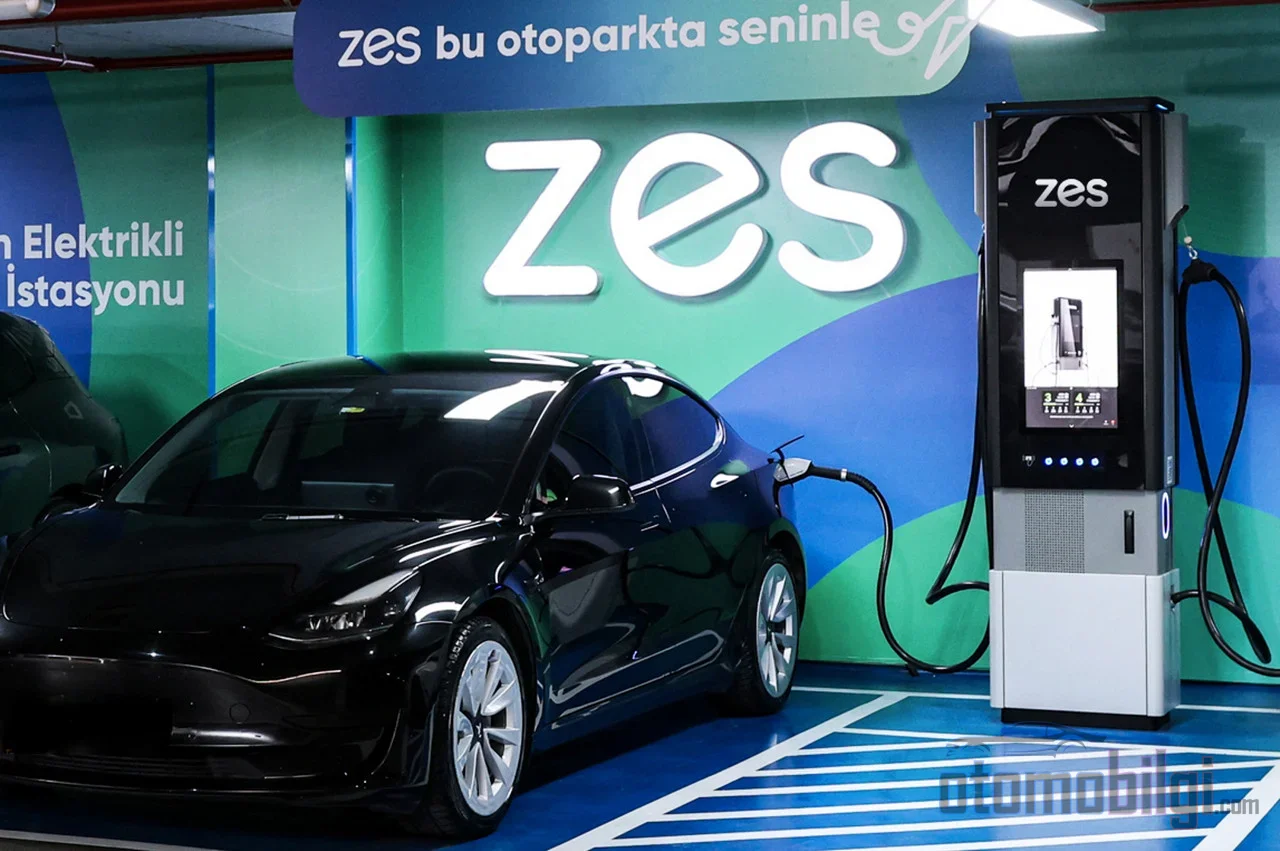
| ZES | 24.4% (1,915 stations) | 10.99 TL/kWh | 12.99 / 16.49 TL/kWh |
| Trugo | 14.0% (1,099 stations) | 9.95 TL/kWh | 14.98 TL/kWh |
| Eşarj | 9.9% (776 stations) | Within the range | Within the range |
| WAT Mobilite | 6.6% (514 stations) | Within the range | Within the range |
| Voltrun | 4.6% (361 stations) | Within the range | Within the range |
The overall price range can be summarized as 6–12 TL/kWh for AC charging and 9–16 TL/kWh for DC charging. Prices are a live variable: one of the leading networks moved its high-power DC tariff from 12.99 TL to 16.49 TL with increases of up to 27% within the last year; another network updated its tariff to 12 TL/kWh at some locations. Failing to move the vehicle from the station after charging is complete is also part of the price table: one network applies a tiered occupancy penalty reaching 150 TL after 15 minutes, 300 TL at 30 minutes, 450 TL at 45 minutes and 500 TL at 60 minutes. Not every network applies this penalty; which is why checking that station's rules before starting a charge is a practical necessity.
How Should You Track Prices?
Since tariffs are updated regularly, using independent platforms that compare all operators' prices on a single screen saves time instead of browsing apps one by one. When planning a route, it's not just the unit price - the number of sockets at that point and the power limit are also part of the decision: 350 kW ultra-fast charging units entered service for the first time in 2025 and are becoming widespread in 2026.
RFID Card, License Plate Recognition and QR: What's the Practical Difference?
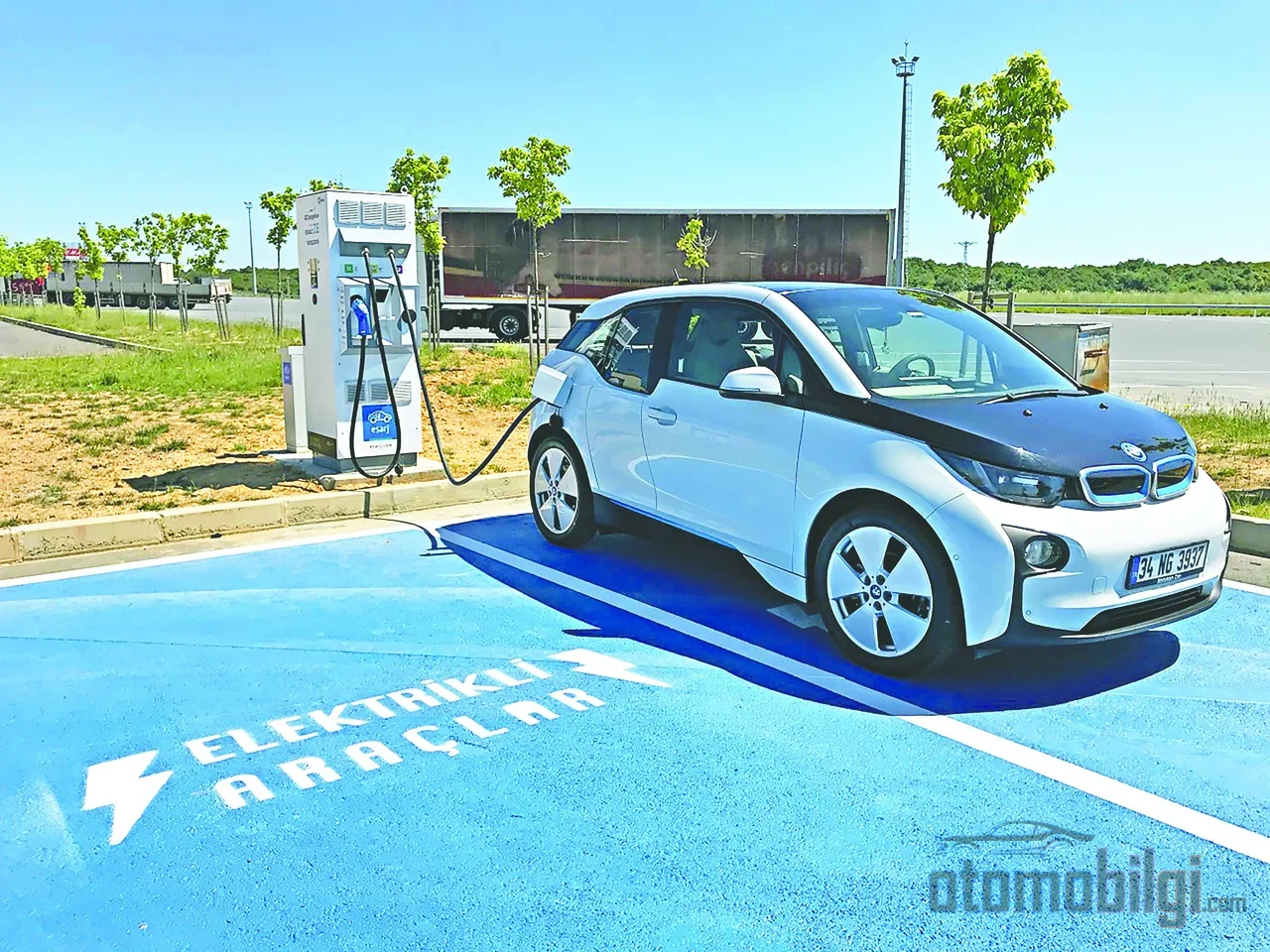
There are three classic ways to start a charge, and each stands out in a different scenario. The physical RFID card is the most basic backup solution: it allows charging to start even when there is no internet signal at the station. No money is loaded onto the card itself; it works like a key linked to your account. QR codes are a cardless and fast alternative - your phone's camera and the operator's app are enough. Starting via the app gives you the advantage of seeing the price, occupancy and charging status in real time; as long as you have mobile data and a server the app can connect to, this is the most informative method.
License plate recognition is technically the simplest solution: when the vehicle's plate is read, charging starts automatically - no card or phone needed. There are academic studies on this integration in our country; it is not yet a standard feature, but it points the way forward. In Europe, the picture is progressing differently: payment by card remains the choice of the majority of users. The protocol architecture called e-roaming (OCPI/OCPP) makes it possible to access many networks with a single account; still, many networks still require a separate account and a separate app. This is exactly the technical reason for the app chaos - standardization is not progressing as fast as the number of licenses.
Which Method Makes Sense in Which Scenario?
En-route fast charging
In intercity use, the decision variables are speed and accessibility. DC stations are located at intervals of 50–100 km along highway routes; every one of the 81 provinces has at least one charging point. Having the apps (and cards, if any) of the two operators with the widest DC networks on hand is standard equipment for long-distance planning. On corridors with ultra-fast 350 kW units, heading to the network that supports the highest power measurably shortens stop time.
Urban Use
The basic logic within the city is this: daily charging done at home or at work, with the public station positioned as a temporary solution. In this setup, a public network subscription is not a necessity; for a driver who occasionally ventures out, the apps of the two major networks + a QR code cover most situations.
Regular Non-Home Use
The strategy of a driver who cannot charge in an apartment building or at work and depends on public stations a few times a week should be different. Whichever network has the densest stations in that area, its app and card come first; price advantage is the second priority. For regular users, the value of the RFID card increases, because weak signal in basement levels is a common situation.
Finding a Station: Map Apps, Occupancy and Reliability
The common practice of experienced users is to make this distinction: a map/route app for finding stations and comparing prices, and the specific app of the station you are going to for payment. Neutral scanner apps that combine all networks on a single map take on most of this burden; PlugShare-like platforms also do the job in terms of discovery and user reviews. Occupancy display is critical, especially during holiday returns: a fleet of 491,492 electric vehicles (September 2026) makes congestion on popular corridors inevitable.
In terms of capacity, the picture is not pitiful: in Türkiye, an average of 7.8 kW of public charging capacity falls per electric vehicle, while the world average is 2.8 kW. In return, we lag behind the EU average in the number of stations per capita: one station per approximately 5,800 people, whereas in Germany this ratio is one per 950 people. So the problem is not capacity, but geographic density; this is also the reason why you should not neglect route planning on long trips.
Can You Charge with a Single App? A Plan to Simplify the Chaos
It is also necessary to note the promising direction: the two major networks announced they are running a joint project for charging accessibility at all public stations starting from Bursa, without any difference between mobile apps; if this initiative spreads, the chaos may decrease on its own. There are also apps that claim to provide access to multiple operators through a single platform; it would be wise to check their network coverage for your own route before using them. Europe's e-roaming infrastructure shows that this model works technically.
For now, the applicable simplification plan consists of three steps:
- Decide on your home operator: Install the app of the densest network in your area, register your card, and learn the billing/balance model.
- Add your road operator: get the app and RFID card of the second network with the widest DC coverage; keep the card in the glovebox, it serves as a backup when there is no internet connection.
- Leave everything else to the map: handle station finding, price comparison and occupancy tracking with a single independent map app; a QR code is usually enough for rare networks.
So the answer: does a separate app need to be required for every station?
No, saying it is required would not be correct. To start a payment, you need an identity belonging to the network of the station you use - most of the time that is the network's app; but RFID cards, QR codes and emerging e-roaming/shared platform access largely eliminate this requirement. Two apps, an RFID card and a map app are the realistic setup that covers almost all charging scenarios for the driver in Türkiye today.
Conclusion: The Chaos Is a Temporary Problem
The stack of charging apps is a natural byproduct of a growth phase in which the market is squeezed between 77 and 182 licensed operators. The regulation's kWh-based pricing requirement, the shared access platform and cross-network joint project initiatives are forces pushing the chaos downward. What needs to be done on the driver's side is simple: define your scenario correctly (in-city, on-the-road, or regular public charging), fix your setup accordingly with two apps and one card, and leave the rest to the map and QR codes. The habit coming from gas stations - one card, one transaction - is not yet complete on the network side; but it is now possible to set up a simplification plan that comes very close to it.
Sources
- Prices - ZES
- Trugo | Electric Vehicle Charging Stations
- Charging Service Market - Energy Experts Association
- 2026 Türkiye Electric Vehicle Charging Network Analysis | Vmob
- Charging station prices 2026: ZES, Trugo, Eşarj comparison
- Electric Vehicle Charging Prices 2026: AC and DC kWh-Based - osarj
- The charging bill for electric vehicles has swollen - CNBCE
- List of All Electric Vehicle Charging Companies in Türkiye
- May 2026 Türkiye Electric Vehicle and Charging Network Development Report - EVCify
- How to Get an Electric Vehicle Charging Card? - Araclo
- Integrated License Plate Recognition for Electric Vehicle Charging Stations - İKÇÜ
- EV charging cards UK - Electroverse
- Contactless Payments: An enabler for e-mobility in the EU - DigitalEurope
- EV roaming and why it matters - ChargeLab
- EV Charging City by City in Türkiye - Bemis EV Charge
- ChargeIQ: Electric Vehicle Charging App and Route Planner
- Charging Prices 2026 - SarjFiyat